
From 2017’s enigmatic and engrossing Taboo to the cultural phenomenon of Peaky Blinders, show creator extraordinaire Steven Knight is no stranger to period pieces. Most recently, he stepped into the brutal world of bare-knuckle boxing in Victorian London with A Thousand Blows. But now, he leads us across the Irish Sea for a tale of money, power, and history’s most famous beer-brewing dynasty.
The action kicks off in Dublin, 1868, on the day of Sir Benjamin Lee Guinness’s funeral. Grandson of the original Guinness founder, Sir Benjamin steered the business to previously unseen heights in the mid-19th century, becoming a Tory MP for Dublin and Ireland’s wealthiest man. As an employer of thousands and a symbol of Irish industry, plenty revered Sir Benjamin. But his staunch unionist sympathies put him at odds with just as many – particularly Catholic nationalists, who attack his funeral procession in a fantastically violent opening sequence to this new Netflix offering.
As brawls erupt on the streets and effigies of their father burn at St James’ Gate, we meet Sir Benjamin’s four children, safely cloistered in their Georgian mansion on St Stephen’s Green. But relations between the siblings aren’t exactly cordial. Cavalier Arthur (Anthony Boyle) has been away in London for years, and despite being the firstborn son who’s poised to inherit the brewery, he has very little concern for the family business. Eldest, Anne (Emily Fairn), is keen to exert her influence but is shut out because of her gender. And with middle brother Benjamin (Fionn O’Shea) busy gambling and drinking himself into oblivion, the pragmatic and overly-serious youngest, Edward (Louis Partridge), has stepped up to run the show.
Eager to return to his carefree life in London, Arthur agrees to cede control of the brewery to Edward in exchange for a hefty slice of the profits, but their plans are swiftly scuppered by a Succession-esque twist at the will-reading. Just like Brian Cox’s gruff media tycoon, Logan Roy, the late Sir Benjamin manages to foil and frustrate his entire brood, tying Arthur and Edward together as co-stewards of the brewery and leaving Anne and Benjamin out of the spoils entirely.
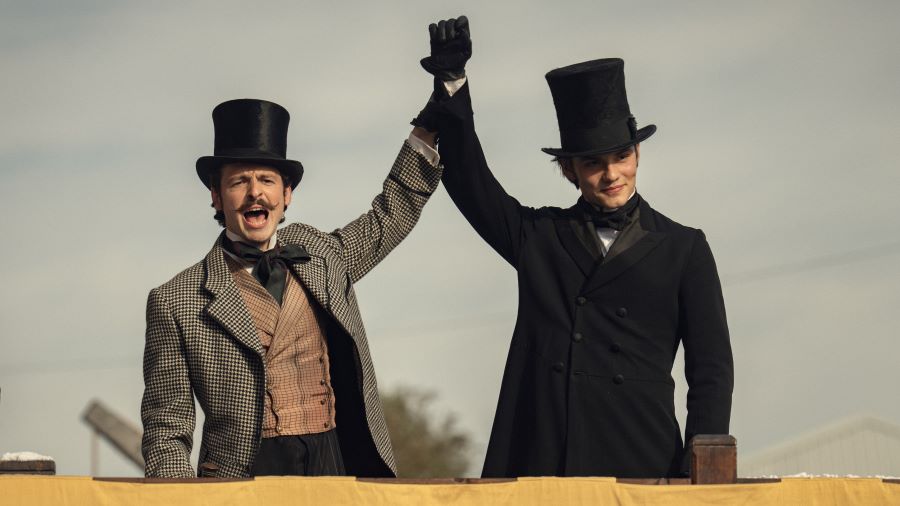
At this point, show creator Knight follows Sir Benjamin’s lead, relegating Anne to a supporting role and banishing Benjamin Jr. from the drama altogether. It’s a shame, since both characters are well drawn in the opening episode. Benjamin’s plight, especially (slave to the very substance that made his family’s fortune), presents an interesting poetic irony that we’d like to see fleshed out. Yet, Knight keeps a wide berth, as he does with the issue of alcoholism in general.
Instead, the action largely follows Arthur and Edward as they try to usher the brewery into the future and keep their father’s legacy from crumbling around them. Scheming against them are Ellen and Patrick Cochrane (Niamh McCormack and Seamus O’Hara) of the Irish Republican Brotherhood, who see the changing of power as an opportunity to further the nationalist cause.
House of Guinness has all the swagger of Peaky Blinders. There are blistering montages of roaring industrial machinery, a pulse-racing soundtrack featuring Irish groups like Kneecap and Fontaines D.C., and plenty of dapperly dressed gents swishing long coats down cobblestone streets. Yet, it doesn’t deliver quite the same punch. The pacing is choppy, and even with half the siblings sidelined, Knight spreads his focus too thinly. Plot lines flare up and fizzle out before surging to the surface again episodes later – and there are a few ill-placed time jumps in the back half that might leave some viewers disoriented.
Pacing and plotting issues are par for the course with historically accurate period pieces about public figures. Beholden to the history books, writers can’t always conjure up convenient plot devices to inject energy into the story or navigate themselves out of narrative dead-ends. But, as stated in the disclaimer before each episode, this series isn’t overly concerned with historical accuracy. Knight plays fast and loose with the deeds of the Guinnesses – not just the behind-closed-doors drama, but the big, public stuff, too. Entire plot lines are based around events that either didn’t happen or happened at some other time – leaving us puzzled as to why the finished product feels so sluggish and constrained.
As for the performances, it’s mostly positive, with a youthful cast showcasing a bright generation of up-and-coming Irish talent. Of the four Guinnesses, Anthony Boyle stands out as Arthur, delivering an entertaining blend of brooding Byronic melancholy and moustache-twirling snobbishness. While his performance borders on caricature sometimes, especially in scenes with Partridge’s straight-laced and awkward Edward, it comes off most of the time.
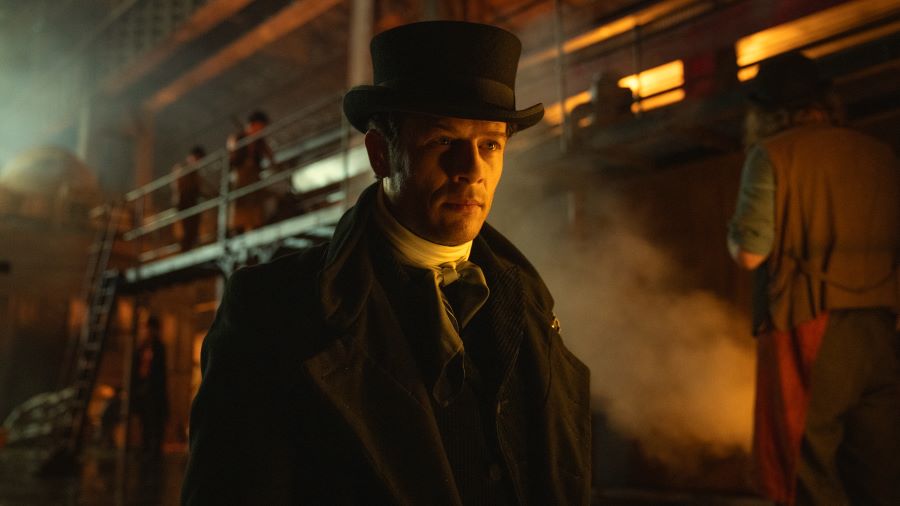
James Norton is also entertaining as Mr Rafferty, the Guinness family’s dashing and morally dubious enforcer, whose time is spent bedding aristocrats and roughing up anti-Guinness dissidents. The part seems handcrafted for Tom Hardy, if only he weren’t already playing the modern-day equivalent on Paramount+’s MobLand. And while Norton is effortlessly charming, we’d like to see more bite from him in the more ruthless moments.
Overall, House of Guinness is a watchable historical drama with a commendable cast of young Irish performers and plenty of Peaky-esque panache, but fans of the Brummie gangster saga might find the floundering narrative frustrating. The series is strongest when dealing with its characters’ personal struggles, such as Arthur’s homosexuality and the loneliness it causes. However, Knight’s attempts to incorporate social and political issues of the time, like the recent famine and nationalist/unionist divide, unfortunately, feel superficial – and the historical liberties taken aren’t repaid in entertainment value.
House of Guinness is now streaming on Netflix.
Banner image: Courtesy of Netflix. Credit: Ben Blackall
Have you watched House of Guinness? Or are you planning to? We’d love to hear from you in the comments below.