
Five years and thousands of handmade frames later, Wildwood is the longest stop-motion animated film ever made.
After the critical success of Flow (2024), Wild Robot (2024), and Hoppers (2026), audiences are hungry for ambitious, original animation. That makes it the perfect opportunity for multi-award-winning studio LAIKA (Coraline, Kubo and the Two Strings) to step into the spotlight with its next release.
After seven years away, LAIKA is back with Wildwood, directed by Travis Knight and based on Colin Meloy’s novel of the same name. Five years in the making, it’s the longest stop-motion film ever made. We’re thrust into a hidden world of nature, magic, and deeply human struggles as we follow protagonist Prue McKeel (Peyton Elizabeth Lee) on her quest to rescue her kidnapped baby brother.
Coming in at 132 minutes, Wildwood breaks the runtime record for stop-motion films, and somehow it still had me begging for more. Behind the $100 million budget are 132 sets and an incredible 230 puppets, which together form a lovable, believable cast of characters.
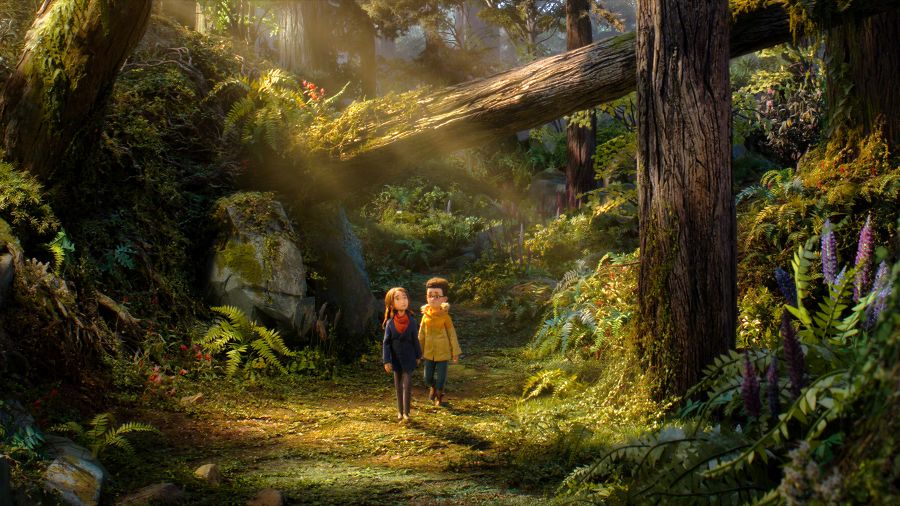
The story starts with 12-year-old Prue, who lives an ordinary life as a Portland high schooler until a murder of crows swoops down and carries her baby brother off into the nearby forest. Reluctantly accepting help from classmate Curtis (Jacob Tremblay) to find him, the pair breach the so-called Impassable Wilderness and find themselves in an enchanted world of talking coyotes and magic ivy, not to mention a particularly charismatic rat (Awkwafina) who aids them on their journey. Before long, Prue is forced to confront how far family will go to protect its own.
Courtesy of LAIKA Studios
And this film doesn’t pull its punches. Although we’re quick to associate anthropomorphised animals with family films, Wildwood earns its PG-13 rating. It may be no Evil Dead, but heads do fly, and bodies do drop. That may narrow the audience, but it pays off, inviting intensely emotional scenes as the Prue and Curtis wrestle with the cost of their involvement in Wildwood’s political struggles.
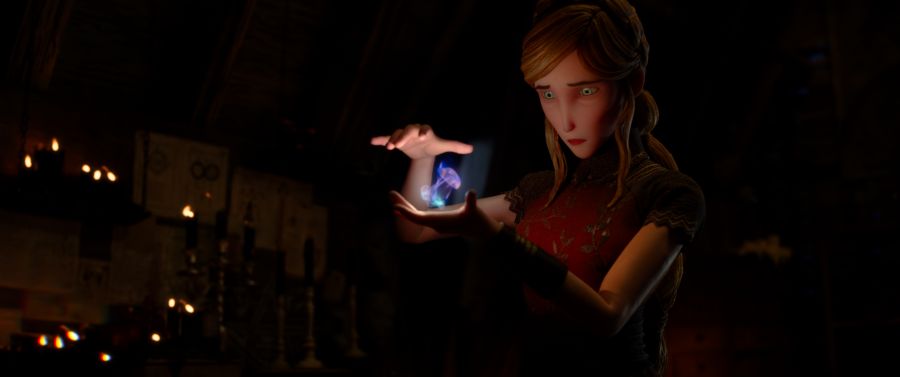
The voice cast breathes even more life into the lovingly animated characters. Carey Mulligan’s throws herself into Alexandra, the film’s big bad. She reigns over the coyote army, an austere military that rules a growing section of Wildwood. Yet, underneath a hardened exterior is a tortured villain driven to extremes by deep, unresolved grief.
Mulligan’s performance is impeccable, but the writing left me wanting more. With loss at the heart of the film, there was an opportunity to explore the parallels between Prue and Alexandra, and how familial bonds can cloud a person’s morals. Instead, Wildwood takes a safer approach, and Alexandra’s motives seem cartoonishly simplified next to Prue’s, as she grapples with coming of age, the guilt of losing her brother, and her connection to the magic ivy.
But Wildwood’s characters are only one piece of the puzzle. Meloy’s secret world of warring animal factions, dark magic, and ancient tribes is beautifully realised. The worldbuilding could have easily detracted from the central story. Yet, the protagonists’ meandering journey through the forest drip-feeds the necessary information without losing sight of the plot. I enjoyed piecing together the history of the Wildwood, even though some minor questions were left unanswered, such as how the coyotes became the villainous faction.
Courtesy of LAIKA Studios
As for the art design, few things could have prepared me for the combination of handcraft and modern technology. Wildwood contains over 2,700 shots and 142,000 3D-printed faces, bringing an incredible sense of realism to such stylised art direction.
That’s not to say the score should have any less attention. Academy Award-winning composer Dario Marianelli’s music swells at just the right moments, elevating the film’s emotional climaxes and character beats. The sound design deserves credit, too: details as small as the slow snap of a rope or the slap of hands on a windowsill are strikingly lifelike, adding texture to every scene.
The music is thoughtfully layered, too. Instrumental, orchestral pieces sit alongside modern licensed tracks, mirroring the unlikely collision of characters from Portland and the Wildwood. The soundtrack also features songs by The Decemberists, the American indie-folk band fronted by Colin Meloy, author of the original book. This full-circle moment is a fitting tribute to its source material.
Travis Knight’s fantasy epic earns its place among stop-motion’s greatest for far more reasons than its record-breaking runtime. Wildwood may be a grand fantasy of lavish landscapes and bombastic battles, but it’s an emotional story that stays with you. While Alexandra could have offered a little more depth, the film’s other puppets are anything but hollow. With Wildwood, Knight makes a persuasive case for stop-motion as one of cinema’s most remarkable art forms.
Wildwood is now showing in UK cinemas.
Are you going to watch Wildwood? Has this review made up your mind? We’d love to know what you think in the comments below.
Banner image: Courtesy of LAIKA Studios