
Creative writing submission from the Rest Less community – submit your entry here.
On August 29th, 2009, my mother died.
It’s strange, as being over seventy myself now, I still think about her as we were when I was a child. I can still see us walking in Battersea Park hand in hand; dancing in the rain at the end of an unbearably hot day on the flat roof, or in the gardens of the Natural History Museum, eating egg sandwiches and playing ‘which flower?’ A game invented by her. She would take us to a spot along the flower beds, give us the names of three flowers, and we had to guess which one was actually the Snapdragon, Japanese Poppy, or Salvia.
She was such a wise, patient mother. Shy, quiet, never comfortable at parties or wanting to be the centre of attention, preferring to be in the background, but with us children, she was confident and safe. Though she worked three jobs to put food on the table, she always made time to read to us, answer our questions and teach us new things. She would invent stories, take us out for long, long walks to Battersea Park or Kensington Gardens and at Christmas, to window-shop in Knightsbridge, the lights twinkling magically around us.
As an adult, when I was at Uni, I would always earmark one day when I would pick her up, and we’d go back to Knightsbridge. On those days, I’d take her for tea on the fourth floor at Harrods in their Georgian restaurant, something which would have been unimaginable to her when we were children, memories of those days when we’d stand with our noses pressed to the glass windows.
Long after qualifying as a teacher, we’d continue that little ritual every summer holiday until, sadly, Alzheimer’s took over, and she no longer answered the telephone or left the flat where I had grown up.
Mummy had a dark, wicked sense of humour which I have inherited and as an adult, she and I could be reduced to hysterics by exchanging just a look and knowing what each other was thinking. In truth, I think that’s what I miss most about her: her laughter, that and her sharp wit and keen intelligence.
Mummy was the daughter of ‘Lady Stanhope’s’ lady’s maid and their chauffeur, having had to give up work once they married. My grandmother always thought she was the ‘lady’, not the maid, but my point is that my grandparents on both sides were ‘in service’, meaning we came from very humble beginnings. Neither of my parents were educated past age 14 and mummy was sent to trade school as a seamstress, graduating at 17 to work as a tailor for Hardy Amies before war broke out, and she married daddy, his family also living in the mews, when he was called up.
Mummy joined the ATS thinking she’d use her tailoring skills for uniforms, but it turned out that she was quickly identified as having a very high IQ and keen intelligence. She trained as a kine-theodolite operator, and then worked, using those skills in intelligence.
Unfortunately, after the war, my father returned having been ‘missing presumed dead’ since before my mum joined up. He spent five years working in mines in Poland and was held in prisoner-of-war camps and survived the Long March, where over 2,000 soldiers died, experiencing terrible hardship.
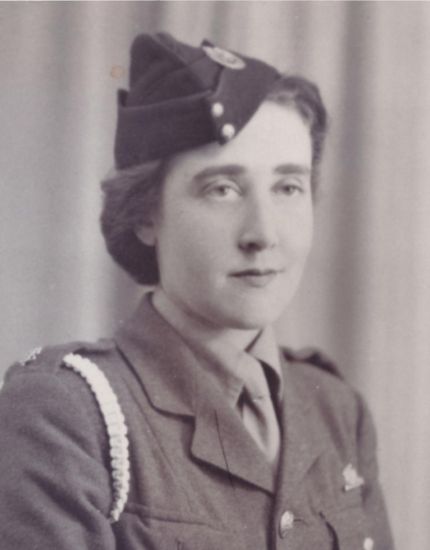
I say unfortunately because my dad had clung to the image of that girl he married, sitting at home waiting for him. Mummy had found herself. She’d changed. Believing he was dead, she had thrown herself into the war and discovered she had a brain; mixed with the officer classes and, unintentionally, reinvented herself. In adulthood, she confessed once when we talked (and we talked often), that she actually thought about killing herself when she knew daddy was coming home. It was my grandmother who took her by the hand and forced her to recognise “her duty- marrying for better or for worse”.
I don’t need to say any more for it to be fairly obvious that theirs was not a happy or successful marriage. Daddy turned out to be a lousy, selfish provider. We were dirt poor, mummy forced to do three jobs to keep the wolf from the door.
That said, we were well fed, all be it often on just bread and potatoes. We were spotlessly clean and beautifully dressed; she would raid the jumble sales in Chelsea and cut up curtains, bed spreads, sheets, evening dresses, and blankets to make our clothes, even our underwear. Most importantly, she was a good mother who always encouraged and supported us. She wasn’t judgemental and, in many ways, was well before her time.
Once over 50, she was persuaded to join Mensa, which she enjoyed, and she would write and send crosswords for The Telegraph and The Times. My dad, though, feeling inferior, enjoyed belittling her, so most of her life she hid her intelligence from everyone, hid who she really was, though she was a fierce reader, card player, and puzzle/crossword solver.
I try never to look backwards, only forwards and frankly, the older you get, there are so many ghosts clamouring for your attention, that if you opened the door, you’d be forever in a state of grief. That said, my mother deserves more than a few moments of my time, hence my piece, however sad and reflective it might make me.
Alzheimer’s was cruel, especially to such an intelligent woman as she was, and she couldn’t understand what was happening to her. Looking back, things started to go wrong/happen when she was in her mid-70s, and got worse when she lost her job because her boss (a really good, decent man) was forced to let her go because of the obvious effects of the disease.
Alzheimer’s blighted her life and took her from us all for a period of over 10 years. By the time she died, the home she’d been in for five years had been telling us almost weekly (for four of those) that she was on her way out and her death was imminent!
I visited every six weeks (I was in London working and she was in a home in Eastbourne). I would go for the day with my Leonberger, and I would read to her and tell her all about my days, but she no longer knew who I was or that I was even there. Frankly, she was unrecognisable, too, having been put on the Liverpool Care Pathway, which my father agreed to. Care! What a joke.
Anyway, I would whisper in her ear every time I left, “Just let go, mummy. I love you, just let go!” And then, on 29th of August, 2009, she finally did.
I will allow myself to be sad and to share that sadness with you again, just for a little while. To tell you that I miss her, miss hearing her chuckle and seeing her sit in her favourite chair peering over the top of her glasses, sewing, or doing some embroidery. I will stroke a recumbent sausage dog absentmindedly for comfort and will take time to remember the child I was, always safe and warm beside her; her warm hand reaching out to take mine.
‘In loving memory.’
Are you feeling creative? We are proud to have a hugely talented community on Rest Less, which is why we’re so excited to open up a section of the site dedicated to showcasing the wonderful and diverse writing of our members. If you have a piece of creative writing that you’d like to share with the Rest Less community – you can do so here.