
Sponsored content

Autumna Logo

When someone you love has a fall or becomes unwell, it’s natural to worry about how their needs might change. A parent who was managing well at home might suddenly need a hand getting dressed, preparing meals, or moving around safely. And while you may want to be there for them, providing that support yourself isn’t always possible.

Winter can bring its own challenges. A bad bout of flu might leave an older relative feeling weak and unsteady, and a fall may mean weeks of recovery at home. If you’re already helping with their care, you may find their needs have grown beyond what you can comfortably manage.

This is where short-term respite care can help. Whether it’s a temporary stay in a care home or additional support at home, it can give your loved one the help they need while they recover. And if you’re usually involved in their day-to-day care, it can give you a chance to take a break while knowing they’re in good hands.

To explore how respite care can support families through the winter months, and what to consider when arranging it, we’ve partnered with Autumna, an independent directory of later-life care across the UK. It’s a free service that lets you search over 25,000 providers, or share your loved one’s needs with its friendly advisors and receive a personalised shortlist of options.

What is respite care?

Respite care is temporary care that can take different forms, from having someone come into your loved one’s home to arranging a short stay in a residential or nursing care home. It’s often used to give family members or unpaid carers a break from caring responsibilities. It can also offer a period of recovery after a fall, illness, or hospital stay.

Depending on their needs, your loved one might need help with washing and dressing, preparing meals, taking medication, or simply moving around safely while their strength returns. Arranging respite care can give them time to recover while taking some of the pressure off you and other family members.

According to Autumna, respite stays in care homes usually last around two to four weeks, although this varies between providers and shorter stays may also be available.

Helping you find the right care home

OpenScore is an independent quality indicator for care homes. Searching for the right one? Try the OpenScore map for an up-to-date picture of care homes near you.
Search the OpenScore map*

Respite care at home or in a care home?

The right choice depends on your loved one’s needs, their home, and what they’d feel most comfortable with.

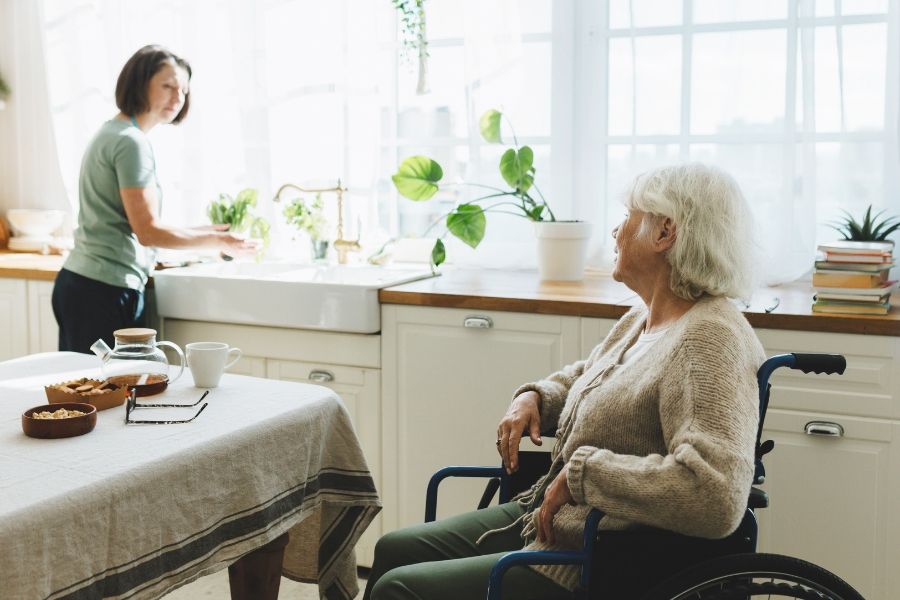
Home care suits people who want to recover in familiar surroundings and keep their routines, particularly if their needs are mainly practical, such as help getting up in the morning, getting ready for bed, or assistance with medication. It can be built around the times of day they need support most, and they can stay close to their belongings, their neighbours, and any pets they might have. For those who need round-the-clock support, but want to stay at home, live-in care is another option, with a carer staying in the home with your loved one.

A care home stay can suit people who need more support throughout the day and night, or whose home isn’t easy to manage while they recover, for example, if the bedroom and bathroom are upstairs. It also means meals, personal care and company are all in one place, and it can be a good option if there’s no one nearby who can check in on them.

Some families combine the two, for example, a short care home stay followed by home care visits once their loved one is back on their feet.

Respite care at home or in a care home

When could respite care help?

Whether respite care is right for your loved one will depend on their health, mobility, home environment, and how much support they already have.

It can be a good fit if a parent is leaving hospital and you’re worried about them managing alone, if they’ll need help after a planned operation, or if you’re providing a lot of care already and need a break yourself.

It’s also worth thinking about how much support you and other family members can realistically provide. If you’re already helping with daily tasks and personal care, an illness or injury might mean your loved one suddenly needs more assistance than you can manage.

To find out more, you might like to read Autumna’s article on Signs It’s Time to Consider Short Term Respite Care.

What support can your loved one receive?

The level of care needed varies from one person to another. Your loved one might only need a bit of help with everyday tasks, while someone with more complex needs may require medication support or specialised nursing care.

Home carers can help with washing, dressing, meals, medication reminders and getting around the house safely, and some can also help with shopping or light housework. Visits can range from a quick check-in to stopping for several hours a day if recovery is slower than expected.

In a care home, support is available around the clock, along with meals, laundry, and activities.

If you’re organising respite care for someone after a fall, operation, or hospital stay, it’s important to ask care providers what support is available to help them rebuild their strength and mobility. Some can arrange physiotherapy or other rehabilitation services, while others can’t, meaning you might need to organise it separately, for example through your loved one’s GP.

There’s also the social side to consider. Recovering at home alone can feel isolating, particularly in winter, when short days and bad weather can make getting out and seeing people more challenging. A care home stay can offer company as well as practical care, with communal spaces and activities if they feel like socialising, and the option to have time to themselves when they don’t.

At home, regular visits from the same carers can provide company and a familiar face, and it’s worth thinking about how friends, family and neighbours can keep in touch, too.

Helping you find the right care home

OpenScore is an independent quality indicator for care homes. Searching for the right one? Try the OpenScore map for an up-to-date picture of care homes near you.


Search the OpenScore map*

How much does respite care cost?

The cost of respite care depends on the level of support needed, how long the stay or service lasts, and the provider you choose.

Care homes usually charge a weekly or daily rate, while home care is often charged by the hour or, for live-in care, by the week, so it’s worth asking what’s included before comparing prices.

You may be able to get help with the cost, for example through your local authority, which can carry out a needs assessment. If you’re an unpaid carer, you can also ask for a carer’s assessment, which may lead to support with breaks. It’s worth asking early, so you know what to expect before you book.

How to find respite care for short-term recovery after a fall or flu

How to find respite care for short-term recovery after a fall or flu

1. Search for care with Autumna

If someone you love needs short-term care, finding the right care can feel like a lot to manage, especially if their needs have changed suddenly after an illness or fall.

Autumna lets you search for care homes and home care services offering respite care and compare information about the care available, so you can find somewhere that suits your loved one’s needs – whether you’re arranging a short stay to help them recover or looking to take a break from caring responsibilities.

2. Think about the level of care your loved one needs

Before comparing care providers, it helps to have a clear idea of the kind of help your loved one is likely to need. Not all homes and services provide the same type of care. Residential homes generally help with day-to-day tasks and personal care, while nursing homes also have qualified nurses on hand for people with more complex health needs. Home care providers can offer anything from short daily visits to live-in support, and the type of tasks carers can help with varies between agencies.

Try to be as specific as you can about what they can manage independently and what they might need extra help with. Can they get in and out of bed safely? Do they use a walking frame or wheelchair? Will they need help with medication, washing, or dressing? Would they need help during the night as well as the day?

It’s important to involve your loved one in these conversations where possible. Ask what matters to them and what would make them feel comfortable. Making sure they have a say in their care and helping them prepare for the change can make the prospect feel much less daunting.

3. Start your search as soon as you can

If you know a loved one will need care after a planned operation, start looking beforehand if you can. Some respite stays and home care arrangements can be planned weeks or months ahead, giving you more time to compare providers, ask questions, and find something they’ll feel comfortable with.

If respite care is needed unexpectedly, you may have to find something more quickly, and not every care home or home care agency has availability at short notice. Demand can also be particularly high in winter, when flu and other illnesses, as well as falls, are more common. So, if you have some warning that respite care might be needed, starting your search early can give you more choice and mean there’s one less thing to worry about later.

That said, if you do need short-term care quickly, it’s worth focusing your search on care homes, which will almost always offer respite care, whereas home care can be trickier. If you’re searching within a one-mile radius and nothing is available, try expanding the search to a two-mile radius. You can search for care homes near you using the OpenScore by Autumna map.

4. Look beyond location

Even though respite care is short-term, you’ll still want your loved one to feel comfortable and well looked after. How you assess it depends on the type of care.

If your loved one has difficulty getting around, ask about lifts and step-free access, as well as whether staff are experienced in caring for people recovering from falls or operations. If you’re struggling to find somewhere suitable close by, consider widening your search. A longer journey for visitors might be worth it if you find a home that can provide the care your loved one needs.

For care homes, staying close to home can be reassuring, especially if it makes it easier for you and other family members to visit, but distance isn’t the only thing to consider. Take a look at the bedrooms (including whether they have en-suite bathrooms), find out what the food is like, whether there are accessible gardens or outdoor spaces, and what activities are on offer.

When it comes to arranging respite care at home, think about whether the home itself will work while they recover. Can they reach the bathroom and bedroom easily? Are there stairs, rugs or poor lighting that could increase the risk of another fall? It’s also worth asking how far the agency’s carers travel, and whether you can have the same small team visit, as familiar faces can make a big difference to how comfortable your loved one feels.

Look beyond location

5. Ask the right questions

Once you’ve found a care home or service that looks promising, it’s best to speak to the team directly. You can often learn much more from a conversation than from a website or brochure – and it gives you the chance to explain your loved one’s needs and find out whether the care provider can meet them.

Start with the basics: are they available for the dates and times you need, is there a minimum stay, and what’s included in the price? Then, find out what happens if things don’t quite go to plan. If your loved one’s recovery takes longer than expected, could the stay or care be extended? And if they’re feeling better sooner than anticipated, could care end early?

Be sure to mention any specific care they need, whether that’s help with medication, mobility, continence, or rehabilitation. It’s always better to check than assume something will be available.

And don’t forget the everyday details, either. For care homes, what should they bring? When can family and friends visit? Can the kitchen cater for their dietary requirements? And can they bring a few familiar belongings to make their room feel more like home?

For home care, how are visits scheduled and what happens if a carer is running late or can’t make it? Will the same carers visit each time? Can visits be increased at short notice? And is there an out-of-hours number for you or your loved one to call?

6. Check independent information

If you need to arrange respite care quickly for a loved one, particularly after an unexpected illness or fall, it can be tempting to go with the first available option. But even when time is short, it’s still worth doing some research.

In England, care homes and home care agencies are regulated and inspected by the Care Quality Commission (CQC), whose inspection reports and ratings can tell you more about how a provider is performing.

It’s also worth looking into the care providers’ facilities and services, and what you can expect to pay. Autumna brings this kind of information about later-life care providers together in one place, so you can search for care homes and home care agencies offering respite care and compare your options. To start searching, you can head over to OpenScore, or contact Autumna’s free advice line on 01892 335 330 for more information.

7. Plan for what happens next

Hopefully, your loved one will leave respite care feeling stronger and more confident, but that doesn’t mean they’ll be ready to manage everything themselves again.

It’s worth thinking about what support they might need once the respite period ends. You or other family members could help with shopping, cooking, or other everyday tasks, or you could arrange home care visits for a while. If they’ve been receiving care at home, you may want to reduce visits gradually rather than stopping all at once, and agree with the provider how this will work.

You might also want to make a few changes around the house. After a fall, for example, adding grab rails and improving lighting can help your loved one feel safer. An occupational therapist can also assess the home and recommend changes; ask the hospital or your local council.

If your loved one had physiotherapy or other rehabilitation, ask whether there are exercises or routines they should continue afterwards. It’s worth reminding your loved one that progress isn’t always a straight line, and there’s nothing wrong with having some extra help until they feel ready to manage on their own again.

And if you usually help care for them, think about what you’ll realistically be able to manage once the respite period ends. Their needs may have changed since their illness or fall, and it’s important to make sure you have the right support in place, too.

Helping you find the right care home

OpenScore is an independent quality indicator for care homes. Searching for the right one? Try the OpenScore map for an up-to-date picture of care homes near you.

Search the OpenScore map*

Final thoughts…

Arranging respite care after a fall or illness can feel like a lot to take on, especially when you’re trying to make decisions quickly. But a little preparation can make a real difference, whether that’s thinking about the level of care your loved one needs, asking the right questions, or checking independent information before you book.

Most importantly, remember that there’s no need to do everything yourself. A short stay or some extra support at home can give your loved one the time and care they need to get back on their feet, and give you the chance to rest, too. And with Autumna, you can search for respite care and compare your options in one place, so you can find the care that feels right for them.

Looking for short-term care for someone you love?