
- Home
- Leisure & Lifestyle
- Learning
- A beginner’s guide to birdwatching
How does Rest Less make money
We make money through advertising and commission from affiliate links, which enable us to offer Rest Less as a free service to our users. The content on this page may use affiliate links, which track traffic from our website to a third party provider and enable us to receive a commission or payment from any traffic we refer.
* Affiliate links on this page have an * next to them. We place enormous importance on our editorial independence and the integrity of our content which means that we will never change how we write about something as a result of an affiliate link.
Birds are almost everywhere if you take the time to notice them – and once you do, they can provide hours of entertainment. Not only can you spend time identifying different species, but you can also spot family dynamics, see chicks grow, and watch as migratory birds fly thousands of miles to other parts of the world throughout the year.
Plus, birdwatching is a fascinating, flexible activity that can encourage mindfulness – and you can get started for free in the comfort of your own home.
Here, we’ll offer 12 tips and tricks for beginners to help you get the most from your first birdwatching experiences.
Contents
-
- 1. Start birdwatching from anywhere
- 2. Get an idea about the sorts of birds that you’re likely to see
- 3. Pick a few things to concentrate on
- 4. Be aware of how the changing seasons affect bird behaviour
- 5. Make use of books, apps and websites
- 6. Join a birdwatching society
- 7. Look for birds at popular feeding times
- 8. Be calm, quiet and patient
- 9. Keep an eye on the sky
- 10. Make your garden more bird-friendly to increase your chance of sightings
- 11. Enhance your experience with a good pair of binoculars
- 12. Check out our webinar from Rest Less member Marina Harkins
1. Start birdwatching from anywhere

You don’t have to venture too far to have a memorable birdwatching experience. You can get started in your garden, local park, or even by sitting at your window. It doesn’t matter whether you live in the quiet countryside or in a busy city, as there’ll still be plenty of birds around to keep you occupied.
Because life is so busy, many of us see birds roaming or flying around and never really think about what they’re up to. Or sometimes we might not notice them at all.
The wonderful thing about birdwatching is that actively looking for birds and paying close attention to their relationships, struggles, and songs can open up a whole new world.
Although birds are almost everywhere, it’s worth being aware of some of the different habitats that different bird species prefer, so you have a good idea of where to look.
For example, shoe larks prefer sandy beaches, sparrows prefer thickets, and woodpeckers prefer trees. The RSPB has published some useful information on upland habitats and the species you can expect to find there.
Five pangolins are killed every minute.
Tens of thousands of pangolins are torn from the wild each year by wildlife trafficking gangs. Your gift could help save them, by equipping rangers with vital gear like boots, tents and rations. Please donate and turn the tide for pangolins.
2. Get an idea about the sort of birds you’re likely to see
Doing some research before you step outside can help give you an idea about the types of birds you’re likely to see in your local area, and what they might be doing. This will largely depend on the time of year.
Migratory birds
While some birds reside in the UK all year round, others make seasonal visits – travelling thousands of miles to and from different parts of the world.
Spring and summer

In March and April, millions of migratory birds reach the UK, having flown thousands of miles to join us for spring and summer.
Most of these birds come from Africa or Southern Europe, where there are more predators, more competition for nesting spots (nesting season runs from March to August), and hotter, drier conditions during the summer. In the UK, we typically have more rainfall in spring and summer, meaning there are more insects for these birds to feast on.
Keep your eyes peeled for sand martins and wheatears who appear from March onwards – and house martins, swallows, swifts, whitethroats, turtle doves, and nightingales from April onwards.
Swallows – who arrive in the UK from South Africa between April and May – travel through France, the Pyrenees, Spain, Morocco, and the Sahara to get here, and cover around 200 miles a day! To find out more about what birds will be arriving this spring, check out this article from the Woodland Trust.
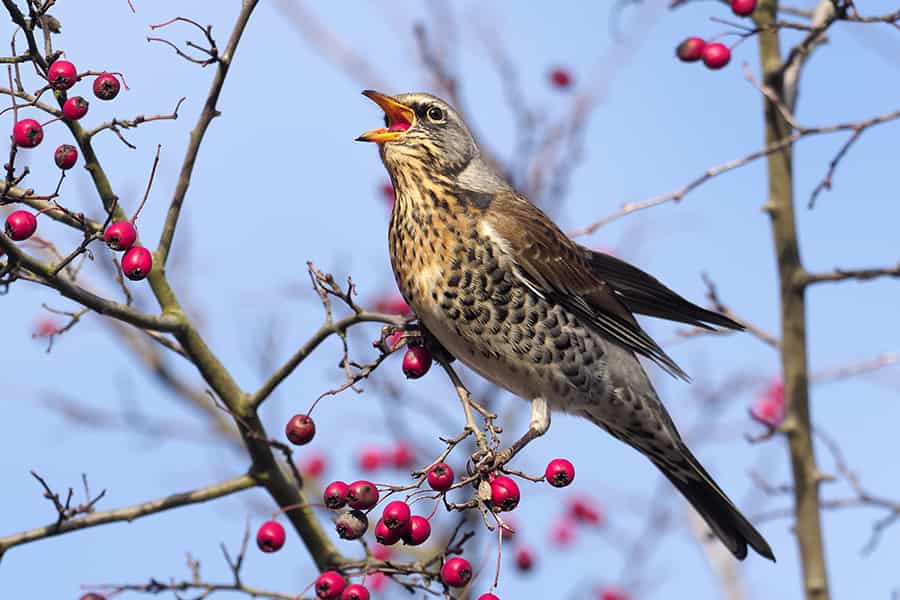
During the spring, we also say goodbye to some of our winter-visiting birds, most of which come from countries with much colder winters, including Russia and Scandinavia. These birds include redwings, fieldfares, and bramblings, as well as some breeds of ducks, geese, swans, and wading birds, including pink-footed geese and whooping swans.
The smallest and rarest swans found here in the UK are Bewick’s swans. They face a 2,500-mile journey back to Siberia around February/March, encountering several challenges along the way, including illegal hunting, predators, and the risk of hitting power lines.
Autumn and winter
In September and October, species of birds – such as osprey and willow warblers – who’ve spent the summer in the UK, will be stocking up on nuts and seeds and preparing to migrate back to warmer continents, including Africa and South America.
Summer visitors tend to leave in stages throughout the autumn, but by the end of October, we can expect nearly all of them to have departed. Then, we can welcome the arrival of our winter visitors…
These incredible birds travel hundreds or thousands of miles to the UK from the Northern and Eastern corners of the world for winter, where it’s milder (believe it or not), and food is easier to find. One of the birds with the longest journeys is the pink-footed goose, which travels around 2,000 miles from Greenland or Iceland to the UK every year.
Some winter-visiting birds you might come across (depending on where you live) include waxwings, fieldfares, and knots.
To find out more, have a look at this article on which birds head to the UK for winter from the RSPB.
Birds that live in the UK all year
Birds that tend to live in the UK year-round, and are commonly spotted in gardens and local parks during the autumn and winter, include…
Wrens

Wrens are brown, dumpy, rounded birds with long legs and toes. They also have remarkably loud singing voices and are commonly heard in the Dawn Chorus (which occurs when birds sing at the start of a new day between March and July).
Often, wrens are easy to spot because they lead a very active lifestyle, especially during the spring when preparations for nesting season are underway. Male wrens will build several nests, and the female will choose which one to use. Once she’s made her selection, she’ll line it with feathers, ready to lay her eggs.
Wren numbers often decline in the winter months, as they find it difficult to tolerate freezing temperatures and a lack of available insects.
Blue tits

Despite their tiny size, blue tits can eat up to 30% of their body weight in food each day, so they’ll spend a lot of time on bird feeders and hunting insects – especially during the colder months, when they need to keep warm.
Because of their stunning blue and yellow colouring, blue tits are often easier to spot in winter, among the bare branches. However, spring is also a busy time for blue tits, and an increase in activity can lead to more sightings.
From mid to late March, a female blue tit will be racing to find a mate, build a nest (all by herself over several weeks), and lay her eggs. She does this all while trying to time the hatching of her eggs with peak food availability, as baby blue tits can eat up to 100 caterpillars a day!
When it comes to breeding, blue tits differ from other garden birds like blackbirds and robins. This is because they’ll typically only raise one brood of chicks each year. A female blue tit will typically lay an egg a day for up to 14 days, which is quite a tall order for such a tiny bird (blue tits weigh just 10g, and each egg weighs 1g!).
Once all eggs are laid, the female blue tit will keep them warm using a featherless patch on her tummy, and will only leave the nest to hunt for food.
Usually, she won’t need to leave too often, as her male partner will deliver food to the nest, which is usually located in a cosy cavity like rot holes in trees. Some blue tits will also nest in garden nesting boxes if they’re cosy enough.
Sparrows

The UK has two types of sparrow: house and tree. Tree sparrows are smaller and have chestnut crowns and black cheek spots. These tend to be found in the Midlands and in Southern and Eastern England.
House sparrows, on the other hand, are dumpier, with grey chests and cheeks and are seen more widely across the UK. If you see a sparrow, chances are it’s a house sparrow, as they’re much more common.
House sparrows are very sociable birds, so they often don’t feel the need to guard their territory. They will, however, fiercely protect the entrance to their nesting place – which is usually undercover, and they’re notorious for nesting in roof spaces.
House sparrows tend to live in close proximity to one another, so you’ll often see or hear several sparrows together in a noisy flock, bathing, singing, or chattering away. It’s also not unusual to see them getting into noisy arguments with their neighbours.
Males might be easier to spot during the spring because they have a large black bib, which they use to attract a mate. They wear their bib like a badge of masculinity, and the bigger it is, the more appealing they’ll be to a female. They’ll then lose this bib around August, during moulting.
Robins

Often appearing on the front of Christmas cards and regularly voted the UK’s favourite bird, robins are considered a British winter icon.
Many people think robins disappear during the summer, but they appear in gardens year-round. Their red breast is just more striking during the colder months when branches are barer, and our parks and gardens are browner.
Not all birds sing year-round, as many only do so to attract a mate during breeding season. But robins sing to act as a warning to other wildlife to keep away from their territory. They’re incredibly territorial and will often fight other robins to the death, defending what’s theirs.
Although small, robins are very broody and will usually start breeding around January. They can then produce up to five broods of chicks a year.
Blackcaps

Blackcaps originate from mainland Europe and used to only visit the UK in summer – but more of them are now staying in the UK all year round.
Males have a black cap, while females have an auburn quiff – and both sexes have pale grey bodies. Male blackcaps often get confused with willow or marsh tits, which also have a black cap.
These black and white birds eat a diet that consists mainly of insects, such as caterpillars and flies; so they tend to thrive in warmer conditions where the availability of these food sources is much greater.
During the winter, following a decline in insects, blackcaps can be found chowing down on ivy berries instead. They’re also regular visitors to gardens with bird feeders that contain sunflower seeds and suet balls – and they aren’t afraid to shoo other birds off of them.
Starlings

Starlings live in the UK all year round, but during winter, there are many more of them because they’re joined by starlings who migrate from Northern Europe.
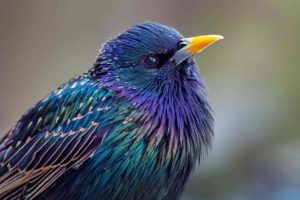
It’s not uncommon for people to confuse starlings and blackbirds, because they’re a similar shape and size, and dark in colour. But upon closer inspection, they have a beautiful purple and green iridescent shimmer to their feathers.
During winter, a starling’s feathers will develop white tips, making them easier to identify. Starlings are usually easy to spot because they’re noisy, sociable birds who tend to feed together, and won’t shy away from a garden bird feeder.
They usually breed during April, and sometimes again in June, with a typical clutch containing between four and seven pale blue-green eggs.
Broods are generally brought up by one male and one female starling, with the female doing most of the incubating and both birds doing the feeding. However, males often have several different active nests at one time, and females are also known to lay their eggs in the nest of another male!
Other common UK garden birds
For more common garden birds that you can see all year round, including wood pigeons, magpies, and jays, have a read of this article from Love The Garden. Or, for more birds that can be easier to spot in winter, including chaffinches, blackbirds, and coal tits, check out this list popular migrant birds to spot from the Woodland Trust.
You might also find it helpful to familiarise yourself with a few common bird songs, as this can help you to identify some of the common birds in your local area.
Have a watch of the video below to see how sounds can differ between species – or check out this bird song identifier from the RSPB.
3. Pick a few things to concentrate on

One of the first things birdwatching beginners want to know is what they should concentrate on once they spot a bird. But as you learn more about different bird species, you’ll find yourself naturally asking questions and instinctively knowing what to look for.
To begin with, it can help to choose a few things to focus on and record your findings on paper, or take a photo if you can do so without disturbing the bird.
Questions to consider during a sighting to try and identify a bird include…
- Where’s the bird located?
- What does it look like (size/colours/patterns/beak/claws)?
- Was it alone or with a flock?
- Was it singing? If so, what did it sound like?
- What was it eating?
- What was it doing/how was it interacting with its surroundings (including with other birds)?
- What time of day did you see it?
The more you’re able to observe about a bird, the greater chance you’ll have of identifying it and learning about its life. Birdwatching can be a little like putting pieces of a puzzle together.
Once you can identify a bird and understand how it interacts with its surroundings, you’ll be given clues about other bird species and wildlife, and your understanding of the bird ecosystem will grow.
When this happens, watching them can become a bit like watching a soap opera, and you might find yourself asking the question, “How did I never notice any of this before?”
Even the common pigeon can have its fair share of drama! Have a watch of the video below, which shows a wood pigeon and a feral pigeon fighting over scraps in a park, while a mouse looks on.
4. Be aware of how the changing seasons affect bird behaviour

While the types of birds seen in your local area can differ depending on the time of year, bird behaviour will also be markedly different between seasons.
During spring and summer, birds will be busy mating, preparing nests, laying eggs, and raising chicks (nesting season officially runs from February to August).
On spring and summer mornings, you’ll also be more likely to hear loud, persistent bird songs early in the morning (the Dawn Chorus) – and you’ll typically see more birds hunting for insects during the warmer months when insect numbers peak.
In August, you might also notice fewer birds than usual. Often, this is because they’re moulting: a process where a bird loses all its old feathers and grows new, strong, warm feathers.
The moulting process happens very gradually so that birds aren’t left with big bald patches, but it requires a lot of energy and can be more difficult for them to fly during this time. For this reason, they spend much of August hiding in vegetation to avoid predators.
For more information, check out this article on the spring and summer highlights in the world of birds from the Natural History Museum.
During autumn and winter, you might notice flocks of birds performing synchronised aerial acrobatics known as murmurations. These usually take place between November and February.
Throughout the colder months, more birds will also visit garden bird feeders in an attempt to stock up on food and stay warm, especially since there’s a decline in insects during this time.
The Natural History Museum has compiled some more autumn and winter bird highlights.
5. Make use of books, apps, and websites

Once you start observing birds and taking notes, you can start identifying them using books, apps, and websites.
If you have a good idea what a bird looks or sounds like, you stand a good chance of being able to put a name to that feathered friend.
British Birds: A photographic guide to every common species and the RSPB Pocket Guide to British Birds are popular books that can help you decide which bird species you saw.
These books include detailed descriptions and images of birds you might come across in the UK, as well as information about their habitat and other birds that they’re commonly confused with. The latter book is also pocket-sized, making it convenient to carry when you’re out and about.
There are also some great apps out there that’ll allow you to ID birds by taking a photo of them or recording their bird song.
An example of a highly rated bird-identifier app is Merlin ID, which can help identify birds across six continents for free by answering basic questions or uploading a photo.
Alternatively, if you don’t mind paying a small fee, ChirpoMatic is another popular option for identifying British birds by their song and is available on iOS and Android devices.
As well as books and smartphone apps, there’s a wealth of interesting and helpful information about birdwatching online.
The Royal Society for the Protection of Birds (RSPB) is a reliable source to visit if you’re ever in doubt about anything bird-related. They have a handy tool on their website that can help you quickly and easily identify birds based on what they look like and what they’re doing – you can find this here.
It’s also worth checking out this RSPB page on reporting bird sightings, as it has details on where to report sightings of all kinds of wildlife, and how to get involved in surveys which can help determine population numbers and contribute towards bird conservation.
If you’re wondering which birds are considered rare in the UK and where they’ve been spotted so far, have a read of this Guide to Britain’s rarest birds from Countryfile. Choughs, nightingales, and white-tailed eagles are just a few that you’d be lucky to see.
6. Join a birdwatching society

Depending on how involved in birdwatching you become, you might want to join a birdwatching society, either internationally, nationally, or locally.
These can be particularly helpful if you’re interested in bird conservation, as you’ll be able to keep up to date with the latest bird facts, figures, and news – as well as get tips on how you can do your bit to help protect and support bird wildlife.
You’ll also be able to connect with other birdwatchers and enthusiasts (sometimes referred to as ‘twitchers’), and share tips and experiences – they’re a universally friendly bunch!
The leading international bird society is BirdLife International, while examples of national birdwatching societies include the RSPB, the British Trust for Ornithology (BTO), and the Wildfowl & Wetlands Trust.
Many people say they find it helpful to join a national or international society alongside a local one – or all three.
Birds don’t understand borders and fly around freely (with many doing cross-continental travel twice a year). So while looking out for and helping protect birds in your local area is invaluable, it can also be useful to learn what efforts are happening at a larger scale to protect birds across the UK and beyond.
Five pangolins are killed every minute.
Tens of thousands of pangolins are torn from the wild each year by wildlife trafficking gangs. Your gift could help save them, by equipping rangers with vital gear like boots, tents and rations. Please donate and turn the tide for pangolins.
7. Look for birds at popular feeding times

Birds will feed at different times. This largely depends on whether they’re alone or travelling in a flock, the time of year, and their diet. It can help to be aware of when and how birds feed if you want to maximise your birdwatching opportunities.
The saying, “the early bird catches the worm!” is thought to be most accurate for single birds – rather than those who travel in flocks – who’re looking to top up energy stores lost the night before, or for birds (such as blackbirds) whose main food sources are worms and insects.
Many birds will hunt for worms and other insects when the sun rises. This is because the sun heats the insects in the ground, making it easier to forage for them.
You might also be familiar with the 5am wake-up call of birds singing (the Dawn Chorus), especially during the spring and summer months.
There’s still limited research about why the Dawn Chorus happens, but a common theory is that birds are singing to claim their territory and protect their breakfast before the morning rush when the sun starts to rise. It’s believed that the better and louder they sing at a challenging time of day, like feeding time, the stronger and more difficult they’ll be to compete with for food.
Whether or not this theory is correct, it’s true to say that there’s definitely an increase in bird activity early in the morning – making it a good time to sit and watch.
If you aren’t a morning person and don’t fancy getting up at the crack of dawn to do some birdwatching, you’ll be glad to know there’s also a peak in activity late in the evening. This is especially true during autumn and winter, as birds stock up on food (many from garden feeders) to help them through the night.
The other, but less common, time for some birds to increase their activity as they search for food is in the middle of the day. It’s thought that smaller, less dominant birds might visit feeders at this time because the more dominant species exclude them early in the morning and late in the evening.
8. Be calm, quiet, and patient

If you want to increase your chances of seeing as many different bird species as possible, it’s worth paying attention to how you approach and behave around them.
Birds are easily startled by loud noises or sudden movements, and will often fly away if they feel threatened – so it’s best to stay as quiet as possible and move slowly if you want them to stick around.
This is where patience is key – it’s much better to wait for a robin to hop into your view than to try and get close to it. Birds have much better hearing than we do, so even the smallest noise can give you away.
Always avoid wearing bright colours, too – although birds are colour-blind, anything that’s too bright will create an obvious contrast with your surroundings, and enhance the appearance of movement.
To help protect birds in their natural habitats, some of the leading bird organisations, magazines, and websites have published the Birdwatchers’ Code. This is a list of five things for birdwatchers to remember to put the best interests of the birds first and have respect for other people in the area.
In brief, these are: avoid getting too close to birds, be an ambassador for birdwatching, don’t repeatedly mimic bird songs (as this can divert birds from caring for their young), stick to countryside rules, and think about the interests of wildlife and local people before passing on news of a rare bird.
You can find the full Birdwatchers’ Code on RSPB’s website.
9. Keep an eye on the sky

Many birdwatchers become very focused on looking for birds in trees, thickets, and the ground. But don’t forget to keep an eye on the sky, where you might see flocks of birds travelling together.
During the winter months, many smaller birds such as starlings and knots will flock together for protection and make their food search easier.
Some flocks fly silently, while others can be louder – and their noise, or lack of, can often indicate what sort of birds they might be. As can their flying pattern.
During March, April, September, and October, our skies will generally be busier than ever, with huge flocks of birds migrating to and from various countries.
To see how hundreds of birds can flock together in synchronisation, have a watch of the video below. Travel journalist Dylan Winter was sailing around the UK in an 18-foot boat when he captured the footage.
To find out more about why birds flock, check out this murmurations article from WWT.
10. Make your garden more bird-friendly to increase your chance of sightings

If you’re lucky enough to have a garden and you want to increase your chances of bird sightings, consider making your garden more bird-friendly.
The best way to attract more birds to your garden is to install a bird feeder, a nest box, and/or a birdbath in your garden.
Bird Feeders
In the warmer months, birds need high-protein foods, especially when they’re moulting. These foods can include things like black sunflower seeds and mealworms – and it’s best to avoid leaving out anything that could go rancid.
For more tips, have a read of how to best feed birds in spring and summer from the RSPB.
In autumn and winter, many birds will use garden feeders to stock up on food before a long flight or help them stay warm during cold nights. They’ll be looking for food with higher fat content, so you can help by filling your bird feeder with things like nyjer seeds, sunflower seeds, and suet balls.
The Woodland Trust offers some helpful tips on what to feed birds during the winter. You can also pick up bird feeders at reasonable prices on Amazon.
Birdbaths
Birds will also benefit from a birdbath year-round. Although birds might use a water bath to cool down during the warmer months, the main function of bathing year-round is to clean and maintain their feathers. They also drink the water.
In colder conditions, birds (believe it or not) will also bathe to keep warm. A quick dip will fluff up their feathers, which can help to insulate them against the cold.
You can pick up a birdbath at your local garden centre, or use a shallow container you already have in the house that doesn’t get much use – this article on feeding birds near you from the RSPB will explain more about which sorts of containers are suitable. Then, just be sure to keep it clean and topped up.
Nest boxes
If you want to give birds a helping hand during the breeding season, consider providing them with a nest box in your garden.
A nest box should always be placed somewhere safe, where birds will not be disturbed, as some birds (like robins) that have recently laid eggs might abandon their nest if they see that it’s been tampered with.
Even after breeding season is over, many birds will still use nest boxes to roost (rest) and keep warm.
You can purchase nest boxes for just a few pounds on Amazon. Although if you’re feeling adventurous, you could attempt to make your own. The RSPB have created a step-by-step guide to help you build your own bird box out of wood and screws. This guide also has tips on choosing a location for your bird box.
Cameras
If you want to be nosy and keep up to date with what your garden visitors are up to when they think no one’s watching, you could consider installing a small camera in your bird box, or somewhere near your bird feeder. Again, you can pick these up at a range of prices on Amazon.
These mini cameras are a fantastic way to get closer to nature, without disrupting or disturbing birds in their natural habitat. The video below will show you an example of some nest box footage – watch as a blue tit uses the box to roost overnight during the winter.
Helping provide natural habitats for birds in your garden
It’s also worth thinking about how you could provide a range of natural habitats for birds in your garden, such as hedges, trees, and shrubs. Avoiding pruning these too harshly before the winter will mean that birds visiting your garden will have somewhere to stay warm and take shelter.
To learn more, Gardeners’ World has more information on habitats for garden birds.
11. Enhance your experience with a good pair of binoculars

While you can enjoy birdwatching without any equipment, it’s still worth having a look at a few binoculars, as they could enhance your experience.
These days, a decent pair of lightweight binoculars won’t break the bank and can be easily carried around.
When it comes to choosing them, it’s important to remember that the most powerful ones aren’t always the best for birdwatching. Yes, they might have the highest magnification, but this will often mean you need to use a tripod to get a steady view, which isn’t always practical for seeing a bird quickly before it flies away.
If you want something to carry with you and use at a moment’s notice, experts recommend a pair of binoculars with 8x or 10x magnification. The RSPB has written a handy guide on the best binoculars for birdwatching, which covers magnification, performance, and budget ranges.
If you’re looking to browse, Amazon has a wide selection of binoculars at varying prices.
You might also want to consider investing in a digital camera with a zoom lens at some stage in your birdwatching journey. While these aren’t cheap, they allow you to capture amazing shots, which can be hugely satisfying.
This birdwatching lens guide from Digital Camera World will talk you through some of the best options available. The Canon RF 800mm lens comes at the top of the list and is available on Amazon.
12. Check out our webinar lead by Rest Less member Marina Harkins
Rest Less member Marina Harkins hosted a brilliant webinar on ‘An introduction to birds of the UK’, which you can watch below. She shows us how to look beyond the obvious and lays the foundations for us to begin to appreciate and learn about birds on a deeper level.
We also had a chat with experienced birdwatcher Bob Wyatt from North London…
Bob has been a birdwatcher for two decades and has seen over 156 bird species. Sharing his experience of birdwatching so far, he says…
“Engaging with nature is really good for the mind and body. Just going out in the morning, walking around the park, and stopping to look at things is a very enriching experience.
“On the days I don’t get out there and interact with nature, I really feel it. I’d recommend birdwatching to anyone who’s in need of some fresh air, a bit of a routine – or wants to do something mindful.
“I’ve had some really exciting moments as a birdwatcher. Like last week, we had a crane fly over. It had a couple of rings on its leg, and we worked out that it must have come from one of three countries, based on the colour of the rings. Either Finland, Poland, or Russia. So, that bird has flown all the way across the North Sea. That was brilliant – we watched it for about five minutes, and it came right overhead.
“Birdwatching has also encouraged me to travel all over the world – I’ve travelled far more widely than I ever would have done. I’ve been to some very exotic parts of the world, many of which are off the beaten track and teaming with wildlife.”
“Absolutely anyone can get into birdwatching, and it’s something that seems to be growing in popularity and becoming more popular in mainstream media.
“I would recommend having a look at David Lindo, who explores the art of urban birdwatching, and Dr Mya-Rose Craig (also known as Bird Girl), whose interest in birds first developed as a young child. Now she’s a keen blogger.”
Five pangolins are killed every minute.
Tens of thousands of pangolins are torn from the wild each year by wildlife trafficking gangs. Your gift could help save them, by equipping rangers with vital gear like boots, tents and rations. Please donate and turn the tide for pangolins.
Final thoughts...
There are endless benefits of grasping a deeper appreciation for nature. Many of us can find sanctuary in our gardens, local parks, and even gazing out of our windows.
Birdwatching is an activity that’s on almost all of our doorsteps and can be unlocked by simply looking a little more closely.
While you can invest in binoculars, books, and bird feeders to enhance your experience, it can still be relaxing and enjoyable to simply watch them go about their daily lives.
If you’re looking for further inspiration, you might like to read our articles: 8 of the best birdwatching destinations around the world, and 32 ways to connect with nature and feel inspired.
Do you enjoy birdwatching? Would you be keen to connect with other birdwatchers? We’d love to hear your experiences in the comments below.
Elise Christian is Lifestyle Editor at Rest Less. She joined Rest Less in 2018 after achieving a first class Master’s Degree in Journalism from the University of Kent, and writes across a range of lifestyle topics such as mental health, home and garden, and fashion and beauty. Prior to this, she worked as a freelance writer for small businesses and also spent a year training to be a midwife. Elise spends her spare time going to the gym, reading trashy romance novels, and hanging out with loved ones. She also loves animals, and has a fascination with sharks and tornadoes.
* Links with an * by them are affiliate links which help Rest Less stay free to use as they can result in a payment or benefit to us. You can read more on how we make money here.

Start your new chapter abroad with this free retirement guide
With Your Overseas Home, you will receive honest guidance, expert advice and a helping hand every step of the way.
Download the free guide to find out how to cut everyday living costs, get tax, pension and visa checklists, and discover top tips from the expat community.
Join the discussion
Read our full commenting terms and guidelines