
- Home
- Health
- Healthy Mind
- 10 positive news stories from 2026 so far
How does Rest Less make money
We make money through advertising and commission from affiliate links, which enable us to offer Rest Less as a free service to our users. The content on this page may use affiliate links, which track traffic from our website to a third party provider and enable us to receive a commission or payment from any traffic we refer.
* Affiliate links on this page have an * next to them. We place enormous importance on our editorial independence and the integrity of our content which means that we will never change how we write about something as a result of an affiliate link.
If you’re struggling with the weight of what 2026 has brought so far, you’re in good company. With tragic news stories dominating headlines around the world, it can feel difficult to see the light. However, amid the darkness, there are always glimmers of hope; good news stories that remind us of the positive power of humanity or can simply make us smile.
So if you’re looking to inject some colour and comfort into your day, we hope you enjoy these 10 positive news stories from 2026 so far.
1. Artemis II travelled beyond the moon
On Monday, 6th April, at 13:56 EDT, four astronauts aboard NASA’s Artemis II mission travelled further from Earth than any humans (252,760 miles), surpassing a record that’s stood for 55 years.
As the spacecraft, Orion, passed behind the Moon, contact with Earth was lost for around 40 minutes (expected, but eerie nonetheless!). And from that vantage point, the crew witnessed an extraordinary total solar eclipse. When communication was restored, astronaut Christina Koch said, “It’s so great to hear from Earth again.”
But distance wasn’t Artemis II’s only historic first. Koch became the first woman, CSA astronaut Jeremy Hansen the first non-American, and Victor Glover the first Black person to travel to the vicinity of the Moon.
Artemis II was never about landing. It was a crewed test flight, designed to verify that Orion’s systems perform as they should with people on board, laying the groundwork for a lunar landing to follow.
2. A cow called Veronika wowed scientists with her rare ability to use tools
Veronika is a cow living in a mountain village in the Austrian countryside – and earlier this year, she astonished scientists by giving herself a good scratch using sticks, rakes, and brooms.
After years of perfecting the art, word of her behaviour reached animal intelligence specialists in Vienna. What stunned them most was her sophistication: Veronika uses both ends of the same object for different purposes. For her back or tougher areas, she favours the bristle end of a broom; for her underbelly or more sensitive spots, the handle.
Dr Antonio Osuna-Mascaro of the University of Veterinary Medicine in Vienna told the BBC, “We were not expecting cows to be able to use tools, and we were not expecting a cow to use a tool as a multipurpose tool. Until now, this has only been consistently reported in chimpanzees.”
Although humans have lived alongside cows for over 10,000 years, this appears to be the first time scientists have documented a cow using tools, suggesting they may be considerably smarter than we give them credit for.
Veronika’s owner, organic farmer Witgar Wiegele, perhaps put it best: “Save the nature, then you protect yourself. Nature diversity is the key to survive on this planet.”
3. Scientists have found a way to regrow knee cartilage
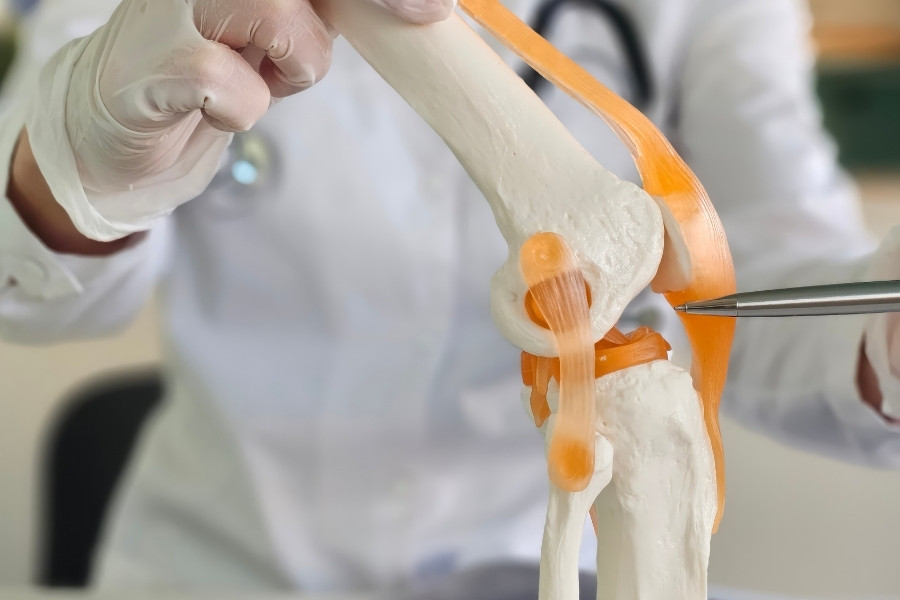
When knee cartilage deteriorates beyond repair, artificial replacement becomes necessary to restore the smooth, cushioned surface that allows pain-free movement. However, a landmark study from Stanford Medicine may one day make such replacements unnecessary.
Scientists discovered that blocking a protein called 15-PGDH – which increases naturally as we age and actively suppresses tissue repair – can reverse cartilage loss in ageing joints and even prevent arthritis from developing after injury. Remarkably, human cartilage samples taken from patients already undergoing knee replacement surgery began regenerating new, functional tissue when exposed to the treatment.
If the approach proves successful in human trials, it could reduce or even eliminate the need for knee and hip replacement surgery, making a world of difference to the millions of adults affected by osteoarthritis globally.
4. Three-quarters of cancer patients diagnosed from 2035 will be cancer-free or living well after 5 years
The UK government has launched a National Cancer Plan committing to 75% of cancer patients being cancer-free or living well five years after diagnosis by 2035. This is the fastest improvement in outcomes this century, projected to save an additional 320,000 lives. The NHS has also pledged to meet all cancer waiting time targets by 2029, reversing a decade of missed standards.
Key to the plan is a £2.3 billion investment. This will deliver millions of additional tests, a huge rollout of robot-assisted surgery – rising from 70,000 to half a million procedures by 2035 – and a new AI pilot to detect hard-to-reach lung cancers earlier.
The government is also addressing broader pressures, including support for the 830,000 working-age cancer patients in employment. They’re also continuing to tackle the root causes of cancer through measures such as a generational smoking ban and restrictions on junk food advertising before 9pm.
5. Scotland has committed to building brick homes for birds
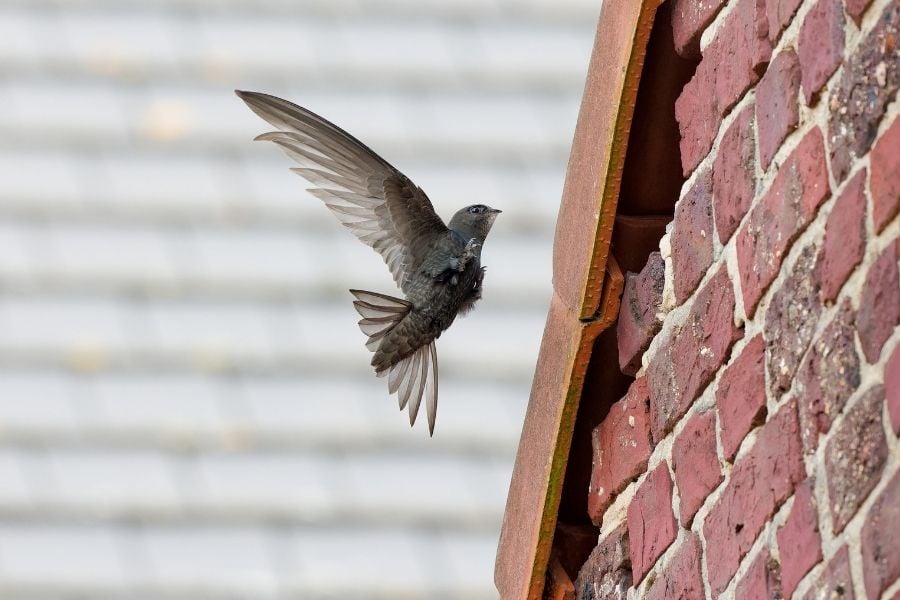
Scotland has become the first country to make it law that every new house built in the country has a swift brick in it – a small but significant step for a bird in serious decline.
Swift bricks may look like normal bricks, but each one will have a hollow interior designed for nesting. This legislation comes after the RSPB (Royal Society for the Protection of Birds) reported an alarming 66% fall in the swift population over the last 25 years, which conservationists have put down to a lack of places to nest and bugs to eat.
As creatures of habit, swifts favour small, snug nests tucked under rooflines and will return to the same spot year after year. The new rules are designed to make finding that spot a little easier and to give the population a chance to recover.
Swifts are, in many ways, remarkable birds, spending so much time in the air that they can eat, sleep, and bathe whilst flying, and reach top speeds of 69mph. Each year, they also travel around 14,000 miles, seeking warmth as the seasons change, spending summer in the UK and winter in Africa.
6. Spogomi is going global
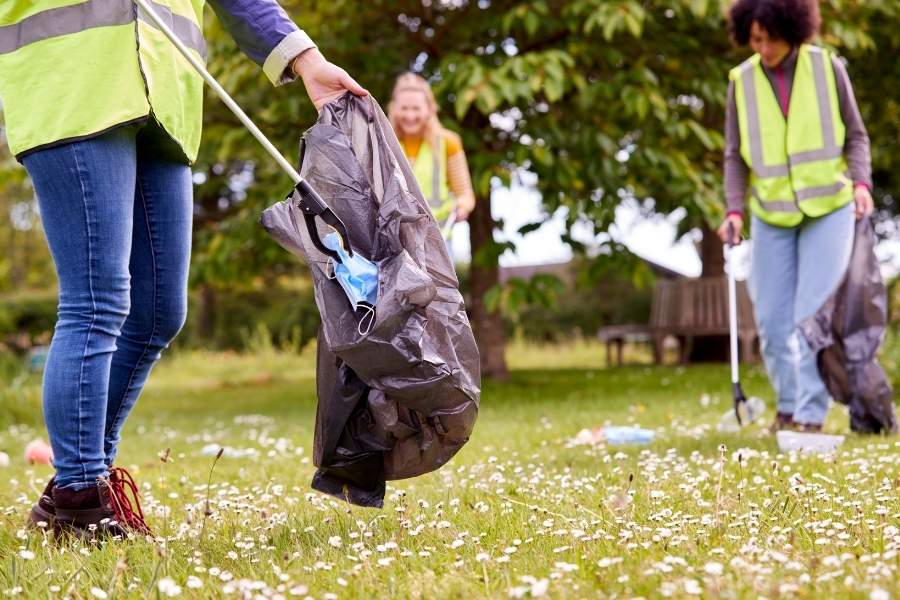
This spring, students from Loughborough University took part in a litter-picking competition called SpoGomi, as part of a series of sustainability events aimed at restoring nature and cleaning up the local area.
SpoGomi blends the word “sport” with “gomi“, the Japanese word for litter. Born in Japan in 2008, it’s grown steadily in popularity, turning an otherwise mundane activity into something competitive and fun.
Teams from Loughborough sports clubs, including hockey, gymnastics, and lifesaving, raced to collect and sort litter across five categories as quickly as possible. Hauls ranged from discarded clothing to abandoned shopping trolleys, with each team’s collection weighed and scored accordingly.
The winning team gathered over 28kg of rubbish. But the real headline was the collective effort: 281kg cleared from Loughborough town in a single afternoon.
7. Scientists discovered a coral giant in the Great Barrier Reef
Jan Pope has been diving the Great Barrier Reef for 35 years, but this year she came across something quite unlike anything she’d seen before.
A few hours offshore from Cairns, as part of a citizen science project run by Citizens of the Reef, Jan discovered a giant Pavona clavus coral colony spanning 3,973 square metres – roughly half the size of a football pitch – believed to be one of the largest ever documented. She described it to The Guardian as “a very surreal underwater landscape. It looks like a rolling meadow.”
Pavona clavus is a stony coral that grows exceptionally slowly, adding just a centimetre or two each year. A colony this size would have been quietly growing for centuries, persisting through storms, warming events, and human interference. That it has survived conditions that have killed off countless surrounding corals makes it a potentially valuable subject for scientists trying to understand what gives certain corals their resilience.
At a time when the Great Barrier Reef is facing an existential crisis, due to mass bleaching events, climate change, and degraded water quality from agricultural run-off, the discovery offers a rare moment of hope and wonder.
8. Healthcare workers are braving heat, dust, and elephants to protect young girls against cancer
In the rural Zimbabwean districts of Kariba and Hurungwe, community health workers known as “vaccine cyclists” are riding bicycles from home to home to deliver HPV vaccinations to girls, tackling disproportionately low coverage in remote areas. The work is hugely important yet gruelling; Kariba is one of Zimbabwe’s hottest and most arid districts, and hazards range from thorn punctures to encounters with wild elephants.
Zimbabwe’s overall HPV vaccine coverage sits at 55%, with rural areas falling well below that. This is a serious concern given that 66% of Zimbabwean women diagnosed with cervical cancer are expected to die from the disease – a rate far higher than in wealthier countries with stronger screening programmes.
The bikes were provided by Zimbabwe’s Ministry of Health with support from UNICEF and the Clinton Health Access Initiative. So far, the programme has helped immunise more than 22,000 girls in Mashonaland West province.
Among them are two orphaned girls in the care of Kurehwa Majaivhana, a 65-year-old grandmother in Hurungwe, whose son passed away and left the children with her. She told Gavi, “I’m old, frail and cannot make it to hospital for HPV screening for these kids under my care. We don’t have the taxi fare. When the cyclists reached my home, immunised the girls – I felt happy. It was like their late father blessing them, staring down from heaven. The VHWs are our guardian angels.”
9. A video of an over 50s men’s fitness class in a Bradford mosque has gone viral
A men’s Pilates class for over 50s in Bradford has received more than two million views on TikTok.
Every Thursday, Jamia Usmania Mosque hosts the one-hour session. Mohammed Ilyas, the mosque’s secretary, told the BBC that the aim is to improve the health and wellbeing of older men, with plans to introduce sessions for women in the future.
“It’s an opportunity for men to come together, have a laugh,” he said, “[…] We’ve seen the classes grow from seven to 20 to 25, so we’re having to limit some of the classes because the numbers are growing day by day. […] “Mosques are mainly used for prayers and we want to be more inclusive and we want the mosque to be a community hub.”
For some attendees, the benefits have gone beyond fitness. Abid Khan, 62, began coming after a heart transplant. “It’s helped me a lot both physically and emotionally,” he told the BBC. “I’ve met new people and some are now my best friends.”
Since the video went viral, the mosque has reportedly been contacted by people from around the world wanting to know how to set up something similar at their own mosques.
10. Copenhagen has started a “human library” where you can check out people instead of books
Who said you could only borrow books from a library? Since 2020, a Human Library Reading Garden in Copenhagen has offered something rather different: the chance to borrow a person instead.
The concept was founded by Ronni Abergel, and describes itself as “a safe place to explore mankind, be courageous and ask questions that can help you challenge the stereotypes and better understand the diversity in our community”. Librarians facilitate and supervise every conversation, and all readers must agree to a set of rules before their first loan.
On arrival, borrowers choose from a list of topics. A librarian then makes the introduction, and they have 30 minutes to ask whatever they like – which we think is pretty cool!
Final thoughts…
While the world can feel heavy, things become more manageable when we focus on what we can control, including, where we can, seeking out the positive.
Though it’s important to stay informed, the way we consume news can make a big difference to how we move through our day. You can read more on this in our article: 8 ways to manage your news consumption.
Did any of these positive news stories make you smile? We’d love to hear from you in the comments below!
Elise Christian is Lifestyle Editor at Rest Less. She joined Rest Less in 2018 after achieving a first class Master’s Degree in Journalism from the University of Kent, and writes across a range of lifestyle topics such as mental health, home and garden, and fashion and beauty. Prior to this, she worked as a freelance writer for small businesses and also spent a year training to be a midwife. Elise spends her spare time going to the gym, reading trashy romance novels, and hanging out with loved ones. She also loves animals, and has a fascination with sharks and tornadoes.
* Links with an * by them are affiliate links which help Rest Less stay free to use as they can result in a payment or benefit to us. You can read more on how we make money here.
Join the discussion
Read our full commenting terms and guidelines