
- Home
- Health
- Healthy Mind
- 9 wonderful wildlife walks in the UK
How does Rest Less make money
We make money through advertising and commission from affiliate links, which enable us to offer Rest Less as a free service to our users. The content on this page may use affiliate links, which track traffic from our website to a third party provider and enable us to receive a commission or payment from any traffic we refer.
* Affiliate links on this page have an * next to them. We place enormous importance on our editorial independence and the integrity of our content which means that we will never change how we write about something as a result of an affiliate link.
From glimpsing red deer rutting in a Highland Glen to spotting bottlenose dolphins leaping from Cornish seas, the UK offers some extraordinary wildlife experiences.
Plus, many of these fascinating scenes are accessible on foot via well-trodden walking trails.
Below, we’ve put together a list of nine wonderful wildlife walks in the UK. These range from long coastal trails to short, wheelchair-accessible forest paths. So, whatever your ability, there’s hopefully something to inspire your next rambling adventure.
1. Spot ospreys at Rutland Water, England
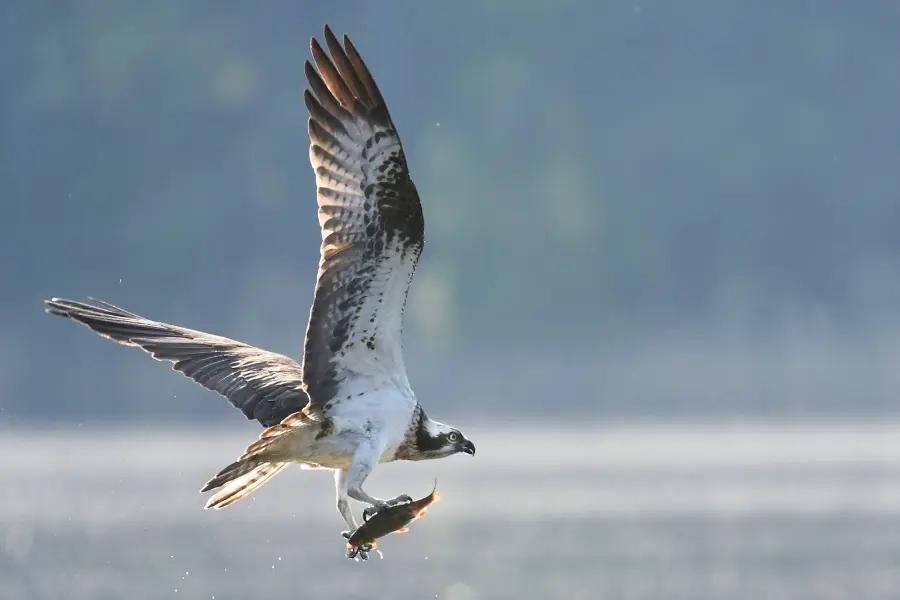
For many birdwatchers, spotting an osprey is a true bucket-list experience. Once a familiar sight on our shores, osprey numbers declined throughout the 18th and 19th centuries due to human persecution and habitat loss, eventually leading to their extinction as a breeding bird in England and Scotland.
However, thanks to dedicated reintroduction efforts, ospreys have made a remarkable comeback, and there are now hundreds of breeding pairs across the UK.
A great place to see these magnificent raptors is the scenic Rutland Water in the East Midlands, where visitors can explore various trails around the reservoir – from short, wheelchair accessible routes to a lengthy, 22.1-mile shoreside circuit.
To see ospreys at Rutland Water, visit between mid-March and the end of summer, before they migrate to sub-Saharan Africa in autumn. Chances are especially good near the Lyndon Visitor Centre, where a pair nests. You can also see them at home via this live stream.
2. Wander with deer at Richmond Park, England
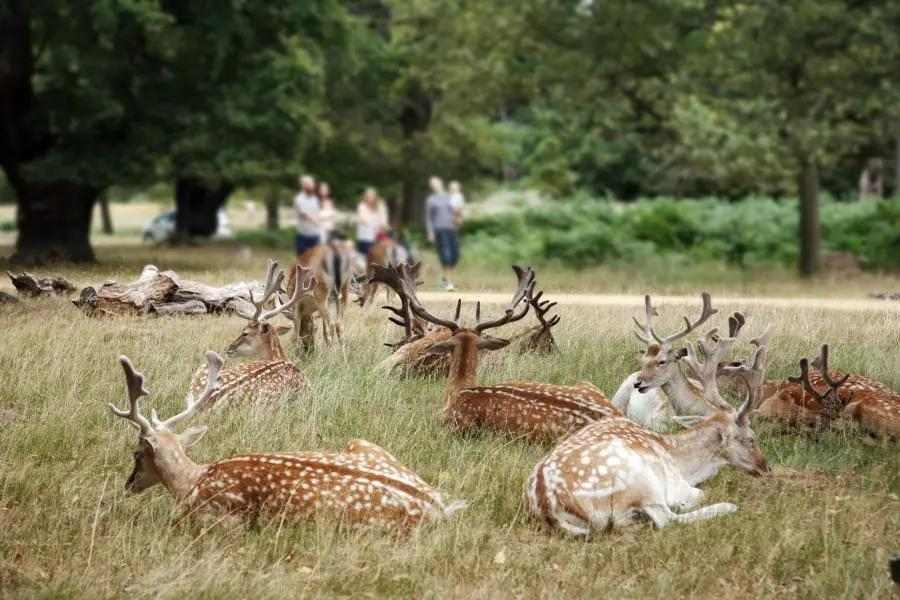
For those living in London, local wildlife-spotting opportunities are few and far between. But, luckily, Richmond Park’s undulating hills, sprawling grasslands, and ancient woods have been home to hundreds of free-roaming red and fallow deer since the 17th century.
Strolling through this bucolic Royal Park can sometimes feel like being miles away from civilisation, making it easy to forget you’re a stone’s throw from the hubbub of Central London. While there are plenty of walking trails to choose from, the Tamsin Trail, a 7.3-mile loop around the perimeter, is popular.
The best time for wildlife spotters to visit Richmond Park is in the early morning or late evening. Not only are the deer more active and the crowds thinner, but the scenery also comes alive, with gooey-golden sunlight filtering through the trees, illuminating the grasslands in a fiery glow.
3. Spy red squirrels at Ledmore and Migdale, Scotland
Ledmore and Migdale is an enchanting swathe of Highland wilderness with diverse landscapes. Its network of walking trails takes visitors along gorgeous loch shores, over unique bogland, and through one of the most northerly oak woods in the UK. Keep an eye out for rare flora, including rock cinquefoil and creeping lady’s tresses orchid.
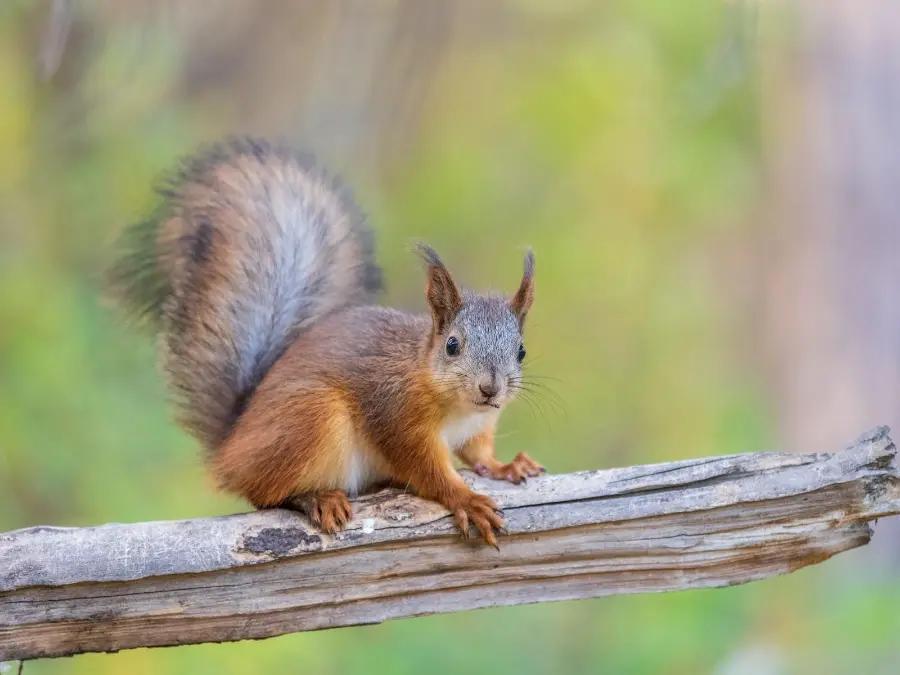
For birdwatchers, Ledmore and Migdale is home to many classic and rare Scottish species, such as osprey, capercaillie, buzzard, hen harrier, and black grouse strutting around in the undergrowth. You may also see deer, otters, pine martens, Scottish wildcats, and red squirrels, which were reintroduced to the area in 2019.
For an easy stroll with wide paths, take the straight route along the banks of Loch Migdale. Or, if you’re looking for more of a challenge, the 4.5-mile A’Chraisg trail winds up through the woods onto open moorland with an exceptional panorama over the Highland hills. The Spinningdale viewpoint (accessible via a one-mile path) also offers great views over Dornoch Firth to the south.
4. Glimpse the South Stack puffins in Anglesey, Wales
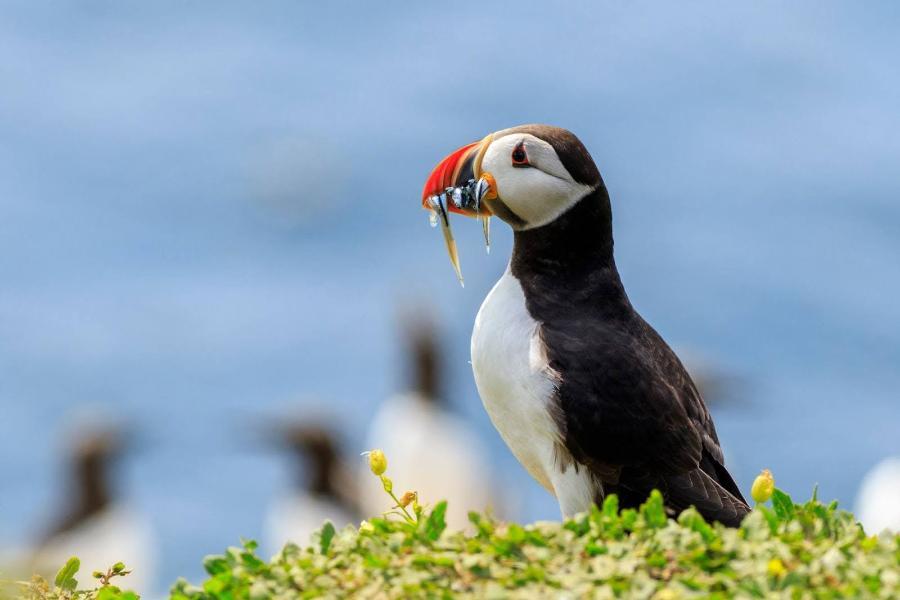
This 5.8-mile circular route in Northwest Anglesey winds through some of the UK’s most dramatic scenery. Heather-topped heaths and verdant farmland give way to rugged sandstone cliffs that plunge into the roiling Atlantic.
This picturesque trail features the historic lighthouse perched atop the island of South Stack and a rewarding ascent to the top of Holyhead Mountain. From the summit, hikers can admire a breathtaking 360 panorama, with views of Ireland and the Isle of Man on a clear day.
However, the main draw of this walk is undoubtedly the area’s fantastic birdlife. In spring and early summer, the cliffs welcome thousands of nesting seabirds – including puffins, razorbills, guillemots, and kittiwakes.
In autumn and spring, walkers can spot migrant species passing by, such as dotterel, redstarts, ring ouzels, and grasshopper warblers. And permanent residents like ravens, stonechats, and rock pippits can be spied year-round.
5. Catch sight of coastal wildlife at Murlough National Nature Reserve, Northern Ireland
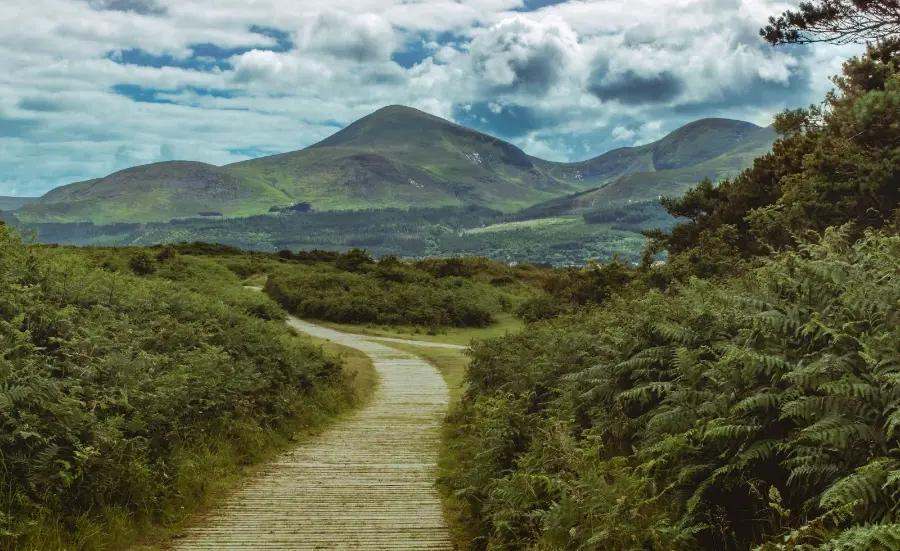
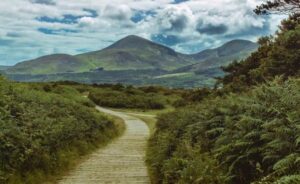
Rolled out like a carpet at the foothills of the Mourne Mountains, the Murlough National Nature Reserve in County Down is a must-visit for wildlife-loving walkers. With habitats ranging from dune heath to fairytale-like woodland, this rich landscape supports an impressive diversity of wildlife. While there are a few hiking routes, this one, outlined by Countryfile, allows visitors to explore as much of the reserve as possible.
From the main car park, walkers can follow the winding boardwalk through hulking dunes covered with marram grass and over grassland, where, in spring, wildflowers paint the landscape with dabs of colour. The boardwalk eventually halts at Murlough Beach, a vast expanse of sand. Keep an eye out for redshanks wading in the shallows or brent geese flying in formation overhead.
As the beach veers left into Dundrum Bay, grey and common seals can be seen splayed out on the sand. The route also takes visitors past the grand Murlough House and its grounds, plus the ancient ruins of Dundrum Castle.
6. Marvel at purple emperors on Bookham Commons, England
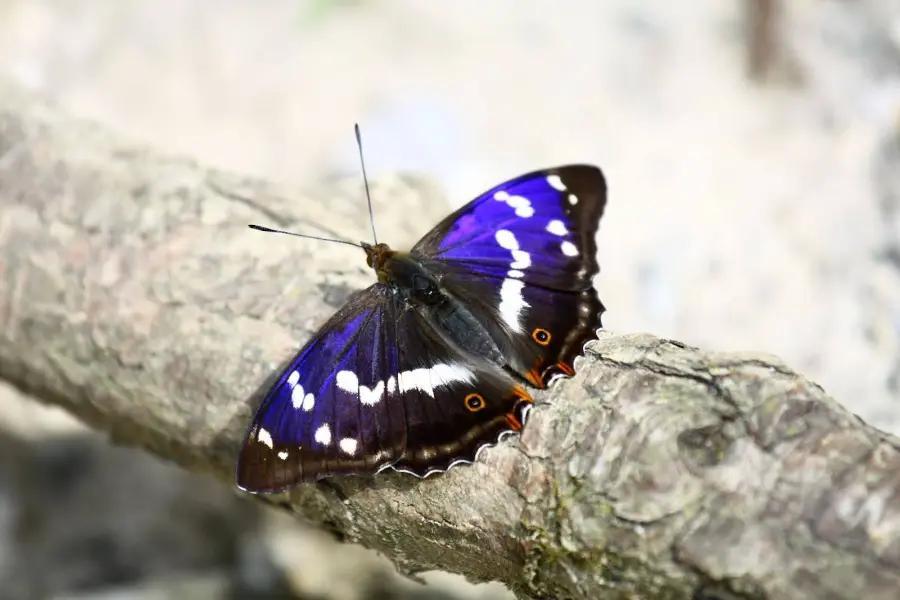
The purple emperor is one of Britain’s most striking insects. Their large wingspans (sometimes exceeding 8cm) make them easier to spot – plus the males are an iridescent shade of deep purple, with intricate white and orange markings. And while the females don’t possess the species’ famous colouring, they’re beautiful in their own right, with a dazzling orange-ringed eyespot under their forewings.
One of the best places in the UK to see these amazing arthropods is Surrey’s Bookham Commons, a bucolic patchwork of grassy glades, picturesque ponds, and towering oak woods. Purple emperors typically emerge from late June to early August, with peak sightings in the second week of July. You might want to bring binoculars, as they usually hang out high in the trees.
Visitors can follow this easy, 1.5-mile butterfly walk route. But these regal butterflies aren’t the only wildlife worth watching. Twitchers can look at our hawfinches, goshawks, and sparrow hawks while listening for the woodpecker’s distinctive tapping. The glades are also home to various wild orchids.
7. Watch out for marine mammals along the St Davids Peninsula walk, Wales
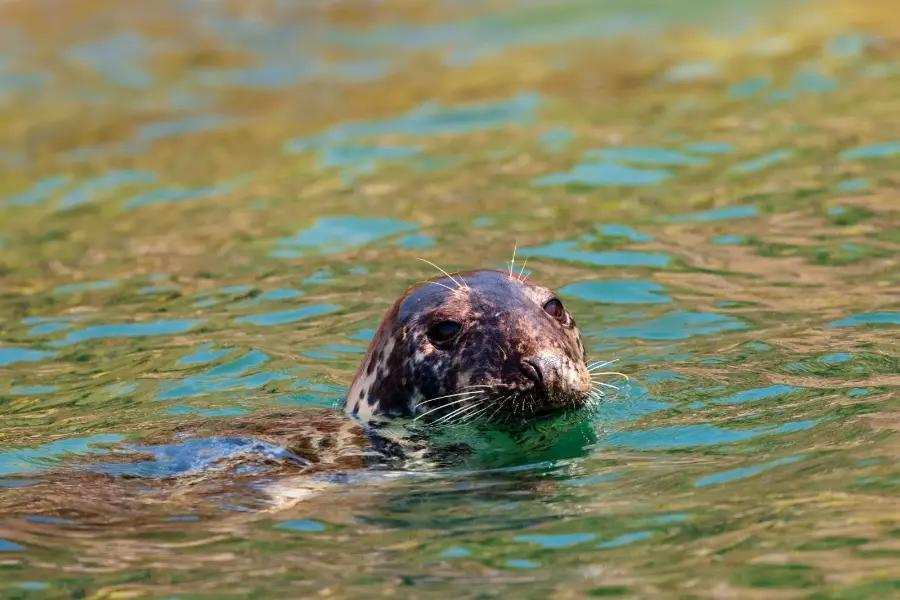
Starting in St Davids, Britain’s smallest city and a popular place of pilgrimage, this 9.4-mile trail follows the picturesque Pembrokeshire coastline. It ends at Whitesands, a glorious stretch of powdery sand, where a summer shuttle bus can take you back to St Davids.
The route boasts some spectacular scenery and, if you’re lucky, you might spot marine mammals emerging from the sea for a breath of fresh air. Chances are best where the path skirts along Ramsey Sound, a fast-flowing tidal passage separating the mainland from Ramsey Island. Here, seals, porpoises, and bottlenose dolphins are often seen playing in the waters.
Overhead, walkers can also admire various birdlife, from chough to peregrine falcons. Plus, there are various fascinating sites to discover – including St Davids Cathedral and the holy well, where legend says St David was born during a fearsome thunderstorm circa 500 AD.
8. Admire starling murmurations at the Avalon Marshes, England
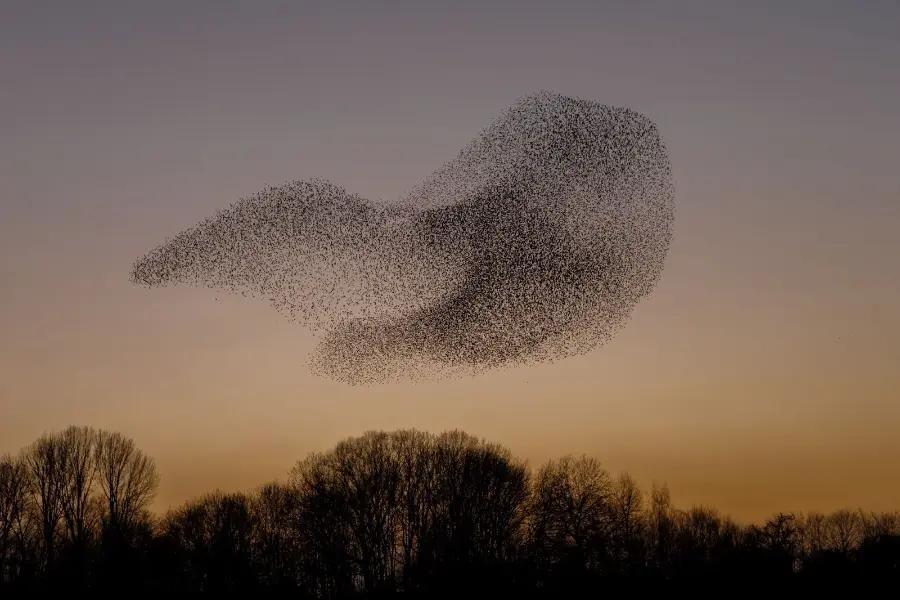
Follow in the footsteps of our Neolithic ancestors at Somerset’s Avalon Marshes, a landscape steeped in history and myth. Named after a magical island from Arthurian legend, these ethereal wetlands are home to the Sweet Track, one of Britain’s oldest known paths. Built over 6,000 years ago, this raised wooden walkway helped early communities cross the treacherous bogs. While the original is preserved in the wet peat below ground level, today’s visitors can look at a life-sized replica.
Ancient innovations aside, Avalon is home to a fantastic array of wildlife. In the warmer months, the air comes alive with dancing dragonflies, damselflies, and butterflies. Great white egrets stand gracefully in the shallows, while elaborately plumed ducks from the Arctic north glide over the glassy waters. Look out for the elusive marsh harrier as it zips over reed beds searching for prey.
However, Avalon’s most famous spectacle is its starling murmurations. From mid-November to late February, as many as 250,000 birds gather to form mesmerising displays of shifting shapes, and watching the show is the perfect way to top off a walk around the marshes. You can call the Starling Hotline (07866 554142) ahead of time to find out where they’re likely to be on a given night.
9. Immerse yourself in a rainforest habitat at Dunollie Wood, Scotland
You don’t need to venture to the tropical climes of the Amazon or Bourneo to explore a spellbinding rainforest. Scotland’s west coast is home to lush, temperate rainforests like Dunollie Wood in Oban.
Here, everything feels primordial. Mist lingers in bewitching hollows and clings to craggy mountainsides, while brilliant green ferns fan out across the path. Rare mosses, lichens, and fungi adorn twisting trees and bulging boulders like elaborate garments. Take a closer look, and you’ll spot all kinds of colours – from bright yellows to rich reds and pinks. The spring bluebells here are also beautiful, blanketing the forest floor in shades of blue-purple.
What’s more, one of Scotland’s favourite forest residents, the red squirrel, is often spotted here darting through the trees, and some spots boast spectacular views over the water towards the Western Isles. To explore this uniquely magical place, set off on the rainforest ramble marked out by the Woodland Trust Scotland.
Final thoughts…
From spotting seals basking on windswept beaches in County Down to admiring purple emperor’s fluttering through the treetops in Surrey, these walks offer plenty of wonderful wildlife-spotting experiences in the UK.
So, whether you want to watch dolphins from winding coastal trails, witness starling murmurations in Somerset marshes, or spy red squirrels scurrying through Scottish forests, we hope there’s something for everyone here.
For more walking content, head over to our fitness and exercise section. Here, we cover everything from coastal and woodland routes across the UK to introductions to Nordic and power walking.
Have you been inspired by any of these walks? Or would you like to suggest any that we haven’t included? We’d love to hear from you in the comments below.
Sam McLoughlin is a Senior Lifestyle Writer at Rest Less. He joined the editorial team in 2021 after completing his Master’s degree in English Literature, Culture, and Theory at The University of Sussex. He enjoys writing about careers, books, sports, travel, and pretty much anything that his editor will let him have a crack at, but his favourite part of the job is interviewing inspiring people – from activists and CEOs to later life career changers. In his spare time, Sam enjoys climbing, snowsports, and going to see live music.
* Links with an * by them are affiliate links which help Rest Less stay free to use as they can result in a payment or benefit to us. You can read more on how we make money here.
Join the discussion
Read our full commenting terms and guidelines