
Isn’t it interesting how “getting older” and “ageing” mean the same thing but carry very different weight?
“Getting older” evokes the privileges of living a long life. Maybe sunny holidays, a house full of grandchildren, switching careers, embracing new hobbies, and yes, even faces softened by grey hair and mapped with the lines of a lifetime full of laughter.
Ageing, on the other hand, is a word that’s been weaponised by industries selling us solutions to a problem they’ve created. What should simply describe the natural process of growing older has been transformed into something often loaded with dread and shame. We’re constantly told that ageing is our enemy – something to battle, resist, and defeat through products and treatments.
But, anti-ageing isn’t possible, despite the promises of the skincare and aesthetic industries. Ageing is happening to us one way or another. What we do have control over, however, is how we approach it, which is where another often-loaded term comes in…ageing gracefully.
What does ageing gracefully mean?
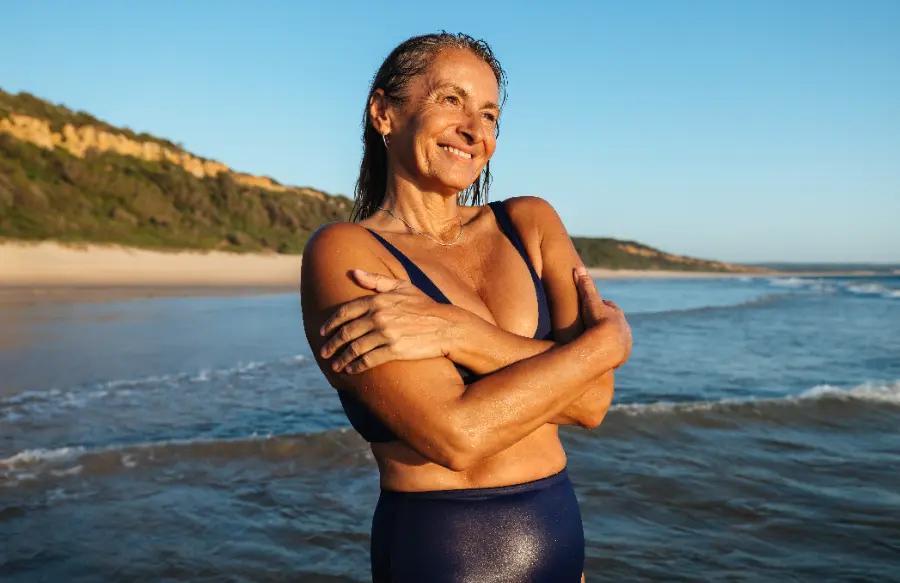
Traditionally, ageing gracefully has meant eschewing conspicuous facelifts and toupees, “dressing one’s age”, and embracing getting older without succumbing to the desire to cling to youth.
And the reason it’s loaded? As much as it’s a compliment to those who hear it, the compliment relies, in part, on the implication that there’s an ungraceful way to age…disgraceful, even.
You’ve likely seen the excoriating pictures and articles in gossip mags – celebrities being pilloried for their plastic surgery, every inch of their faces scrutinised and compared to a ‘before’ picture. Phrases like “mutton dressed as lamb” are used to describe women who dress in clothes or wear make-up deemed to be the preserve of women far younger. It can all be quite nasty.
Of course, so can the inverse, with women in particular being subject to all kinds of criticism and mockery for the serious crime of…not being as young as they used to be, and not trying to hide it. Chasing youth is derided as ungraceful, while embracing age is seen as unacceptable. It’s almost as if you’re damned if you do and you’re damned if you don’t.
“There’s so much judgment inherent in the term ‘ageing gracefully.’ Is there an ungraceful way to age? We don’t have an option, of course. No one has an option about ageing, so it’s not a positive or a negative thing, it just is. It’s part of the human condition, so why are we always talking about it as if it is something that we have control over?”
- Julianne Moore
So, rather than asking what ageing gracefully means, perhaps it’s more productive to consider what it means to you? Is it all about appearance? Perhaps it encompasses something more, such as maintaining strength and mobility, tending to your emotional wellbeing, cherishing the wisdom you acquire, and appreciating the new ways you find to enjoy spending your time.
You might even take a leaf out of Dolly Parton’s book, and reject the term entirely – as she said in a 2019 interview – “I’m not growing old gracefully; I’m gonna fight it every step of the way!”.
When did looking your age become a failure?
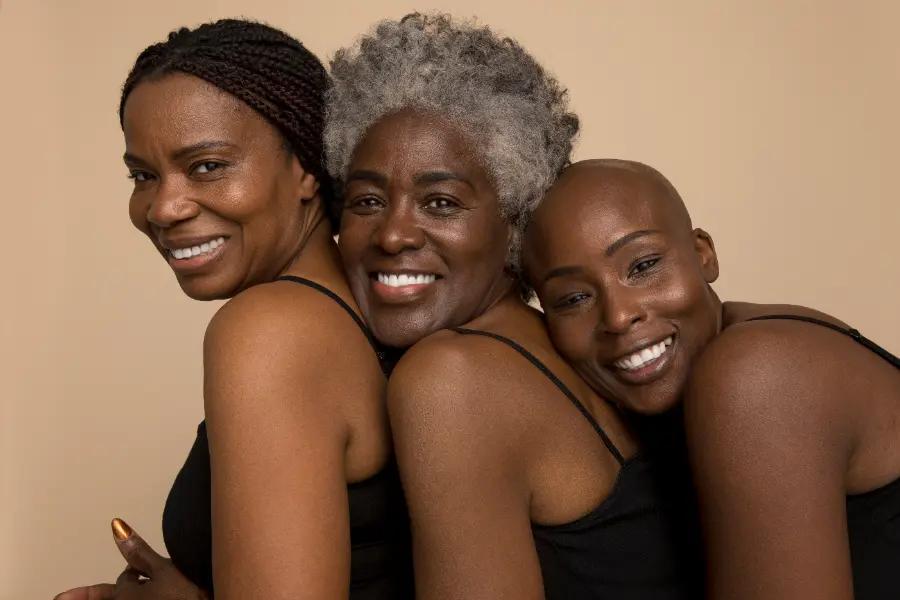
Societal pressure to look younger is both intense and insidious. There are the obvious things – the barrage of advertisements for lotions and potions and magic snake oils promising to take years off us – and the less obvious. The idea that people look good “for their age”. And the admiration and surprise that people express to those who “don’t look their age”.
All around us is the message that we must fight time, and fight it we do. It’s a tale as old as time, right back to Cleopatra’s milk and honey baths, a quest to keep her skin soft and supple. In modern times, the pressure of ageing anxiety is applied tenfold with the rise of camera phones and social media.
Every day, we’re bombarded with images of men and women who’ve been tweaked, nipped, tucked, plugged, filled, frozen, and filtered; presented with a version of perfection and beauty that’s rarely attainable without some sort of intervention. Our reality has become influenced by aesthetics and appearance to a degree that hasn’t been seen before.
This is coupled with another phenomenon that’s entirely new to us – not only do we have unprecedented exposure to other people’s faces, but also to our own. From abundant mirrors in homes to glass shop fronts, and even seeing ourselves on screen during Zoom and video calls, we have never, in all of history, had the opportunity to see our own faces as much as we do today.
It’s a perfect storm that takes an age-old ageing concern and exaggerates it to make many feel inadequate, insecure, and ‘old’. And, as more and more research is done, studies are finding a strong correlation between the use of image-based social media and a desire for cosmetic surgery.
The Elixir is real (and it’s available at lunch!)
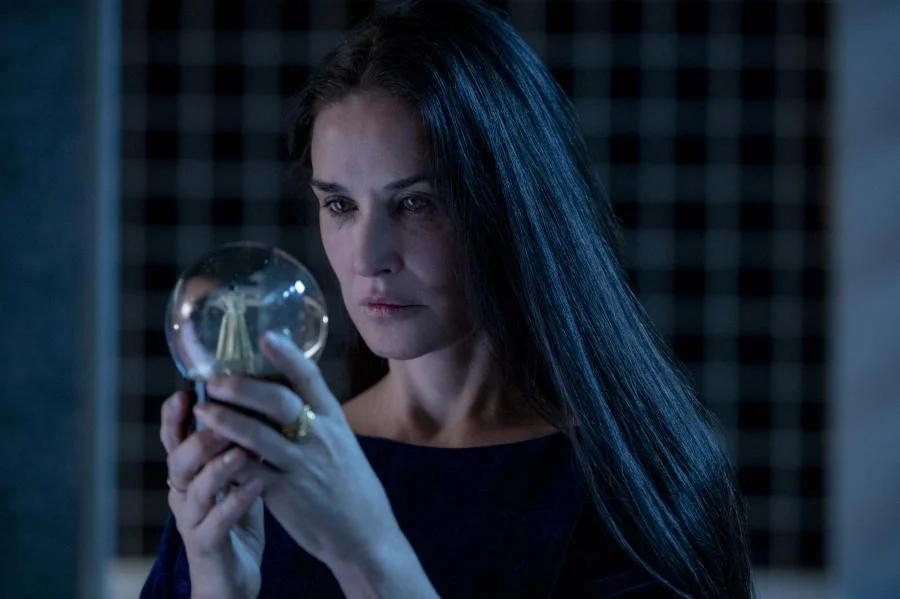
Demi Moore as Elisabeth Sparkle in Coralie Fargeat’s The Substance. Courtesy of Mubi.
Two films have dealt with the theme of ageing anxiety incredibly well: the hilarious 1992 comedy Death Becomes Her starring Meryl Streep, Goldie Hawn, and Bruce Willis, and 2024’s Oscar-winning film starring Demi Moore: The Substance.
Though 30 years apart, both films centre around beautiful, middle-aged women, obsessed with retaining a more youthful beauty they feel is slipping away. In each film, they find a secret, exorbitantly priced elixir that not only halts but reverses the ageing process. And both women pay dearly for their ‘vanity’.
But, in today’s world, we don’t have to venture to shady places to find elusive elixirs, we won’t actually be punished for a little vanity, and we certainly don’t need to sell our souls to access a few minor treatment and tweakments that can help us look and feel a little fresher – if that’s what we want. Modern aesthetic medicine has produced treatments that Streep and Hawne’s 1992 characters could only dream of, and it’s never been easier – or less stigmatised – to access them.
Gone are the days of the ‘wind tunnel’ 80s facelift and the comically bad toupee. Today, graceful agers can enlist the help of a skilled doctor to achieve beautiful, subtle results, with treatment options ranging from hair transplant holidays to lunchtime liquid facelifts. The idea that it’s a shameful vanity that must be ‘punished’ is also largely gone by the wayside, and people will now happily admit to the procedures they’ve just popped out for.
And thankfully, while social media does cause issues around beauty standards and ageing, there are lots of people fighting back and promoting a more holistic and healthy approach to ageing.
Ageing gratefully – The Pamela Anderson revolution
In recent years, one of the most famous faces in the world has appeared more on gossip pages and celebrity magazines, with an entirely new look. Pamela Anderson, once known for her highly glamorous, heavily made-up and surgically enhanced appearance, began to walk red carpets wearing minimal make-up and embracing her now 57-year-old face in its natural, beautiful state.
It was an act so radical and shocking that she regularly went ‘viral’ after public appearances, with some asking what she was thinking – but most finding her pared-back look beautiful, inspiring, and refreshing.
At 56 years old, she very quickly became the new face of ‘ageing gracefully’. But listening to what she has to say about growing older in Martha Stewart’s podcast, it becomes apparent that her ‘secret’ is less to do with ageing gracefully and more to do with ageing gratefully.
“Life humbles you. As you grow old…you stop chasing the big things and start valuing the little things…alone time, enough sleep, a good diet, long walks, and quality time with loved ones,” she wrote in the caption. “Simplicity becomes the ultimate goal.”
- Pamela Anderson
Perhaps that’s the real ‘fountain of youth’ – to still, always take new pleasure in the small things. To be grateful for everything our amazing bodies have allowed us to do, even if they’re a little softer and slower than they used to be. To allow them to be softer and slower, and be grateful for the time we can take to rest them. To be grateful for the life of laughter and expression that has left its mark in the lines on our faces.
Laura Carstensen, the director of Stanford’s Centre on Longevity, challenges the ageing-as-decline narratives that are so ubiquitous, and instead looks at the benefits that ageing brings to those who embrace it – “as we age, we invest in what matters most, and that makes life better.”
Final thoughts…
Looking young might still, and always, be important to you – and there’s nothing whatsoever wrong with that. It’s perfectly normal to mourn our youth or the beauty of our younger years, and if you’d like to avail yourself of some of the wonders of modern aesthetic medicine, more power to you.
But it’s worth bearing in mind, at the same time, that ageing gratefully can help you to feel youthful. Embracing this chapter of life with gratitude can help you retain and cultivate a spirit of joy, curiosity, and discovery that will have far-reaching benefits throughout your life.
And what could be more graceful than that?
What does ageing gracefully mean to you? We’d love to hear your thoughts in the comments below.