
Charles Dickens is one of history’s greatest authors – and his works resonate as deeply with audiences today as they did when they were published nearly two centuries ago.
Whether it’s the reformation of the miserly Scrooge at Christmas or the adventures of Oliver Twist in London’s underbelly, Dickens’ tales remain timeless and universal, while depicting the bygone realm of Victorian Britain in vivid detail.
Thanks to A Christmas Carol, and how it’s shaped our modern understanding of the holiday, Dickens has also become forever tied with the festive season. So, this Christmas, we wanted to take a peek behind the pages at the great author’s life through 15 fascinating facts.
1. Dickens was sent to work at a factory at 12
Dickens’ father, John, worked as a clerk in the Navy Pay Office in London. Though it was a well-paid job, he tended to live beyond his means, and his extravagant lifestyle plunged his family into poverty in the early 1820s.
John Dickens’ financial troubles were so extreme that his eldest son, Charles, had to leave school and start working in a rat-infested factory, aged just 12 (some documents even suggest he was 11). Here, he sat at a desk for 10 hours a day, six days a week, fixing labels to bottles of boot polish.
Interestingly, Dickens never spoke about his time in the factory, but it influenced some of his most famous works – including Oliver Twist and David Copperfield. We know about it because he wrote an account of this unhappy period for his friend, John Forster, who included it in his biography of the author, published two years after his death.
2. Dickens’ family went to prison
While young Dickens was working in the factory, his father was sent to Marshalsea debtors’ prison for failing to pay a baker’s bill of £40 and 10 shillings. He was joined in jail by his wife and youngest children, which was a common practice at the time.
John Dickens was released from prison after three months, and though the family’s finances never really recovered, Charles was allowed to return to school. Jailed debtors appear regularly in his works, particularly Little Dorrit, much of which is set within the confines of Marshalsea Prison.
3. Writing wasn’t Dickens’ first ambition
Dickens was a lifelong theatre fan with no shortage of dramatic talent himself. Throughout his life, he would stage animated readings of his novels, leading essayist Thomas Carlyle to call him “a whole tragic, comic, heroic theatre visible performing under one hat.”
Dickens was so passionate about the dramatic arts that he scored an audition at the famous Covent Garden theatre in 1832, but missed his chance due to a terrible cold. Not long after, he started the parliamentary reporter job that would lead to his career as a novelist.

4. Dickens’ early work was published under a pseudonym
While working as a journalist, Dickens began publishing stories and descriptive essays in newspapers and magazines under the pseudonym ‘Boz’. This pen name came from a mispronunciation of his brother Augustus’s childhood nickname, ‘Moses’.
These early writings soon earned Dickens a reputation and were collected in Sketches by “Boz”, published in 1836. A short time later, he was commissioned to write a serial narrative to accompany engravings by caricaturist Robert Seymour. The Pickwick Papers, as it was called, launched Dickens into literary stardom.
5. Dickens was an international celebrity
From Van Gogh to Emily Dickinson, many creative geniuses weren’t appreciated in their time – but not Charles Dickens. In fact, scholars have called him “the first self-made global media star of the age of mass culture.”
He was the most famous and successful author of his day, with readers ranging from the poor working class to Queen Victoria herself. And he cultivated a close relationship with audiences through talks and tours.
Dickens was so popular that crowds mobbed him in the street. During a tour of the U.S, he refused to get a haircut the entire trip, fearing the barbers would sell his locks as souvenirs.
6. Dickens was in a ghost-hunting club
The Victorians were obsessed with spirits and spectres. At public séances, mediums tried to communicate with the dead, while swindlers used new effects, like double exposure, to capture photographs of ‘ghosts’ for profit.
Always attuned to his audience’s wants, Dickens fanned the flames of this craze with spooky stories like The Signalman and A Christmas Carol. But the author’s interest in the supernatural went far beyond his fiction.
According to the Paris Review, Dickens is said to have been a member of the Ghost Club, an organisation that discussed and investigated paranormal activity, alongside poet William Butler Yeats. However, despite his interest in the otherworldly and dabbling in mesmerism (a precursor to hypnotism), Dickens remained sceptical about the existence of ghosts.
7. Dickens invented words that are still used today
Much like Shakespeare centuries before, Dickens made up plenty of words and phrases commonly used today. Some of his best include: ‘butterfingers’, ‘flummoxed’, and ‘the creeps’.
8. Dickens founded a charity for ‘fallen women’
Charles Dickens was very generous and supported many charitable causes throughout his lifetime. Perhaps most remarkably, alongside a wealthy friend and philanthropist, he founded a “home for homeless women” in 1847.
Located in Shepherd’s Bush, Urania Cottage offered a sanctuary to ‘fallen women’, as they were called at the time. These were often women who’d had sex out of wedlock or turned to prostitution, leading to disownment from their families or even imprisonment.
The purpose of the cottage was to ‘rehabilitate’ them through kindness, gentleness, and encouragement – and help them start a new life in colonies like Australia. Dickens managed the home for 12 years, interviewing potential inhabitants, hiring/firing matrons, fixing issues, and much more.
9. A Christmas Carol took just six weeks to write
In 1843, Charles Dickens was in a career slump. His latest serialised novel, The Life and Adventures of Martin Chuzzlewit, wasn’t selling well, and his publishers wanted to reduce his pay considerably. With a family of five (and his father) to support, plus another child on the way, he needed to make money quickly.
At the same time, Dickens was becoming increasingly concerned about the plight of the poor. He was particularly disturbed by a recent report on child labour, featuring testimonies from eight-year-old coal mine workers and other exploited children. Afterwards, he resolved to write something that would raise awareness about this issue, while inspiring kindness and charity.
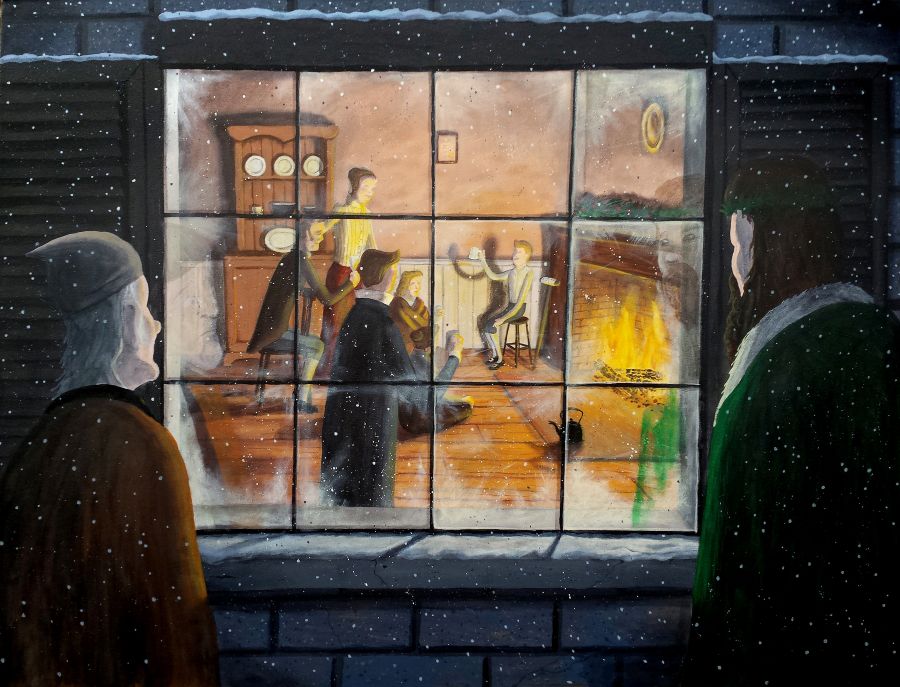
So, in the autumn of 1843, Dickens worked furiously for six weeks. By day, he would write, and by night, he would wander the brisk London streets for 15-20 miles at a time. A Christmas Carol was published on the 19th of December, selling out its initial 6,000 copies by Christmas Eve, and has never been out of print since.
10. Dickens was an amateur magician
Alongside his passions for drama, mesmerism, and philanthropy, Charles Dickens was also an amateur magician, performing mainly at parties for friends and family. Among his favourite tricks were transforming a box of bran into a live Guinea pig and making a hot plum pudding appear from an empty hat.
Jane Carlyle (the wife of Thomas, who we mentioned above) wrote to a friend after one of Dickens’ performances, that he was “the best conjuror I ever saw – (and I have paid money to see several).”
11. Dickens was in a near-fatal train crash
In August 1865, Charles Dickens was travelling from Folkestone to London when his train derailed while crossing a viaduct near Staplehurst in Kent, causing the deaths of 10 people and injuring 40 more.
According to The Dickens Project, all of the first-class carriages plummeted into the riverbed, except for the one Dickens was riding on, which was left hanging off the bridge. According to witnesses, the author did what he could to help the wounded, including fetching water in his top hat. He even climbed back into the precarious carriage to save the manuscript of Our Mutual Friend, which he’d left in his overcoat.
The crash greatly affected the author. He became terrified of train travel afterwards, and his son reportedly said his father was “never the same man” again. Scholars say Dickens’ name was left out of newspaper reports and legal proceedings following the accident because he was travelling with his mistress and didn’t want rumours to circulate. Peculiarly, he died on the accident’s anniversary five years later.
12. Dickens had a fake bookcase door
In his Kent home, Charles Dickens had a secret door disguised as a bookcase – complete with fake volumes.
Among the bogus titles, which Dickens came up with himself, were Life and Letters of the Learned Pig and Treatise on the Tapeworm by Tim Bobbin.
13. Dickens kept pet ravens
Charles Dickens was an ardent admirer of animals and kept many pets – from cats and dogs to goldfinches and an eagle. But most famous of all are probably his ravens.
Dickens was so taken with his first raven, Grip, that he included it as a character in his fifth novel, Barnaby Rudge, which accompanies the protagonist wherever he goes. Grip sadly died after eating paint, but was swiftly replaced by another, also called Grip (and a third Grip followed that one).
Interestingly, another prominent author of the day was equally charmed by Dickens’ ravens, both real and created. In a review of Barnaby Rudge, Edgar Allan Poe described the fictional Grip as “intensely amusing”, and scholars believe the bird inspired one of Poe’s most famous works, ‘The Raven’.
14. Dickens’ final book is an unsolvable mystery
When Dickens died of a stroke in 1870 at age 58, he was halfway through writing a strange and dark murder mystery, characteristically titled The Mystery of Edwin Drood.
The novel was being published in monthly instalments. So, by the time of Dickens’ death, audiences were already hooked by the puzzling tale, and it was selling well.
To add to his audience’s woes, who were busy mourning the loss of the beloved author, Dickens left very few clues as to how the whodunnit would end, taking the mystery to his grave. Since then, many have tried their hand at penning the ending, but, sadly, we’ll never truly know what Dickens had in store for us.

Discover books that expand your mind and deepen your understanding
Explore a huge range of titles on Amazon.
15. Dickens was buried in Westminster Abbey against his wishes
In Dickens’ will, he said he wanted to be buried either near his home in Higham, Kent or at Rochester Cathedral, and that the funeral be “inexpensive, unostentatious, and strictly private”.
However, both these wishes were ultimately ignored. Dickens was instead laid to rest in Poet’s Corner in Westminster Abbey, alongside other literary greats like Geoffrey Chaucer and Alfred Tennyson. Following a private ceremony, the grave was left open to the public for three days so people could pay their respects.
The reason for this is debated. Some argue the decision was spearheaded by the media and supported by the public. But a recent scholarly investigation suggests it was engineered by Dickens’ biographer, John Forster, and the dean of Westminster, Arthur Penrhyn Stanley, to satisfy their own personal aims.
Dr Leon Litvack from Queen’s University Belfast argues that Forster wanted a fitting way to end his upcoming book and a public funeral to further the author’s reputation. While Stanley, Litvack argues, sought to “add Dickens to his roll of famous people whose burials he conducted.”
Final thoughts…
From his firsthand experiences with poverty and child labour to his brush with death in the Staplehurst rail crash, Charles Dickens experienced his fair share of tragedy and turmoil, which influenced some of his most famous works.
However, his penchants for pet ravens, staging magic shows, and installing fake bookcases in his homes also reveal an equally interesting, lighthearted side to his life, which paints a picture of the man behind the mythic figure.
To learn more about Charles Dickens, check out our upcoming talk on Rest Less Events, London of Charles Dickens: the tale of a literary legend. Or tune in to our one-man live performance of A Christmas Carol from actor J.T. Turner.
And for more literary content, head over to our books and literature section. Here, you’ll find more fascinating facts about writers from history, as well as interviews with today’s bestselling authors – such as Elif Shafak and Tessa Hadley.
Did any of these facts surprise you? Or did we miss out any of your favourites? We’d love to hear from you in the comments below.