

- Home
- Leisure & Lifestyle
- Food & Drink
- 9 delicious ways to use up stale bread
How does Rest Less make money
We make money through advertising and commission from affiliate links, which enable us to offer Rest Less as a free service to our users. The content on this page may use affiliate links, which track traffic from our website to a third party provider and enable us to receive a commission or payment from any traffic we refer.
* Affiliate links on this page have an * next to them. We place enormous importance on our editorial independence and the integrity of our content which means that we will never change how we write about something as a result of an affiliate link.
Bread is a staple food in the UK, bought by 99.8% of households. The average Brit eats around 80g of bread a day – the equivalent of two or three slices. Yet, despite how much we seem to like bread, we waste a lot of it.
Around 900,000 tonnes of bread are binned in the UK annually – or 24 million slices every day – which wastes money and harms the environment. We produce the highest quantities of food waste in Europe, with bread being the most wasted product.
This is frustrating because of how well bread freezes, plus frozen slices can be placed straight into the toaster. And even if you do forget about a loaf before you can freeze it, you don’t need to throw it out if it’s stale. There are all kinds of uses for leftover, stale bread – many of which are unexpectedly delicious.
So, if you’ve stumbled across an old loaf in the cupboard, what are some of the best uses for it? Here are nine great ways to use up stale bread.
1. Bread and butter pudding
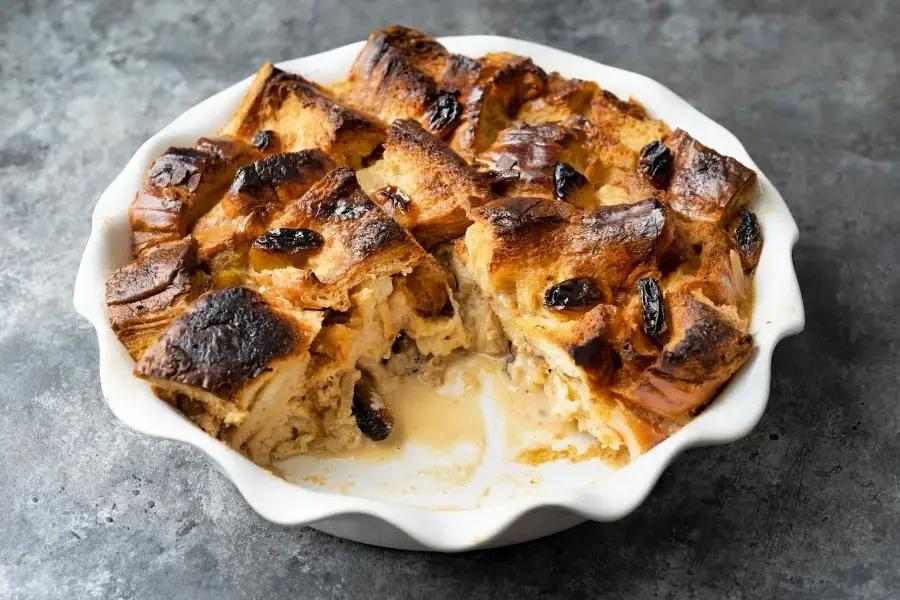
If you have a sweet tooth, you might like to use your leftover loaf to make a classic British treat: bread and butter pudding. Wonderfully unpretentious, yet unexpectedly luxurious, this comfortingly stodgy pudding is just as good eaten for breakfast as dessert. While you can use fresh bread, stale bread works much better, as the bread acts as a sponge, soaking up the custard, and becoming gooey and soft.
Traditional bread and butter pudding, like this recipe from Raymond Blanc, contains plump sultanas and is dusted with warming nutmeg, but there are many ways to elevate this classic dish. Why not try variations like limoncello and raspberry, fig and orange zest, or rhubarb and pecan? Head over to Delicious to find more delicious bread and butter pudding recipes like these.
2. Croutons
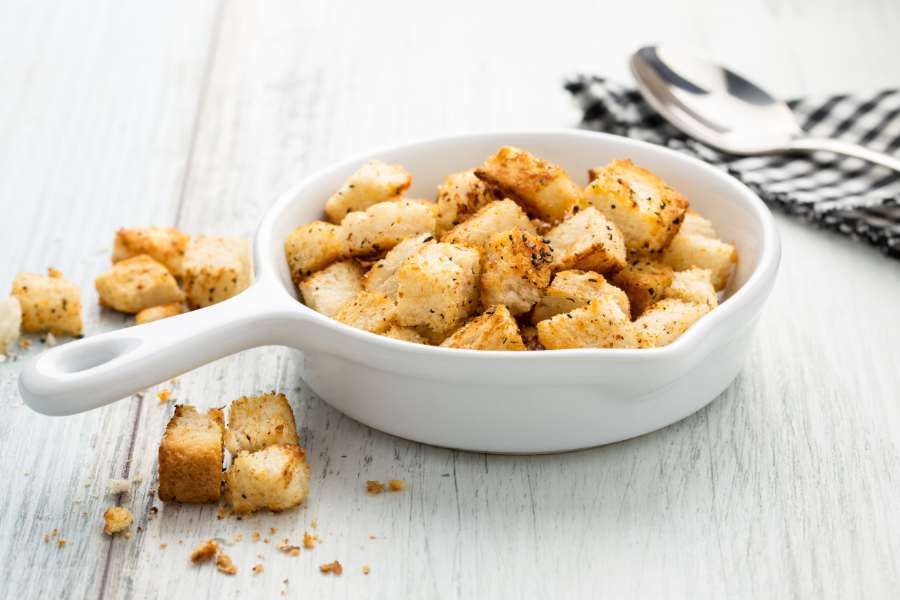
The quickest and easiest way to use up leftover bread is to turn slices into croutons. These satisfyingly crunchy chunks of toasted bread can add texture and flavour to soups and salads. You can make croutons two different ways: either chop bread into small cubes, or tear it into pieces for rustic-style croutons.
For extra flavour, you can infuse them with herbs and spices: add chilli oil, garlic oil, or truffle oil, or even a dusting of grated cheese. Then, bake in the oven for around 15 minutes, or until the bread is crunchy. Why not try this crouton recipe from Gimme Some Oven?
3. Panzanella
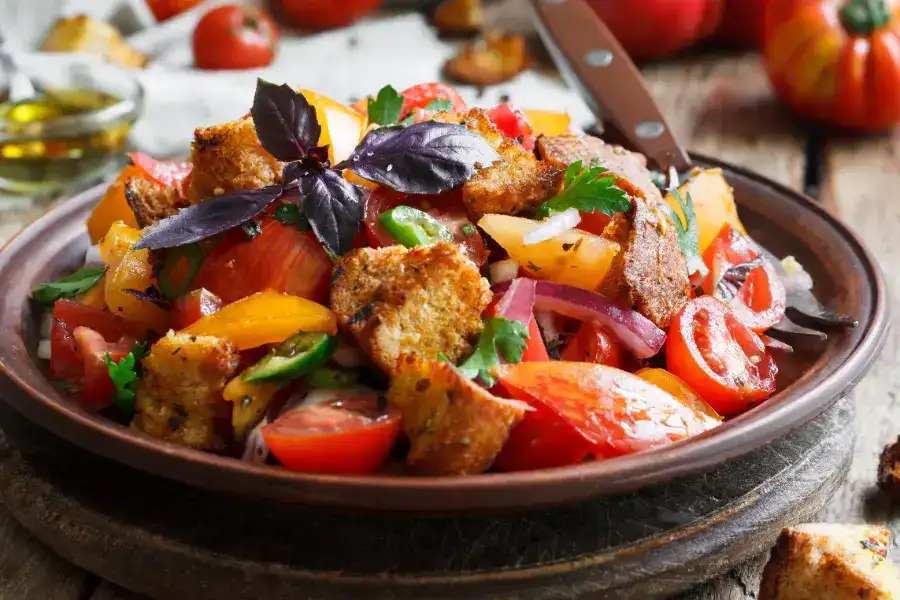
Caesar salad might be the most famous salad that makes use of stale bread, but panzanella is arguably the most delicious. And, if you have a really stale loaf of bread you think is too hard to eat, panzanella can breathe new life into it. Originating in Tuscany, this classic Italian salad screams summer: juicy, ripe tomatoes, a zingy vinaigrette, and crispy, olive oil-soaked bread come together beautifully.
You need very crusty, stale bread for this because if it’s too soft, it’ll disintegrate when soaked in olive oil and tomatoes. Tear your bread into large chunks, stir in fresh, chopped tomatoes, pour over your dressing (usually olive oil, garlic, dijon mustard, shallots, and vinegar), season, and add fresh basil. Don’t worry if the bread feels too hard; it’ll soften after 15-30 minutes. Serve at room temperature and enjoy!
For more on making perfect panzanella, check out this recipe from The Guardian.
4. French toast

Despite the somewhat elegant-sounding name, humble French toast has been made with stale bread since Roman times. It was also known as “poor knights of Windsor” in the UK, and pain perdu in French (“wasted bread”), both nods to its thriftiness and popularity with poorer people. Today, however, it can be a deliciously indulgent breakfast or brunch.
Traditionally, stale white bread is used, but you can use just about any loaf – although some types do absorb liquid better than others. The bread slices are soaked in batter, which often contains lemon zest, salt, sugar, and spices like cinnamon or ground cloves and cardamom. Fry on each side until golden and crisp, then top with fresh fruit, syrup, or honey. You can also make savoury versions if you prefer.
For classic, fluffy French toast, try this recipe from Tastes Better From Scratch.
5. Strata

If you’ve never eaten strata before, think of it as a savoury bread pudding. Stale bread is soaked in a savoury custard, layered with veg, meat, and/or cheese, and baked in the oven. It’s endlessly adaptable, so is a great way to use up any leftovers you have in the fridge. It’s a delicious and filling breakfast, brunch, or lunch, a real crowd-pleaser, and is easily made ahead of time, too.
The first strata recipe appeared in a 1902 cookbook, and while many American recipes use cubed bread, sliced bread works just as well (and is easier to prepare!). This strata recipe from The Guardian uses chopped spinach, roast leeks, and sun-dried tomato paste, although you can add other ingredients like spring onions, cherry tomatoes, leftover roast veg, sautéed mushrooms, cooked sliced sausage, or ham.
6. Breadcrumbs
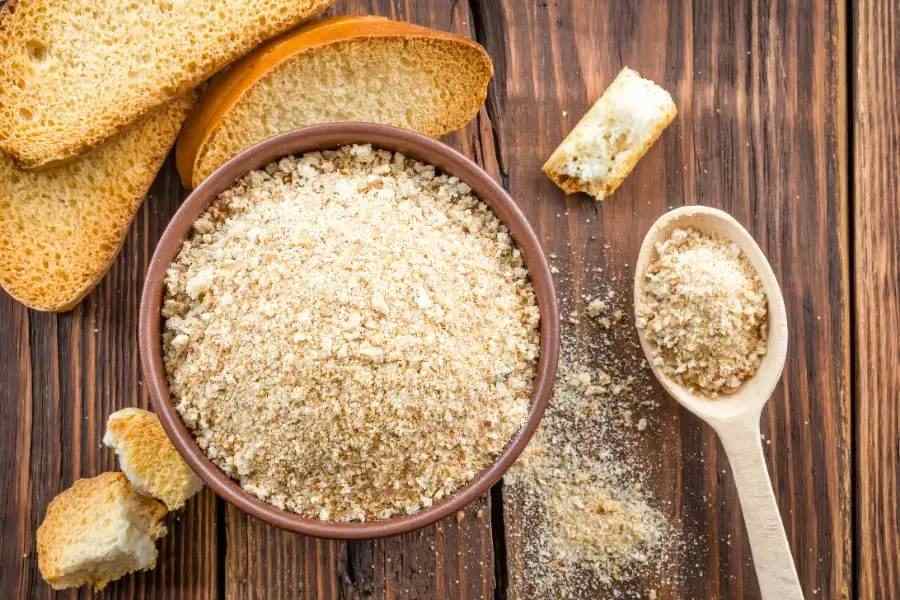
Making breadcrumbs out of stale bread is quick and easy – simply blitz your bread in a food processor and add any seasoning you like: salt, pepper, garlic granules, and onion powder all work well. Once you’ve got your crumbs, you can put them in a freezer bag and keep them until you need them. Fresh breadcrumbs are soft and absorbent, so they’re often used to add bulk to recipes or act as a binder.
But if you bake your breadcrumbs for around 10 minutes, they become wonderfully dry and crispy. You can then use them to coat foods like fish or croquettes, or sprinkle them on top of dishes like gratins or pasta bakes to provide a crunchy topping. You can freeze breadcrumbs once they’ve cooled, too, and scatter them over dishes whenever you want to add a bit of extra flavour and depth.
To make dried breadcrumbs, try this recipe from BBC Good Food – and for more ways to use breadcrumbs in your cooking, check out these 44 recipes from Tastes of Home.
7. Bruschetta
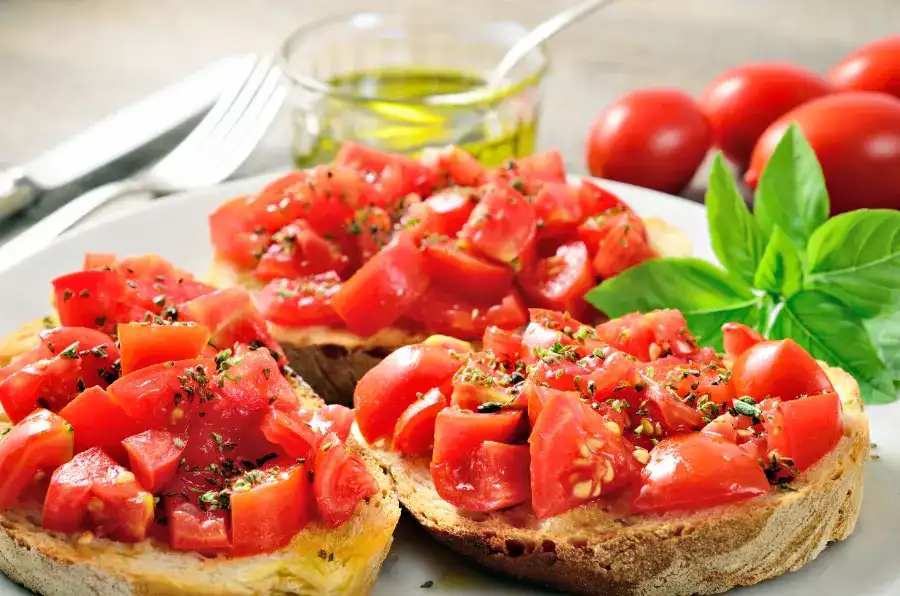
Bruschetta is one of those dishes that’s incredibly simple, yet deceptively flavoursome. It’s about as basic a dish as you can imagine – all you need is bread, garlic, olive oil, and a sprinkle of salt. Yet, when made correctly, and with the right ingredients, it’s not only the perfect amalgamation of flavours and textures, it’s also the ideal vehicle for all kinds of fresh, seasonal produce.
Simply slice your stale bread and toast on both sides until golden using a grill pan, overhead grill, or barbecue. Then, rub the toast with a garlic clove and top with a generous drizzle of good-quality olive oil. While you can use most bread to make bruschetta, for authenticity, Italian bread like ciabatta is best. The rough texture allows oil to pool on the surface and gets the most juice out of the garlic.
To make classic tomato bruschetta, try this recipe from Gimme Some Oven. For more unusual ideas, like broad bean and goat’s cheese bruschetta or courgette, pepper, and mozzarella bruschetta, check out these recipes from Waitrose.
8. French onion soup
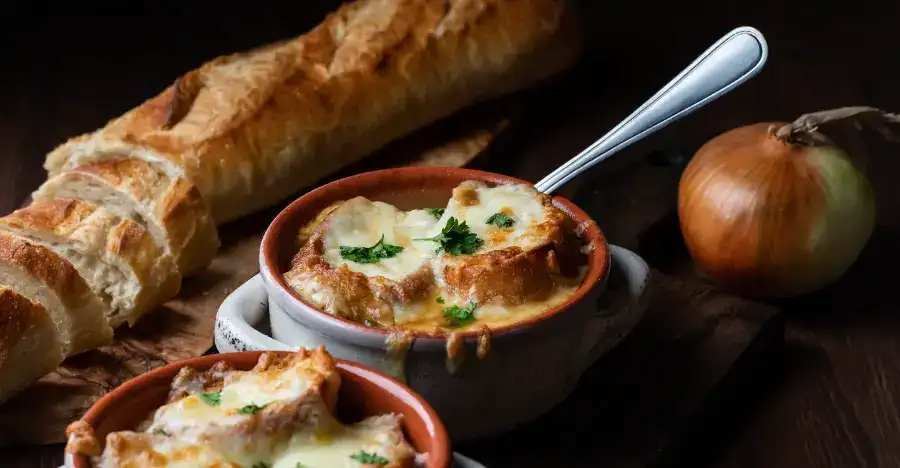
French onion soup might be a regular on restaurant menus, but it began life as a simple peasant dish made from stale bread, onions, and water. While today’s versions are a little fancier, it’s still surprisingly simple to make at home, and is a great way to use up an old baguette. The secret to achieving that umami depth of flavour is cooking the onions low and slow, so they’re perfectly caramelised.
But the best part about French onion soup is arguably the crusty bread ‘lid’, which is topped with melted cheese and soaks up the delicious broth. Once you’ve made your soup and ladled it into oven-proof bowls, top it with a slice of toasted stale bread. Before toasting, try to cut the bread to fit right to the edges of the bowl, then place the bowls under the grill and cook until the cheese is molten and bubbling.
To make traditional French onion soup, try this recipe from Once Upon A Chef.
9. Stuffing
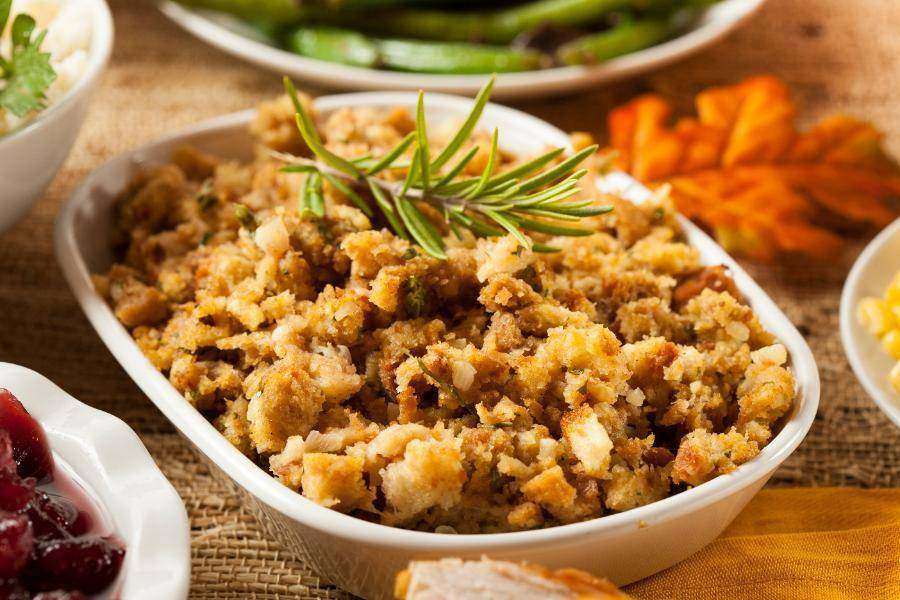
The most popular stuffing recipe in the UK – sage and onion – doesn’t contain fancy ingredients. It doesn’t even contain meat. Sage and onion stuffing is bread-based, and while you can buy packet mixes and just add water, making your own is quick and easy…and usually tastier, too. The best bread for this is stale white sandwich bread, as it stops the stuffing from getting too mushy.
First, blitz stale bread into coarse breadcrumbs. Then, cook onions, garlic, and herbs until soft and, when cool, mix with the breadcrumbs and season. Add eggs, mix again, and cook in a shallow dish until the top is crisp and the centre is cooked. Once you’ve mastered basic stuffing, you can get creative with other ingredients, ensuring your Sunday roasts or Christmas dinners are always impressive.
To make classic sage and onion stuffing, try this recipe from Raymond Blanc.
Final thoughts…
Bread is the most wasted food item in the country, but it doesn’t need to be. Not only does it freeze exceptionally well, but there are also all kinds of ways to upcycle an old, stale loaf.
Even if you think your bread is too stale to save, many recipes can breathe new life into an old loaf. From soaking slices in batter to make juicy French toast to drenching hearty chunks in olive oil and tomato juice to make salads, these recipes are all quick, easy, and, most importantly, delicious ways to use up stale bread.
Are you tempted to make any of these recipes? Do you have any other ideas for how to use up stale bread? We’d love to hear from you in the comments below.
Selene Nelson is an author, freelance journalist, and lifestyle writer for Rest Less. After graduating from the University of Sussex with a degree in English Literature, Selene began contributing to many major newspapers and websites, and has written for the BBC, The Sunday Times, The Independent, Town & Country, and HuffPost. Her specialist subjects include food, travel, and health, though she enjoys writing about a wide range of topics (e.g. her two books are about veganism and psychopathy, respectively!). She enjoys cooking (particularly pasta and Asian noodle soups), reading, travelling, hiking, attempting to keep fit, and watching animal videos on YouTube.
* Links with an * by them are affiliate links which help Rest Less stay free to use as they can result in a payment or benefit to us. You can read more on how we make money here.
Join the discussion
Read our full commenting terms and guidelines