
- Home
- Leisure & Lifestyle
- Food & Drink
- From Jamaica to Germany – 9 pasta dishes from around the world
How does Rest Less make money
We make money through advertising and commission from affiliate links, which enable us to offer Rest Less as a free service to our users. The content on this page may use affiliate links, which track traffic from our website to a third party provider and enable us to receive a commission or payment from any traffic we refer.
* Affiliate links on this page have an * next to them. We place enormous importance on our editorial independence and the integrity of our content which means that we will never change how we write about something as a result of an affiliate link.
Pasta may have its roots in Italy, but today it’s truly global. Cheap, filling, and uniquely satisfying, it’s been voted the world’s favourite food, and more than half of Brits eat it at least once a week.
Much of pasta’s appeal is its remarkable versatility. It’s a staple of children’s dinner tables and a lifeline for hungry students – pesto pasta alone has seen more people through university than most study guides. It can be folded around a filling, coated in rich tomato sauce or indulgent creamy sauces, or baked as part of dishes like macaroni cheese and lasagne.
But countries worldwide have embraced pasta as their own, leading to the creation of all kinds of delicious dishes. So, putting aside the classic ragu and bolognese, what kind of pasta can you tuck into around the globe?
Here are nine tasty pasta dishes from around the world.
1. Pastitsio, Greece
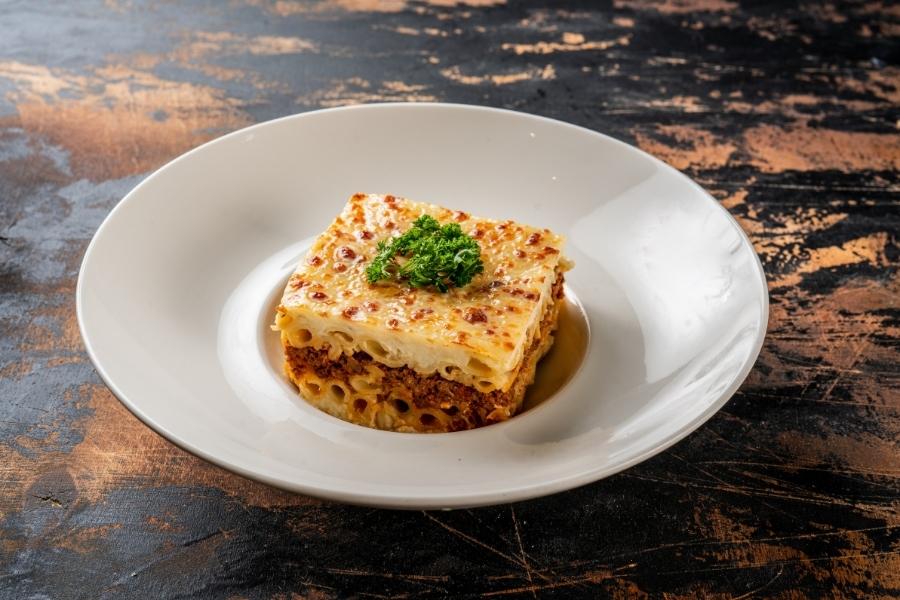
If you’re a fan of lasagne, you might want to try the Greek version, pastitsio. Commonly served at family gatherings, pastitsio is traditionally made with a thick tubular pasta called ‘Pastitsio No 2 pasta’, sometimes referred to as Greek bucatini. You can find it in Greek or Italian delis; otherwise, regular bucatini works well, or even short tubular pasta like penne or rigatoni.
What sets pastitsio apart from other baked pasta dishes is the sauce. Tomatoes, onion, and mince are simmered with cinnamon, giving pastitsio its distinctively warming, subtly spiced flavour. The pasta is then layered with this sauce and an unusually thick béchamel, and baked until golden. Once cooked, allow it to cool for at least 10 minutes, so you can cut neat slices that show off all the layers.
Classic versions like this one from Recipe Tin Eats use ground beef or lamb. Or Waitrose has a veggie recipe, and vegans can try this version from Lazy Cat Kitchen. Why not serve it with a Greek or green salad, and perhaps some Greek wine for an extra touch of authenticity?
2. Rasta Pasta, Jamaica
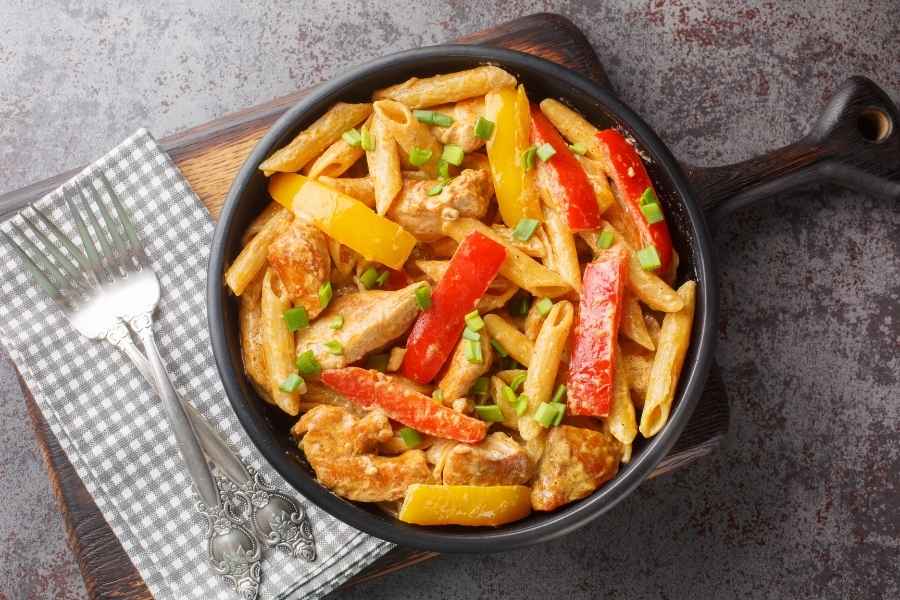
While pasta isn’t a traditional part of Caribbean cuisine, this next dish perfectly encapsulates Jamaica’s unique culinary culture. Combining Italian pasta with colourful bell peppers, jerk spices, fiery Scotch bonnet chillies, and local herbs, Rasta pasta beautifully blends African and European influences.
The first versions of this dish appeared in the 1980s and followed the Ital food philosophy: the plant-based way of eating that’s part of the Rastafari movement. But as tourism in Jamaica grew, chefs began experimenting, adding ingredients that appealed to visitors while still showcasing local flavours – and the iconic Rastafari colours, red, yellow, and green.
Today, there are many variations of Rasta pasta, although most include penne pasta tossed in a creamy jerk sauce, colourful bell peppers, and grilled jerk chicken. If you’d like to make a modern version of Rasta pasta, try this recipe from Butter Be Ready. Or, if you’d prefer to make an authentic Ital plant-based version, try this recipe from Make It Dairy Free.
3. Fideuà, Spain
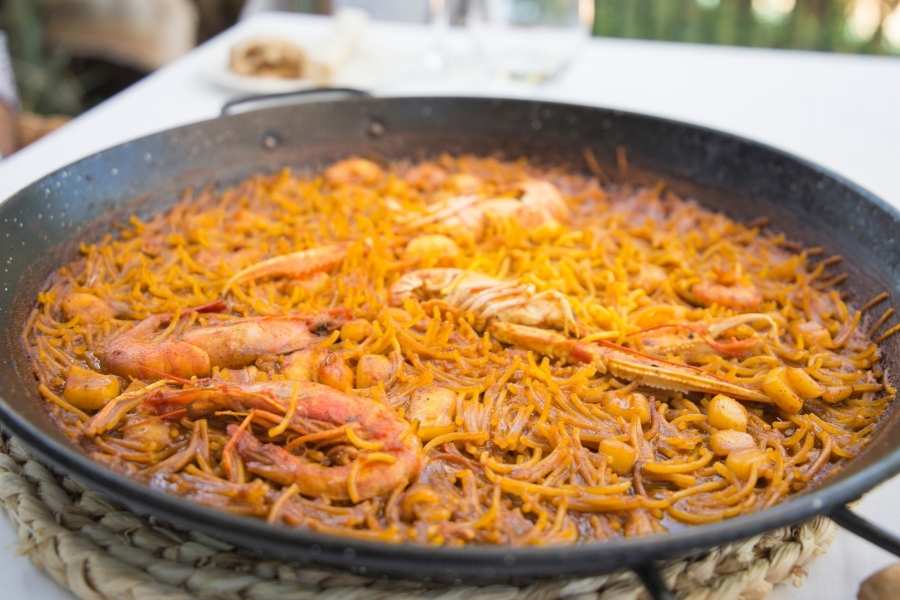
Beloved for its rich, smoky flavour, paella is Spain’s national dish. If you’re a fan, but your carb of choice is pasta rather than rice, why not try making fideuà? Originating in Valencia, just like classic paella, fideuà swaps rice for short, thin noodles – sometimes snapped vermicelli, but more often spaghetti.
First, the pasta is lightly toasted in a shallow pan, then it’s simmered in a rich seafood broth until a crispy layer forms at the bottom of the pan; this is called socarrat and is usually the most coveted part! Flavoured with smoked paprika and saffron, the pasta absorbs the aromatic broth and becomes incredibly flavoursome.
Just like traditional paella, fideuà is very versatile, and you can use any seafood you have to hand – though squid and prawns are often considered the ‘must-have’ ingredients. For maximum Spanish authenticity, serve your paella with a drizzle of aioli. We like this recipe from The Spanish Chef if you fancy giving it a try.
4. Pasta primavera, USA
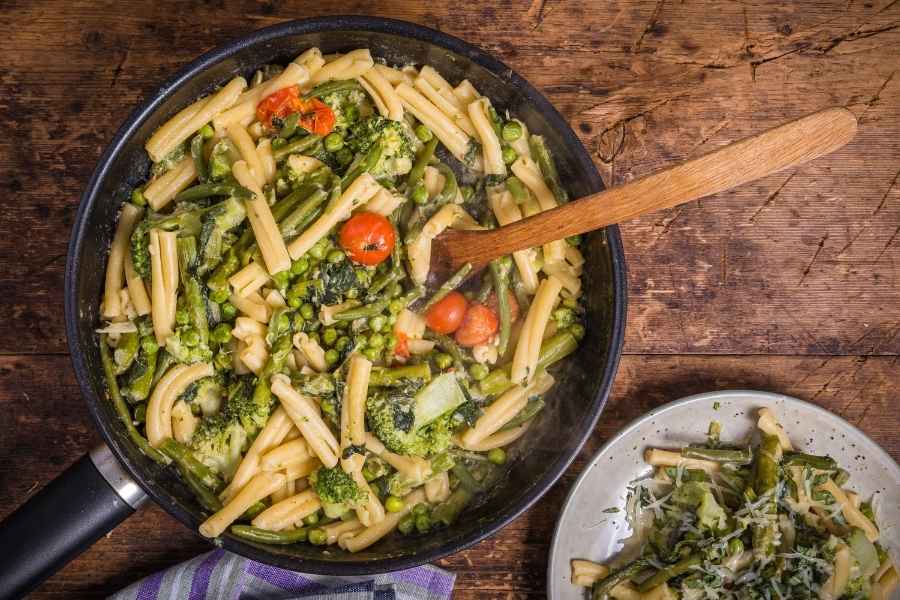
Although it might sound traditionally Italian, pasta primavera was created in the USA. According to legend, in 1975, famous restaurateur Sirio Maccioni visited Nova Scotia with his chefs. After his guests grew tired of meat and fish, Maccioni and his chefs whipped up a pasta dish using the fresh produce available.
At the time, pasta dishes in the US were very meat and cheese heavy, yet pasta primavera was all about showcasing fresh, seasonal veg. Inspired, the chefs returned to the US to refine their creation, and pasta primavera was first served in New York in 1975, where it quickly became an American staple.
Primavera means ‘spring’ in Italian, and the dish traditionally features spring veg like courgettes, peas, asparagus, tomatoes, and broccoli. However, it varies depending on what produce is available, and peppers, carrots, and squash are often added, too. The pasta is usually tossed in olive oil, butter, or a light cream sauce. You can try making it yourself with this recipe from RecipeTin Eats.
5. Fuži with Truffles, Croatia
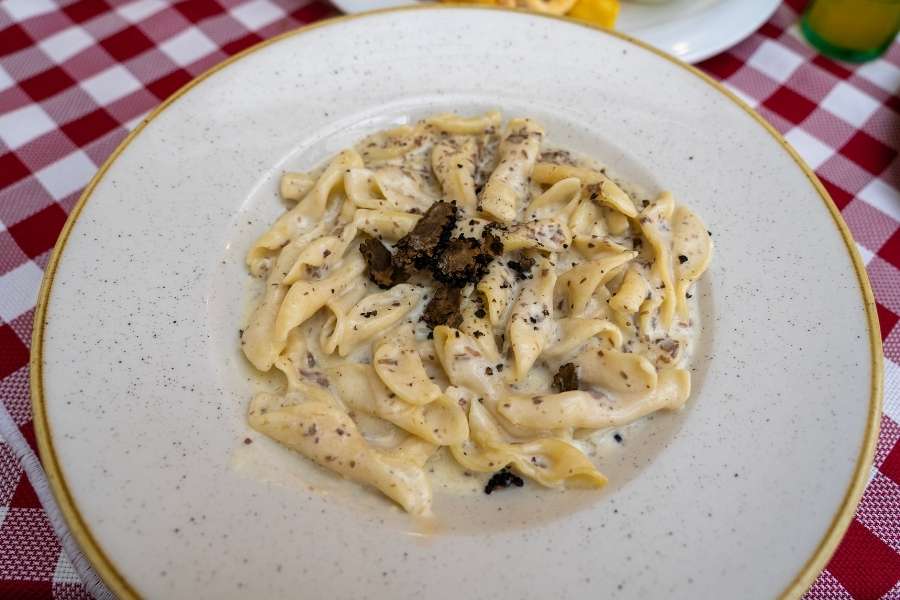
Given its proximity to Italy, it’s not surprising that pasta features so heavily in Croatian cooking. Thanks to its miles of coastline, seafood pasta recipes are perhaps most prevalent, but one of the most traditional dishes – especially in the Istrian peninsula in northern Croatia – is fuži with truffles.
Fuži is a traditional Istrian pasta that’s made by cutting the dough into small squares, then rolling each piece around a wooden stick to form short hollow tubes with pointed ends. The shape is perfect for holding rich sauces, but if you don’t want to make your own pasta from scratch, any narrow, hollow shape will work just as well.
The real star of the dish, however, is the sauce. Istria is one of Europe’s best-known truffle regions, and both black and white truffles grow here. Paired with a simple sauce made with butter, olive oil, or cream, the truffles’ delicious, earthy flavour can take centre stage. This is a dish that’s simple yet also wonderfully luxurious.
For a truly Istrian experience, pair it with a glass of Croatian wine and a drizzle of olive oil. To give it a go, why not try this recipe from Delish Globe?
6. Mentaiko pasta, Japan
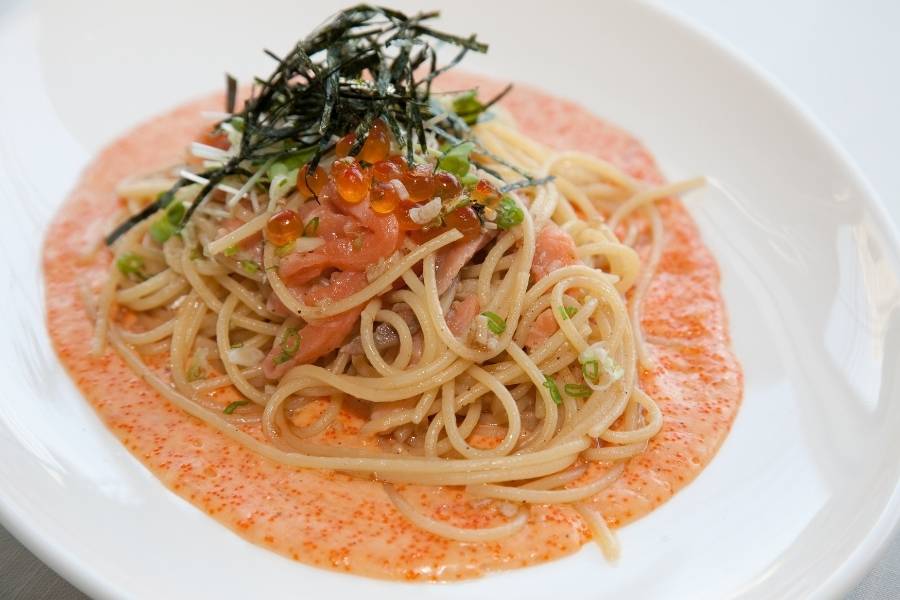
While many varieties of noodles have been eaten in Japan for over a thousand years, Italian pasta is a relatively new introduction. In the 1960s and 70s, Japanese restaurants began experimenting with wafu pasta: Japanese-style pasta dishes that combined Western ingredients with Japanese flavours like soy sauce, mushrooms, seaweed, and seafood.
Mentaiko pasta is arguably the most famous – and popular – of the wafu pasta dishes. It combines Italian spaghetti with mentaiko (salted pollock roe that’s been marinated in chilli and seasonings). The sauce gives the pasta a delicate pink colour and a rich, umami flavour with a subtle kick of spice. It’s often topped with shredded nori seaweed, fresh herbs, and a squeeze of lemon to elevate the dish.
Today, mentaiko pasta is a staple of Japanese cafés and home kitchens. This recipe might require a trip to an Asian supermarket (the mentaiko is usually found in the freezer section), but if you’re a fan of seafood pasta, it’s worth the effort. If you’d like to give it a go, try this recipe from Serious Eats.
7. Túrós Csusza, Hungary
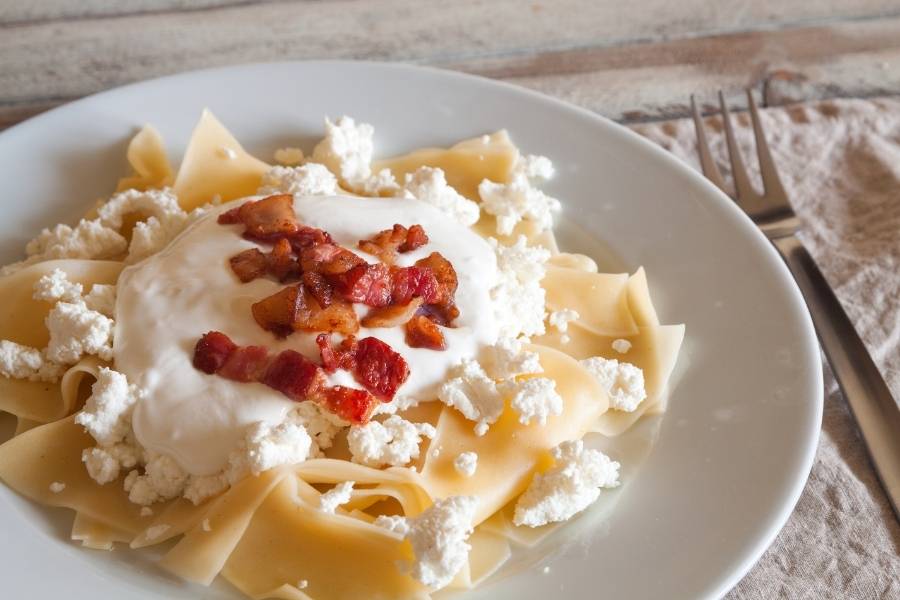
Túrós csusza is a simple yet classic comfort dish from Hungary that beautifully combines savoury and creamy flavours. It’s one of the country’s most popular peasant dishes and perfectly encapsulates Hungary’s history of rustic, farm-based cooking.
Wide, flat pasta noodles are tossed with túró – a fresh, crumbly local curd cheese – and sour cream. The pasta is then typically topped with crispy bacon, which adds a smoky, salty contrast to the mild cheese and sour cream. In some parts of the country, túrós csusza is also served with a dusting of sugar, so if you’re a fan of sweet-and-salty pairings, this may be something you want to try.
The dish is commonly served in local csárda-style restaurants – traditional taverns and inns found in the countryside. To make your own túrós csusza, try this recipe from Culinary Hungary.
8. Sopa de Fideos, Mexico
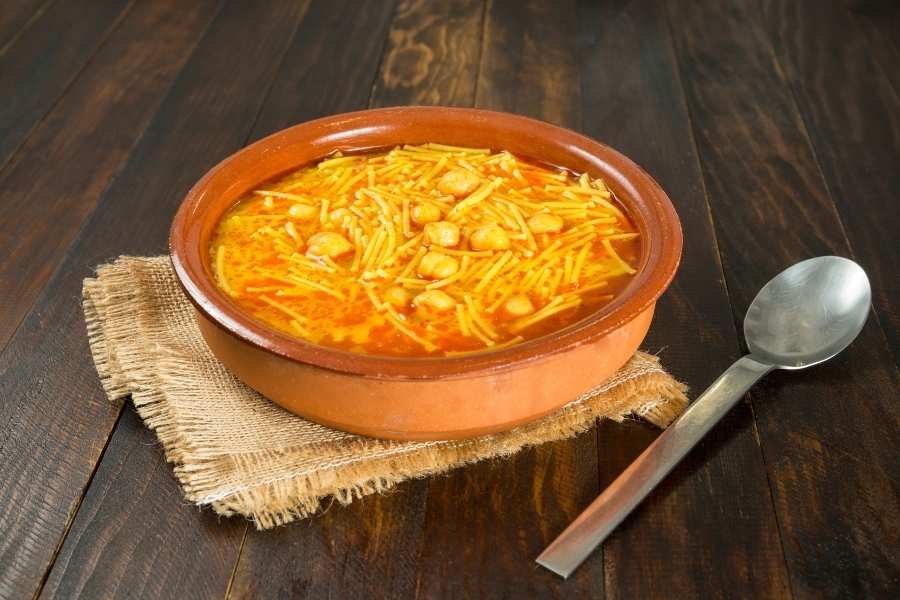
Pasta-based soups and stews like minestrone are some of the most comforting dishes in the world, and if you’re a fan, sopa de fideos might be the recipe for you. This humble, hearty dish is found all across Mexico and Central America, where it’s associated with childhood meals and home-cooked comfort food.
Because it’s so economical, it’s a staple in working-class kitchens; a warming, nourishing meal people turn to when money is tight. But despite its simplicity, it’s absolutely delicious. Made with broken long spaghetti or vermicelli, just like Spain’s fideuà, the noodles are first lightly toasted in oil, giving them a lovely nutty flavour, before being simmered in a tomato, garlic, and onion broth.
While the core of the dish remains the same, there are multiple versions. Often, potatoes or carrots are added, making it slightly heartier; sometimes, eggs, chickpeas, and fresh coriander are used; and other times, it’s served with beans and tortillas. Simple and satisfying, it’s a great recipe when you’re hungry, but there isn’t much in the house! For a step-by-step guide, see this recipe from Dora’s Table.
9. Spätzle, Germany
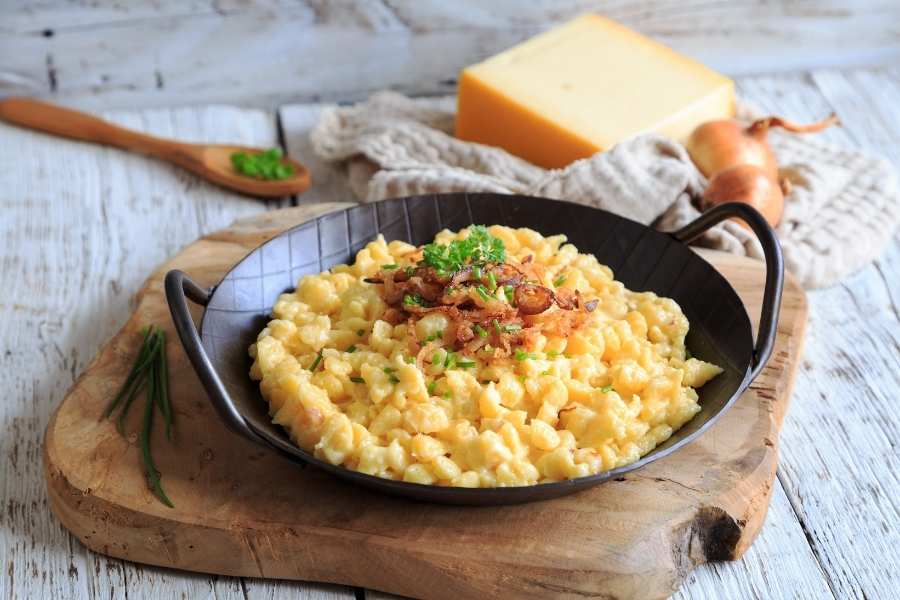
If you visit southern Germany, you’ll almost certainly come across spätzle. A staple of the historic Swabia region, which includes parts of modern-day Bavaria, this egg-based noodle dish has been eaten since the Middle Ages. Requiring only flour, eggs, salt, and water, it became a go-to meal for farming families, and today it represents centuries of rural cooking traditions.
The name spätzle comes from “spatz”, which means “little sparrow” – apparently because early versions of the shapes looked like little birds. Traditionally, the dough is pushed through a spätzle maker straight into boiling water to create the shapes, but a colander or grater can also work. Once they’ve been cooked in water, they’re often sautéed in butter to crisp them up.
The dough is looser than normal pasta dough – more of a batter – and the result is a satisfyingly chewy pasta-dumpling hybrid. It’s often served as a side to meats and stews, but also forms the basis of käsespätzle, where the noodles are layered with melted cheese and caramelised onions.
To make spätzle, try this recipe from Tastes Better From Scratch, and to make käsespätzle, check out this recipe from The Daring Gourmet.
Final thoughts…
From hearty, humble soups in Central America to truffle-laced delicacies in Croatia, pasta has travelled far beyond its Italian roots. It can be economical or luxurious, simple or indulgent, spicy or mild – yet it’s always satisfying, filling, and endlessly adaptable.
Each of the countries featured here has taken this simple staple and adapted it to their own culinary traditions – from jerk-infused pasta in Jamaica to paella-inspired noodles in Spain, and even dishes topped with seaweed and pollock roe in Japan.
So next time you’re craving pasta, why not look beyond the familiar spag bol or lasagne and try a global twist instead?
Are you tempted by any of these recipes? Do you have some other unusual pasta recipes you’d like to share? We’d love to hear from you in the comments below.
Selene Nelson is an author, freelance journalist, and lifestyle writer for Rest Less. After graduating from the University of Sussex with a degree in English Literature, Selene began contributing to many major newspapers and websites, and has written for the BBC, The Sunday Times, The Independent, Town & Country, and HuffPost. Her specialist subjects include food, travel, and health, though she enjoys writing about a wide range of topics (e.g. her two books are about veganism and psychopathy, respectively!). She enjoys cooking (particularly pasta and Asian noodle soups), reading, travelling, hiking, attempting to keep fit, and watching animal videos on YouTube.
* Links with an * by them are affiliate links which help Rest Less stay free to use as they can result in a payment or benefit to us. You can read more on how we make money here.
Join the discussion
Read our full commenting terms and guidelines