

- Home
- Leisure & Lifestyle
- Food & Drink
- 7 ways to use AI in cooking
How does Rest Less make money
We make money through advertising and commission from affiliate links, which enable us to offer Rest Less as a free service to our users. The content on this page may use affiliate links, which track traffic from our website to a third party provider and enable us to receive a commission or payment from any traffic we refer.
* Affiliate links on this page have an * next to them. We place enormous importance on our editorial independence and the integrity of our content which means that we will never change how we write about something as a result of an affiliate link.
Not so long ago, artificial intelligence felt like something from a science fiction film – but it’s quickly become a part of daily life. From virtual assistants to personalised recommendations, many of us use AI without thinking. But have you ever considered using it in the kitchen? It can be one of the easiest ways to make cooking easier, healthier, and more enjoyable.
Whether you like cooking from scratch or prefer quick, no-fuss meals, AI can take the hassle out of cooking while inspiring you to try new things. From planning weekly meals to salvaging leftovers and reducing food waste, there are many ways AI can be your secret sous chef. You don’t need to be a tech whizz to enjoy its benefits either; most AI tools are built into apps, so a smartphone or tablet is enough to get started.
So, if you wouldn’t mind a helping hand in the kitchen, how can AI help you? Here are seven easy and enjoyable ways to use AI in cooking.
1. Create personalised, weekly meal plans in seconds

If you sometimes find yourself staring into the fridge, unsure what to make, AI can be a lifesaver. Whether you’re cooking for yourself or family, meal-planning apps can create a week’s worth of personalised recipes in seconds. It’s almost like having your own virtual nutritionist.
AI-powered apps like Eat This Much or Lifesum can create daily or weekly meal plans tailored to your dietary choices (vegan, vegetarian, gluten-free, etc.), allergies or intolerances, health goals (weight loss, muscle gain, etc.), and calorie and nutrient needs.
If you’re trying to cook more sustainably or stick to a budget, some apps even consider factors like seasonal produce, local availability, low-cost swaps, and eco-friendly recipes (for example, reducing meat). This helps you plan meals that aren’t just healthy, but also better for the planet and your wallet.
To find out more about the best meal-planning apps, check out this guide by Cosmopolitan.
2. Discover creative ways to use leftover food
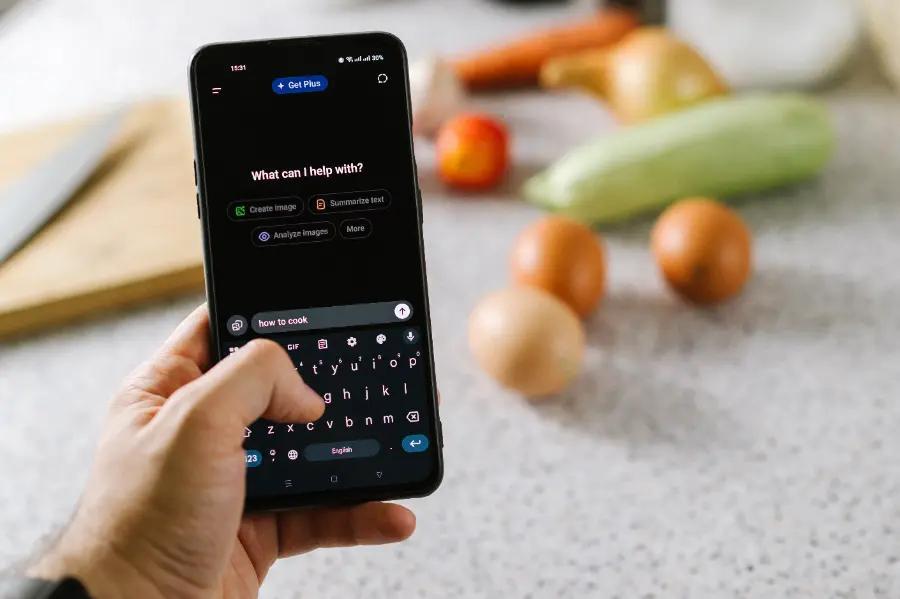
AI can be a game-changer for cutting food waste. Beyond analysing what’s already in your fridge and suggesting recipes based on those ingredients, it can also track expiration dates for perishable items and remind you to use them before they go off.
If you often end up with leftovers, apps like SuperCook or Whisk can transform them into new, creative meals instead of letting them go to waste. For example, last night’s roast chicken could become a zesty chicken salad or hearty chicken soup. These apps can then integrate those meals into weekly meal plans and automatically schedule them for lunch or dinner the next day.
For more tips on making the most of leftovers, see our articles: 10 money-saving recipes made from leftover foods and Four apps to reduce food waste and save money.
3. Get voice-guided recipes and automatic timers

If you’re not confident in the kitchen, AI can act as your personal cooking assistant, guiding you through every step of a recipe so you can cook with ease. Apps like SideChef offer interactive, voice-guided recipes, letting you cook hands-free. They also highlight key details like cooking times, temperatures, and ingredient order, helping you stay organised as you go.
If you tend to get distracted and end up overcooking or burning food, AI can help keep you on track, too. It can automatically set timers for each step (for example, boil pasta for 8 minutes, simmer sauce for 12 minutes) and even suggest smart ingredient swaps when you’re missing something; for example, using yoghurt instead of milk. This can help keep your cooking flow uninterrupted and avoid last-minute stress.
4. Discover new recipes, tailored to your taste buds

One of the most exciting ways to use AI in the kitchen is to discover recipes that match your tastes. AI is remarkably skilled at learning what you like – and the more you use it, the smarter it gets. Tools like YourTaste, Foodify, and SuperCook study your saved and rated recipes, then suggest dishes that perfectly fit your taste buds.
If you lean toward Asian flavours, for example, AI might start suggesting dishes featuring chillies, lemongrass, and fresh herbs like coriander and Thai basil. Do you prefer Italian comfort food, like pasta or risotto? It’ll learn to prioritise those, too. And if you’re following a specific diet, like plant-based, gluten-free, or low-sugar, AI can adapt its recommendations to suit your needs.
It’s like having a personal recipe curator who always knows what you’re in the mood for. Because AI can draw from thousands of recipes across different cultures and cuisines, it opens up a whole world of culinary discovery, introducing you to new ingredients, techniques, and flavour combinations you might never have tried otherwise.
5. Automatically generate shopping lists

If you often leave the supermarket only to realise you’ve forgotten what you actually went in for, AI can help. Over time, it learns your shopping habits, from the items you regularly buy to how often you need them, and can suggest recurring essentials when you’re running low. Pair that with a smart fridge or pantry app, and AI can track what’s already stocked in your kitchen so you never double-buy again.
Apps like Whisk or Mealime can also automatically generate shopping lists based on your weekly meal plan. They neatly categorise ingredients (for example, fruit, vegetables, dairy) and update lists in real time when you add or remove recipes. If you’re watching the pennies, AI can compare prices across different supermarkets or delivery services, flagging discounts, special offers, and cheaper alternatives to save you time and money.
6. Pair food and drink, based on budget, location, and personal preferences

Whether you’re planning a dinner party or simply wondering what to drink with your meal, AI can be a surprisingly effective flavour matchmaker. If you’re searching for the perfect wine pairing, apps like Vivino and WineGPT act as virtual sommeliers, analysing your dish’s flavour profile and suggesting wines that match it. These can even tailor recommendations based on your budget, location, or personal preferences, like whether you prefer dry or sweet wines, or red or white.
The more you interact with these apps by rating drinks or meals you’ve enjoyed, the better they understand your palate, making future suggestions even more personalised. If you don’t drink alcohol, AI can also recommend non-alcoholic pairings that balance your meal, matching sweet, sour, or spicy flavours with refreshing alternatives.
7. Get food presentation and plating ideas

Making food taste great is one thing…making it look great is another. Thankfully, AI can help with that, too. Apps like DALL·E or Midjourney can create styling visuals to inspire your presentation, while other tools can suggest plating ideas based on your style preferences; for example, you can specify minimalist, rustic, or fine dining. AI can also suggest colour palettes, garnishes, and textures to make your dishes visually striking.
If you’re exploring different cuisines, AI can also help you match your presentation with authentic styles. A Mediterranean dish might use casual, rustic plating, for example, while a Japanese dish could feature neat, symmetrical arrangements. If you love sharing photos of your creations online, AI can also suggest the best lighting, angles, and backgrounds, while tools like Foodie or Canva’s AI photo enhancer can instantly enhance your food images.
Final thoughts…
Over the past few years, AI has been reshaping the way we live…and it’s now transforming the way we cook. From meal planning and waste reduction to creative recipes and perfect plating, AI can make cooking easier, as well as more inspiring, sustainable, and fun.
By learning your tastes, habits, and goals, AI can act as a personal kitchen assistant, nutritionist, and recipe curator all in one. Whether you’re an experienced home chef or just starting out, it can help you experiment with confidence and make healthier, more cost-effective, and sustainable choices.
If you’re hesitant about using AI, or feel that cooking should be about creativity and connection rather than technology, it can help to think of AI as a handy kitchen companion. It doesn’t replace your skills or take over the kitchen; it simply saves time, reduces stress, and sparks inspiration when you need it.
Do you already use AI in the kitchen? Or are you tempted to give it a go after reading this article? We’d love to hear about your cooking experiences in the comments below.
Selene Nelson is an author, freelance journalist, and lifestyle writer for Rest Less. After graduating from the University of Sussex with a degree in English Literature, Selene began contributing to many major newspapers and websites, and has written for the BBC, The Sunday Times, The Independent, Town & Country, and HuffPost. Her specialist subjects include food, travel, and health, though she enjoys writing about a wide range of topics (e.g. her two books are about veganism and psychopathy, respectively!). She enjoys cooking (particularly pasta and Asian noodle soups), reading, travelling, hiking, attempting to keep fit, and watching animal videos on YouTube.
* Links with an * by them are affiliate links which help Rest Less stay free to use as they can result in a payment or benefit to us. You can read more on how we make money here.
Join the discussion
Read our full commenting terms and guidelines