- Home
- Leisure & Lifestyle
- Home & Garden
- 12 garden checklist ideas for May
How does Rest Less make money
We make money through advertising and commission from affiliate links, which enable us to offer Rest Less as a free service to our users. The content on this page may use affiliate links, which track traffic from our website to a third party provider and enable us to receive a commission or payment from any traffic we refer.
* Affiliate links on this page have an * next to them. We place enormous importance on our editorial independence and the integrity of our content which means that we will never change how we write about something as a result of an affiliate link.
The longer, brighter days of May are just around the corner, and they remind us that winter is now firmly behind us. But, it’s not quite warm enough to hang up our coats or relax into the idea of summer just yet! And the same pretty much applies to our green spaces, too.
With temperatures rising and more light available, most plants will have entered a new growth phase. But, while the threat of late frost still lingers, tender plants might need a helping hand through to the warmer months of the year.
From keeping plants warm to giving leggy perennials the Chelsea Chop, here are 12 things you can do to get the most out of your green space this month and make sure it’s looking its best for the summer.
1. Sow vegetables like sprouting broccoli, sweetcorn, and carrots
There’s great value in growing fruit and veg at home, and during May, there are plenty of delicious vegetables to be sown.
Vegetables that you can sow outdoors in May include…
- Cauliflowers, cabbages, Brussels sprouts, and broccoli. This is probably the last month to sow these veggies if you’d like to harvest them next year. However, sprouting broccoli can be sown up until July.
- Kale, spinach, Swiss chard. These can all be sown directly into the ground this month.
- Herbs. Sow dill, chive, coriander, and parsley directly into the ground or in containers. However, some tender or half-hardy young plants, like rosemary, sage, and thyme, might need protection from frost on chilly nights.
- Root vegetables. Beetroot, radishes, carrots, swede, and turnips can all now be safely sown outside.
- Sweetcorn. Plant seeds in blocks rather than rows for successful pollination. Corn seeds are best planted in a sunny spot towards the end of the month when the risk of frost has passed.
- Salad onions. These make for a quick harvest and should be grown in rows for best results.
- Peas. This includes maincrop peas, mangetout, and sugar snap peas.
Fruits and vegetables that can be sown indoors and planted once the risk of frost has passed include chillies, peppers, cucumbers, squashes, French and runner beans, melons, and lettuce.
2. Protect tender plants from late frosts
The majority of the UK will still be at risk of late frost until the end of May, though in some regions, frost can occur until early June.
So, although the days are lighter and warmer than they were during winter, tender plants (those that come from warmer climates and haven’t developed the ability to withstand cold temperatures) will still be at risk of frost damage, especially at night when temperatures plummet.
You can protect tender plants by covering them with a layer of horticultural fleece to keep them warm. To find out more about the pros and cons of fleece covers and how to choose one, check out this article on the RHS website. Or, you can buy fleece covers on Amazon.
If you’re growing any tender plants inside and plan to plant them outside as the weather warms up, it’s worth waiting until the risk of frost has passed before you do so. It’s also a good idea to ease plants into their outside environment by moving them out into a greenhouse or under cover first, to give them a chance to adapt to their new surroundings.
Alternatively, you could try putting them outside for a couple of hours a day to start with, then gradually increasing this until they’re ready to move outdoors full-time.
For more tips and advice on protecting tender plants from spring frost, check out this advice from Gardeners’ World.
3. Give leggy perennials the Chelsea Chop
The Chelsea Chop is the name for the process of cutting leggy perennials such as phlox, campanulas, and echinacea back by roughly a third or a half to make them more compact and encourage bushy growth.
The chop is best carried out in May or June before flowers form, and it not only reduces the need to stake plants, but it also makes it easier for plants to survive gusty winds because they become stockier and sturdier.
Giving plants the Chelsea Chop will usually delay their flowering – though when they do flower, blooms will be smaller and more abundant, and will often stick around until later in the year.
Experienced gardeners often advise giving the Chelsea Chop to some plants to stagger flowering and have beautiful blooms for longer.
For more tips and advice on how to carry out the Chelsea Chop, have a read of this advice from The English Garden.
4. Earth up potatoes
Providing that they’re grown in warm and moist conditions, potatoes will grow pretty quickly – and when their stems reach 10cm, it’s time for an important part of the growing process, known as ‘earthing up’. This simply means taking some soil and piling it up around your leafy potato stems, either by hand or using a hoe.
Earthing up is a task designed to protect plants from frost damage (as the tender leaves below the soil will escape any cold snaps). It also helps smother competing weeds and makes sure that developing potatoes (which grow close to the soil surface) aren’t exposed to light, as this can cause them to become poisonous. Plus, earthing up allows roots to grow longer and form more tubers, which often means more potatoes!
To see exactly how earthing up is done, check out the video from Crocus below.
5. Plant dahlias, begonias, and canna tubers
Dahlias, begonias, and canna tubers can be safely planted in the ground outside this month. They take around five weeks to sprout, by which time their tender tops should be free from frost risk.
The great thing about these tubers is that once they’ve finished flowering later in the year, their fleshy root systems can be stored in sawdust and saved for next year. Check out this advice from The Fabulous Garden to learn more about how to do this.
If you’ll be planting tubers that you stored from last year, be sure to soak them overnight to perk them up and add some compost to the soil when planting.
Dahlias will bloom between June and December, while begonias and canna will flower throughout summer until the first frosts.
6. Take part in the No Mow May challenge
It can be tempting to start mowing your lawn more regularly as soon as you see it’s having a spring growth spurt. But research shows that leaving your grass to grow wild in May can significantly benefit gardens and their wildlife.
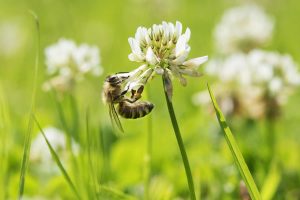
One of the main reasons for this is that it gives lawn flowers such as daisies and white clover a chance to flower and produce nectar for bees and other pollinators.
Plantlife’s Every Flower Counts survey found that the highest production of flowers and nectar sugar was on lawns cut once every four weeks, and that making simple changes to our lawn mowing habits could result in the production of enough nectar to feed up to 10 times more bees and pollinators. It also found that areas with unmown grass had greater flower diversity, making them excellent nectar sources.
As a result of the survey, Plantlife has a ‘No Mow May’ challenge to encourage people to put off mowing their lawn until at least June.
To read more about No Mow May and join the movement, check out this page on the Plantlife website.
7. Train clematis plants
Clematis is referred to as ‘The Queen of the Vines’, and for good reason. These woody vines (of which there are over 250 varieties) can climb almost anything, including trees, trellises, and garden fences – and they produce blooms in an array of stunning colours, from hot pink to brilliant blue.
If you can train your clematis to climb, it’s easier to create a beautiful floral display and keep them under control. Clematis are surprisingly easy to grow and can tolerate many soil types and conditions – some varieties will just need pruning at certain times to keep them healthy.
This month, train summer-flowering clematis by tying in spring growth, or train young and workable clematis by providing them with a structure, such as a wall or an arch to climb. Check out Balcony Garden Web’s list of 27 beautiful ideas with clematis in the garden to get a few ideas.
Late spring is also a good time to buy and plant clematis – the RHS has a helpful guide that’ll get you up to speed on how to grow and care for them. Alternatively, have a watch of B&Q’s video below.
8. Keep an eye out for viburnum beetle and lily beetle grubs
Viburnum beetle grubs
Viburnum beetles like to eat the leaves of some viburnum plant species, which can cause serious plant damage. In late-April to early-May, overwintered viburnum eggs hatch to produce creamy-yellow larvae with black markings that are up to 8mm long.
These larvae feed on viburnum leaves until mid-summer, when they move into the soil to pupate. Then, in July and August, the adult viburnum beetles (which measure around 4-6mm and are greyish-brown in colour) emerge and begin to feast on the leaves, while preparing to mate and lay their eggs.
You’ll usually know if you have a viburnum beetle infestation because there’ll be lots of small holes all over the leaves of your viburnum plants, and you might also notice a nasty smell, caused by larvae’s excrement.
The best way to prevent plant damage without using chemicals is to pick off the larvae by hand and destroy them. To learn more about viburnum beetles and how to control them, check out this article from Notcutts.
Lily beetle grubs
Like viburnum beetles, lily beetles, and lily beetle grubs will nibble away at plant leaves – in this case, the leaves of lilies, fritillaries, and other members of the lily family Liliaceae. Left to munch, these tiny beetles can ravage plants in just a few days.
Lily beetles are bright red, but often appear dirty red because they cover themselves with their own excrement to ward off predators. Adult lily beetles emerge from the soil between March and May after a long winter, and begin to feed on lily plants.
Once they’ve got their strength up, they lay their bright red or orange eggs on the underside of plant leaves between April and September. Although only around 8mm, lily beetles can lay up to 450 eggs at a time.
Eggs typically hatch a week after being laid, and the larvae begin feeding on lily foliage. The larvae look like reddish-brown grubs, but with their disguise, they sometimes look like tiny piles of brown poo.
When the larvae fully mature, they move into the soil to pupate, and the next generation of Lily beetles emerges in spring the following year.
Lily beetles can be tricky to catch because as soon as they sense movement, they drop to the ground and lie on their backs – so, if trying to remove them by hand, it’s best to place one hand underneath the plant to catch them as they fall.
For more tips and advice on how to control Lily beetles, check out this article from Gardeners’ World.
Alternatively, to find out what other common garden pests to look out for, have a read of this information from Hillier.
9. Sow flower seeds for a splash of colour this summer
If you want to make sure that your garden is as bright and beautiful as possible over the summer months, there’s still plenty of time to sow some flower seeds.
May is a great time to sow flower seeds such as cornflowers, nasturtiums, zinnias, and sunflowers.
Cornflowers are great at attracting birds, butterflies, and other beneficial insects, and will typically flower 10-11 weeks after spring sowing.
Nasturtiums can be planted outside in pots or flower beds, and will usually sprout in one to two weeks.
Zinnias should be sown directly into a weed-free flower bed because their developing roots don’t like to be transplanted and disturbed. With proper care, you should have bright blooms within 60 days.
May is the last month for sowing sunflower seeds to give them enough time to germinate and flower over the summer, as this can take 11-18 weeks.
For a striking display of red blooms next spring/summer, you can also plant poppy seeds this month. Though seeds will germinate within seven to 30 days, the plants won’t produce flowers until the following year.
10. Inspect plant ties and loosen them if needed
Earlier in April, we advised you to stake plants like pothos and philodendrons that are likely to grow tall and/or become top-heavy. This month, it’s a good idea to stake any additional plants that you think might need extra support, and to inspect and loosen tight ties on stems that now have a wider girth.
If you’d be interested in reading more about how to stake your plants this spring, check out this page from Gardeners’ World. Or, to learn more about alternative supports that might help your plants to grow, such as a trellis or cage, have a read of House Beautiful’s advice here.
11. Lift and divide spring-flowering perennial plants five weeks after blooms have faded
Spring-flowering perennial plants like daffodils and crocuses that tend to grow in clumps can be lifted and divided this month. Though you should make sure it’s been around five weeks since the flowers started to fade before you do this.
Lifting clumps of plants out of the ground, dividing them, and replanting them, will make sure they grow back healthily – and vigorously – next year.
Take a look at this information from Gardeners’ World about how and when to divide spring-flowering bulbs to find out more.
It’s also important to resist cutting back spring perennials until their leaves have turned yellow and dried out. This gives plants time to move nutrients from the plant back down into the bulb, where they will be stored, ready for next year.
During the time between the end of flowering and the plant drying out, you can also feed bulbs with an all-purpose fertiliser to help them store as many nutrients as possible.
If you’d like to know more about how to look after your spring bulbs when their blooms have faded, then have a read of this advice from Longfield Gardens – or for specific advice on daffodil care, have a watch of the video below.
12. Keep up with weeding
It’s useful to get into the habit of hoeing or pulling up weeds from your pots and flower beds once a week to keep them under control and prevent them from overrunning your garden.
It can also be helpful to make sure you’re clued up on the different types of weeds and understand how they grow – so you can work out the best way to tackle them.
To learn how to identify common weeds – such as Japanese knotweed and common chickweed – it’s worth checking out this guide from Roots Plants. Or, for five different ways to remove weeds from your garden, have a read of this article from Gardeners’ World.
While weeds can be pesky and disrupt your garden, it’s important to remember that they can also contribute to the survival of wildlife, such as bees and caterpillars.
To find out how to take a gentler approach to weed control, you might want to have a read of The Guardian’s article: How to weed in a wildlife-friendly way.
Tip: Although weeds are commonly seen as an annoyance, there are some that you can actually eat, such as ground elder and greater burdock. Have a read of this article from Huffington Post to find out more about how you could make use of certain garden weeds.
Final thoughts...
May is a time when we can put thoughts of winter behind us and start enjoying long, sunny days. And what better way to do so than by nurturing our green spaces?
For more tips and advice, head over to our gardening section, where you’ll find more monthly gardening guides, as well as tips on houseplant care, and ideas for plants that look good all year.
Or, if you’re looking to learn more with tutorials and talks, check out our home and garden sessions over on Rest Less Events.
Do you have any additional gardening tips for May that you’d like to share? Or perhaps you’d like to share a photo of your own green space? We’d love to hear from you in the comments below!
Elise Christian is Lifestyle Editor at Rest Less. She joined Rest Less in 2018 after achieving a first class Master’s Degree in Journalism from the University of Kent, and writes across a range of lifestyle topics such as mental health, home and garden, and fashion and beauty. Prior to this, she worked as a freelance writer for small businesses and also spent a year training to be a midwife. Elise spends her spare time going to the gym, reading trashy romance novels, and hanging out with loved ones. She also loves animals, and has a fascination with sharks and tornadoes.
* Links with an * by them are affiliate links which help Rest Less stay free to use as they can result in a payment or benefit to us. You can read more on how we make money here.

Start your new chapter abroad with this free retirement guide
With Your Overseas Home, you will receive honest guidance, expert advice and a helping hand every step of the way.
Download the free guide to find out how to cut everyday living costs, get tax, pension and visa checklists, and discover top tips from the expat community.
Join the discussion
Read our full commenting terms and guidelines