- Home
- Leisure & Lifestyle
- Home & Garden
- 8 garden plants that do the hard work so you don’t have to
How does Rest Less make money
We make money through advertising and commission from affiliate links, which enable us to offer Rest Less as a free service to our users. The content on this page may use affiliate links, which track traffic from our website to a third party provider and enable us to receive a commission or payment from any traffic we refer.
* Affiliate links on this page have an * next to them. We place enormous importance on our editorial independence and the integrity of our content which means that we will never change how we write about something as a result of an affiliate link.
Most of us want a garden full of colour, something that looks intentional and lovely, and gives our garden structure throughout the year. Yet, wouldn’t it be wonderful if we could achieve all of that without spending every weekend on our knees with a trowel, fighting with weeds?
The good news? That garden exists, and you can have it. The secret is simply knowing which plants to choose. In fact, a huge amount of the hard work in a garden can be done for you by the right plants. Plants that come back year after year without being asked. Plants that suppress weeds just by existing. And plants that ask for virtually nothing and give you an enormous amount of colour, scent, and structure in return.
Get a few of these doing the heavy lifting for you, and you can spend far less time maintaining your space and far more time actually enjoying it.
Here are eight great choices for a beautiful, low-maintenance garden.
1. Hardy Geranium 'Rozanne'
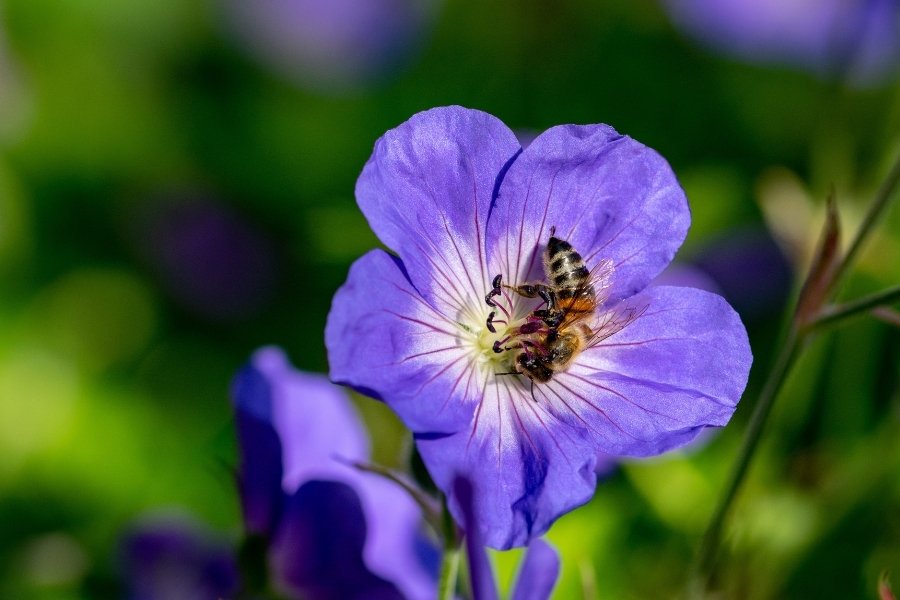
If there’s one plant that comes up more than most in conversations about low-maintenance options with gardeners, it’s probably the charming Geranium ‘Rozanne’ – and for good reason.
This hardy perennial is one of the longest-flowering plants you can buy, with beautiful violet-blue flowers blooming in late spring and staying vibrant and vivacious right through to the first frosts of autumn. That’s months’ worth of colour for your garden, with almost no intervention required from you once they’re planted.
‘Rozanne’ is also incredibly tolerant. Sun, partial shade, a variety of different soil types…it’s not fussy. It will happily spread to fill gaps in your borders, which comes with the bonus of suppressing weeds naturally as it goes. All you have to do is cut the whole plant back hard once a year, usually in early spring, and it will bounce back enthusiastically.
One job, once a year, and in return you get their electric, blue-purple colour from May/June through to September. You can find ‘Rozanne’ at Farmer Gracy.
2. Lavender
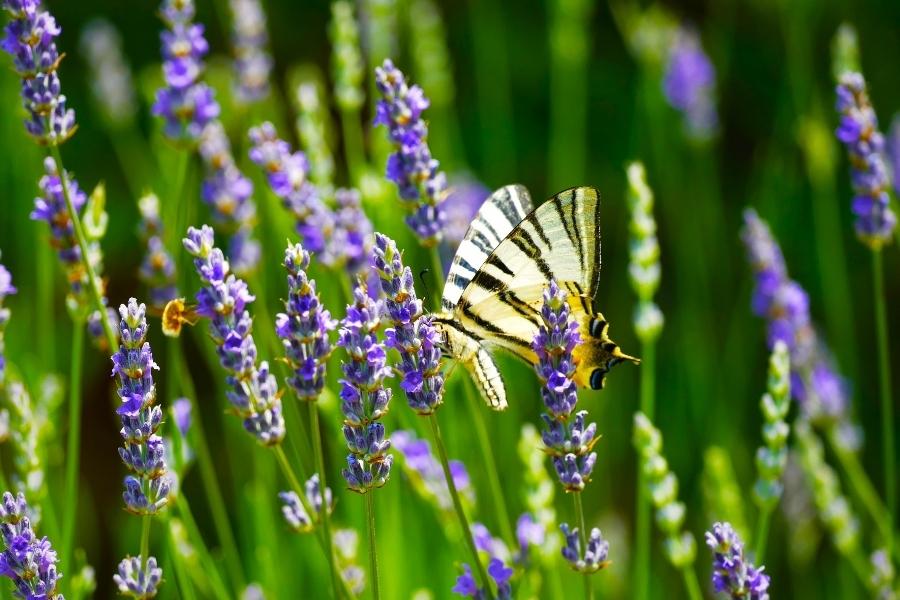
Lavender is so easy, beautiful, and fragrant that it almost feels like cheating. As well as looking and smelling spectacular, it’s really beloved by bees and pollinators, it works beautifully as edging, thrives in pots and borders, and best of all, it’s perfectly happy when ignored. The one thing lavender wants is good drainage and good sun – give it those two things, and it will reward you handsomely for years.
The only maintenance involved is a light trim after flowering, which keeps the plant compact and prevents it from becoming too woody. In return, you get its gorgeous silvery-green foliage year-round, its iconic purple flower spikes throughout summer, and a scent that will make people who walk past your garden stop and breathe deeply. And of course, some sweetly smelling bouquets for your home, too.
You can get garden-ready lavender at your local garden centre or delivered from J Parkers.
3. Choisya (Mexican Orange Blossom)
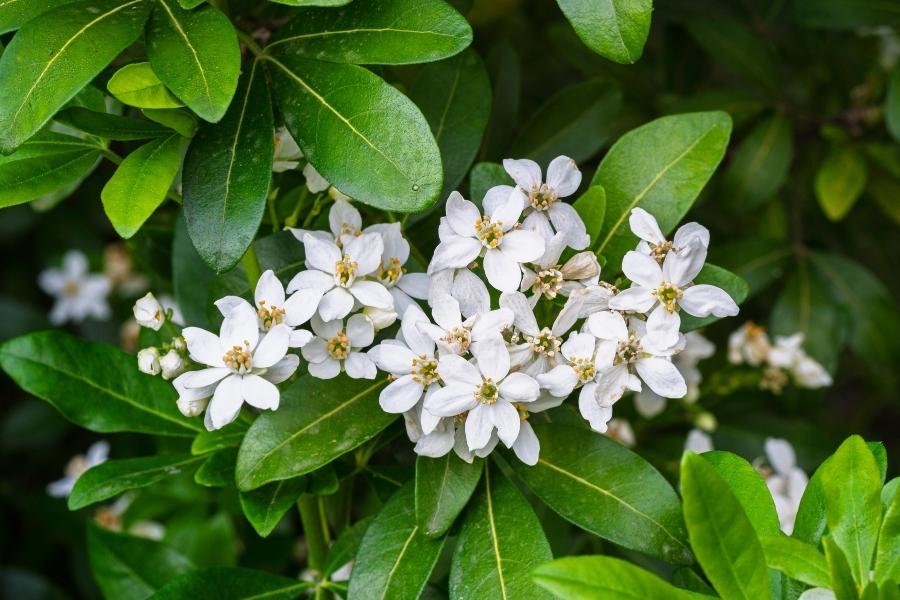
Choisya ternata is one of those plants that truly earns its place in your garden every single day of the year. It’s an evergreen shrub, so it’s an asset to your garden all year. It forms a naturally round, neat mound that needs little intervention on your part to look tidy. Your main work is in planting Choisya, as they need enough space for proper air circulation and growth.
Water them regularly while they’re getting established, but do be mindful not to overwater. During the growing season, they require minimal care, but if you do give them an occasional pruning after they flower, it encourages a shrubby, dense plant and – even better – it might even trigger a second or third flowering period.
In late spring, Choisya covers itself in thick clusters of small white flowers with a delicious citrus scent that will carry on the breeze through your garden. The second bloom often appears again in late summer, and then possibly even a third.
Choisya is a very shade-tolerant shrub, which is a massive “pro” if your garden isn’t blessed with wall-to-wall sunshine. It’s not overly fussy about soil, and rarely needs anything more than a light tidy-up after flowering.
If you’re looking for an evergreen shrub that will anchor a border for years and is unlikely to cause you much trouble, Choisya is a very strong choice indeed. Gardener’s Dream can deliver it to your door.
4. Hellebore (Helleborus orientalis)
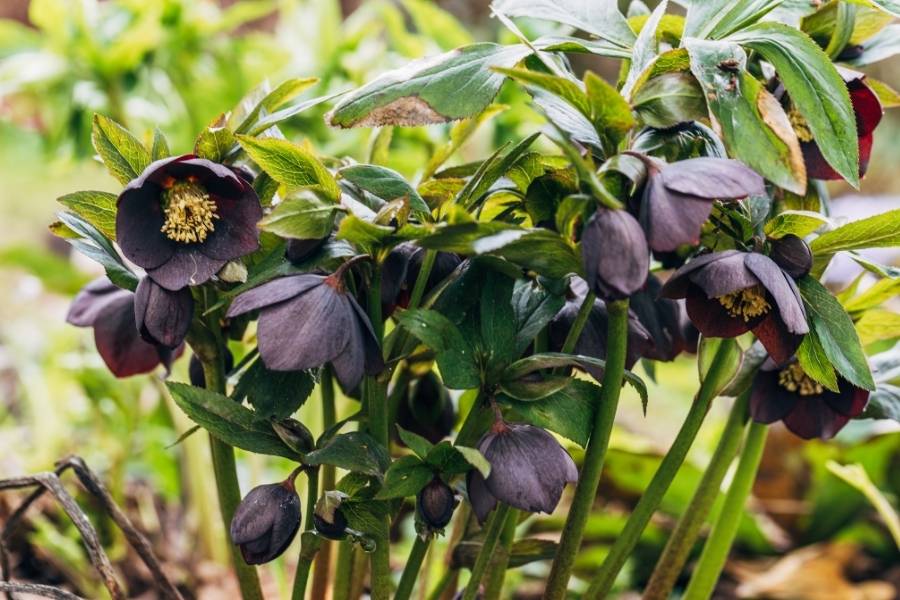
Hellebores are the heroes of the late winter garden – they flower when almost nothing else will, usually from January right through to the end of March, bestowing the most beautiful range of colours on gardens that have been winter-bare for months. From deep plum and burgundy to dusty pink, pale blush, cream, and white, these flowers even feel perfect for the season in which they appear.
Hellebores are shade-tolerant to a greater degree than many plants, which makes them perfect for those tricky dark corners where few plants will be happy. Plus, once established, they’re remarkably self-sufficient, quite drought-tolerant, and ask very little beyond having old and damaged leaves removed in late winter to let the flowers shine. They also make excellent ground cover underneath trees, and in woodland-style borders, helping suppress weeds as they spread.
You can find Hellbores at J Parkers.
5. Verbena bonariensis
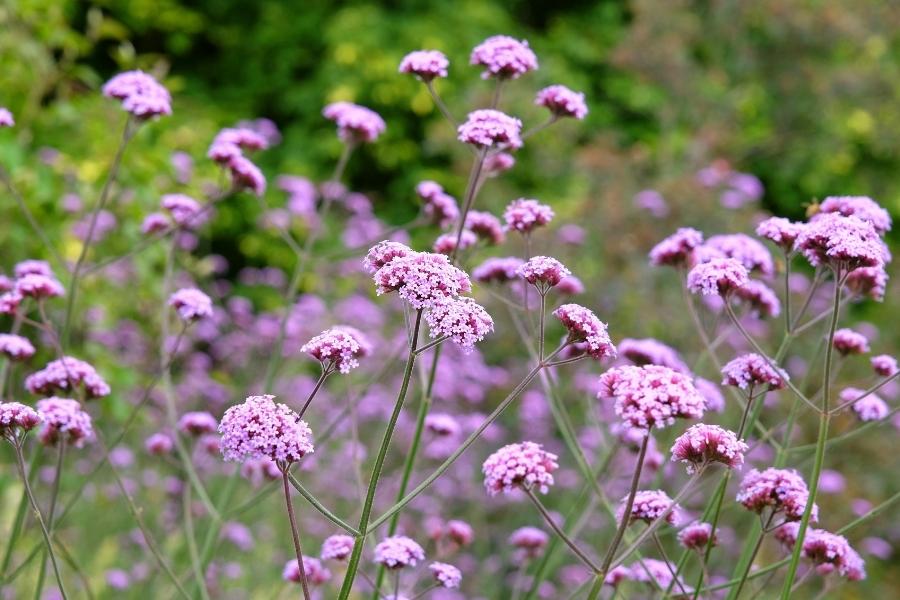
Verbena bonariensis is a wispy and whimsical perennial that is beloved by gardeners all over the UK. Tall, airy stems carry tiny clusters of vivid purple flowers that seem to float above everything around them like lilac clouds. Butterflies find the flowers irresistible, humans love them too, and it’s also conveniently one of the most low-effort plants you can choose to grow.
Technically a short-lived perennial, Verbena self-seeds freely and fecundly, which means that once you’ve introduced it, it will effectively maintain its own population year after year without you having to do a thing. The transparent, branching stems weave beautifully through other planting without swamping or smothering anything. They add height, dimension and movement, with those gorgeous little purple clouds appearing from midsummer onwards.
Leave the stems standing over winter for the birds, then cut them back in spring. The Verbena bonariensis is well worth the small effort they ask for. You’ll find seeds at Gardeners Dream.
6. Ornamental Grasses (Miscanthus or Stipa)
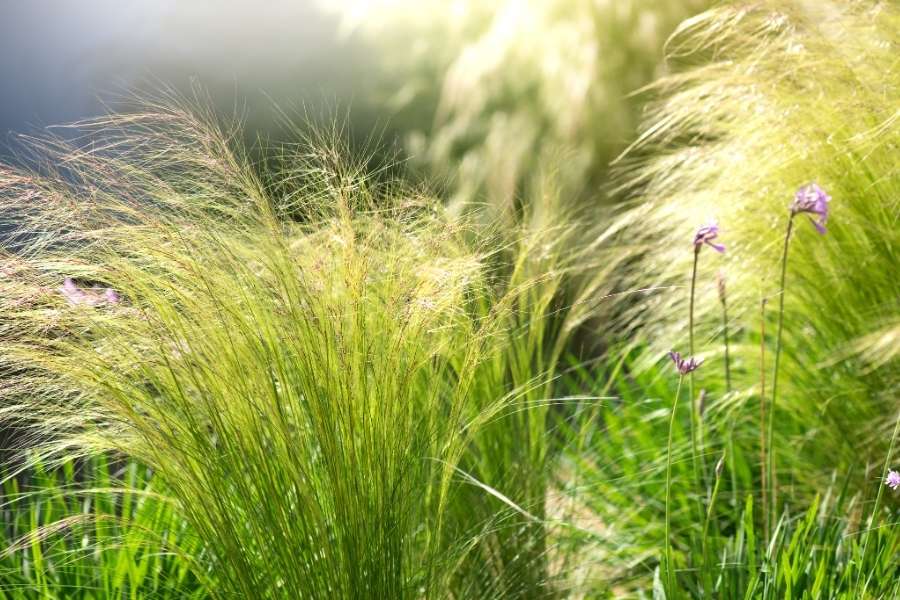
If you’ve never grown ornamental grasses, it might be time to dip your toe! They’re among the most genuinely low-maintenance plants available; they’re dramatic and pretty, and they bring a movement to your garden that nothing else can quite replicate.
In summer, the foliage is lush, thick and architectural. In autumn, those beautiful feathery plumes appear. Throughout winter, the dried stems and seedheads provide structure and catch the light on frosty mornings in a really gorgeous way. Then, in late February, all you have to do is cut the whole clump down to about 15cm, so that it all starts again.
Miscanthus “Lady in Red” is a beautiful, elegant variety that stays compact at a maximum of around 1.3 metres. You’ll find it at Farmer Gracy.
7. Sedum (Stonecrop)
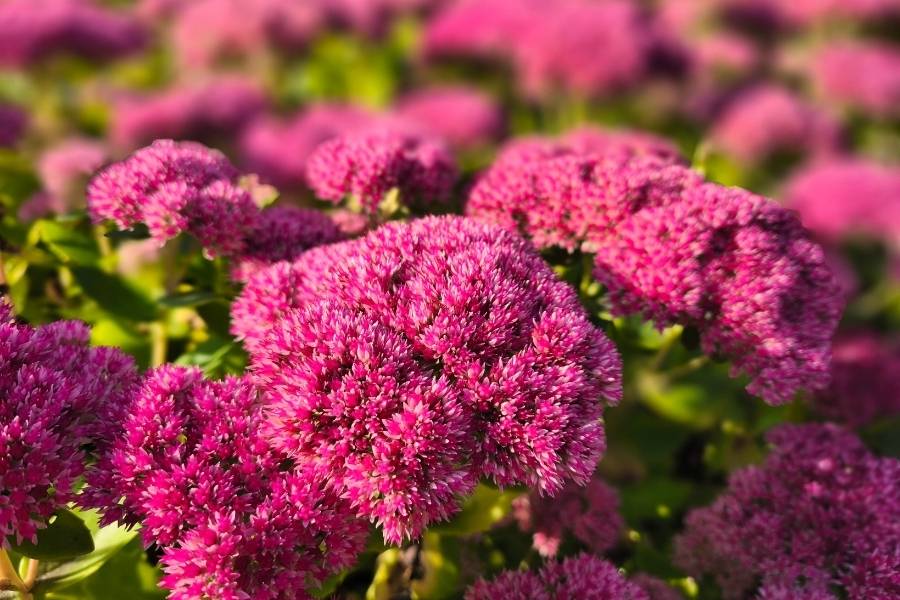
Sedum is the perfect plant for anyone who finds themselves forgetting to water things – because it doesn’t just tolerate neglect, it actively prefers it. A succulent perennial, it stores plenty of water in its thick, fleshy leaves, making it extraordinarily drought-tolerant and well able to fend for itself for extended periods.
Sedum also thrives in poor soil, loves the full sun, tolerates rocky and sparsely soiled areas, and produces gorgeous clusters of pretty star-shaped flowers in shades of pink and red in late summer and autumn, right around the time so many other plants are winding down for the year.
There’s also real winter benefits to sedum – the dried flowerheads will remain well into the cold months and provide structure in your garden, and better yet, winter food for birds. Leave them standing until spring, then simply cut them back to their base and watch the brand new growth emerge. Sedum works well in gravel gardens, rock gardens, along the edges of paths, and in pots where watering can sometimes be inconsistent.
Farmer Gracey has a lovely range of Sedums you can order online.
7. Viburnum tinus
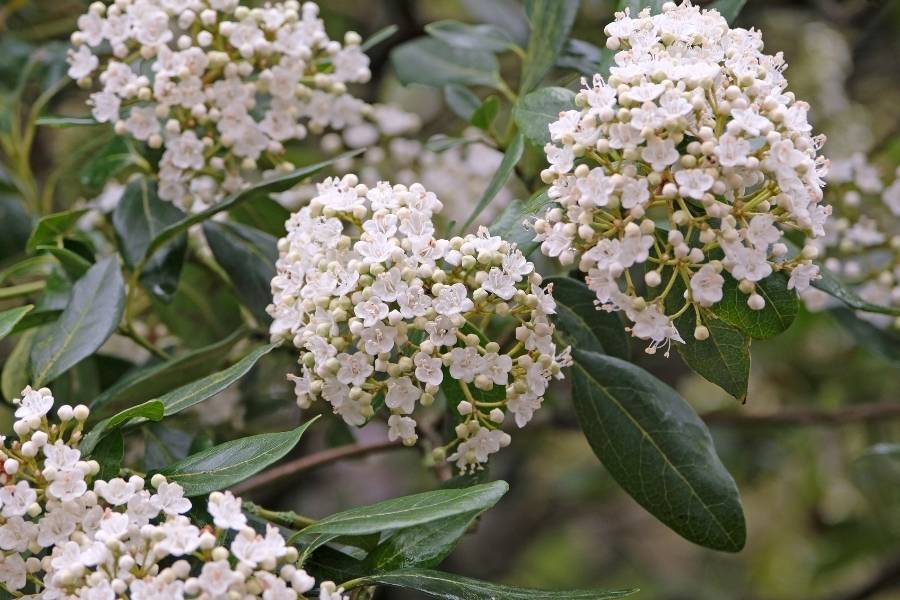
A true evergreen “garden workhorse”, this plant provides structure, cover, and year-round presence without requiring your constant effort and management. Viburnum tinus is compact but robust; it forms a lovely dense, rounded shrub with attractive glossy leaves, and from late winter right through to spring, it produces beautiful bunches of small white flowers tinged with just a hint of pink.
As far as its hardiness…well, it’s tough as old boots. It’s tolerant of shade, most soil types, and coastal conditions, and is happy to be left alone; everything you want in a low-maintenance plant for your garden. It rarely needs pruning beyond a little tidy up after it flowers, as it tends to stay fairly neat and well-behaved without intervention. If you want a strong, bright evergreen that will bolster your garden through every season, can look after itself, and asks very little of you, Viburnum tinus might just be the one.
Why not give it a go with an order from Gardener’s Dream?
Final thoughts…
As many beautiful low-maintenance plants as there are, it’s worth remembering that one of the best things you can do for a low-maintenance garden – beyond choosing those plants – is to mulch.
Laying a good thick layer of bark mulch around your plants in spring does an enormous amount of hard work for you: it suppresses weeds, locks in moisture, regulates temperature, and, of course, improves the soil as it breaks down over time. A day’s effort will save you lots of labour and time in the long run.
It’s also worth remembering that even the toughest, most resilient and self-sufficient plants need a little help in their first season when they’re getting established. Water them in well when you plant them, give them a chance to get their roots established, and they’ll repay that early effort for years, or maybe even decades, to come.
For more reading, why not head over to our home and garden section?
What are your favourite low-maintenance garden plants? We’d love to hear about them, and any planting hacks or tips you might have, in the comments below.
Dee Murray is a freelance journalist and copywriter, and a lifestyle writer for Rest Less. After graduating from DIT Dublin with a degree in Scriptwriting and the University of Sussex with an MA in Creative Writing, Dee began writing for experience and adventure companies. She then founded Ryanair’s first travel blog, which she managed and wrote for for five years. She writes about a range of topics but most often about travel and adventure or women’s interests. She also has a keen interest in behavioural psychology, mental health, and nutrition and wellness. When she’s not writing, you can find her in the woods with her dog Boudicca, playing piano (poorly), or tending to her plants and vegetables.
* Links with an * by them are affiliate links which help Rest Less stay free to use as they can result in a payment or benefit to us. You can read more on how we make money here.

Start your new chapter abroad with this free retirement guide
With Your Overseas Home, you will receive honest guidance, expert advice and a helping hand every step of the way.
Download the free guide to find out how to cut everyday living costs, get tax, pension and visa checklists, and discover top tips from the expat community.
Join the discussion
Read our full commenting terms and guidelines