Sponsored content

More and more people are moving to retirement communities in later life – and it’s easy to see why. With life expectancies rising, older adults are looking for ways to stay social, look after their health, and unlock more time for the things they love – all of which retirement communities can help with.
Choosing whether a retirement community is right for you or a loved one is a big step. But this decision can be made even more challenging by the many myths and misconceptions surrounding them – for example, that they’re drab, clinical, and only for people wanting to wind down.
However, in many cases, modern retirement communities are worlds away from these outdated stereotypes. Many are vibrant, sociable places designed to help residents get more from life, not less, while offering a little extra support when needed.
With this in mind, we’ve partnered with Life in Place from Anchor, who build and manage retirement communities for over 55s across England, to debunk 10 of the most common myths surrounding them.

Myth 1 – Retirement communities are care homes
One of the most common misconceptions about retirement communities is that they’re the same as care homes. But this is far from the truth.
Many retirement communities, like those built and managed by Life in Place, are designed for older adults who can live independently. These are often called independent living communities or later-living communities.
While some independent living communities have additional support services, such as 24-hour emergency response systems, they don’t typically offer care services. Instead, people choose them for their various benefits over conventional homes – including organised activities, wellness programs, and the chance to join a ready-made community of people at similar life stages.
If you or your loved one needs more support than this – either now or down the line – Life in Place communities allow residents to fund and organise their own in-apartment care. Or, you might decide that another type of later-life housing – such as an assisted living community, care home, or nursing home – may be a better choice.
In assisted living communities, you can still live independently, only with extra support available to help you with things like washing and dressing. Care homes are designed for individuals who need full-time support, while nursing homes provide registered nursing care for residents with medical needs.
Myth 2 – Moving to a retirement community means losing your independence
Retirement communities are designed to help residents live more independently, not less. Support services, such as on-site teams and 24-hour emergency call systems, are there to help residents if needed, while also giving them the peace of mind to continue living unassisted.
Many retirement living communities also make it easy for residents to prioritise their health and wellbeing, which can promote independence in various ways – for example, by helping them stay mobile and reducing their risk of falls.
Life in Place communities do this through their award-winning Be Well 360 program at several locations. This comprehensive and bespoke service includes…
- health and wellbeing assessments to determine residents’ goals
- exercise classes and onsite activities designed for older adults
- a complimentary Fitbit to aid progress (at some locations)
Speaking about the exercise classes run at The Dials, Life in Place’s community in Hinckley, Leicestershire, where he lives with his wife, Caroline, Keith says:
“I have had a long-term injury to my spinal area and have seen some real benefits from the classes, which have improved my mobility and flexibility. Caroline feels that she is improving in her balance and stamina, which has enabled her to walk further and feel more confident in her day-to-day activities.”
Myth 3 – Retirement communities are only for retirees
These days, many people are working for longer – whether to fund the lifestyle they love or because they enjoy the routine, purpose, and sense of fulfilment it brings. So, if you’re still working (full or part-time), or thinking about returning to work, you might be wondering: Can I still move into a retirement community?
The good news is yes. Despite the name, retirement communities aren’t just for those who are fully retired – they’re open to older adults who want the best of both worlds: independence, connection, and convenience.
Most, however, have a minimum age to make sure residents are at similar life stages. At Life in Place communities, it’s 55, while others may welcome those over 60 or 65.
Myth 4 – Retirement community accommodation is drab and clinical


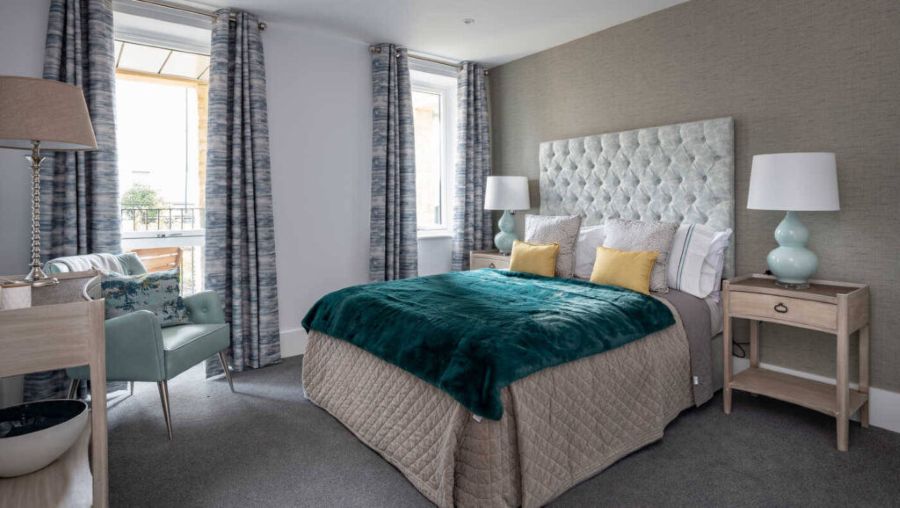
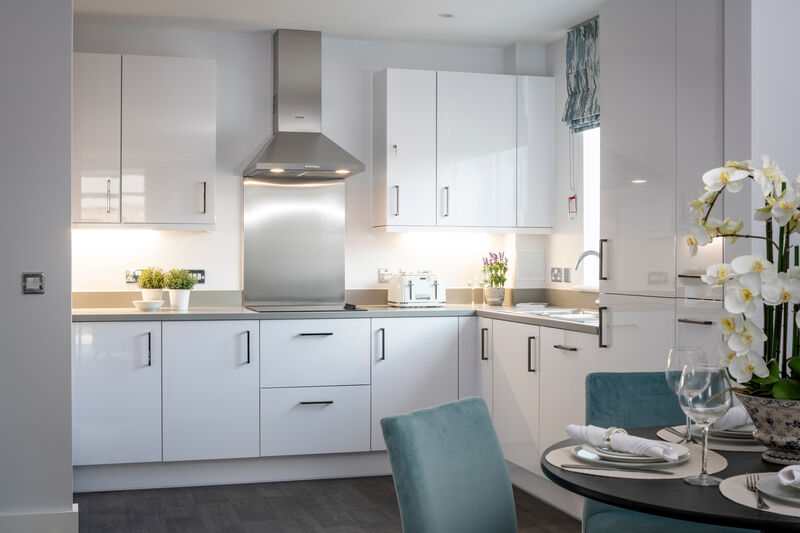
For many, the words ‘retirement community’ conjure up images of muted colours, uninspired furniture, and clinical lighting. But you’ll find that many modern retirement communities balance functionality with flair.
For example, Life in Place communities blend modern architecture with smart, contemporary materials, finishes, and features. “People who come into our apartment who don’t live here really like it and are quite amazed by it,” says Jack, who lives at The Landings, Life in Place’s community in King’s Hill, Kent, with his wife, Tina.
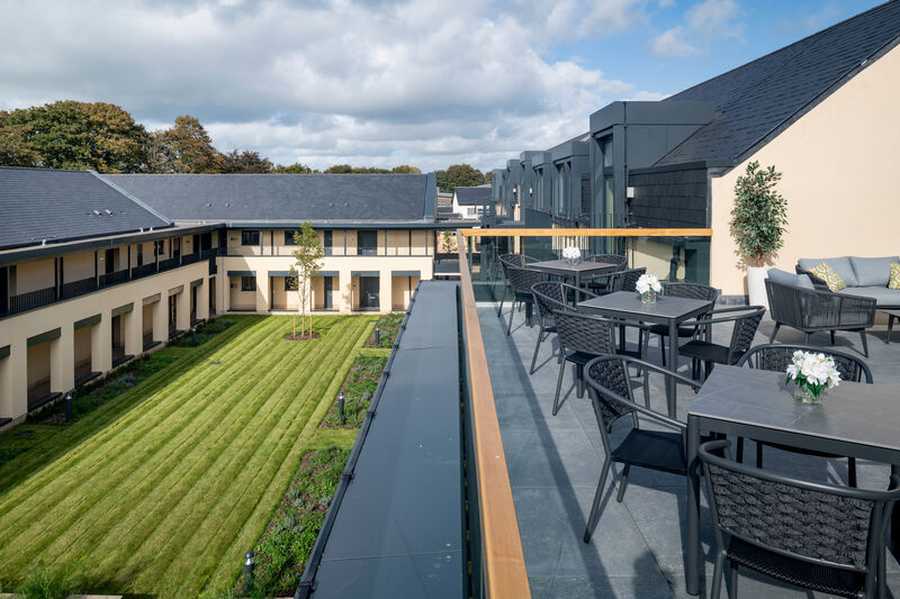
This thoughtful design extends to the communal areas, which all have their own character. The lounge at The Peaks in Stockport features an abundance of calming cerulean tones with accents of ochre. Yet, the café at Pemberley Place in Bath (pictured above) boasts floor-to-ceiling windows that flood the space with natural light, plus a chic rooftop patio with views over the manicured gardens.
Subject to permission from management, Life in Place residents can also redecorate their apartments to make them feel like their own – for example, by adding furniture, repainting walls, and altering fixtures.
Myth 5 – Downsizing to a retirement community means you can’t host friends and family
In later life, many of us find ourselves with homes that are too large, and downsizing to a smaller place can be a great way to save time and money for what matters most. But one reason preventing many people from taking this liberating step is not wanting to stop hosting family and friends.
However, many retirement living communities make hosting loved ones easy. Not only are they welcome to stay in your apartment and socialise in communal spaces, but Life in Place communities offer dedicated guest suites that can be booked for a small fee, giving you and your guests more space and privacy.
“The environment is lovely for friends and family to visit because, in the summer, we can sit out in the garden; we can walk around,” says June, who lives at The Landings. “Everything you need is here.”
Myth 6 – Retirement communities are isolated
Another common misconception about retirement communities is that they’re isolated. But more often than not, the opposite is true. Most retirement communities are thoughtfully located in some of the UK’s most desirable spots.
For example, The Chimes, Life in Place’s retirement community in Bingley, offers warm small-town vibes with the Yorkshire Dales on your doorstep. If city life is more your speed, their upcoming community, Goldfinch Point, is opening in Hackney, one of London’s most desirable boroughs. Or for something in between, you might prefer Pemberley Place, which is nestled in the countryside overlooking historic Bath.
Many Life in Place communities are also located within easy reach of shops, transport links, and any other amenities you might need. “The highlight of my week is walking into town,” one resident of The Dials says. “I love that everything is within walking distance.”
Myth 7 – You can’t bring your pets to retirement communities
From encouraging us to take walks to snuggling up on the sofa, pets can have a hugely positive impact on our lives, and they’re often nothing less than family. So, for many, giving up their companion to move to a retirement community isn’t an option.
However, contrary to popular belief, you don’t have to choose between your faithful friend and moving to a retirement community. As long as they’re well-behaved and won’t disturb other residents, many providers welcome pets.
Dave and Pam moved into The Chimes in early 2024. They chose a ground-floor apartment so their cat has free roam of the grounds, and say she settled in with the neighbours from day one.
Myth 8 – Retirement communities are lonely
Another outdated stereotype of retirement communities is that they’re lonely places. In reality, they’re designed for residents to make new connections and maintain existing ones, and many residents report that their social lives grow once they arrive.
Life in Place communities, for example, run a calendar of regular social events – from curry nights to ladies’ evenings. Speaking about other residents at The Chimes after just four months of moving in, Pam says, “I don’t think we’d call them neighbours. They are more [like] friends.”
Communal areas like lounges and cafés make impromptu interactions easy, too. June from The Landings says, “You can just pop downstairs, there’s always somebody there. And if you sit on your own, someone will come and talk to you.” She especially enjoys watching the Six Nations rugby with other residents.
Plus, handy facilities like guest suites and locations near high streets and transport networks make it easy for residents to stay connected with friends, family, and the wider community.
Myth 9 – Moving to a retirement community means losing your freedom
Some people may worry that moving to a retirement community might restrict their freedom, but many residents report the opposite.
Downsizing to a retirement community apartment, where communal areas are fully-maintained, can cut down on housework and other jobs you need to do. This can free up more time to spend as you wish – whether travelling, engaging with hobbies, or spending time with loved ones.
Speaking of travelling, living in a retirement community can make exploring the world in later life simpler and easier. Residents can lead ‘lock-up-and-leave’ lifestyles, setting off for as little or as long as they like, knowing that their homes are safe and secure while they’re gone.
For example, Life in Place communities are equipped with security measures like secure door entry systems, vigilant on-site teams, and CCTV covering buildings and communal areas.
What’s more, because communal spaces and building exteriors are looked after, you won’t need to worry about returning home from your holidays to dirty windows and gutters full of leaves. Instead, you can enjoy your travels knowing everything’s being looked after.
Myth 10 – Retirement communities mean winding down
Perhaps the biggest myth surrounding retirement communities is that they’re exclusively for older adults wanting to wind down. While many are peaceful places designed to help people spend their later years as they wish, this doesn’t necessarily mean slowing down or doing less.
From helping residents to prioritise their health and maintain social connections to the freedom downsizing offers, moving to a retirement community is about expanding your world, not narrowing it. And we hope that this article has cleared up some of the most common misconceptions surrounding them.
To learn more about their communities, head over to the Life in Place from Anchor website using the button below.