
- Home
- Leisure & Lifestyle
- Home & Garden
- 13 things you might not know about solar panels
Sponsored content
 More and more people are investing in solar panels for their homes. In the UK, over 1.5 million households have taken the leap, with installations growing by more than 10% year-on-year for the last three years, according to government data.
There are many reasons for this. Solar panels can save us money on energy bills, reduce our reliance on the grid, and cut our carbon footprints considerably – meaning they can benefit our wallets and the planet.
Though solar panel systems have been around for a while now, they’re constantly evolving. So, whether you’re thinking about investing in one for your home or you’re simply curious about what benefits they can offer, you might be interested to learn more.
With this in mind, we’ve partnered with OVO to bring you 13 things you might not know about solar panels. OVO Solar & Heating’s MCS-certified teams install solar panels all over the UK, cutting through the complexity to deliver high-quality installations, great value, and a service you can trust.
1. Solar panels can cut your carbon footprint by one tonne per year
As a renewable source of energy that doesn’t burn harmful fossil fuels or create air pollution, one of the main reasons people invest in solar panels is their positive environmental impact.
By installing solar panels, you can rest easier knowing that you’re combating climate change, protecting wildlife habitats, and contributing to the UK’s carbon reduction goals.
To give you an idea of the kind of positive environmental impact solar panels can have, the Energy Saving Trust says a typical home system could save around one tonne of carbon per year. That’s the same amount used by driving from London to Bristol 30 times (3,600 miles).
2. Solar panels can save money on energy bills
The second main reason why many people invest in solar panels for their homes is that they can save money on energy bills.
How much they can save will depend on several factors, including your energy habits, system size, and where in the UK you live.
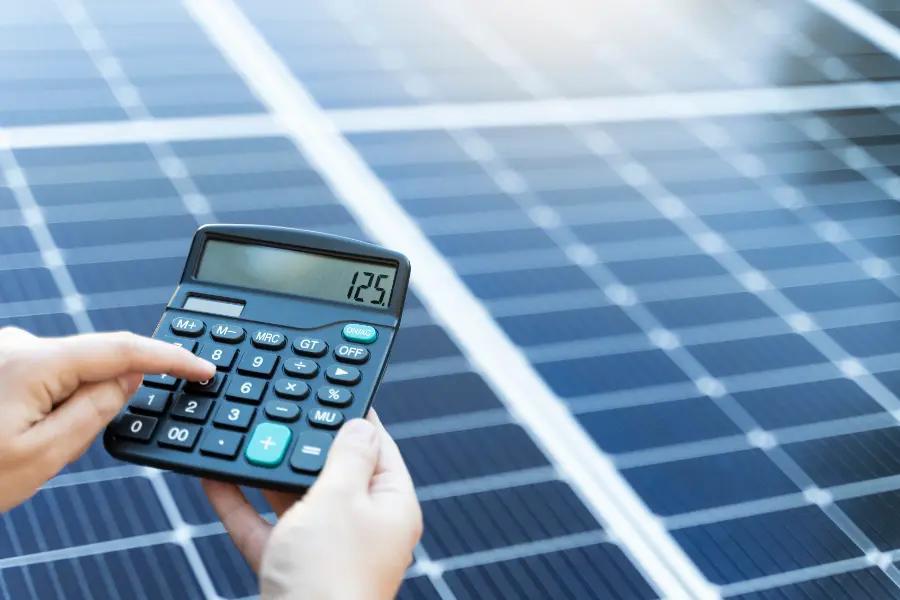
According to OVO, customers could save up to £1,200 a year on their bills with their full solar package. However, it’s worth bearing in mind that these are top-end savings. For a typical 3.5 kilowatt-peak (kWp) system, Money Saving Expert says you can expect savings of around £190-£350 a year, based on Energy Saving Trust estimates and current Energy Price Cap rates.
3. Solar panels can earn you money
Many households with solar panels don’t use all the energy they generate. But if you live in Britain, you can sell any excess back to the grid through the Smart Export Guarantee (SEG).
How much you can get for your excess solar energy will depend on the tariff you choose, as rates can vary wildly. However, customers who get their panels and battery installed with OVO can get an exclusive, generous 20p per kWh rate (the average rate in 2023-24 was around 8.9p per kWh). With OVO’s rate, you could save up to £1,300 a year.
It’s worth remembering that you’ll need to have your solar panel system installed by an MCS-registered installer, like OVO, to take part in the SEG scheme. You also need to have a working smart meter.
The SEG scheme is only available in England, Scotland, and Wales. However, solar households in Northern Ireland can sell their excess energy back to Power NI.
You can read more about the Smart Export Guarantee scheme in OVO’s blog post.
4. You can use solar electricity when it suits you
It’s easy to assume that solar panels only power your home during the day, when the sun is shining. But with a solar battery as part of your system, you can store that electricity to use whenever you need it – such as at night or during cloudy days, when your panels aren’t working as efficiently.
Solar batteries range in price from approximately £2,500 to £10,000+, but you can expect to pay around £5,000 on average.
5. Solar panel installation is simpler than you might think
As with any home improvement, you may be concerned about the disruption solar panel installation might cause. However, in many cases, the process is pretty straightforward.
After consulting over 2,000 solar panel owners, consumer champion Which? found that very few complained about installation, with 80% saying they’d install solar panels again if they moved home.
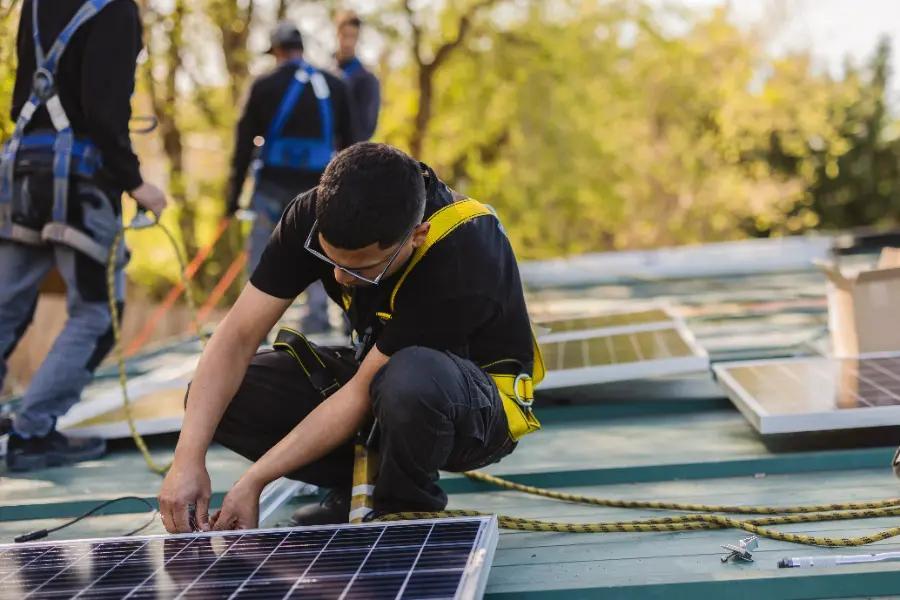
According to the Energy Saving Trust, installations typically take one to two days. This usually involves erecting scaffolding, fixing the panels to your roof, connecting them to your home’s electrical system, and installing any extras, like battery storage.
While installers may need to turn your power off to connect the panels to your home’s electricity system, this disruption should be brief.
How long and disruptive your solar panel installation is will depend on the size of your system and where you’re having it installed. For example, a large system installed in the garden involving landscaping work might take longer than a smaller system installed on the roof.
6. You don’t need planning permission to install solar panels
Because it typically falls under ‘permitted development’, most homes don’t need planning permission to install solar panels. But you may need it if you live in a listed building in a conservation area. So it’s worth checking with your local planning office beforehand.
Another thing to be aware of is that solar panel systems in Britain must be registered with the local Distribution Network Operator (DNO). This is the organisation responsible for managing the power supplies in your area. In Northern Ireland, they need to be registered with NIE Networks. However, your installer should take care of this step for you.
7. Solar panels work on cloudy days
A popular misconception about solar panels is that they only work in direct sunlight. While it’s true that solar panels are more efficient on bright, cloudless days, they can still produce energy when it’s overcast. After all, a spot of cloud doesn’t mean it suddenly gets dark.
The Environmental and Energy Study Institute says solar panels can work at roughly 80% of their maximum output on partially cloudy days.
Interestingly, a little bit of rain can actually help solar panels work better by washing off any dirt or dust that’s blocking light from reaching them.
8. Solar panels work in winter
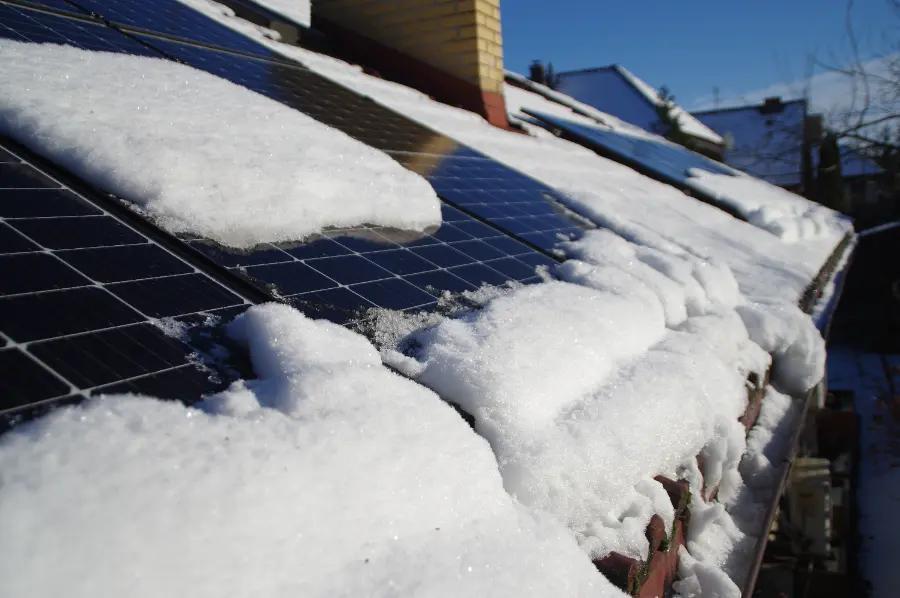
Solar panels can work effectively in all seasons, but they’re least efficient in winter. According to data from the Eco Experts, output reduces by an average of 83% in winter compared to summer. This is because there are generally more cloudy days and fewer daylight hours, and the sun is lower in the sky.
9. Solar panels are low-maintenance
Another common misconception about solar panels is that they’re tricky to maintain, but you might be surprised by how little maintenance they need. Mostly, it comes down to cleaning and servicing.
According to the Energy Saving Trust, you should clean your solar panels every 12-18 months to keep them working efficiently. This will remove any dirt, dust, and other debris that’s blocking sunlight from reaching them. Depending on where you live and where your system is positioned, you may need to do this more often – for example, if you live in a drier area with more dust and pollen.
You can clean your panels yourself if you’re confident and can access them safely. Just make sure to check their documentation for instructions, so you can do it correctly without causing any damage. Alternatively, you can hire a professional, costing between £20 and £200.
Aside from inspecting your panels every year or so for obvious issues, the Energy Saving Trust also recommends having a full professional service every three to five years. You may need this within a specific period to keep your panels within warranty.
10. Solar panels can increase the value of your home
The payback period of your solar panel system will depend on various factors – such as your location, SEG rates, and energy usage patterns. But, according to the Independent, it’s 8-12 years on average.
However, this shouldn’t necessarily put you off investing in a solar system. Even if you sell your home before you’ve made your money back in energy savings, you might make it back through the value they add to your home.
For example, a 2024 study from Swansea University calculated that solar panels can boost property value in the UK by 6.1% to 7.1%. For the average selling price as of August 2025 (£271,000), this amounts to £16,531 to £19,241.
11. You might be able to access funding for solar panels
To help manage the upfront costs of solar panels, there are various loans, grants, and other funding options available across the UK. Some may offer a sizeable chunk off the cost of your solar panel system, while others could cover it completely.
For example, the Warm Homes: Local Grant initiative offers free energy-saving improvements (including solar panels) to those in England who are on a low income, getting certain benefits, or living in specific postcodes.
It’s also worth checking with your energy supplier to see if they offer any financial support for solar panel installations.
Another way to manage upfront costs is through financing, as offered by OVO. This allows you to pay via a monthly cost that fits your budget.
12. Solar panels can last for 25 years+
Solar panels are a great long-term investment because they can last for over 25 years.
According to Money Saving Expert, some of the latest solar panel models may have a useful life of 40 years or more.
13. Solar panels are getting better
Thanks to improved cell design, new materials, and better manufacturing processes, solar panel technology is constantly improving. According to Greener Ideal, average commercial silicon solar panel efficiency rose from around 15% in 2010 to 22% in 2024.
This innovation means that even if you had a solar quote a few years ago and decided it wasn’t right for you, it could be worth getting another one to see if anything’s changed – especially since solar panels are currently cheaper in the UK than ever.
Final thoughts…
Whether you’re looking to cut your carbon footprint, save money on energy bills, or reduce your reliance on the grid, solar panels can be a great investment for your home.
From tips on maintenance to information about their efficiency on cloudy days, we hope this article has given you some fresh insight into solar panels.
If you’re interested in installing solar panels in your home, head over to the OVO website to see your solar estimate.
Sam McLoughlin is a Senior Lifestyle Writer at Rest Less. He joined the editorial team in 2021 after completing his Master’s degree in English Literature, Culture, and Theory at The University of Sussex. He enjoys writing about careers, books, sports, travel, and pretty much anything that his editor will let him have a crack at, but his favourite part of the job is interviewing inspiring people – from activists and CEOs to later life career changers. In his spare time, Sam enjoys climbing, snowsports, and going to see live music.
* Links with an * by them are affiliate links which help Rest Less stay free to use as they can result in a payment or benefit to us. You can read more on how we make money here.