- Home
- Leisure & Lifestyle
- Home & Garden
- 7 ways to spider-proof your home
How does Rest Less make money
We make money through advertising and commission from affiliate links, which enable us to offer Rest Less as a free service to our users. The content on this page may use affiliate links, which track traffic from our website to a third party provider and enable us to receive a commission or payment from any traffic we refer.
* Affiliate links on this page have an * next to them. We place enormous importance on our editorial independence and the integrity of our content which means that we will never change how we write about something as a result of an affiliate link.

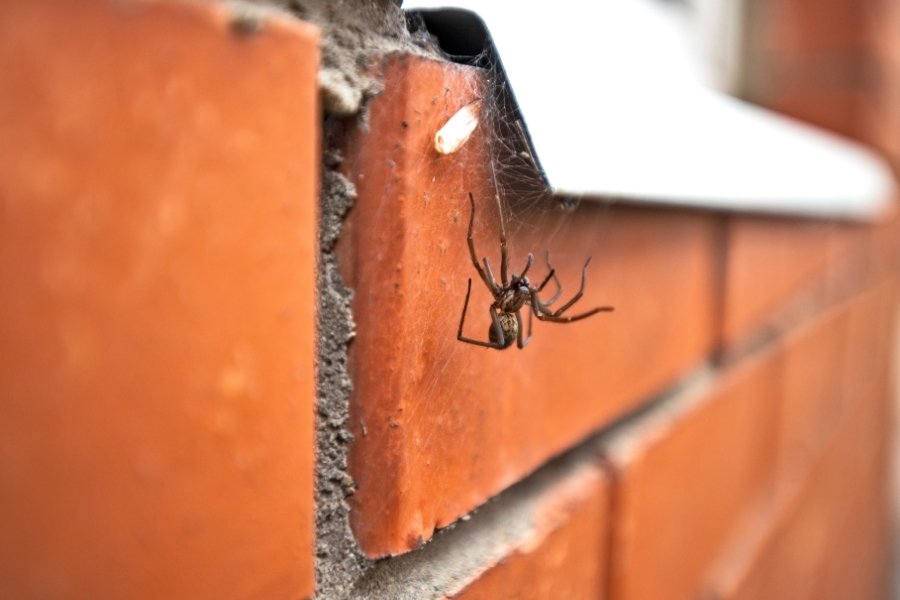
For most of us, spiders are an unwelcome but inevitable part of sharing our homes with the natural world. As the weather cools and the seasons change, they tend to make more of an appearance indoors – seeking warmth, shelter, and a steady supply of insects to feed on.
And while the vast majority of spiders found in UK homes are completely harmless, that’s rarely much comfort when you find one lurking in the corner of your bathroom at 7am.
The good news is that there’s plenty you can do to make your home less inviting to them. From simple cleaning habits to a few clever tweaks around the house, here are seven practical ways to spider-proof your home.
1. Declutter
Spiders are shy creatures who are always looking for undisturbed places to hide, so the more unused things you have in your living space, the more potential homes you’re creating for your eight-legged friends. They’ll easily set up shop in and around objects that stay put for long periods: behind picture frames, inside old boxes, and within clothing piles.
Regular decluttering and organising can help prevent spiders from settling in, as can using properly sealed storage containers, rather than cardboard boxes and baskets.
Check out our article, How to declutter and reorganise your home, for tips on getting started.
2. Clean around windows and doors
The areas around the windows and outer doors in your home can be highly attractive to spiders – largely because they’re sources of light and warmth that attract other insects. If spiders set up webs near these entry points, they’re in a prime position to catch them as they come in.
The nooks and crannies around windows and doors are also some of the least disturbed areas in the home. It’s easy to forget about cleaning the corners around our windows or checking the crevices in our curtains – which is why many of us can get surprised by a spider or two when doing a more thorough spring clean.
While it can be difficult to eradicate spiders from your home entirely, wiping down or vacuuming the corners around windows and doors, and giving your curtains a little shake from time to time can help deter them.
3. Use a homemade bug spray
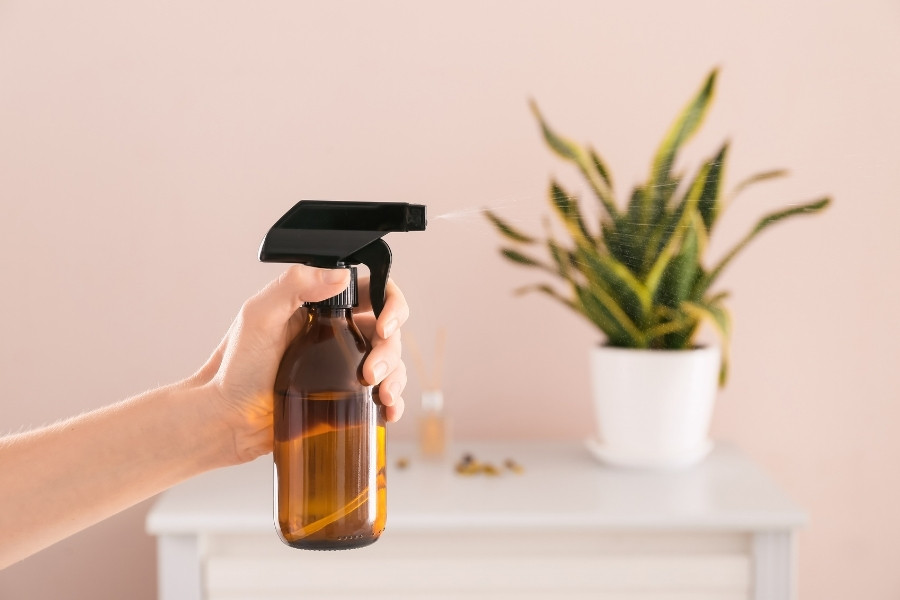
One hack that’s said to keep spiders from entering homes in the first place is to make a homemade bug spray by mixing one cup of water with 10-15 drops of essential oil.
One recent study found catnip, cedarwood, cinnamon, citronella, and clove oils to be particularly effective at deterring spider activity.
Because spiders smell and taste through sensory organs on their legs, strong, pungent scents can overwhelm their receptors, affecting their ability to navigate, hunt, and build. This effectively creates a repellent “barrier” that the spiders avoid crossing.
For this reason, it’s best to concentrate the spray on areas that spiders are most likely to enter the home or hang out, such as around doors and windows, and in quiet corners. Remember to choose an essential oil that you like – or at least don’t mind – the smell of, so you aren’t repelled from your home, too!
4. Try not to leave dirty washing sitting for too long
While for many of us, it will be the stuff nightmares are made of, research suggests that one of the most appealing places for spiders to hide is in our laundry baskets. It makes sense, as our pile of dirty washing is warm and cosy and probably feels very safe to a spider, especially if it’s been sitting undisturbed for a while.
While there’s no perfect solution to this, as we can’t avoid putting clothes in our wash bins, it can help to minimise the amount of time dirty washing sits undisturbed. Doing smaller, more frequent loads rather than letting a big pile build up, and keeping your laundry basket in a well-lit, regularly accessed area of the home, can make it a less attractive proposition for spiders looking for a quiet retreat.
5. Seal up cracks and gaps
One of the most effective long-term solutions to spider-proofing your home is simply making it more difficult for them to get in. Spiders can squeeze through surprisingly small openings, so it’s worth doing a sweep of your home for any gaps around skirting boards, floorboards, window frames, and the edges of pipes or cables entering the home.
Filling these with caulk or sealant is a relatively easy DIY job that can make a noticeable difference – not just for spiders, but for other insects, too. Pay particular attention to ground-floor entry points, as well as any gaps in older window and door frames, which tend to shrink and expand with seasonal temperature changes and can open up over time.
6. Keep the outdoor area around your home tidy
Spiders don’t just appear from nowhere – they usually make their way in from outside. If you have dense plants, woodpiles, leaf litter, or garden debris pushed right up against the exterior walls of your home, you’re essentially creating a spider motorway with a direct route indoors.
Keeping vegetation trimmed back from the walls of your home, and storing things like firewood slightly away from the house, can reduce the number of spiders that find their way to – and through – your doors and windows. It’s also worth checking outdoor furniture, plant pots, and door mats regularly, as these are common resting spots for spiders that are one small step away from coming inside.
7. Switch up your outdoor lighting
Spiders are hunters, and they go where the food is. Many insects are strongly attracted to bright white or blue-toned lights, which means that outdoor lights around your doors, windows, and porch can inadvertently create a buzzing buffet that draws spiders in close to your home.
Switching your outdoor bulbs to warm amber or yellow-toned lights – or LED bulbs specifically marketed as “bug lights” – can significantly reduce the number of insects gathering around your entry points, which in turn makes the area far less appealing to spiders. If you have the option, motion-activated lights are even better, as they limit the amount of time your lights are on altogether.
It’s also worth thinking about indoor light that spills out through windows at night, as this can have a similar effect. Keeping blinds or curtains drawn after dark, particularly in rooms with bright overhead lighting, can help reduce the number of insects – and spiders – drawn to the outside of your home.
Final thoughts…
The truth is, completely eradicating spiders from your home is a near-impossible task – and arguably not one worth pursuing, given the role they play in keeping other insect populations under control. But with a few consistent habits and some attention to the spots you’d usually overlook, you can make your home significantly less attractive to them.
As with most things in home maintenance, little and often goes a long way. Keep on top of the clutter, seal up the gaps, and stay ahead of the areas spiders love most, and you should find their visits become far less frequent – and far less startling.
For further reading, check out our article: 9 common garden pests and how to tackle them.
Do you get a lot of spiders in your home? How do you keep them at bay? We’d love to hear from you in the comments below.
Elise Christian is Lifestyle Editor at Rest Less. She joined Rest Less in 2018 after achieving a first class Master’s Degree in Journalism from the University of Kent, and writes across a range of lifestyle topics such as mental health, home and garden, and fashion and beauty. Prior to this, she worked as a freelance writer for small businesses and also spent a year training to be a midwife. Elise spends her spare time going to the gym, reading trashy romance novels, and hanging out with loved ones. She also loves animals, and has a fascination with sharks and tornadoes.
* Links with an * by them are affiliate links which help Rest Less stay free to use as they can result in a payment or benefit to us. You can read more on how we make money here.

Start your new chapter abroad with this free retirement guide
With Your Overseas Home, you will receive honest guidance, expert advice and a helping hand every step of the way.
Download the free guide to find out how to cut everyday living costs, get tax, pension and visa checklists, and discover top tips from the expat community.
Join the discussion
Read our full commenting terms and guidelines