

- Home
- Leisure & Lifestyle
- Learning
- 9 reasons why you can go to university at any age – it’s never too late
How does Rest Less make money
We make money through advertising and commission from affiliate links, which enable us to offer Rest Less as a free service to our users. The content on this page may use affiliate links, which track traffic from our website to a third party provider and enable us to receive a commission or payment from any traffic we refer.
* Affiliate links on this page have an * next to them. We place enormous importance on our editorial independence and the integrity of our content which means that we will never change how we write about something as a result of an affiliate link.
There’s a story that many of us tell ourselves quietly, and one that, if we’re not careful, might start to hold us back: that education is the preserve of the young. Old dogs, new tricks and all that. That our window for sitting in lecture halls, stressing over our bibliographies, and earning a degree gets shut firmly somewhere around our 20s, maybe our 30s at a push – and if you didn’t do it then, well, your ship has sailed.
But that narrative simply isn’t true. Going to university as a mature student – whether you’re in your 30s, 40s, 50s, or beyond, and whether it’s your first degree or not – isn’t only possible, it may just turn out to be one of the most rewarding things you ever do.
If you’ve ever found yourself wondering “what if?”, felt drawn towards a new subject, or want to return to a subject you’ve always thought about exploring properly, try not to let a negative narrative put you off achieving something amazing and enriching your life with education.
Here are eight great reasons why the door to higher education is very much still open for you.
1. Universities actively want you

Let’s start with the metaphorical red carpet being rolled out for you at universities across the UK. British universities are actively recruiting and celebrating people who want to come back and study a little later in life. Many institutions have dedicated support and funding for mature learners, including more flexible entry routes. That means admissions will consider your life experience and professional background, rather than relying solely on your A-level results.
Universities have long recognised that older students can bring something different and valuable to the table that younger cohorts might not: a depth of experience, keener focus, and genuine hunger to learn (after all, this isn’t just taking the well-worn path from school to university; this is a conscious choice to return). UCAS – the Universities and Colleges Admission Service – has also created resources specifically for mature students, such as this guide to writing your personal statement.
2. You already know more than you think

One of the most liberating realisations for many mature students is how much they already know, before they ever set one foot on campus. Decades of working, dealing with people, raising a family, navigating relationships, solving problems – all of that precious life experience is not some separate entity from your education. It is education; it’s what will drive you to learn more and help you understand new concepts and ideas, and it’s right there, ready to be put to great use, whatever subject you choose to tackle.
Whether you study psychology, science, history, business, creative writing, or literature as an older adult, you bring context and wisdom that will serve you. You might be surprised to find yourself connecting the dots between theories and real-life situations you’ve actually lived through, and that kind of understanding goes deeper than anything you can get from a textbook.
3. Flexible and blended learning is here

Perhaps the biggest shift in higher education over the past decade is the sheer breadth of new flexible study options now available thanks to the surge of online learning. For lifelong learners, this is an absolute game changer; no longer do you have to choose between career, family, or education – because in many cases, you really can have it all.
The Open University is one of the most obvious and pioneering examples of this, offering fully distance-learning degrees that you can engage with entirely at your own pace and from the comfort and convenience of your own home. But it’s far from the only one, with part-time degrees, evening classes, blended learning structures, and modular courses now offered by universities all over the country. Stuck for time? You can take one module at a time if you like, building towards a qualification slowly and steadily, in a way that fits into your life rather than upending it.
4. Your brain will thank you

There’s a stubborn and unhelpful myth out there that learning becomes more difficult as we age and we lose our ability to parse and absorb new information. The science, happily, disagrees.
The truth is that certain types of brain processing do slow somewhat with age, and certain ageing milestones like menopause and andropause (also called male menopause) can affect cognitive functioning, with ‘brain fog’ being a very common complaint. But older brains compensate with what’s known as crystallised intelligence – the accumulation, over time, of knowledge, pattern recognition, and the ability to draw connections across complex ideas.
Research also shows that adults approaching midlife have the greatest focus and highly trainable attention, which means it can get better with age. And crucially, our neuroplasticity – the brain’s ability to form new connections – remains very much alive throughout adulthood, and the more we learn, the greater our capacity to learn becomes, as communication between brain regions improves.
5. It can transform your career
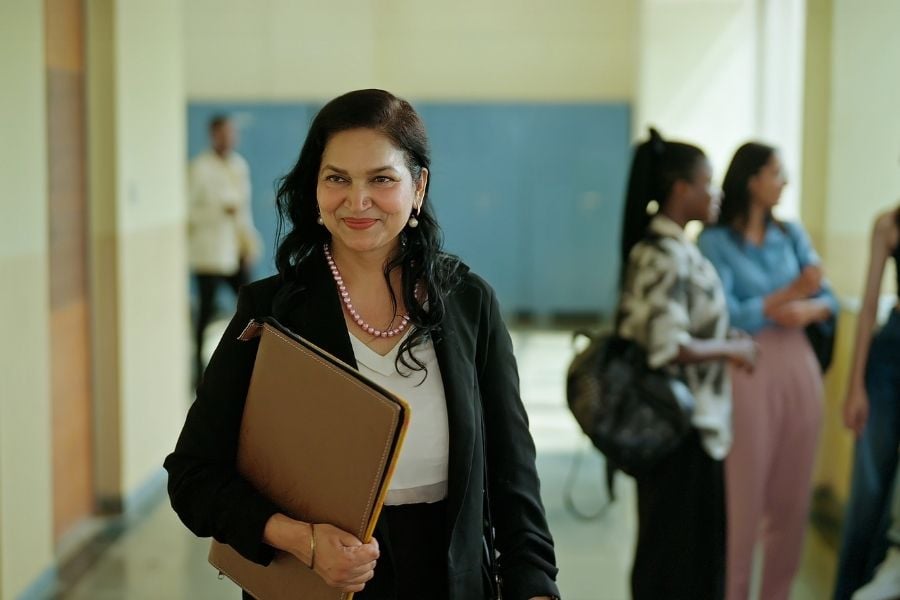
Whether you’re looking to make a complete career change, step up to a more senior role, deepen your skills and widen your skillset, or move into a field you’ve been thinking about for years, a degree can open doors for you.
Mature students often report that studying gave them the confidence, knowledge and credentials to make professional leaps they might not otherwise have attempted. There are so many fields of study with clear graduate pathways, and many are populated by people who entered them later in life.
Consider what are known as “high-growth” options for career changes – data analytics, cybersecurity, healthcare (nursing, therapy), education, and project management are all areas that mature students choose for the great career opportunities that come once the course is completed.
6. You might just have a great time

If you’re imagining mature student life as an awkward experience where you’ll feel out of place among rows of 19- and 20-year-olds, you can put that thought to bed. University as a mature student tends to be a far richer social experience than many people expect.
Student communities are often warm, motivated, inclusive, and wonderfully mixed. You’ll find like-minded people at all different life stages – recent school leavers, yes, but also people who are finally returning to education after raising children, people changing careers or upskilling, or people who simply want to learn something new. What you all have in common is a shared purpose and, within your course, also a shared interest that creates a particular kind of camaraderie. Many mature students find that they form unexpectedly strong friendships that enrich their lives long after they graduate.
7. Your mental health will thank you

There is something profoundly self-affirming about choosing to invest in yourself in this way – to take on something new and challenging, and get better at something. Saying to yourself that your growth still matters, your curiosity is still there, and your mind wants to know more is a powerful thing.
Research consistently links continued learning in later life to better cognitive health, greater life satisfaction, and reduced risk of depression. But beyond that, choosing to take on a university course later in life can be an incredible act of self-love – and for many who may have sacrificed such pursuits when children were small, life was busy, and mortgages were new, it can signal a kind of coming home to oneself.
Studying also gives us structure, purpose, and a sense of achievement and pride that can be absolutely invaluable.
8. There’s no "too late"

This one might be the most important reason of all. So many of us end up carrying around an invisible clock that ticks away, and counts down, and tells us that our time for certain things has passed – exercise, adventure, romance, learning. Trying. But the clock is wrong.
Some people are still studying, learning and graduating at 60, 70, and beyond, such as Archie White, who’s believed to be the UK’s oldest graduate at 96. Many people famously kick off their most meaningful or lucrative careers in their 40s – JK Rowling, Julia Child, and Samuel L. Jackson, to name a few. But the great news is that your 50s and beyond can be every bit as transformative as your 40s – your main challenge is finding what lights a fire in your belly.
Some people pick up a subject they abandoned at 18 and discover, decades later, that it lights them up completely. The artist Grandma Moses began taking her painting more seriously than a light hobby at 78. At the same ripe old age of 78, Joseph Campbell created the world’s most beloved tomato soup. And Colonel Sanders perfected and franchised his Kentucky Fried Chicken at 65 years of age.
You can truly do whatever you put your mind to, and you can do it well. And who knows, you might find yourself a billionaire in your 80s!
Final thoughts…
Our potential is a beautiful and hopeful thing, and it doesn’t have an expiry date; we’re still writing our own stories every single day, and we can change the narrative whenever we like.
If going to university is something you’ve been turning over in your mind, but you’ve let that niggling thought that it’s “too late” hold you back, maybe this is a sign to write a new chapter. You don’t have to leap headfirst into anything, but you can always start exploring. Make a phone call, browse a prospectus, and think about what lights that fire in you.
Might your love of true crime evolve into a course in criminology or psychology? Are you a history buff who wants to delve even deeper into the past? Or do you just want to switch your career to something different? It’s never too late.
For further reading, check out our guide to becoming a university student in your 50s, 60s, and beyond.
Have you gone back to education later in life? If you’ve got any thoughts or tips on going to university as a mature student, please let us know in the comments below!
Dee Murray is a freelance journalist and copywriter, and a lifestyle writer for Rest Less. After graduating from DIT Dublin with a degree in Scriptwriting and the University of Sussex with an MA in Creative Writing, Dee began writing for experience and adventure companies. She then founded Ryanair’s first travel blog, which she managed and wrote for for five years. She writes about a range of topics but most often about travel and adventure or women’s interests. She also has a keen interest in behavioural psychology, mental health, and nutrition and wellness. When she’s not writing, you can find her in the woods with her dog Boudicca, playing piano (poorly), or tending to her plants and vegetables.
* Links with an * by them are affiliate links which help Rest Less stay free to use as they can result in a payment or benefit to us. You can read more on how we make money here.
Join the discussion
Read our full commenting terms and guidelines