
- Home
- Leisure & Lifestyle
- Writers Corner
- History and Farm Life
How does Rest Less make money
We make money through advertising and commission from affiliate links, which enable us to offer Rest Less as a free service to our users. The content on this page may use affiliate links, which track traffic from our website to a third party provider and enable us to receive a commission or payment from any traffic we refer.
* Affiliate links on this page have an * next to them. We place enormous importance on our editorial independence and the integrity of our content which means that we will never change how we write about something as a result of an affiliate link.
Creative writing submission from the Rest Less community – submit your entry here.
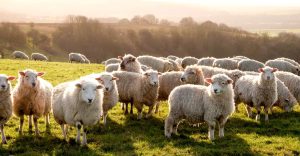
With my husband, Aubrey, I’m lucky enough to have rented a farm on top of the Cotswolds for over 40 years now. Amazingly, we still work well together and have brought up two children in wonderful surroundings. These are as different as chalk and cheese, one loving farming life, although as a secondary career alongside a more profitable one with computers, the other never aiming to get her hands dirty. We now have four lovely grandchildren who periodically arrive at the farm to help or simply ride our elderly pony. Family farming life on a warm sunny day takes some beating, especially at lambing and haymaking.
Farming has hit the news recently with inheritance tax, the need to produce our homegrown food, exacerbated by war situations, and, more amusingly, through Jeremy Clarkson’s farming disasters. His Hawkstone Farmers Choir caused quite a stir on Britain’s Got Talent, and we’re proud to have a cousin on the back row.
All these things have highlighted the difficulties farmers face, including finding a way into farming. When you have no inherited farm, little money and, in my case, no knowledge, it can be daunting. This is still a difficult pathway for young would-be farmers, even those born and bred on a farm. Aubrey did have knowledge of farming, his father being a farm manager, but his parents, lacking conviction that he’d earn a living in agriculture, insisted he trained as an agricultural engineer, something that always put him in good standing.
Through our early days of married life, I was quickly and efficiently taught the basics of sheep farming and lambing, mainly through necessity, as Aub was employed full-time on a large arable and livestock farm. Once we established ourselves as sheep farmers with a small rented field and the gift of a Black Welsh Mountain ram, my part-time job with horses allowed me to take care of the day-to-day work, albeit often with two small children in tow. And here the adventures started.
Along with my daily routine, once the children were in bed, with husband working all hours during lambing, hay time and harvest, I began to write articles about our adventures and often misadventures into farming life, which gradually evolved into a series published by Cotswold Life. Many years later, these original adventures formed the basis of the four books I have written. While all are memoirs of a type, my latest book, Sheep for a Reason, really epitomises farming life, entwined with the history of sheep in Britain.
This may sound like an odd combination, but history in all forms has moulded our lives, and sheep farming is no exception. Diversification is the term used for new ideas, and some of the most notable came in the Middle Ages. Wool was sought worldwide for clothing and furnishings, especially when weaving machines and expertise in both Flanders and Italy could transform this into luxury fabrics. England’s weather conditions and vegetation produced sheep with some of the best wool in Europe. It’s possible that around half a million sheep grazed our Cotswold hills, their heritage still seen today in our splendid churches, manor houses and even the weavers’ cottages, so popular today with tourists.
Not all of history is pleasant. The value of the wool clip encouraged landowners to graze more sheep by enclosing common land, forcing villagers, who grazed a few sheep and a house cow to subsidise a low income, off this land and into dire poverty or to seek employment in the towns. In Scotland, the Highland clearances saw crofters evicted to make way for sheep, leaving families to starve. But enclosures brought improvements in farming, and as the Industrial Revolution evolved, so did farm machinery, again lessening the need for farm workers.
Today’s diversification in farming is often a way to encourage the general public to see agriculture at its grassroots. Farm buildings turned into holiday cottages, and farm shops to sell produce direct to the customer. All ways to also generate income that is often lacking through wholesale.
Sheep for a Reason also uncovers the distress and trauma farming can bring. The weather, which we can do little about. Endless rain floods fields and halts arable planting, then drought takes the grass needed for animal feed, stunting vegetable growth and lowering corn yields. Harassment from government officials with forms and inspections. Personnel with little understanding of the reality of farming life found it belittling to farmers whose form-filling skills are lacking, threatening them with loss of their single farm payments, often a major part of their annual income. In some cases, to the extent of farmers taking their own lives.
But farming life can also be quite cathartic to those suffering from mental health issues caused elsewhere. Over the years, we’ve had friends and strangers come to the farm, sometimes just to look at sheep, but often then to fill water buckets and take hay around to the pens. Tossing straw around to bed up sheep, pushing wheelbarrows of hay and simply leaning on the gates looking at the animals and the landscape can be more beneficial to those suffering from trauma than counselling.
Sheep for a Reason encompasses the determination and dramas of family farming life, alongside the intriguing history of sheep and wool production in this country. Published by Crumps Barn Studios, it’s available from most bookshops and Amazon.
Are you feeling creative? We are proud to have a hugely talented community on Rest Less, which is why we’re so excited to open up a section of the site dedicated to showcasing the wonderful and diverse writing of our members. If you have a piece of creative writing that you’d like to share with the Rest Less community – you can do so here.
Sue Andrews, sometimes known as the Cotswold Shepherdess, farms with her husband in Miserden, on top of the Cotswolds. For the past few years, she’s enjoyed writing about their lives and hopes to encourage others to put pen to paper as everyone has a story to tell.
* Links with an * by them are affiliate links which help Rest Less stay free to use as they can result in a payment or benefit to us. You can read more on how we make money here.
Join the discussion
Read our full commenting terms and guidelines