
How does Rest Less make money
We make money through advertising and commission from affiliate links, which enable us to offer Rest Less as a free service to our users. The content on this page may use affiliate links, which track traffic from our website to a third party provider and enable us to receive a commission or payment from any traffic we refer.
* Affiliate links on this page have an * next to them. We place enormous importance on our editorial independence and the integrity of our content which means that we will never change how we write about something as a result of an affiliate link.
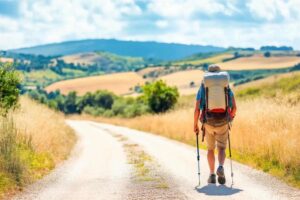
Spain’s Camino de Santiago is one of the world’s oldest and most important walking trails. Dating back to 800 AD, this voyage – also known as El Camino, The Way, or the Camino – is more than a mere long-distance hike. It’s a sacred pilgrimage, a journey through history, and a dynamic blend of cultures, traditions, languages, and stories.
Each year, around 400,000 people from across the globe walk this ancient trail. While there are various routes, each with a unique appeal, all converge on the shrine of Saint James, one of the 12 apostles, in Spain’s Santiago de Compostela Cathedral. The experience is often described as a transformative adventure – but what is it exactly about the Camino that’s so special?
If you’re thinking about walking part or all of The Way – or you just want to see what all the fuss is about – here’s everything you need to know.
Why walk the Camino de Santiago?
There are many reasons why the Camino de Santiago is so popular. The trail is rooted in Christian tradition, and some pilgrims are inspired by their faith and hope to find God. Others are in a period of transition – often newly retired, out of work, or divorced – and hope to find themselves, or a new way forward, along the winding path. Some are lured simply by the promise of peace and solitude.
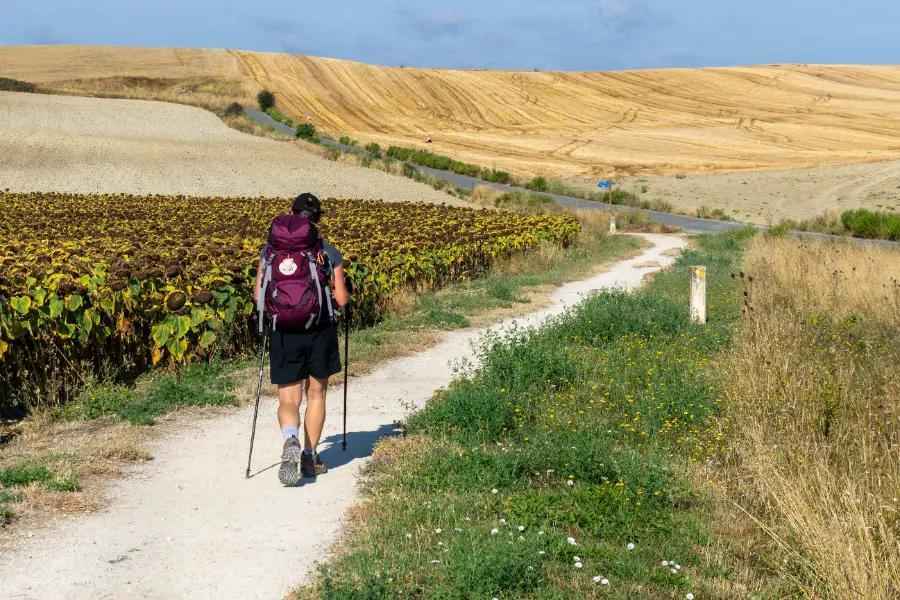
Many hikers are also drawn to the scenery of the Camino, which varies dramatically depending on which route you take. The various trails weave through rolling hills and shady forests, over coastal cliffs and sheep-speckled valleys, and past rugged mountains and unspoiled villages. Whichever route you take, there are stunning views to look forward to each day.
Then there’s the history and culture. All paths are dotted by shrines, holy ruins, monasteries, and albergues – simple hostels that have served pilgrims along the Camino since medieval times. And in the evenings, you can stop for meals in local towns, savouring smooth red wine, creamy cheeses, buttery scallops, and hot, crispy fried churros.
There’s also the physical challenge. Walking the trail is an achievement, whether you decide to walk the full route or only a section of it. And, finally, there’s the camaraderie. For centuries, the trail has united people from all walks of life, and sharing special moments with strangers – the view from a hilltop fort, a bottle of water in the baking sun – can often be some of the most memorable moments.
Where does the Camino de Santiago begin and end?
There’s no one starting point for the Camino; technically, you can begin your walk anywhere on the European continent. There are seven main routes, however, and while five start in Spain, two begin in France and Portugal. Your choice of route depends on how far you want to walk, the scenery you’d like to travel through, and what you’re looking to gain from the experience.
The reason there are so many different routes is that the original pilgrims would have started their journeys from their own homes. Most would be coming from the rest of mainland Europe, entering via France, which is one reason the French trail has always been the most popular route.
The routes vary in length, with the longest being 621 miles and the shortest 71. Many pilgrims choose to walk sections of the route rather than follow the whole trail, but if you want to receive your official pilgrim certificate when you arrive at the cathedral, you need to walk the last 62 miles of any Camino route. You should also remember to stamp your Pilgrim Passport as you go to prove you’ve walked the distance!
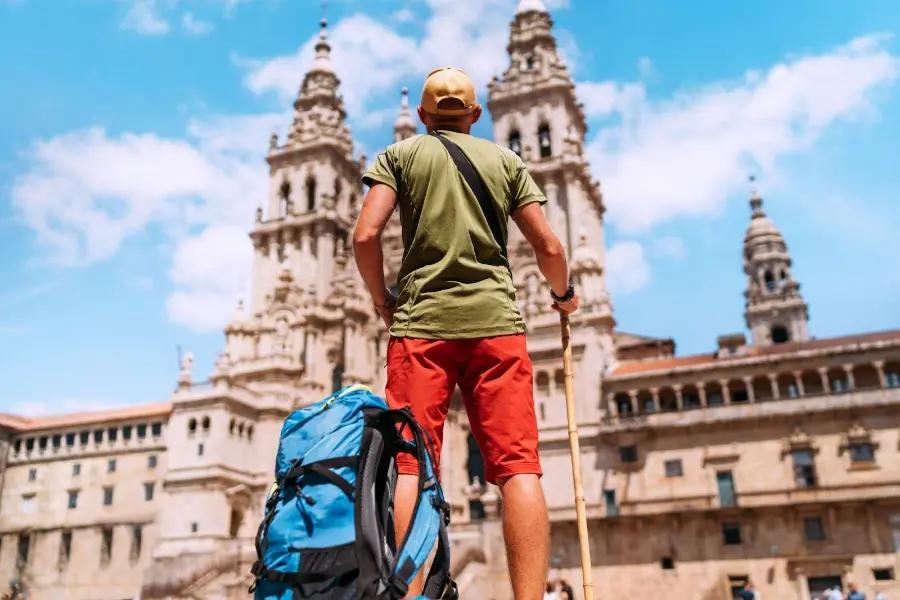
While the routes start in different places, they all finish in the shrine of Saint James, in Santiago de Compostela’s magnificent cathedral. Located in Galicia, a region of northwest Spain, 20 miles from the ocean, this bustling city is home to over 100,000 people. Its medieval old town boasts narrow stone lanes, grand squares, authentic restaurants, and all kinds of charming nooks and crannies, and it’s a wonderful place to end your journey.
Why are gold scallop shells used to signpost the route?
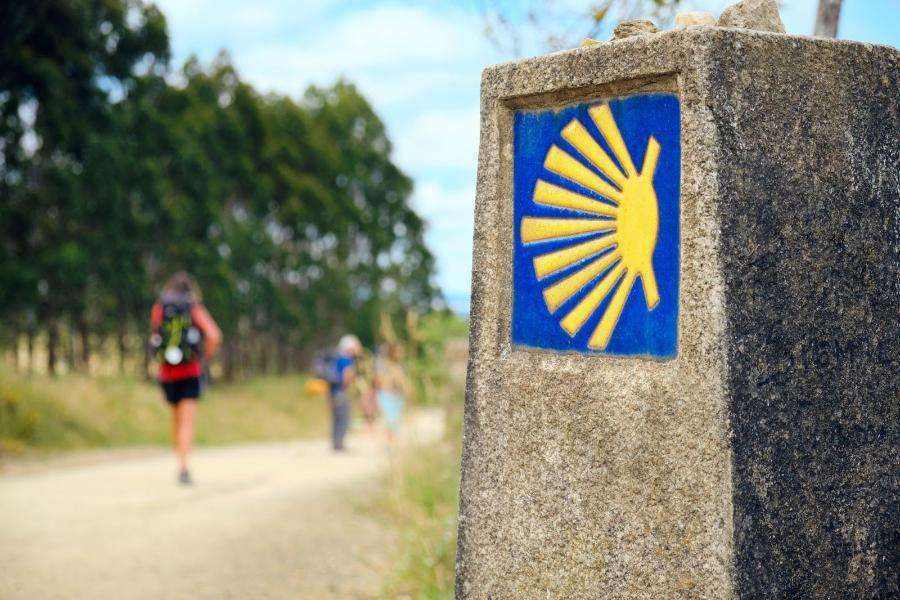
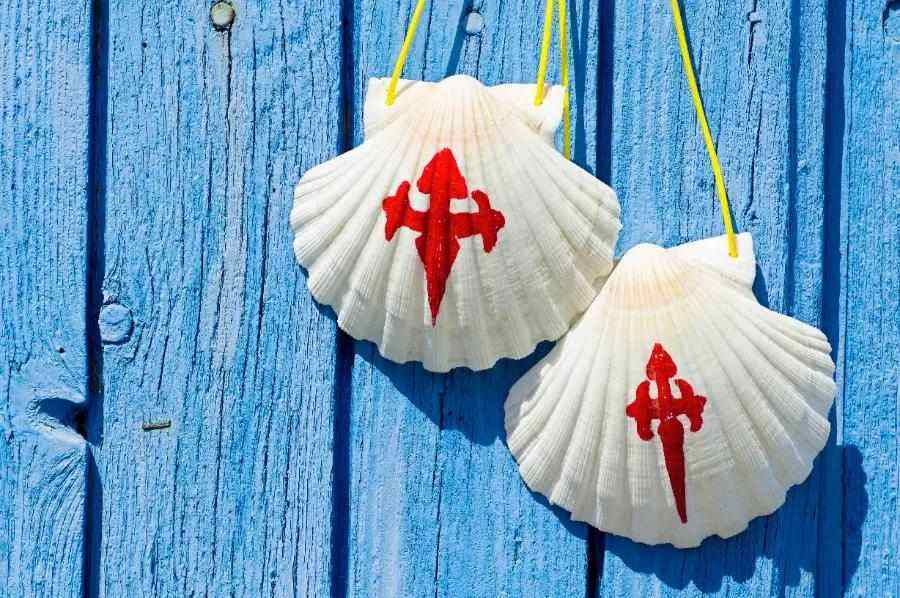
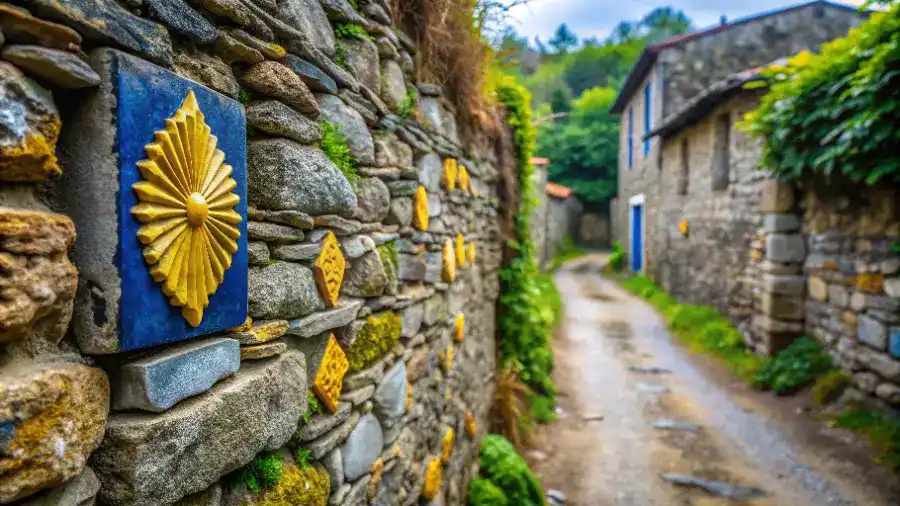
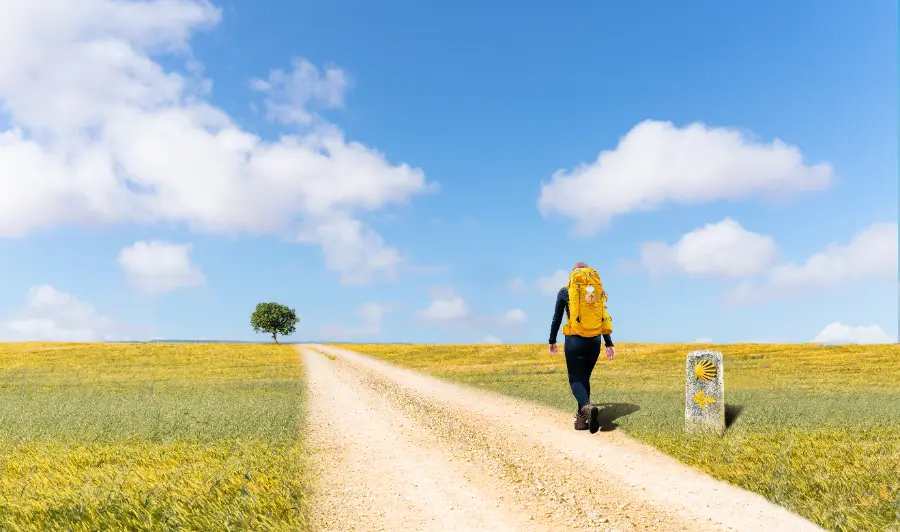
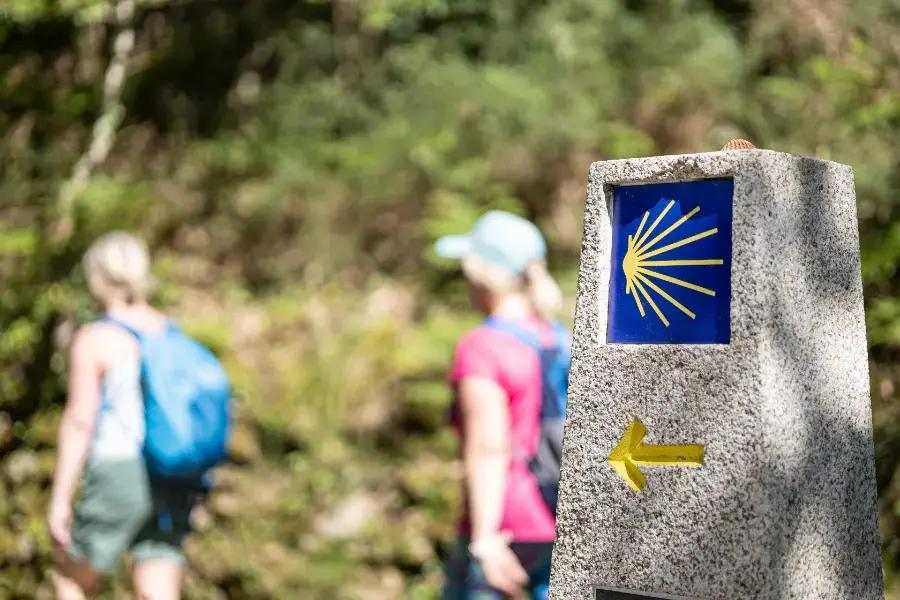
All Camino routes are well-signposted with yellow arrows and gold scallop shells set into blue milestone markers. According to legend, pilgrims drank spring water from scallop shells as they trekked, and were given more shells at the cathedral after finishing their pilgrimage. Another myth states that a knight covered in shells emerged from the sea along the Portuguese route.
Whatever the truth behind the scallop shell’s link to the Camino, it’s now an undisputed emblem of St James, and you’ll see nods to it throughout your journey – not only marking the way and hanging from front doors, but on restaurant menus in the villages you pass through. Scallops are a local delicacy in Galicia, so when you stop to refuel, you can do so while keeping the theme of the Camino alive.
Which Camino de Santiago route should you take?
Once you’ve decided you want to walk the Camino de Santiago, the next important decision is which route you’re going to take. Each route has its unique attractions in terms of landscape, climate, regional cultures, and physical challenge level. Let’s take a look at the five most popular routes.
Camino Francés
The Camino Francés – the French Way – is easily the busiest route, followed by more pilgrims than the other trails combined. The 491-mile path begins in St-Jean-Pied-de-Port, on the French side of the Pyrenees, and winds through northern Spain to Santiago de Compostela. To walk the path in its entirety, it’s advisable to set aside at least one month.
The French Way is arguably the prettiest route, too, winding through the vineyards of La Rioja and over the rural hills of Galicia, passing historic monasteries and temples built by religious orders, like the Templars. The path also takes you through sizable cities like Pamplona, Burgos, and León, many of which are packed with Camino-related history and are great places to immerse yourself in Spanish culture.
As the busiest route, it’s a good choice for solo travellers looking to meet people, and there’s plenty of pilgrim-friendly accommodation along the way. The flow of hikers is consistent year-round, although the path can be sweltering in summer and freezing in winter. Only one in five hikers trek the full distance, however – as nearly half of Camino Francés pilgrims begin in the Galician town of Sarria, 62 miles before Santiago – the last point you can begin walking and still get your official certificate!
Camino Portugués
The second most popular trail is the Camino Portugues – the Portuguese Way. This was the traditional route taken by Portuguese pilgrims, and while it stretches for 383 miles, it’s the flattest one and widely viewed as the easiest. It takes around 25 days to complete if you’re walking from Lisbon, but the most popular starting point is Porto, in northern Portugal. From here, it’s 150 miles to Santiago, and most people can complete the trek in 10 days.
The route is gorgeous, taking you through charming fishing villages, along the white sand beaches of the Atlantic coast, and, once in Spain, through the heart of the Rías Baixas wine region. If you like coastal scenery and fresh seafood, this might be the route for you; you can savour Portugal’s laid-back maritime culture, tuck into local produce, and escape the scorching summer sun with regular sea swims.
Camino Primitivo
If you’re interested in walking the oldest of all the Camino routes – or you’re keen for a decent physical challenge – you might like to take the Camino Primitivo. This is the Original Way, the route of the first pilgrim, King Alfonso II, and it’s been used since the 820s. It’s quieter than the Portuguese or French way, avoids big cities and paved roads, and winds through the Cantabrian mountains and northern Asturias.
While the full route of this 14-day trek is ‘only’ 200 miles, the hilly terrain can be challenging, so it’s best suited to seasoned hikers. The steep hills only enhance the views, however, and you’re surrounded by natural beauty almost all the time. Oviedo, Compostela, and the UNESCO-listed Lugo are the biggest cities en route, so there’s plenty of culture and history to uncover along the way.
Camino Inglés
At only 75 miles, the Camino Inglés – English Way – is the shortest of the routes, and you can walk the full trail in six days. The route is named after British and Irish pilgrims, who, in medieval times, would sail to ports like Ferrol or A Coruña to complete the rest of their journey overland.
Today, most hikers leave from Ferrol in northern Galicia, as the route from A Coruña isn’t long enough to get your certificate. If you’re looking for solitude, the Camino Inglés is an excellent choice, as not many pilgrims choose this path. You’ll trek across lush countryside, along pretty coastal inlets, and through charming medieval towns like Pontedeume and Betanzos.
Camino del Norte
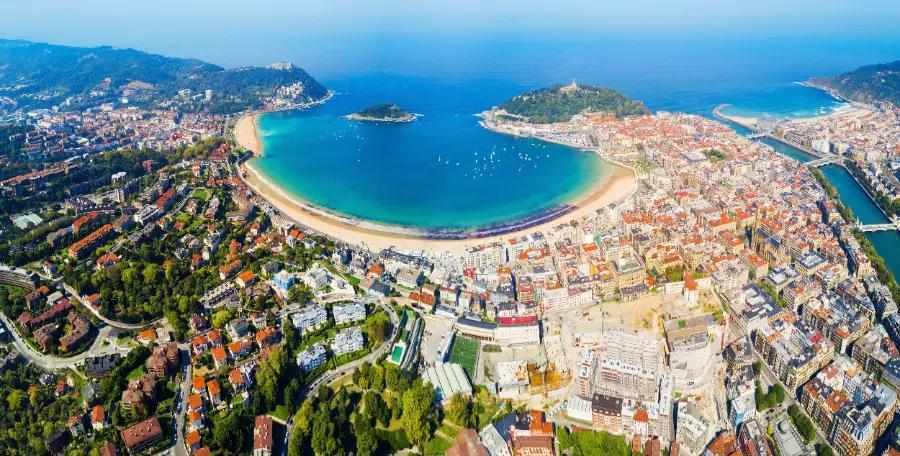
For foodies, the Camino del Norte – Northern Way – is the obvious choice. This route runs along Spain’s north coast for 373 miles, passing through the city of San Sebastián, which is known for its culinary excellence. The path weaves through the seaside towns and villages of ‘Green Spain’ and, while you’ll pass gorgeous beaches and soaring cliffs, much of the route is inland, so there’s plenty of variety.
Aside from San Sebastián, you’ll also pass through cities like Bilbao, Santander, Gijón, and idyllic coastal towns like Comillas, Ribadesella, and Luarca. Given the length of the trail and the fact that there are some challenging hill climbs, you should allow at least four weeks to walk the full thing. This route is quiet and doesn’t have as many albergues as the French Way, but accommodation options are growing each year.
What else do I need to know?
Now you know the details of the most popular routes, what else do you need to know before setting off?
How much will walking the Camino de Santiago cost?
The cost of the walk will depend on the route, accommodation, and restaurants you choose, as well as the season you travel in. The longer the route, the more days you’ll need to budget for. Albergues on the Camino de Santiago usually range from €7 to €25 per night, but public albergues are cheapest, typically costing between €7 and €12.
Many restaurants along the route offer Pilgrim’s Menu, which is a discounted set menu, so if you’re on a budget, this is a good choice. Usually, you get a starter, salad, main course, dessert, and your choice of drink, including wine. These multi-course meals are usually €8 to €20, so it’s a cost-effective way to fill up.
How fit do I need to be to walk the Camino de Santiago?
While you don’t need to be an athlete to walk the Camino, you’ll need a decent level of fitness. This depends on the duration and difficulty of your route, but generally, a two-week trek requires some conditioning. Completing the Camino is about endurance, however, rather than speed or athleticism, so the key is to build up your stamina and prepare your body for the challenge.
If you’re not already walking long distances, start with shorter walks and slowly increase the distance and intensity. It’s a good idea to walk over varying terrain, too, so you’re prepared for the diverse landscape of the Camino. Before setting off, you should be comfortable walking at least 10 miles a day while carrying a sizable backpack. Three months is usually enough time to prepare to walk the Camino.
What should I pack?
Your backpack should always contain waterproofs, a first-aid kit, plasters, a water bottle, and snacks. If you’re walking in the warmer months, sunscreen, a sun hat, and sunglasses are also key, while in winter, a warm hat and torch or headlamp are recommended. Comfortable, sturdy walking boots and walking socks are essential.
If you’re staying in albergues, keep in mind that these are usually pretty basic. It’s a good idea to pack a sleeping bag, earplugs, an eyemask, and bug spray.
Final thoughts
Religion may have been the original motivation to walk the Camino, but nowadays, there are many reasons why people embark on this unique challenge.
Passing through beautiful landscapes, discovering historic sites and monuments, and meeting and connecting with other pilgrims from all over the world is an experience you won’t forget. Along the way, you can immerse yourself in Galician culture, explore Spanish cities, towns, and villages, and tuck into traditional tapas.
You may not find God, or even yourself, but the experience will almost always be rewarding, meaningful, and memorable – and often, truly transformative.
For more inspiration for your next getaway, head over to our travel section.
Are you interested in walking the Camino de Santiago? Do any of the specific routes tempt you – or are there other walking trails around the world you’re keen to explore? We’d love to hear from you in the comments below.
Selene Nelson is an author, freelance journalist, and lifestyle writer for Rest Less. After graduating from the University of Sussex with a degree in English Literature, Selene began contributing to many major newspapers and websites, and has written for the BBC, The Sunday Times, The Independent, Town & Country, and HuffPost. Her specialist subjects include food, travel, and health, though she enjoys writing about a wide range of topics (e.g. her two books are about veganism and psychopathy, respectively!). She enjoys cooking (particularly pasta and Asian noodle soups), reading, travelling, hiking, attempting to keep fit, and watching animal videos on YouTube.
* Links with an * by them are affiliate links which help Rest Less stay free to use as they can result in a payment or benefit to us. You can read more on how we make money here.
See the best holiday deals today
Whether you’re looking for a last-minute getaway, city break, cultural tour, or the trip of a lifetime – search over 20,000 exciting deals from over 20 leading providers, with options to suit all budgets and tastes!
Join the discussion
Read our full commenting terms and guidelines