
How does Rest Less make money
We make money through advertising and commission from affiliate links, which enable us to offer Rest Less as a free service to our users. The content on this page may use affiliate links, which track traffic from our website to a third party provider and enable us to receive a commission or payment from any traffic we refer.
* Affiliate links on this page have an * next to them. We place enormous importance on our editorial independence and the integrity of our content which means that we will never change how we write about something as a result of an affiliate link.
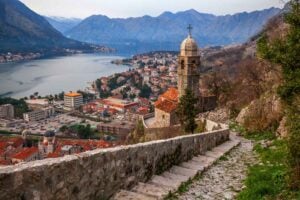
There’s little question as to why the ancient Romans built a settlement at the far end of the Bay of Kotor. The hulking mountains offered a defensive advantage, and the twisting, fjord-like bay provided easy access to the Adriatic for trade and naval operations.
Since then, the Montenegrin town of Kotor has had many stewards, meaning modern-day visitors will find a unique blend of cultural influences – from Venetian fortifications to Byzantine-style chapels.
And while the Romans chose this spot for practical reasons, today, tourists flock here to admire stunning scenery, mix with the friendly locals, sample some of Europe’s finest seafood, and more.
To inspire your next trip, here are some of the best things to do in Kotor.
1. Explore Kotor’s Old Town
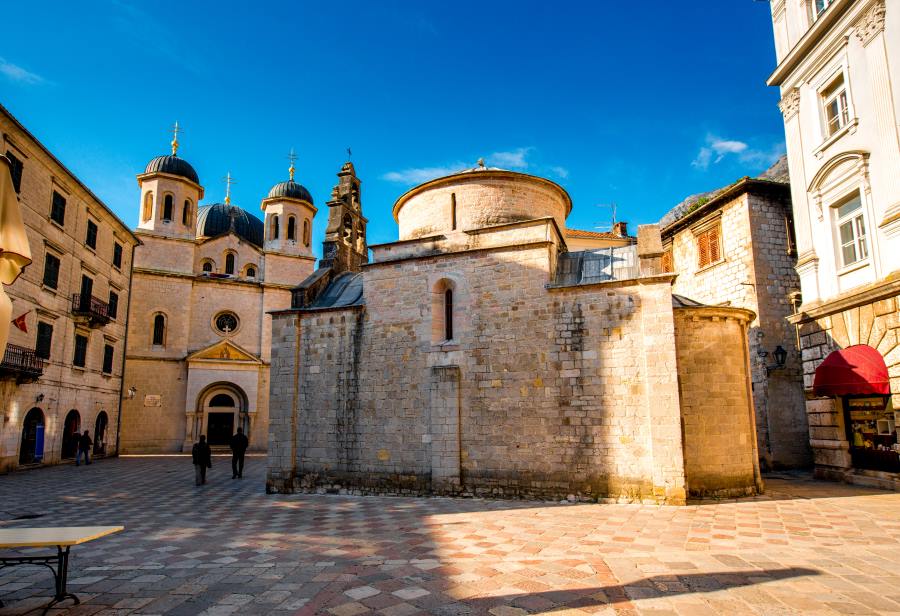
Encircled by impressive defensive bulwarks, Kotor’s UNESCO-listed Old Town, Stari Grad, is the region’s beating heart. It’s a labyrinthine warren of stone alleyways polished smooth by centuries of foot traffic, which open periodically onto sun-kissed squares.
By day, visitors can discover Baroque palaces and Romanesque churches, including the impressive St Tryphon’s Cathedral, home to fragments of Byzantine-style frescoes and a gilded-silver bas-relief altar screen. Souvenir seekers will also enjoy browsing independent boutiques. But make sure to visit after dark, too, when restaurant tables spill out onto the squares and the music of buskers echoes through the back streets.
2. Stop in at an oyster and mussel farm
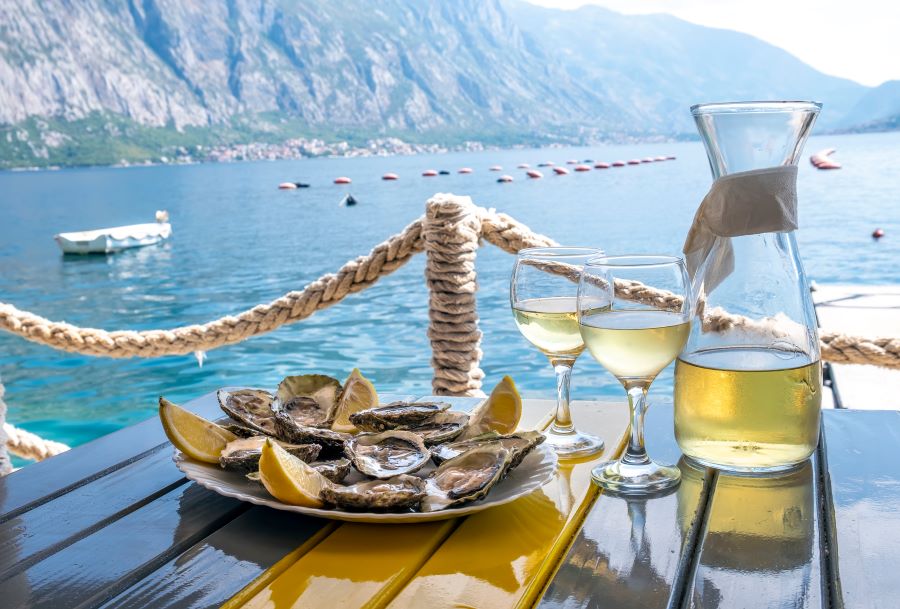
Scattered along the shores of Boka Bay, you might notice modest buildings with rows of buoys stretching out across the water before them. These are oyster and mussel farms, often family-run businesses with delightfully simplistic restaurant set-ups, so you can sample their wares alongside refreshing carafes of Montenegrin wine or ice-cold Nikšićko beers.
Oysters are typically served with just a wedge of lemon, and mussels with hefty hunks of bread to mop up the buzara sauce (a light, flavourful broth made from garlic, tomatoes, parsley, and white wine). If you have a car, farms like Pescatore and Boka Seafood are a short drive from Kotor, or you can book a boat tour with a seafood stop included through providers like Barbarosa Boat Tours.
3. Journey into Lovćen National Park
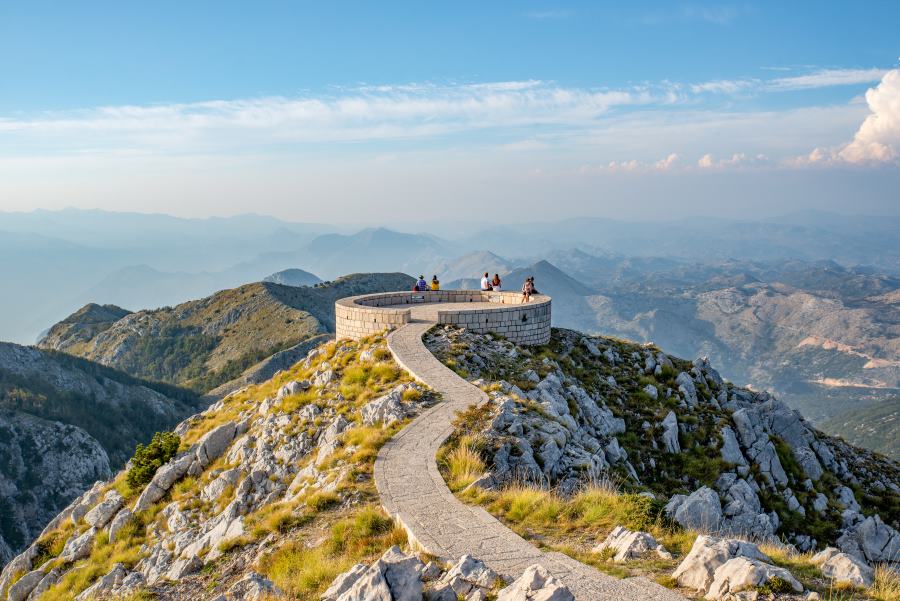
Just over the mountain ridge to the southeast of Kotor lies Lovćen National Park, a ruggedly arresting mountain wilderness. At its edge, Mt. Lovćen (the ‘black mountain’, which inspired Montenegro’s name) looms over the bay, offering unrivalled views of the terracotta-tiled town and sparkling waters below. Visitors can reach the summit on foot, via a twisting road aptly named ‘the Serpentine’, or by cable car.
But adventurous travellers can discover plenty more beyond the first looming peaks of Lovćen National Park. Two of the most popular sights are the mountain-top mausoleum of Petar II Petrović Njegoš, a poet and prince-bishop of Montenegro from 1830-1851, and the nearby village where he was born. Numerous outdoor activities are available, too, including hiking, cycling, ziplining, and quad biking.
4. Unearth curiosities at Kotor’s museums
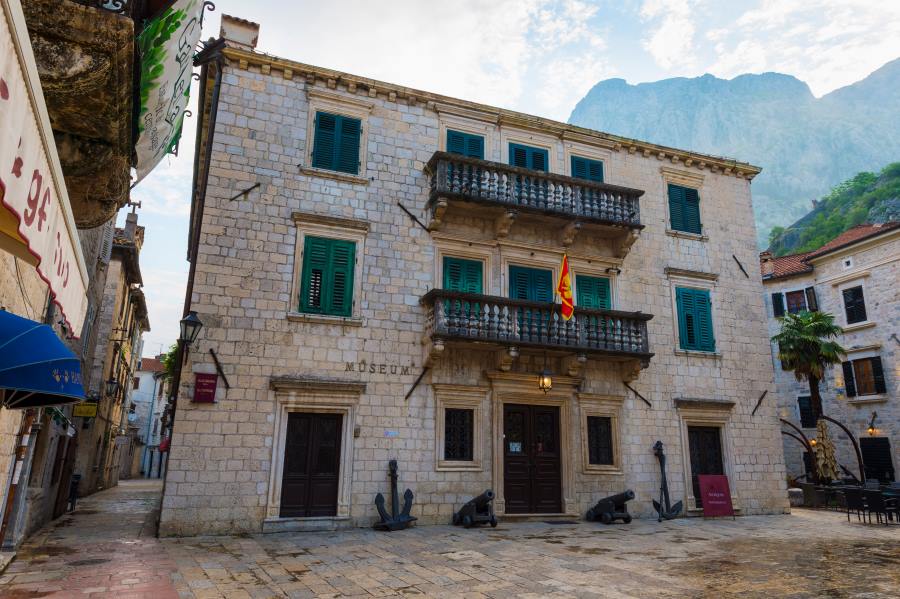
Kotor is home to a handful of off-beat museums, offering travellers unique glimpses into the region’s history. For example, the Maritime Museum of Montenegro centres on the country’s centuries of seafaring. As well as all manner of nautical curiosities, visitors can admire six bronze panels depicting some of the most iconic events and distinguished people from Kotor’s history.
Animal lovers won’t want to miss a visit to the Cats Museum to browse all kinds of memorabilia related to the town’s most iconic residents, who can be seen sleeping in shop doorways and padding along the Old Town’s balustrades. You may also be pleased to learn that the very reasonable entrance fee of €1 goes towards the welfare of Kotor’s cats.
5. Sail to the Church of Our Lady of the Rocks
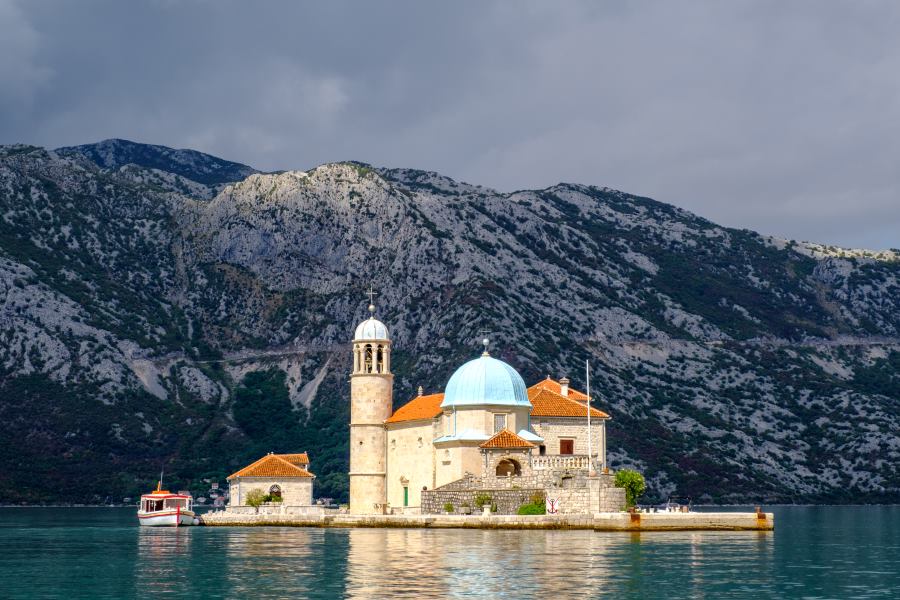
Another iconic sight in the Bay of Kotor is the Church of Our Lady of the Rocks, a tiny, man-made island steeped in local legend. It’s said that, during the 15th century, two fishermen found an icon of the Holy Mother on a rock where the island now sits. Even when taken, the icon would continually reappear at the spot. To honour this miracle, sailors began casting stones into the sea here until a small islet formed.
Whatever the island’s origins, it’s a fascinating and beautiful place to stop on a boat tour of the bay. Ashore, you’ll find a chapel and museum containing over 68 paintings by Tripo Koklja, a local Baroque artist from the 17th century, plus many more treasures. Just be sure to dress appropriately for a place of worship – i.e. no swimwear.
6. Climb the city walls
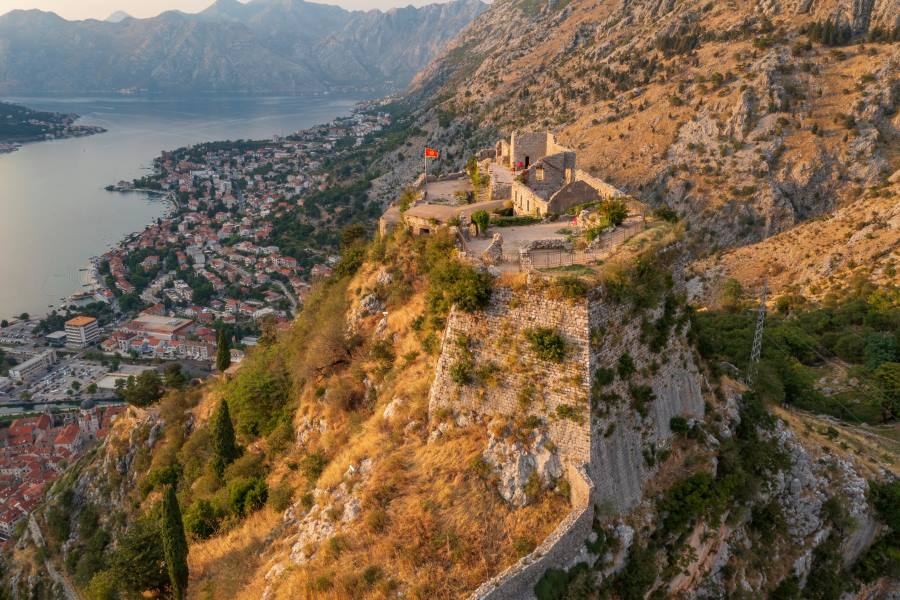
Kotor’s fortified walls encircle the Old Town and scramble up the precipitous mountainside beyond in an arc to a height of 853m. At its peak is the Castle of San Giovanni, a centuries-old ruined fortress. As well as historical intrigue, this spot also boasts some of the best views of the bay, especially at sunset, so it’s worth hiking up there if you’re able to.
Though it usually takes just over an hour to reach the top, the hike is challenging. The route is mostly unshaded (another reason to set off in the evening) and features 1355 stairs and over 70 switchbacks. Yet, there are a few scenic rest points where you can stop to catch your breath, including the serene St. John’s chapel, which acts as a sort of halfway point.
7. Venture into Škurda Canyon
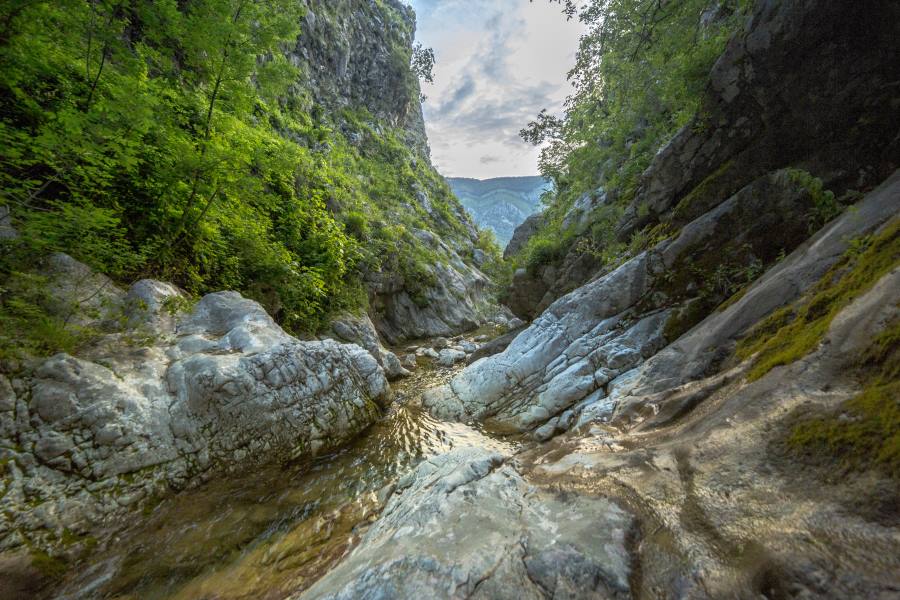
Montenegro is famous for its lofty peaks, but fewer know of its plunging chasms, which are just as breathtaking. Škurda Canyon is a dramatic gorge just 15 minutes by car from Kotor. Here, visitors can marvel at verdant vegetation, tumbling waterfalls, and impressive rock formations that have been sculpted over the millennia by the icy torrents of the Škurda River.
Stretching for eight kilometres and reaching 500 metres deep, Škurda Canyon’s varied terrain offers a wealth of activities. Adrenaline seekers can raft through whitewater, abseil down steep precipices, plunge into narrow caves, or pitch off rocks into deep sections of the river. Yet, those looking to explore at a slower pace can hike along forest trails, perhaps stopping now and then to bathe in languid pools.
8. Have a tipple at the underwater wine cellar
For a truly unique experience, call in at the Kraken underwater wine cellar, a floating wine bar set adrift in the middle of Kotor’s mountain-ringed bay. The Kraken team ages local wines on the seabed for a year before serving them with a range of nibbles, such as bruschetta, charcuterie, and fresh seafood. You can even keep the barnacle-encrusted bottle as a souvenir.
The ambience at Kraken is uber-relaxing, and sipping on crisp wine as the pontoon beneath you rises and falls on the gentle tide is like something out of a dream. The staff even have goggles on hand if you’d like to dive in and see the submerged cellar for yourself. Just remember to book in advance as space is limited.
9. Step inside some of Kotor’s historic churches
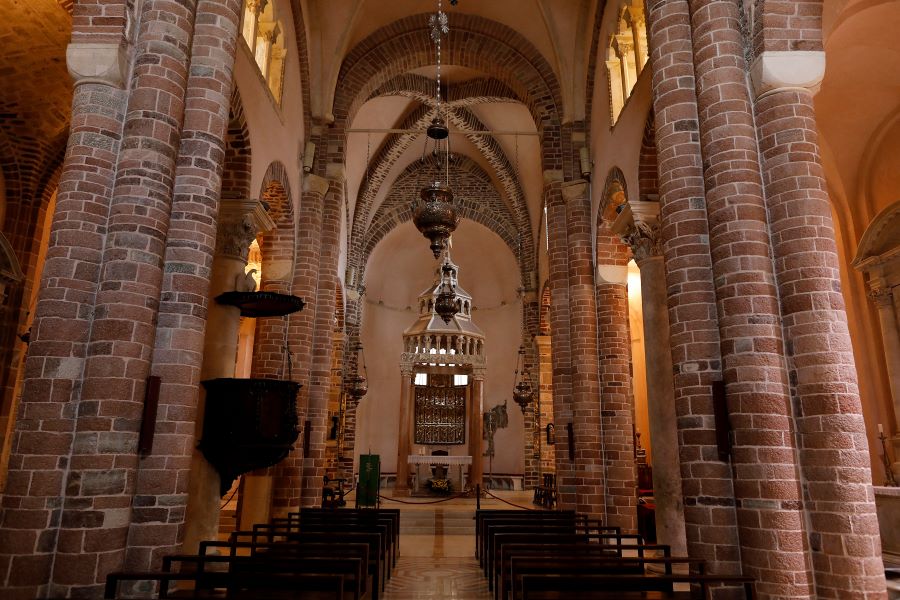
While Kotor’s historic churches boast beautiful exteriors, adding to the town’s old-world charm, it’s worth venturing inside to see what treasures they hold. Some of the region’s most renowned handiworks are housed within churches, such as medieval frescoes and gold iconostasis, and the elaborate interiors are astonishing creations themselves.
In the town’s stone chapels and towering cathedrals, there are many more curious relics other than artworks. Perhaps the most interesting are the remains of St. Tryphon, the patron saint of Kotor, which reside in the cathedral bearing his name. Many of the churches in Kotor are free to enter, while others, such as St. Tryphon’s and the Church of Our Lady of the Rocks, require a small entrance fee.
10. Swim in the Blue Cave’s cerulean waters
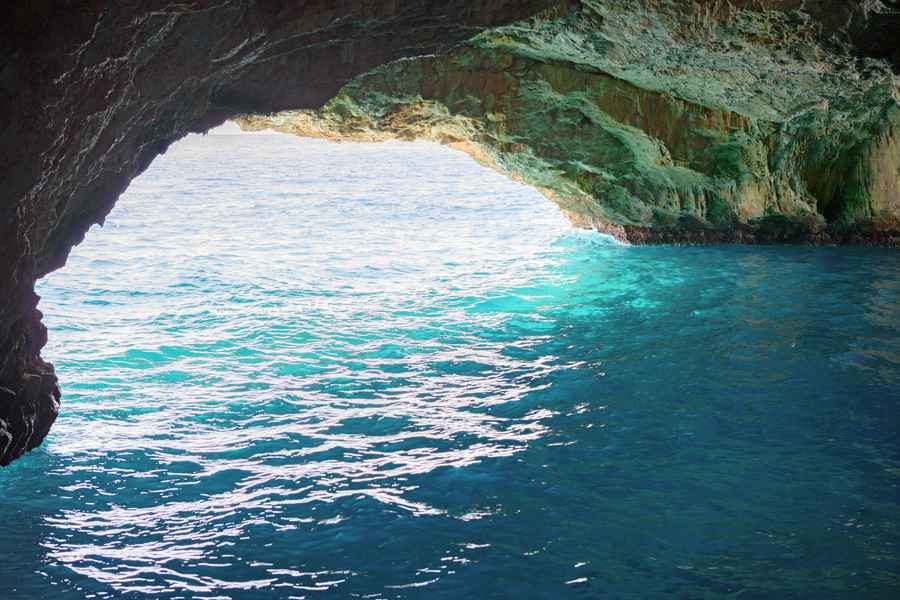
Located on the relatively unspoiled Luštica Peninsula at the entrance to the Bay of Kotor, the Blue Cave is famous for its ethereal beauty. This low grotto is only accessible via a small boat. Inside, visitors will find crystal clear waters and remarkable rock structures, made even more beautiful by the luminous sapphire glow that fills the interior.
Visitors can take a dip in the cave’s radiant waters or simply admire the scenery from their boat deck. The two most popular ways to reach it are by taking a water taxi from nearby Igalo Beach or booking a boat tour from Kotor. Depending on the tour you choose, you can combine a visit to the Blue Cave with other unique sights like the eerie former submarine tunnels, where snorkellers can spot octopi.
11. Day-trip to nearby towns and villages
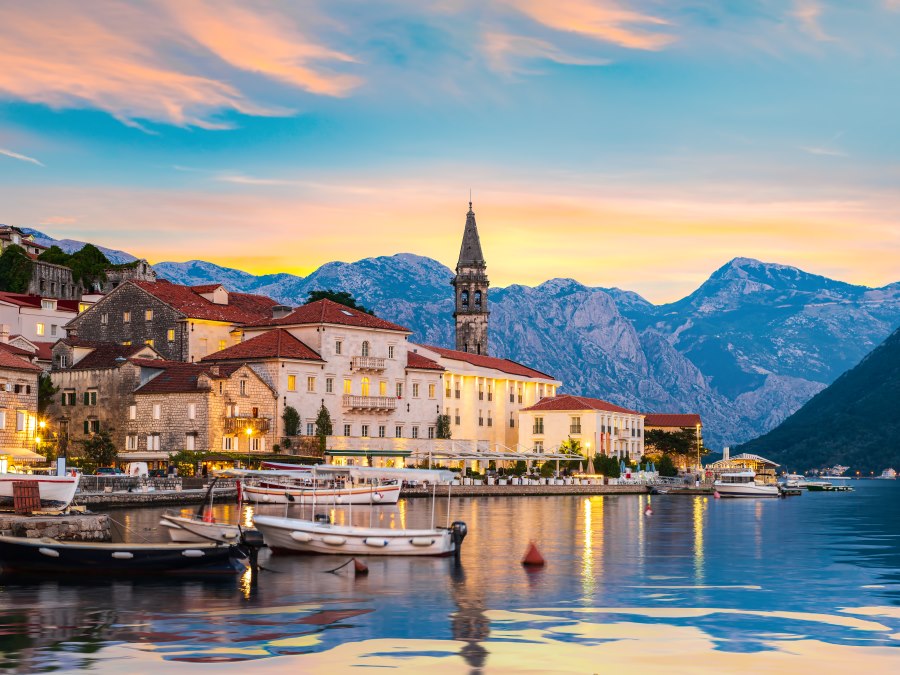
Scattered around the Bay of Kotor and the surrounding area are countless towns and villages waiting to be explored. For a taste of glitz and glamour, head to Tivat, a one-time navy base turned holiday destination for the uber-wealthy, where super-yachts bob in the palm-fringed marina. Or, for something a little livelier, travel further south to Budva, Montenegro’s most popular resort town.
Perast, just 20 minutes by car from Kotor, is also worth a visit, where dinky chapels rub shoulders with gleaming stone palaces. Smaller and a little more serene than its neighbour, Perast boasts some fantastic waterfront dining options and exquisite views. And further along the bay, at Risan, history buffs will find Roman mosaics and ruins.
Final thoughts…
Currently straddling the line between hidden gem and emerging European destination, tourists from around the world are taking notice of Kotor’s natural splendour, fascinating culture, and welcoming locals.
Whether you’re interested in ancient history, outdoor activities, or simply looking for a picturesque destination to enjoy some good food and weather, there are plenty of reasons to bump Kotor to the top of your travel wishlist.
For more holiday inspiration, head over to our travel section. Or search travel deals to Montenegro using the button below.
Have you been to Kotor? Or are you inspired to visit after reading this article? We’d love to hear from you in the comments below.
Sam McLoughlin is a Senior Lifestyle Writer at Rest Less. He joined the editorial team in 2021 after completing his Master’s degree in English Literature, Culture, and Theory at The University of Sussex. He enjoys writing about careers, books, sports, travel, and pretty much anything that his editor will let him have a crack at, but his favourite part of the job is interviewing inspiring people – from activists and CEOs to later life career changers. In his spare time, Sam enjoys climbing, snowsports, and going to see live music.
* Links with an * by them are affiliate links which help Rest Less stay free to use as they can result in a payment or benefit to us. You can read more on how we make money here.
See the best holiday deals today
Whether you’re looking for a last-minute getaway, city break, cultural tour, or the trip of a lifetime – search over 20,000 exciting deals from over 20 leading providers, with options to suit all budgets and tastes!
Join the discussion
Read our full commenting terms and guidelines