
Tennis elbow is a tendon injury, often caused by overuse of the forearm, that causes elbow pain. According to Bupa, tennis elbow affects one to three of every 100 people and is most common between the ages of 35 and 54.
While tennis elbow can be painful and frustrating to live with, the good news is that various treatment options are available, as well as ways to reduce your risk.
Here, we’ll take a closer look at what tennis elbow is, including symptoms, causes, and treatment.
And, if you’re looking for help maintaining healthy bones, the Royal Osteoporosis Society (ROS) offers access to expert information and a chance to connect with others through supporter and volunteer groups, from just £3 a month.
What is tennis elbow?
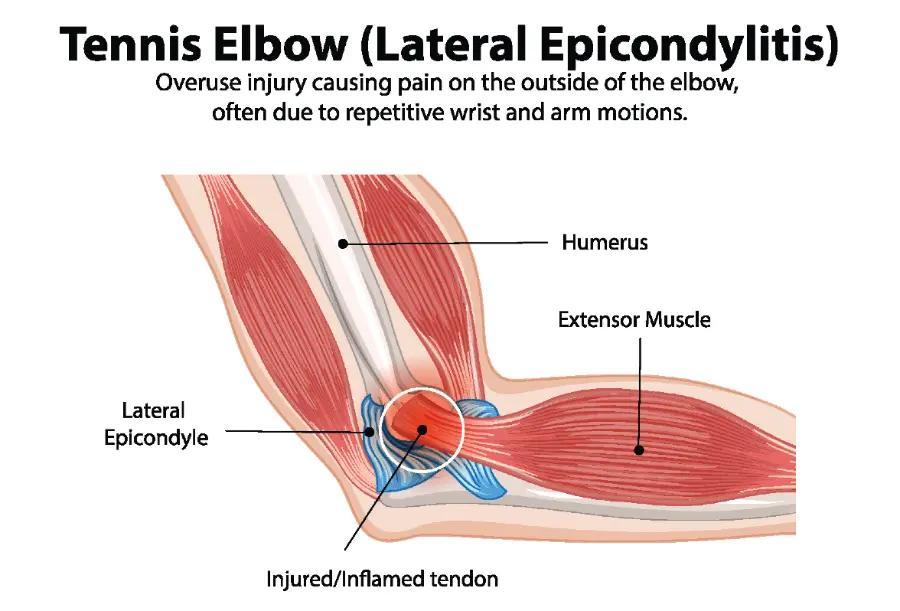
Tennis elbow, also called lateral epicondylitis, is a type of tendinopathy, which means it affects your tendons. Specifically, it’s an injury of the tendon that connects your forearm muscles to your elbow, causing pain and inflammation around the outside of the elbow.
Tennis elbow is one of the most common sources of elbow pain and is usually caused by repetitive strain. These injuries occur when you use a part of your body to do the same kind of movement so often that it damages the tissue.
Despite its name, tennis isn’t the most common cause of tennis elbow. On the contrary, experts estimate that more than nine in 10 people develop tennis elbow for other reasons. We’ll explore the potential causes of tennis elbow in greater detail later on.
What are the symptoms of tennis elbow?

According to the NHS, the main symptom of tennis elbow is pain on the outside of your elbow. It can range from mild discomfort when you move your arm to constant pain that impacts your ability to sleep and carry out daily tasks.
Many people with tennis elbow experience a specific pain, often described as a sharp pain or burning sensation that spreads from the elbow to the forearm and into the wrist. This is caused by tiny tears which develop in the tendon, causing it to swell, thicken, and become tender.
Things like gripping objects (for example, opening a jar or shaking someone’s hand), moving your wrist, trying to straighten your arm fully, and lifting or bending your arms may exacerbate pain. Your grip may also feel weaker in these motions, even if you’re not using much strength. Many people also report that pain is more severe at night.
Tennis elbow can affect both arms, but it usually develops in your dominant one, as this is the side you naturally use for most activities. According to Bupa, symptoms of tennis elbow usually develop gradually and last between six months and two years. Sometimes it may come back in the future.
What can cause tennis elbow, and are there any risk factors?

Tennis elbow develops when the tendons and muscles in your forearm become damaged. This usually happens if you’re repeating the same movement. According to the NHS, a person’s risk of developing tennis elbow is generally higher if they’re carrying out repetitive movements for more than two hours per day.
While the condition can be related to tennis, there are several other potential causes. We’ll explore some of these below.
Racquet sports
Tennis, squash, badminton, and other racquet sports are common causes of tennis elbow, particularly when technique is poor or the equipment isn’t suited to the player.
Other sports and activities that require a strong grip, such as weightlifting, can also strain tendons if not performed correctly. According to the NHS, carrying loads of over 20kg carries a greater risk.
Manual tasks
Manual tasks, like gardening, decorating, plumbing, and the use of hand tools like hammers and screwdrivers, often involve repetitive wrist and forearm movements that can strain tendons.
Certain workplace activities
Jobs that involve lots of typing, data entry, or lifting and gripping (for example, in factories) can contribute to the development of tennis elbow.
Playing musical instruments
Playing certain musical instruments, such as the violin or cello, involves repeated wrist and forearm movements that can increase the risk of tendon strain.
Other factors that may increase your risk of developing tennis elbow
Alongside repeated use of the tendons and muscles in your forearm, research has identified several risk factors that may increase your chances of developing tennis elbow. These include…
- Age – tennis elbow is more common in people aged between 35 and 54. This is due to a combination of age-related and lifestyle changes. For example, tendons and muscles typically lose elasticity over time, making them more vulnerable to micro-tears, even without significant injury.
- Being overweight – among other things, being overweight or obese stresses joints and muscles, and can lead to higher inflammation levels, including in the tendons surrounding the elbow joint.
- Smoking – smoking is known to negatively impact tendon health and blood circulation. This can increase the risk of developing tennis elbow and hinder healing by preventing the delivery of oxygen and essential nutrients needed for tendon repair and recovery.
- Diabetes – people with diabetes, particularly those with poorly controlled blood sugar levels, are at a higher risk of developing tendinopathy, including tennis elbow. This is because diabetes can lead to a build-up of advanced glycation end-products (AGEs) – a group of harmful molecules – in tendons, causing them to weaken and become more susceptible to injury.
- High-fat diet – there’s evidence that diets high in saturated fat may negatively impact tendon health, making them more prone to injury.
How is tennis elbow diagnosed?

If you suspect you may have tennis elbow or have been experiencing elbow pain that hasn’t improved with rest and home treatments for at least two weeks, it’s important to speak to your GP.
Your GP will examine your elbow and ask about your symptoms, as well as your job, hobbies, and medical history. You’ll be asked to move your arm and elbow in different ways to help identify the cause of your pain.
In some cases, your GP may diagnose tennis elbow without doing further tests. However, if they’re unsure whether you have tennis elbow, they may refer you for an X-ray, ultrasound, CT scan, or MRI scan. These provide detailed images of your elbow joint.
For more information on how tennis elbow is diagnosed, head over to Bupa’s website.
How is tennis elbow treated?
Tennis elbow is referred to by the NHS as a self-limiting condition, meaning it usually heals on its own over time. Statistics show that tennis elbow clears up on its own in up to 90% of people with the condition.
As a result, most people find that self-help remedies are enough to treat and manage tennis elbow. We’ll explore some of these below.
Note: While tennis elbow usually improves without formal treatment, it’s worth noting that symptoms can take up to 12-18 months to resolve.
Self-help remedies for tennis elbow
Rest where possible and make necessary adjustments
While it’s important not to become sedentary, reducing activities that worsen tennis elbow can help. For example, taking a break from racquet sports and avoiding carrying heavy loads.
If you’re unable to completely pause a certain activity, making necessary adjustments can be helpful. For example, at a desk job, using a narrow keyboard and positioning your chair to achieve a 90-degree elbow bend has been found to help reduce the strain.
Incorporate exercises for tennis elbow
Alongside resting, experts suggest that certain exercises can improve tennis elbow symptoms. For example, flexing and extending your elbow and palm up/palm down movements.
According to the NHS, these exercises may slightly increase symptoms in the beginning, but get easier over time and, with regular practise, improve movement in the elbow. That said, it’s important to consider your pain levels during exercise. Head over to the NHS website to learn more.
Over-the-counter painkillers
The NHS recommends using over-the-counter painkillers like paracetamol and ibuprofen can be used to manage pain caused by tennis elbow in the short term.
Note: It’s important not to become reliant on over-the-counter painkillers for long-term pain, as this can negatively impact health. If your pain is severe, it’s important to speak to your GP.
Consider using cold therapy
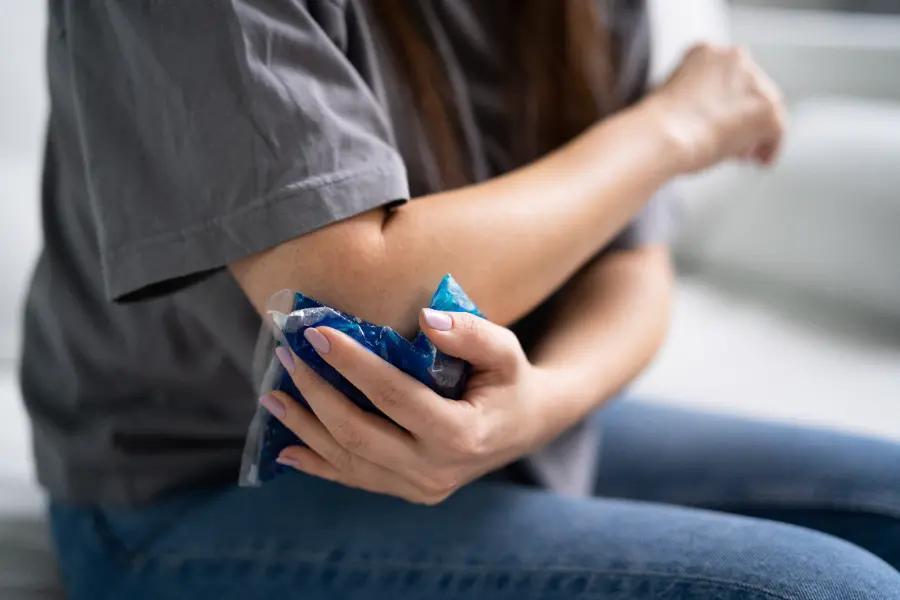
Some people find that cold therapy (for example, using an ice pack) can provide short-term relief for tennis elbow. The NHS advises applying a cold compress to your elbow for up to 15 minutes, every three hours, up to four times a day. It’s important never to apply ice directly to the skin and to wrap it in something, like a towel, first.
Supportive equipment
Wearing supportive equipment, such as a tennis elbow strap or brace, can help protect the elbow and reduce pain when doing activities that can trigger or exacerbate symptoms. These supports are sometimes called epicondylitis clasps.
Decathlon has various tennis elbow supports available on their website.
Treatment options for tennis elbow
If your pain is severe and self-help methods aren’t working, you may be recommended further treatment for tennis elbow. This may include…
Physical therapies
If you’re experiencing severe pain as a result of tennis elbow, your GP may refer you to a physiotherapist.
Physiotherapy treatment for tennis elbow may include deep tissue massage and ultrasound therapy. You may also be given exercises to ease pain and improve strength and flexibility at home.
Medication
If physiotherapy and home remedies like over-the-counter painkillers don’t provide effective relief for tennis elbow, your GP may suggest a steroid injection to help ease your pain.
Steroids can be injected directly into the most painful area and may reduce pain and inflammation for a few weeks.
However, according to Bupa, steroid injections aren’t used as often, as they’re strong and only tend to work for a short while.
Other treatments for tennis elbow
If home remedies, medicines, and physical therapies aren’t improving symptoms after six months or so, your GP may refer you to an orthopaedic specialist. Orthopaedic consultants specialise in treating musculoskeletal problems, including conditions affecting the elbow.
They can advise you on other treatment options, such as surgery and different types of injections. However, it’s important to note that these specialised treatments are only used when all other options haven’t worked.
The Bupa website has more information about treatment options for tennis elbow.
Final thoughts…
Tennis elbow is a common condition that can cause pain and discomfort in and around the elbow joint. While it can be frustrating and limiting, the good news is that with the right care and approach, tennis elbow usually heals on its own.
For further reading, head over to our health section. Here, you’ll find information on everything from important health checks for over 50s to bone, muscle, and joint health.
Do you have any experience with tennis elbow that you’d like to share? We’d be interested to hear from you in the comments below.