
Matt Haig has been releasing books for over 20 years, but his career soared to new heights in 2020 with the smash-hit novel, The Midnight Library.
It follows Nora Seed, a struggling, regretful young woman who, after a suicide attempt, finds herself transported to an otherworldly library. There, each book offers her a chance to experience the lives she could have lived if only she’d made different choices.
Author Joanne Harris called The Midnight Library, “A rare and welcome light of hope and wisdom in the darkness,” perfectly summing up why it struck a chord with so many.
Released during lockdown, at a time when much of our lives were lived online, and it was all too easy to fall prey to gloomy introspection, comparing ourselves to the glossy worlds depicted on our social media feeds, Haig’s uplifting message of gratitude came at just the right moment. And since its release, The Midnight Library has sold nearly 15 million copies.
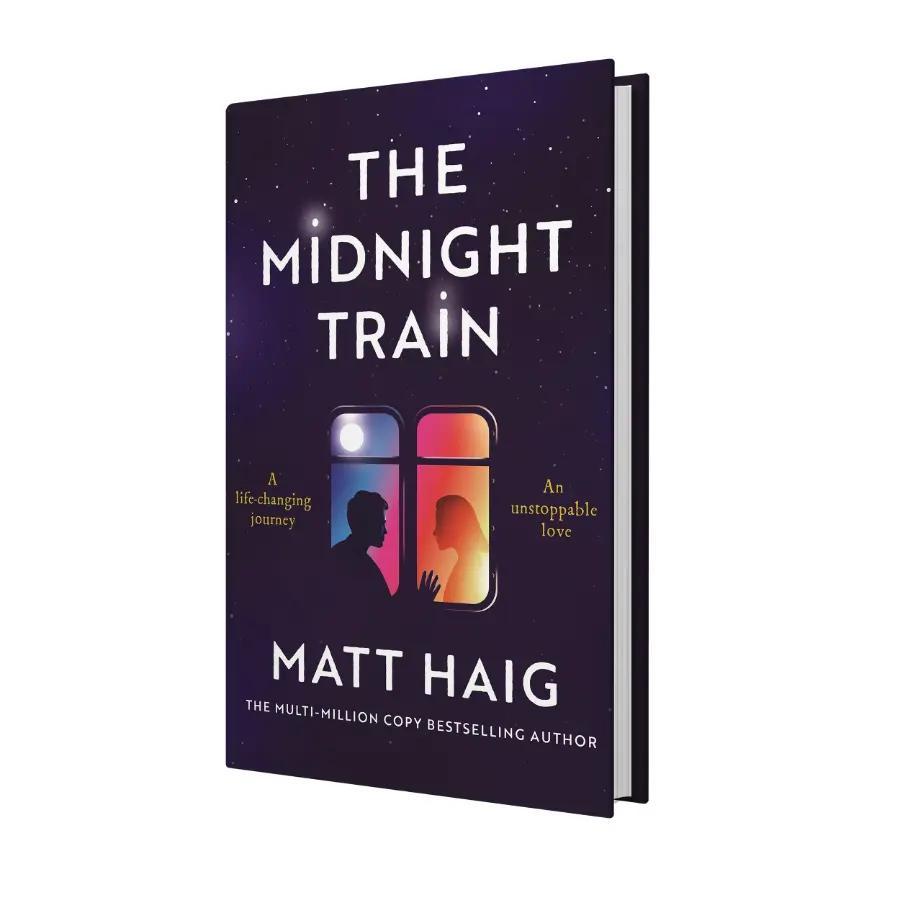
This May, Haig returns to The Midnight World for another fantastical, feel-good tale with The Midnight Train. We caught up with him to discuss the new novel, his unique career, and what’s next for the ‘Midnight’ series.
“If you could always have the perspective of your last self, what would you be doing differently right now?”
When Haig began writing The Midnight Train, he never intended it to be a follow-up to The Midnight Library. In fact, he considers the new novel more of a sibling than a direct sequel, writing in the acknowledgements that the two books are “having a heated debate with each other about how best to live.”
Haig explains, “The Midnight Library is about what-ifs, and: ‘If I’d made a different decision in life, what would happen?’ Whereas this one is more saying: ‘At the end of your life, when you’re looking back, what would you see? If you could always have the perspective of your last self, what would you be doing differently right now?’”
The Midnight Train tells the story of Wilbur Budd, an 81-year-old bookshop mogul who dies one lovely spring Saturday. Despite his success, he’s unfulfilled and lonely. His days are spent learning the piano and regretting the breakdown of his relationship with the love of his life, Maggie. The last thing he does before stumbling out into the garden and collapsing is re-read the letter she wrote when she left him decades earlier.
Following his death, Wilbur wakes up (or, more precisely, his consciousness resumes) in an ethereal train station suspended in a strange void, where the Midnight Train arrives to take him back through his life. The purpose of the journey is to watch and take stock before he moves on to eternity. But, desperate to change his fate, Wilbur doesn’t intend to remain a mere witness.
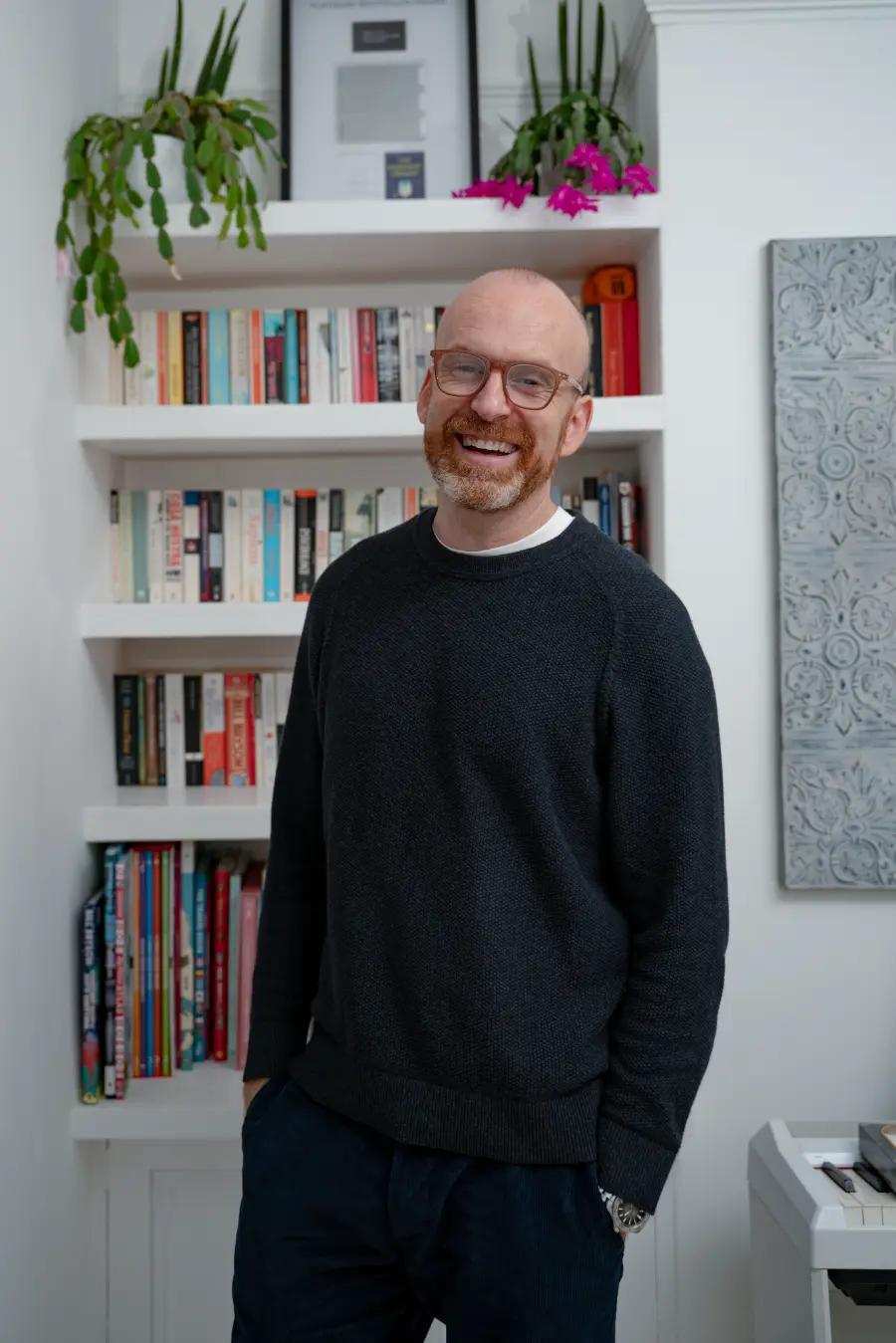
Haig explains that the book emerged partly from his shifting mindset as he’s grown older. Like Wilbur, his career aspirations began to take over his life in early adulthood, something he looks back on somewhat regretfully.
“As you get a bit older, your priorities shift a little bit,” Haig says. “I was incredibly ambitious in my 20s and 30s, in a slightly toxic way – to myself, at least. I shut a lot of life out, and that stemmed from my mental health issues. When I first became a writer, I couldn’t do anything else. I was agoraphobic, so I literally, physically, couldn’t do anything else. So I became very defensive over my career and very determined to make it as a writer.
“Obviously, it’s not the most stable career path, so I needed to be ambitious and passionate about it. I needed to devote myself to it. That said, men, especially, are so encouraged to be these go-getter types, and you can waste a lot of life being like that.”
“You can have books with happy endings, you don’t always have to be capital ‘S’ serious all the time”
The Midnight Train is Haig’s ninth novel for adults. Over the last 15 years or so, he’s gained a reputation for uplifting, genre-bending tales that often incorporate elements of speculative fiction and magical realism. But his early works don’t exactly fit that mould. As Haig explains, it took him a while to find his feet as an author.
“I did a master’s degree in English literature, and you’re kind of told at university what proper literature is; what you should aspire to,” he says. As a young author, Haig set out to write highbrow literary novels – and had no small success. His debut, The Last Family in England, an experimental retelling of Shakespeare’s Henry IV, Part 1, told through the eyes of a dog, was released by Jonathan Cape in 2004. But it wasn’t exactly him.
He explains, “I got published by this very ‘literary’ imprint, and I felt that I had to write a certain way. They publish people like Ian McEwan, so I sort of became a karaoke Ian McEwan. I wrote two more books that were taking me further away from myself. I didn’t really understand what kind of writer I was.”
Things changed when Johnathan Cape rejected Haig’s fourth book, The Radleys, a story of vampires living in suburbia, and dropped him as a client. It came at a very unfortunate moment, when Haig and his wife had just had their first child. But at the same time, setting out to write his next book, The Humans, he suddenly felt free of highbrow expectations.
Haig says, “I wanted [The Humans] to be published, but I sensed it might not be. So, I thought, I might as well write as me, and put all of my influences in there, and all the things you’re not supposed to do. So I included lots of things that were, then, quite frowned on in literary fiction.
“It was very sentimental, it was quite instructive, it was science fiction, it had an alien in it. It had ridiculous action scenes, then it had a love scene. It was just a sort of mishmash of everything. It even had a self-help style list halfway through. So it was almost a compendium of everything I’d felt before that I wasn’t allowed to write in a book. And I did it all.”
Haig’s instincts paid off, and The Humans was later published by Canongate to rave reviews. They also picked up The Radleys, which went on to become a film starring Damian Lewis.
“[Writing The Humans] was a very freeing experience,” Haig explains. “It made me realise that you can have books with happy endings, you don’t always have to be capital ‘S’ serious all the time, and books are another entertainment medium just like anything else. It was fun to write, and it’s nice to have fun with your work. So, since then, I’ve tried to write for me and to write honestly.”
“Even novelists who are broadly realistic are finding it harder and harder to write total realism. I think that’s because it’s hard to even know what realism is”
Speaking about the value of novels that lean into more fantastical elements, Haig says, “I think, in general terms, even novelists who are broadly realistic are finding it harder and harder to write total realism. I think that’s because it’s hard to even know what realism is. Everyone’s in their own separate realities and has a different take on reality. So, sometimes, it’s easier to get to the truth, I think, by stepping away from ‘reality’ into [the] supernatural or fantastical.”
Alongside his fiction, Haig is also well-known for non-fiction writing, which typically centres around the subject of mental health – most famously, Reasons to Stay Alive, a moving and joyful memoir about learning to live again after a mental health crisis and suicide attempt in his 20s. But Haig says fiction offers him a space to talk about his own life in a way non-fiction can’t.
“I found writing Reasons to Stay Alive quite limiting, because when you’re writing about real stuff, real people, and not wanting to hurt your parents, or your partner, everything, you’re continually guarded. Whereas, in fiction, you have the advantage of being able to write about yourself, but you’re not really, because you’ve changed the gender, age, or location. So, then, you can just go for it.”
“Books are always like those Rorschach inkblots, where people see different things based on their own perspectives and prejudices”
Haig’s non-fiction writing, campaign work, and openness about his own struggles have established him as a sort of mental health guide over the years. It’s not a role he’s always been completely comfortable with, and it inevitably plays a part in how people read his fiction.
“It would be interesting to use a pseudonym sometimes and see if a book was taken [differently],” Haig reflects. “Books are always like those Rorschach inkblots, where people see different things based on their own perspectives and prejudices.
“The Midnight Library was very much taken, first and foremost, as mental health fiction – and I didn’t really mean for it to be that. I wanted it to be a story about parallel lives, and the obvious way into that was via a suicide attempt. It wasn’t meant to be a book about depression, but some people took it as that.”
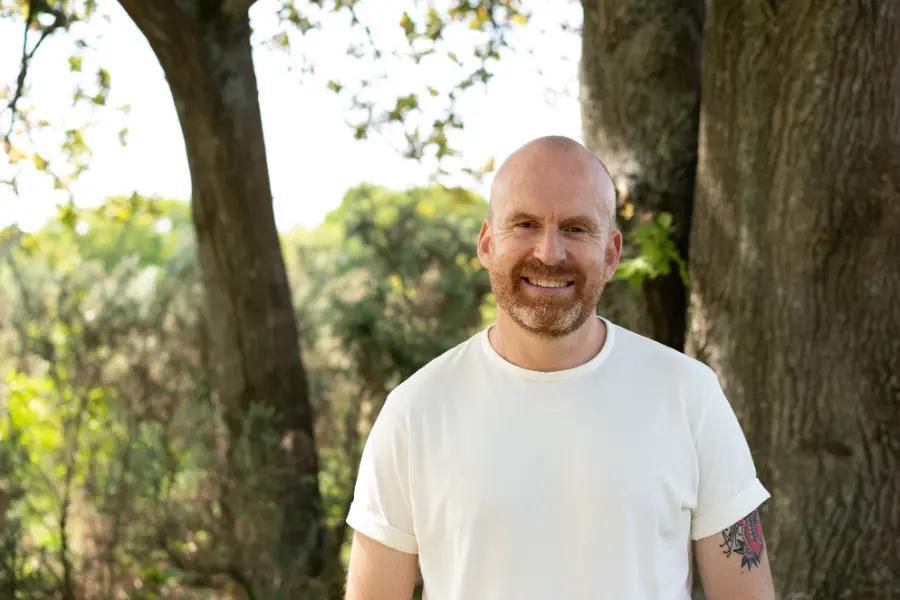
Haig explains that when a book is thought to be about mental health, people often look to the author’s life to make judgments, which can be challenging to deal with.
“People say, ‘Don’t take reviews personally,’ and I don’t,” Haig explains. “But the only thing that gets to me is when it’s an assumption about you. Like, they say, ‘You’re exploiting mental health,’ or ‘You can tell he’s never had depression before,’ when I was agoraphobic for three years and suicidally depressed. So that urge to sort of burst out and argue with people, which would be so ridiculous, is something I’ve struggled to contain.”
With The Midnight Train, Haig says he’s tried to move away from the subject of mental health somewhat. But he acknowledges that, in many ways, that’s impossible – and at the end of the day, he doesn’t necessarily mind if it’s taken that way.
“I think most books are mental health-related,” he says. “If you’re writing about someone’s entire life, you’re going to have grief in there, you’re going to have despair in there.”
“Novels are one of the few spaces we have in cultural life where you can totally disconnect and enter a different kind of reflective space”
Haig celebrated his 50th birthday last year, and looking back on his writing career, he says his work has benefited from the experience and confidence that comes with age.
“Novels are one of the few spaces we have in cultural life where you can totally disconnect and enter a different kind of reflective space,” he tells us. “And I think that it really is a medium that suits older people, both readers and creators, because it’s reflective in its nature.
“[As you age], you start to look back at your own past. You start to see patterns. You get less caught up in trends, and you see how things are quite cyclical – and all of that helps being a writer. And also, it’s a cliché, but just life experience. The older you get, the more good times you’ve had, but also the more hard times you’ve had.”
As far as the future is concerned, Haig is looking forward to embracing his more eccentric side. “It’s another thing about getting older, I don’t feel like I have anything to prove to myself anymore. So I think there’s going to be some more niche projects [coming up]. Maybe if I’m writing non-fiction, for instance, it’ll be a book about music or travel or cinema. You know, I won’t be writing for everybody all the time.”
And fans of The Midnight World will be delighted to hear that there’s potentially more to come after The Midnight Train.
“We will see,” Haig smiles. “There are characters in The Midnight Library that I didn’t really conclude. But I haven’t found a way back in to do that. It won’t be the next book, but at some point, there might be another ‘Midnight’ book.”
THE MIDNIGHT TRAIN by Matt Haig is published on 21 May at £20 by Canongate Books. Matt will be doing a nationwide tour in May. More details can be found on his website.
Are you excited to read The Midnight Train? Or are you inspired to go back and read some of Haig’s other books? We’d love to hear from you in the comments below.