
Age UK Trading logoSponsored content

Many of us want to stay in our homes and make our own decisions as we age. So, if you have older parents, you may be wondering how to help them remain independent for longer.

It can also be challenging to know when to help our parents, as it’s common for ageing adults not to reach out for help when they need it. You may even have offered your assistance already and been met with some hesitation or resistance, which can put you in a tricky and frustrating position.

With this in mind, we’ve partnered with Age UK Trading to discuss how to help ageing parents stay independent at home for longer (without taking over).

Part of the Age UK family, Age UK Trading collaborates with expert providers to offer products and services that are helpful for over-50s, such as stairlifts. Their profits go back to Age UK to help fund their work supporting older adults in need.

Below, we also cover how to recognise if your parents might need help and offer tips on speaking to them about their changing needs.

Signs that ageing parents might need help

Sometimes, due to not wanting to be a burden, our ageing parents might not reach out to us when they’re struggling. However, common signs that they might need help include…

  • Changes in daily routines and activities – for example, avoiding areas of their home may signal that they’re finding it challenging to move around safely and confidently.

  • Changes in appearance or personal hygiene – including weight loss, unwashed hair, and staying in the same clothes for days.

  • Increased disorganisation and messiness at home – may indicate that they’re struggling to keep up with home maintenance.

  • Showing less interest in hobbies and socialising – older adults may withdraw socially for various reasons, including reduced mobility and fear of falling.

  • Missed appointments and/or unopened mail – could be a sign of memory issues, increased confusion or anxiety, or generally feeling overwhelmed.

  • Noticeable changes in mood, confidence, or behaviour – this may be a sign that they’re struggling to cope.

Noticing one or more of these signs doesn’t necessarily mean that your parent is finding it challenging to live independently. And even if they do need some help, they might not be in immediate danger. However, these signs could indicate that it’s time to start conversations about what they need to get the best quality of life possible.

Supporting independence at home

As mobility changes, it can become challenging for you or a loved one to move around the home with ease.

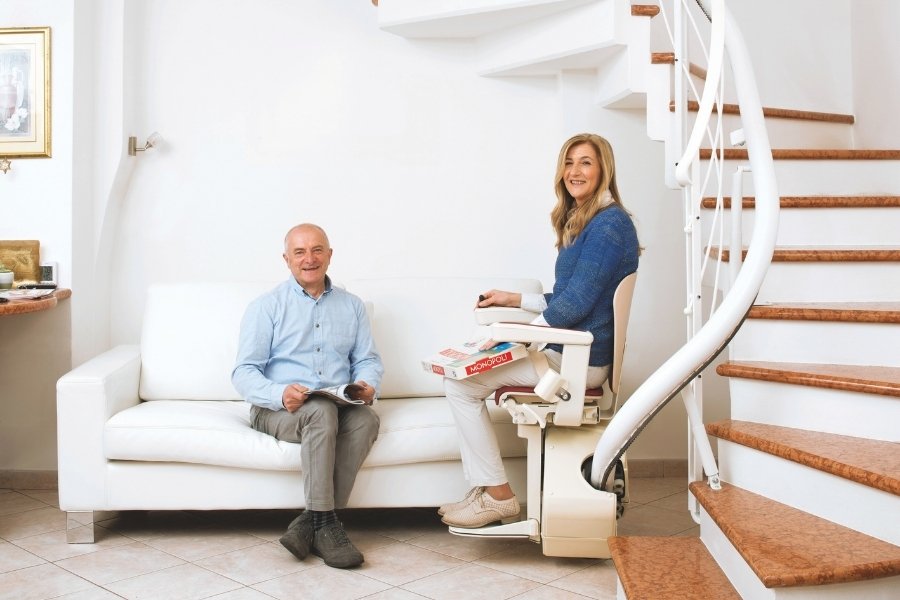
Improving accessibility often involves small, practical changes that reduce strain and make it easier to get from room to room. For some people, a stairlift can help keep everyday routines safe and make it easier to enjoy every floor of your home.

Learn more

6 ways to help ageing parents stay independent for longer

Of course, we couldn’t include every way to help your parents stay independent for longer in this article. But hopefully the suggestions below will provide a good starting point.

1. Assess your loved one’s needs

Assess your loved one’s needs

One of the best places to start with helping your parent remain independent is to make a list of what they need support with. Are they struggling to move around the house safely and confidently? Do they need assistance with home maintenance and errands like picking up prescriptions? Once you have a clear understanding of what they need, you can start considering potential solutions.

It’s important to involve your loved one in the process and let them take the lead where possible. Otherwise, they might feel like they’re losing their independence and be more resistant to any changes you suggest, however well-intentioned they are. So make sure to take some time to sit down with them to discuss not only their needs but also their wishes.

We know discussions around ageing and changing needs can be challenging, as it can be a sensitive topic for some. With this in mind, we’ve included some advice for having these sorts of conversations at the end of this article.

2. Make the home environment safer

Reduced mobility is a natural part of ageing, but it can increase our risk of falls and other accidents. So, a good place to start if your loved one wants to remain in their own home is to find ways to make it safer and more accessible.

There are many ways to do this. Some easy, low-cost options include improving lighting, removing loose rugs and trip hazards, and installing bannisters and grab rails where needed – including near toilets, in the shower, or next to favourite chairs.

Consider stairlifts

In some cases, more extensive home adaptations may be needed. If you notice your loved one struggling to move up the stairs or avoiding upper floors, a stairlift could make a big difference.

There are different types of stairlifts designed to suit a range of needs and homes (subject to assessment) – including those for straight, curved, and narrow staircases. You can even choose between seated and standing/perch stairlifts. The latter are suited to those who have difficulty bending their knees, as they allow for travel up the stairs in a standing or semi-standing position.

While stairlifts can make a big difference to a person’s quality of life by allowing them to move around their home with more confidence, finances can play a role in whether or not they consider installing one. However, you may be able to access help.

For example, it’s worth checking if your loved one’s local council offers a Disabled Facilities Grant. If they qualify, this can help them with the cost of installing one. It’s also worth looking into a free, no-obligation home assessment with a trusted stairlift company (such as Handicare, who work in partnership with Age UK Trading). They can assess your parent’s needs and explain the most cost-effective options.

To find out more about stairlifts, visit the Age UK Trading website using the button below.

3. Declutter and reorganise

Declutter and reorganise

The more stuff we have around the house, the more challenging it can be to remain independent. Excess belongings can create trip hazards, make it more difficult to move around our homes, and increase maintenance.

What’s more, several studies show that decluttered spaces can help us feel happier, less anxious and stressed, and more confident. So, offering to help your parent sort through their belongings could provide a valuable boost to their mental wellbeing and overall quality of life.

It’s also worth considering how you and your loved one could reorganise their home to make things more accessible. This might include moving everyday items – such as mugs, plates, and bowls – to shelves and cupboards within arm’s reach, so they don’t have to stretch or rely on step stools. Installing shelves or shower caddies to make toiletries more accessible can also make a difference.

To sustain the benefits of decluttering, it can be helpful to set aside some time every few months to go through things again and ensure changing needs are met.

Supporting independence at home

As mobility changes, it can become challenging for you or a loved one to move around the home with ease.

Improving accessibility often involves small, practical changes that reduce strain and make it easier to get from room to room. For some people, a stairlift can help keep everyday routines safe and make it easier to enjoy every floor of your home.

Learn more

4. Create a support network

Create a support network

A strong support network is beneficial at any stage of life, but it can be particularly important for older adults wishing to remain independent at home. This could include friends and family, but also neighbours and care professionals (if needed) who can assist your loved one when you can’t.

However, a successful support network is about more than practical assistance. Studies show that social connection can help older adults stay happier, healthier, and more independent for longer. So, if you’ve noticed your parent withdrawing socially, it’s worth thinking about ways to help them maintain social connections.

This could include anything from volunteering and joining clubs to attending classes or scheduling regular video calls with friends or relatives who don’t live nearby. If your loved one seems hesitant to try something new, perhaps you could suggest doing it together. Community programs, such as Age UK’s telephone friendship service and other befriending services, are also worth considering.

5. Establish an emergency plan

Establish an emergency plan

There are many steps we can take to reduce our ageing parents’ chances of finding themselves in an emergency. Although, unfortunately, it’s impossible to eliminate all risk.

Having an emergency plan offers valuable peace of mind that our loved one and their support network know what to do in the event of a crisis, such as a fall.

To start creating an emergency plan, consider situations your loved one could find themselves in where they’d need quick assistance – for example, if they suddenly feel unwell. In this case, it could be helpful to keep a list of key contacts, such as doctors and other medical services, and put it up in easily visible places, such as the fridge or a notice board.

Another scenario to consider is if they have a fall and can’t reach the phone. This is where personal alarms and monitoring systems, like those offered by Age UK Trading, can be invaluable.

There are various types of personal alarms and monitoring systems. Some are wearable pendants that let you contact loved ones at the touch of a button, while others are more extensive systems that can detect movement, smoke/gas, or appliances left on.

6. Consider home care

Consider home care

You might find that you and your support network can’t offer your loved one all the assistance they need. In this case, you and your parent might want to consider home care.

There are lots of different home care services out there. Some can provide personal care – i.e help with things like washing, getting dressed, and going to the toilet. Others can offer assistance with tasks around the home, like cleaning and making meals.

If you and your loved one can’t afford the full cost of home care, the good news is you might be able to access help. In this case, it’s best to contact your local council and ask them for a free care needs assessment. They’ll determine what your loved one needs and what support is available.

You can find out more about home care, including how to access funding support, on the Age UK website.

How to start a conversation with ageing parents about their changing needs

How to start a conversation with ageing parents about their changing needs

Conversations around ageing and changing needs can be challenging. But it’s helpful to remember that, often, how we say something is just as important as what we say. So, when speaking to ageing parents about helping them live independently for longer, careful communication is key.

Here are some tips to consider before speaking with your loved one.

Start conversations early

It’s natural to want to delay these difficult conversations for as long as possible. But often, the longer we leave them, the more challenging they become.

Try having discussions with your parents about potential changes before they need them. You can frame the conversation as future planning and reassure your loved one that nothing has to happen right away. This will help them feel like part of the decision-making process and that changes aren’t being forced on them.

Choose a time and place carefully

Try to avoid starting conversations when your loved one is feeling tired or unwell or during (or right after) stressful situations, such as falls or hospital visits. You also want to pick a moment when you both have plenty of time to talk and won’t feel rushed.

As for setting, a familiar space where your loved one feels comfortable and you won’t be interrupted is usually best – their home is often a good choice. Try to avoid starting these types of conversations in public, where they might feel ambushed.

Listen first, problem-solve later

A common mistake some people make with these conversations is to get straight to the point and explain what they think should happen. However, this can often be counterproductive and make our loved ones feel as if they’re losing their agency.

Instead, once you’ve explained that you’re concerned, try taking the time to hear their side of the story. Don’t be afraid to assure them that you’re listening and really want to hear what they have to say. Maintaining eye contact and open body language can help get this point across.

Ask open-ended questions

Open-ended questions – i.e. those that can’t be answered with ‘yes’ or ‘no’ – are helpful in these types of conversations. They prevent the dialogue from stalling into one-word answers, encouraging the other person to share their perspective and shifting the focus away from blame towards collaboration.

For example, instead of asking: ‘Have you been to the supermarket this week?’ Try something like: ‘How do you manage to get the shopping when the weather’s bad?’

Supporting independence at home

As mobility changes, it can become challenging for you or a loved one to move around the home with ease.

Improving accessibility often involves small, practical changes that reduce strain and make it easier to get from room to room. For some people, a stairlift can help keep everyday routines safe and make it easier to enjoy every floor of your home.

Learn more

Final thoughts…

We all want to help our ageing parents have the best quality of life – but taking steps to do so doesn’t always feel straightforward.

Above all, it’s worth bearing in mind that independence in later life means being able to make our own decisions, so it’s important to let them take the lead where possible – and hopefully, the advice above has given you a helpful starting point.