

- Home
- Health
- Healthy Body
- 10 lesser-known symptoms of menopause
When you think of menopause, hot flushes, insomnia, and mood swings might be among the first things that come to mind. However, we know from research that, beyond the more common symptoms, menopause causes a whole variety of changes – many of which often go unrecognised.
And because many symptoms are unexpected, it’s common for them not to always be linked with menopause, resulting in many women feeling alone and desperately Googling answers.
With that said, we’ll explore 10 lesser-known symptoms of menopause.
Note: Many of the symptoms listed here can also have other causes and may not necessarily be linked to menopause. If you’re concerned about symptoms you’re experiencing, it’s important to speak to your GP.
1. Ear eczema
As oestrogen levels decline during menopause, the production of collagen and elastin – two proteins that give our skin its firmness and elasticity – significantly reduces. This can leave skin feeling thinner and less resilient. Plus, because skin naturally loses moisture during menopause, it’s not unusual for skin to become dry and irritated, resembling eczema.
Research suggests that certain areas of the body may be more vulnerable to these changes – including the delicate skin inside your ears. Oestrogen is needed to produce earwax, which keeps the ear canal moisturised. Declining oestrogen levels means we tend to produce less earwax during and after menopause, which can contribute to dryness and itching.
If you’re struggling with ear eczema, experts at Jude recommend trying moisturising ear drops. For further reading, check out our article: Eczema – symptoms, causes, and ways to cope.
For everyday confidence 25% off Jude
Fewer interruptions, more of your day.
25% off Jude’s bladder and pelvic floor supplements with code BANNER25.
2. Cold flushes
You’ve probably heard of hot flushes, but many women experience cold flushes during menopause, too.
A cold flush can feel like a chilly, tingling sensation that happens suddenly and may last a few seconds or several minutes. For some women, cold flushes appear out of nowhere or tend to occur immediately after a hot flush. They can be uncomfortable and disorienting, especially when they’re unexpected.
Similar to hot flushes, experts suspect cold flushes may be related to the drop in oestrogen levels. When this happens, there’s evidence that the hypothalamus, which is responsible for regulating body temperature, may become more sensitive to small temperature changes. In response, the body overcompensates by having a cold (or hot) flush.

3. Bladder issues
Research shows that around 14 million people in the UK suffer from bladder issues – including 34% of women who live with urinary incontinence.
According to science, for women, this is largely due to declining oestrogen, which helps maintain the strength and elasticity of muscles and tissues in the pelvic area, including the bladder, pelvic floor, and urethra.
Some women experience urge incontinence, which is defined as a sudden and intense need to pee, even when their bladder isn’t full. Experts believe this is due to fluctuating hormones that cause misaligned signals between the brain and bladder.
Other women struggle with stress incontinence, experiencing leaks when they laugh, sneeze, or exercise. Again, because oestrogen affects blood flow to the urethra and helps maintain its lining, when levels drop, it becomes thinner and weaker, which can contribute to leaks.
Despite its prevalence and how distressing it can be, bladder issues aren’t spoken about nearly enough, which can result in many women feeling isolated, ashamed, and unsure who to talk to. If you’ve been feeling this way, you’re certainly not alone.
For guidance and support, head over to our bladder health section. Here, you’ll find information on everything from the best and worst foods for bladder health to ways to get through the day with an overactive bladder.
Advertisement
If you’re looking to improve your bladder health, Jude offers science-backed health supplements that are rich in pumpkin seeds and soy phytoestrogen to help you feel confident and empowered. Rest Less members can also use code BANNER25 to get 25% off.
4. Tingling skin
Another unexpected symptom of menopause is prickly, tingly skin. Also known as paresthesia, some women even describe feeling electric shock-like sensations (similar to a brief jolt) on their skin, often immediately before a hot flush.
According to experts, paresthesia is linked to the role of oestrogen in our nervous system. Oestrogen helps regulate nerve and neurotransmitter function, which are chemical messengers found in the brain. As oestrogen levels drop, it can lead to a misfiring of nerves and neurotransmitters, resulting in unusual sensations on the skin.
Paresthesia can occur anywhere on the body, but is most common in the hands, feet, arms, and legs.
Experts are keen to reassure women that these symptoms are usually harmless. That said, it’s normal to feel alarmed, or even frightened, particularly if your symptoms are unexpected. Things like managing stress and prioritising good-quality sleep may help calm the nervous system and make system and reduce symptoms.
5. Heartburn
Despite its name, heartburn (or acid reflux) isn’t a heart-related issue. The burning feeling in your chest and throat occurs when the acid usually found in your stomach travels up into the oesophagus (food pipe).
Although it’s a lesser-known symptom, there’s evidence that heartburn may become more common during menopause. In this study of nearly 500 women, 42% of perimenopausal women and 47% of menopausal women reported suffering from heartburn. This is supported by further research, which shows that postmenopausal women have a higher prevalence of gastro-oesophageal reflux disease (GORD) symptoms compared to premenopausal women.
This may be due to how the cells, which line the oesophagus and stomach, respond to hormones like progesterone and testosterone. Specifically, research suggests that when hormone levels fluctuate during menopause, it can alter the amount of acid that your stomach produces.
Note: Occasional heartburn or indigestion is fairly common and not usually anything to worry about. However, if it keeps happening, it’s important to speak to your GP. You can find out more about when to see your GP on the NHS website.
6. Brittle nails
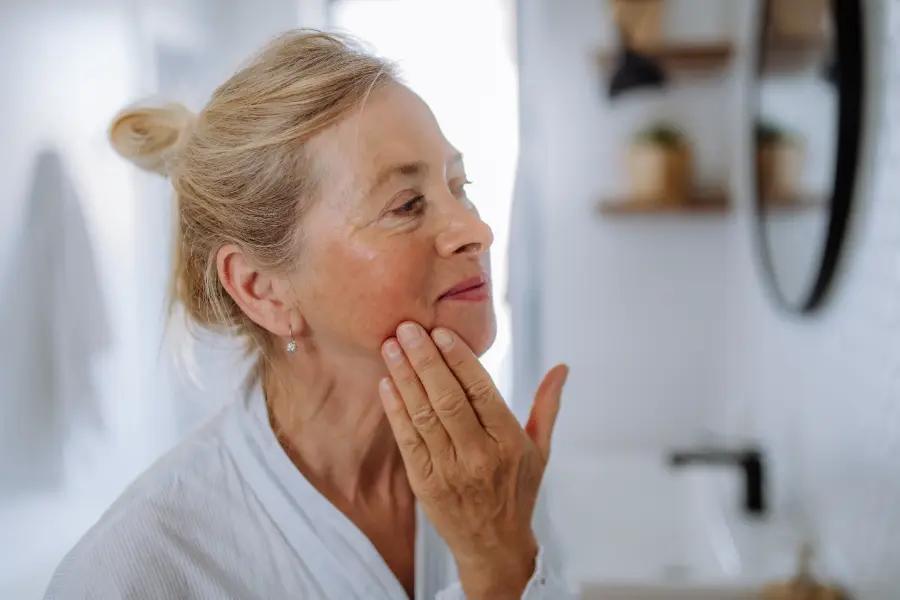
Some women notice that their nails feel drier and more brittle than usual during menopause.
Nails are formed from layers of a protein called keratin, which gives them structure and helps keep them strong. Among other things, research has linked lower oestrogen levels to reduced keratin production, causing nails to become thinner, softer, and more susceptible to splitting, cracking, and breakage.
That said, experts emphasise that menopause may not be the only culprit behind brittle nails. For example, other factors, such as age, trauma from cosmetics (such as using gels and false nails), and medical conditions like an underactive thyroid, may also play a role.
If you’ve been struggling with brittle nails, simple steps like moisturising after bathing or showering, filing nails regularly, and wearing gloves when doing household jobs that involve detergent can be helpful.
7. Burning tongue syndrome
Burning tongue syndrome, also called burning mouth syndrome, is a condition that causes a burning sensation on the tongue, gums, lips, and sometimes the roof of the mouth.
It’s a lesser-known symptom of menopause, but it can cause discomfort and even pain. For example, it may feel as though your tongue and mouth have been scalded by hot food or drink, even though nothing has caused a burn. This can be particularly worrying if you don’t know the cause.
Experts suspect that burning tongue syndrome may be linked to declining oestrogen levels. Oestrogen plays a role in sensory signals and pain response, and is needed for the maintenance of healthy mucous membranes – including those found in the mouth. So, when mucous membranes become drier and weaker during menopause, it can result in increased sensitivity and a burning sensation.
Oestrogen also influences the function of salivary glands and taste buds. When salivary glands produce less saliva, your mouth can feel dry, which can further exacerbate the burning sensation. Some experts also suspect that burning tongue syndrome may be linked to changes in nerve function caused by fluctuating hormones, similar to symptoms like tingling and electric shocks experienced in other parts of the body.
If you’ve been struggling with this symptom, experts recommend staying hydrated and using saliva substitutes to help alleviate symptoms.
8. Dizziness
Dizzy spells aren’t uncommon in adults and, according to the NHS, they aren’t usually a sign of anything serious. While there are several potential causes, because more women experience them than men, it’s possible that menopause plays a role.
Among other things, oestrogen, progesterone, and testosterone all affect the way blood vessels widen and narrow. This means that when hormone levels fluctuate, it can leave you feeling dizzy. Many women report that dizziness becomes more severe during hot flushes.
It’s also worth acknowledging that menopause can be a stressful time in general, which can exacerbate dizziness. One study identified a link between dizziness and anxiety in perimenopausal and postmenopausal women.
For everyday confidence 25% off Jude
Fewer interruptions, more of your day.
25% off Jude’s bladder and pelvic floor supplements with code BANNER25.
9. Changes in body odour
Research shows that menopause can sometimes cause changes in body odour. As oestrogen levels decline, there’s evidence that, in an attempt to regulate temperature, the body produces more sweat – for example, during hot flushes. For some women, this increase in sweating can lead to noticeable changes in body odour.
Generally speaking, sweat itself doesn’t have a strong smell. Instead, odour occurs when sweat interacts with the bacteria on our skin. However, according to experts, during menopause, there’s some evidence that the composition of sweat can change, too, which can sometimes result in stronger body odour.
The role of oestrogen in regulating metabolism and how the body processes fats, proteins, and other nutrients is also worth noting. As our metabolism adjusts to lower hormone levels, it impacts our body chemistry – including the way we smell.
For this reason, it’s normal to find that your usual deodorants may no longer work as well. Experts recommend testing deodorants of varying strengths to help manage changes in body odour during menopause.
10. Tinnitus
Tinnitus is a common condition that causes a ringing sensation in the ears. And while there’s evidence to suggest that there may be a link between menopause and tinnitus, the relationship isn’t yet fully understood.
For example, in this survey of women with surprising perimenopause and menopause symptoms, 19% experienced tinnitus.
According to Tinnitus UK, low oestrogen levels may increase the risk of tinnitus, as well as other menopausal symptoms like anxiety and lack of sleep. For example, some studies have found that women with tinnitus have lower levels of oestrogen than women without tinnitus.
For further reading, you might like our article: What is tinnitus? Symptoms, causes, and ways to cope.
Final thoughts…
Menopause is a significant time of transition, often bringing about a host of symptoms that can be incredibly difficult to navigate – some of which are more expected than others.
However, while everyone’s menopause journey is different, knowledge is power. Becoming aware of some of the lesser-known symptoms of menopause can help make managing them that little bit easier.
For further reading, head over to our menopause section. Here, you’ll find information on everything from healthy diet ideas to body confidence.
Do you struggle with any of the symptoms listed here? Are there any other lesser-known menopause symptoms you’d like to see discussed? We’d be interested to hear from you in the comments below.
Francesca Williams is a senior lifestyle writer at Rest Less. She joined Rest Less in early 2021 after achieving a first-class degree in History at the University of Sheffield and qualifying as an NCTJ Gold Standard Journalist. Francesca is a qualified Level 3 Personal Trainer and writes across a range of lifestyle topics, specialising in health. In her spare time, Francesca likes to keep herself busy going to the gym, dancing, spending time with friends and family, and getting involved with her local church.
* Links with an * by them are affiliate links which help Rest Less stay free to use as they can result in a payment or benefit to us. You can read more on how we make money here.
Join the discussion
Read our full commenting terms and guidelines