
Arthritis is a common condition that causes joint pain, swelling, and inflammation – including, sometimes, in the feet. Not only can arthritis manifest in the feet, but because they’re closely connected to several other joints, the health of your feet can impact how arthritis affects other areas of your body, too.
As a result, it’s important to take good care of your feet, and one way to do this is by choosing the right footwear.
With that said, we’ll explore the link between footwear and arthritis pain, and offer eight tips to help you find the right shoes for you.
Note: Footwear is just one part of a much broader approach to arthritis management, and is unlikely to lead to significant improvements on its own. Therefore, experts advise taking a holistic approach to treatment – one that spans everything from footwear to other lifestyle changes, such as diet and sleep.
What’s the link between footwear and arthritis pain?
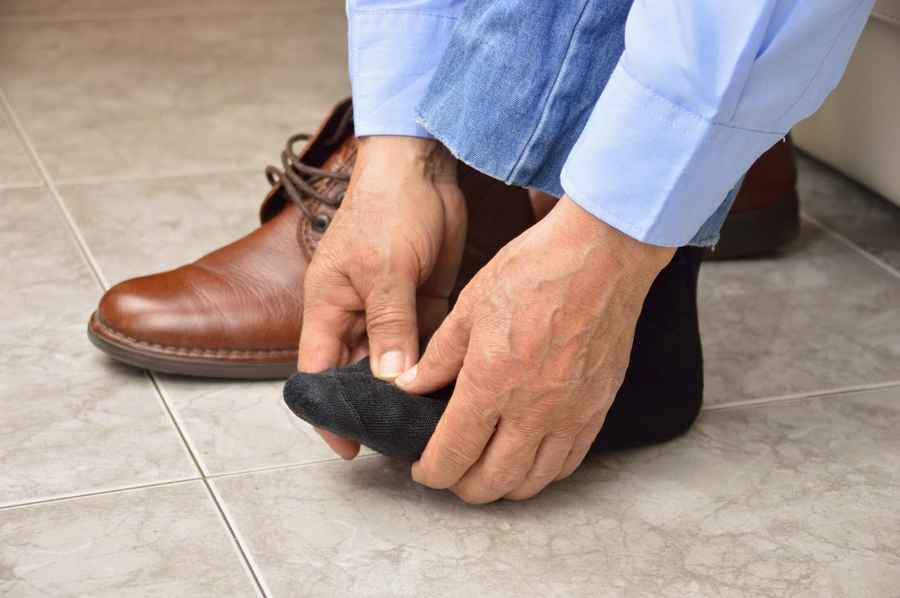
Our feet are intricate structures, each containing 26 bones, 33 joints, and over 100 ligaments, muscles, and tendons that bear the weight of your entire body. So, it’s important to look after them.
Most of us will experience foot pain at some point. In fact, it’s estimated that between 75% and 80% of the UK adult population is living with some form of foot problem. However, having arthritis can make you even more prone to discomfort.
For example, rheumatoid arthritis commonly occurs in the small joints of the hands and feet; psoriatic arthritis often causes swollen toes (known as dactylitis); and many people with gout experience pain, swelling, and inflammation in the base of their big toe.
With this in mind, considering your footwear choices can be an important step in managing arthritis symptoms. Research shows that wearing the wrong shoes can worsen arthritic pain in the feet, and exacerbate pain and mobility issues in other areas of the body – such as the knees, hips, and back.
Robert M. Joseph, a podiatrist at Scholl Foot and Ankle Center in North Chicago, explains, “Your feet determine how the mechanical forces of standing, walking, and running get distributed to the knees, hips, back, and spine. [As a result], shoe gear plays a critical role because it can change, for better or worse, how these forces are distributed.”
Luckily, there are plenty of ways you can look after your feet and reduce strain – including wearing the right shoes. We’ll explore what the research says below.
8 tips for choosing the right footwear for arthritis pain relief

Now we’ve explored the link between footwear and arthritis pain, what practical steps can you take to look after your feet?
1. Wear shoes that support your whole foot
Before delving into specific footwear tips, experts are keen to highlight some general footwear rules worth keeping in mind.
While personal needs will vary depending on your condition, according to Versus Arthritis, good footwear should generally…
- Not press or dig into any part of your foot
- Gently hold your foot in a secure position
- Be firm but comfortable around the heel
- Have a 1cm gap between the end of your longest toe and the front of the shoe
- Have a round front, deep enough for your toes to move
- Have a broad heel, generally no higher than 3cm
- Have a thick, lightweight rubber or non-slip sole
When it comes to where to buy your shoes, it’s important to choose a reputable brand and make sure the shoes are well-made. In this survey by Arthritis Today, Skechers, Clarks, SAS, Easy Spirit, and Vionic were voted as the top five most popular brands among people with arthritis.
For further guidance, check out this page on the top footwear brands for supportive and healthy feet from The Foot Clinic.
2. Choose shoes with good cushioning and arch support
When it comes to managing arthritis pain and improving mobility, wearing shoes with good arch support and cushioning is key. The arch is the part of your foot that supports the body’s weight and helps to distribute pressure evenly across the foot. Improper arch support can worsen gait, place stress on joints, and cause pain and discomfort.
This can be particularly true for people with arthritic knee pain, as the cushioning can help alleviate some pressure on joints.
Features of shoes with good cushioning and arch support include a firm, supportive sole, a well-cushioned midsole, and a contoured footbed that adapts to the shape of your foot. Check out this guide to shoes with good arch support from Paul Miller Podiatry for more tips.
For a more personalised fit, insoles are also available, which we’ll cover below.
3. Consider wearing removable insoles
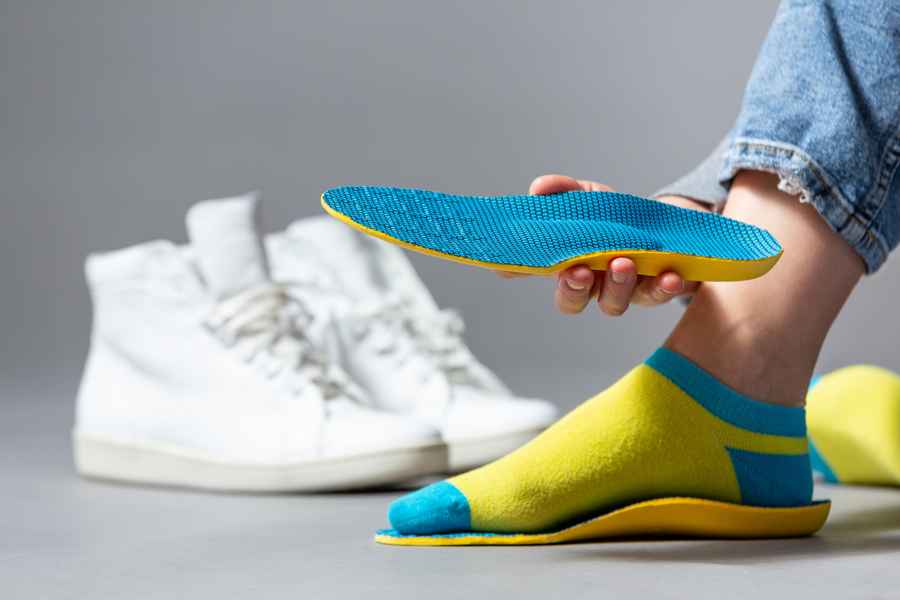
No two pairs of feet are the same, which means shoe customisation can be key. Removable insoles allow you to swap out default shoe padding for orthopaedic or custom-made inserts that offer the best support and cushioning.
Options include shock-reducing insoles, air-cushioned insoles, and lower back pain relief insoles. A podiatrist will be able to recommend the most suitable insoles for your feet. Custom insoles are also an option and can be particularly useful if your condition changes or develops.
Removable insoles can be the most cost-effective way to adapt your favourite footwear to be arthritis-friendly. Plus, some insoles are washing machine-friendly, so you can keep them fresher for longer.
For more information, Scholl has a guide to finding the perfect insoles on their website.
4. Wear shoes that fit your foot width and length
Research shows that people in the UK are twice as likely to buy shoes that are too small for them than elsewhere. Wearing shoes that are too small can restrict, pinch, and rub feet – worsening arthritis symptoms.
However, shoe experts are keen to emphasise that finding well-fitting footwear goes far beyond your shoe size. It’s important to cater to the width of your feet, too. In this study, wearing shoes that didn’t fit the width or length dimensions of feet increased the risk of foot pain and disorders such as corns, calluses, and toe deformity.
It’s generally agreed that shoes and trainers with wider toe boxes are best for big toe arthritis. Meanwhile, stretch-fit designs can be helpful for those suffering from painful, swollen joints.
Experts recommend getting your feet measured to determine your shoe size and width, so you know exactly what type of shoes to go for. It’s also worth noting that feet often spread and increase in size with age or weight gain – so it’s normal to need to wear a larger shoe or one that’s wider fitting over time. This is something worth keeping an eye on.
Note: It’s important not to buy footwear on the basis that it’ll become comfortable over time – choose footwear that fits comfortably from the start.
5. Consider buying heat-mouldable insoles
If you’re struggling to find insoles that feel comfortable, you might like to try heat-mouldable shoes. Made from materials that become pliable when heated, heat-mouldable insoles can be moulded into a new shape that fits the contours of your feet.
In this study, wearing heat-mouldable shoes for three months increased walking ability in 80% of participants with arthritis.
Heat-mouldable insoles are available to buy on Amazon.
6. Prioritise shoes with adjustable fastening
Choosing shoes with adjustable fastening can be helpful if you have arthritis. Not only is it easier to adapt them to the unique shape of your feet, but it can also help to reduce potential pressure points. This can be particularly key during arthritis flare-ups, when the size and shape of your foot may change.
Examples of adjustable shoes include those with laces or touch-fastenings. Pavers has a good selection of adjustable shoes on their website if you fancy browsing.
7. Wear shoes indoors where possible
Research suggests that the benefits of wearing shoes or slippers inside go beyond comfort. In fact, many health experts recommend it over walking barefoot at home as a way to prevent accidents and injuries, and keep your feet in good shape.
This can be particularly beneficial for those with health conditions affecting their feet, including arthritis. Offering more support and cushioning for the feet can reduce joint strain and potentially relieve pain.
Other research has linked wearing shoes indoors with improvements in symptoms of other health conditions like plantar fasciitis, back pain, and diabetes.
However, as always, the type of shoe or slipper you wear matters. According to experts, support, breathability, and a firm sole are among the most important things to look for in indoor shoes. Head over to the Henry Ford Health website for more tips.
8. Know which shoes to avoid
Just as there are factors to prioritise when choosing footwear for arthritis, research shows that there are also shoes worth avoiding.
Unsurprisingly, high heels have been found to exacerbate arthritis symptoms and hasten joint deterioration. According to experts, wearing shoes over 4cm high shifts your body weight forward, towards the front of your foot, often leading to problems.
Equally, very flat shoes, such as ballet pumps, can be just as damaging and are considered some of the worst culprits when it comes to foot pain and accelerated arthritis. Among other things, the lack of structure and arch support means that more impact is transmitted to your joints with each step.
As a general rule of thumb, Versus Arthritis advises choosing shoes where the sole is slightly higher at the front, so that weight is more evenly distributed throughout the foot. Other things to avoid include shoes with pointed toes (which can squash toes) and highly flexible shoes (which provide less support).
Final thoughts…
Research shows that footwear choices can play a key role in arthritis management – especially when it comes to pain in the feet and the rest of the body. Luckily, from prioritising arch support and using insoles to wearing shoes indoors, there are plenty of simple steps that can make all the difference.
For further reading, head over to our bone, joint, and muscle health section.
Do you have any arthritis-related footwear tips that you’d like to share? We’d be interested to hear from you in the comments below.