Sponsored content

boots opticians logoEye strain, also known as asthenopia, refers to a range of uncomfortable symptoms that can occur when your eyes get tired from focusing on something for a long period. Research shows that eye strain has become increasingly common – with one in three people noticing a deterioration in their eyesight, largely due to increased screen time.

However, while eye strain can be uncomfortable, the good news is that most people can find relief by making some simple adjustments.

With that said, we’ve partnered with Boots Opticians to explore eight ways to prevent and relieve eye strain. They offer everything from routine eye tests to more advanced check-ups, with OCT and optomap technology, which you can book using the button below.
You can find more information on pricing and location availability on the Boots Opticians website.

What is eye strain, and what can cause it?

What is eye strain, and what can cause it?

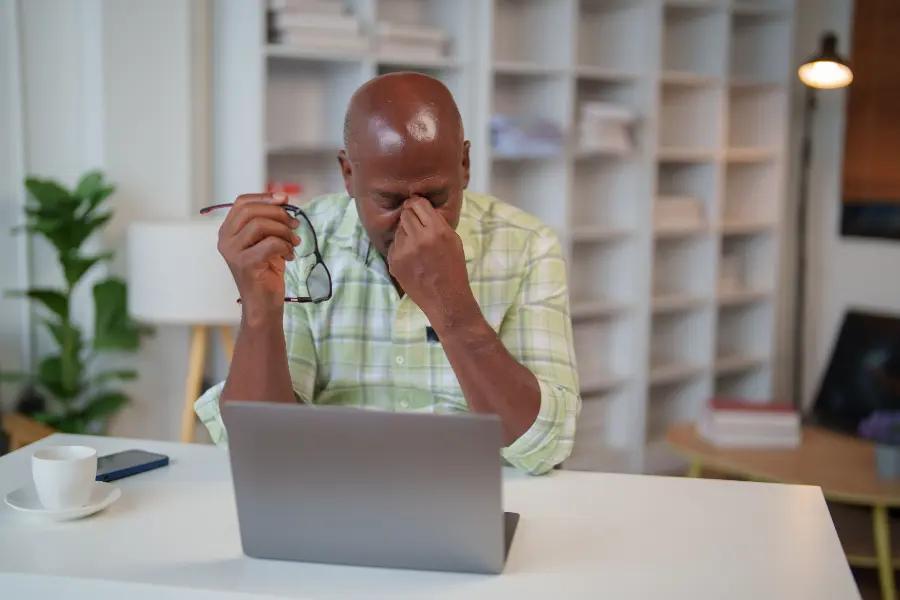
When you look at something close-up, such as a mobile phone or computer screen, your eye muscles naturally contract. This means that when our eyes focus on something for long periods, these muscles don’t get the chance to relax, which can cause eye strain.

One of the most common causes of eye strain is the use of digital screens. Research estimates that at least 50% of all digital screen users experience eye strain – including 95% of young adults. There’s also evidence that digital eye strain has become more widespread in recent years. In this study, 50% of students and 42% of working British adults said that increased screen time during the Covid-19 pandemic had negatively affected their eye health.

Other factors, such as stress, fatigue, reading or driving for long periods, straining to see in dim lighting, and exposure to bright light, can also play a role.

Among other things, eye strain can cause symptoms such as…

Among other things, eye strain can cause symptoms such as…

  • Red, irritated eyes
  • Tired, heavy eyelids
  • Light sensitivity
  • Watery eyes
  • Blurred or double vision
  • Trouble focusing
  • Headaches
  • Muscle spasms of the eye or eyelid

If you’re experiencing any of these symptoms, it’s important to speak to your optometrist, who can help to confirm whether you have eye strain and rule out other conditions.

Note: While eye strain is a common condition and usually temporary, prolonged eye strain or irritation can be a sign of more serious health concerns and should be discussed with your doctor or optometrist.

Free NHS eye tests plus 10% off glasses for over 60s

Booking an appointment online has never been easier, and with a range of offers from 10% off if you’re over 60**, 2nd pairs half price^ & a free NHS eye test if eligible, our expert optometrists are here to help you on your journey to clearer vision.

Book your eye test now

T&Cs apply

8 ways to prevent and relieve eye strain

While eye strain can be uncomfortable, the good news is that there are plenty of things you can do to find relief – and help prevent it in the first place. We’ll cover some of these below.

1. Book an eye test

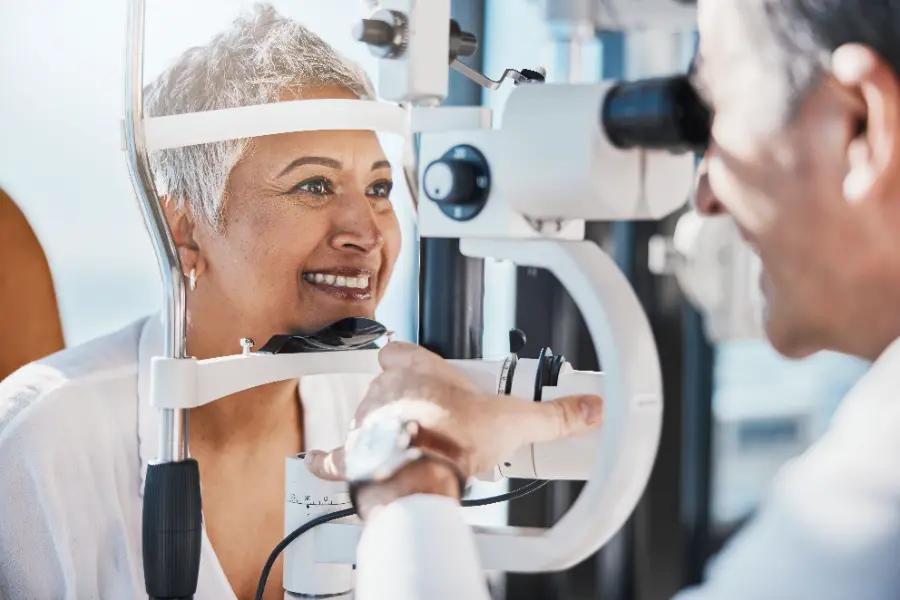
Having regular eye tests is essential for eye health, including for protecting against eye strain. During eye tests, optometrists can detect even the smallest of changes to your eyes – allowing them to monitor and treat symptoms of eye strain and prevent it from developing into anything more serious.

Boots Opticians recommends getting your eyes tested at least every two years, or as recommended by your optometrist. This is important whether or not you’re currently experiencing issues with your sight.

If you wear glasses or contact lenses, regular eye tests are also key for making sure your prescription is correct. In some cases, eye strain can be a sign that your prescription needs updating, or that you may benefit from lenses specifically designed for screen use.

According to Boots Opticians, even if you have a mild prescription, wearing the correct glasses or contact lenses can make a significant difference to how your eyes feel throughout the day.

Boots Opticians offer everything from routine eye tests to more advanced check-ups, with OCT and optomap technology, which you can book below.

You can find more information on eye test pricing and location availability on the Boots Opticians website.

Book an eye test

2. Take regular breaks

Eye strain often becomes more intense when we focus on something like reading or screens without taking proper breaks. For example, studies have linked extended use of digital devices, as well as holding them too close to your eyes, with an increased risk of eye strain.

For this reason, it’s important to schedule regular breaks when engaging in activities that might lead to eye strain – particularly if you think you’ll forget otherwise.

Some people find it useful to follow the 20-20-20 rule to help relax their eyes. This involves taking a break from reading or looking at screens every 20 minutes, for at least 20 seconds to encourage your eye muscles to relax.

For example, in this study, taking frequent breaks to look at faraway objects when using digital screens significantly reduced eye strain. To stay consistent, some people find it useful to set 20-minute reminders on their phone.

3. Spend more time outdoors

As well as taking frequent breaks using methods like the 20-20-20 rule, it’s important to factor in longer periods of rest, too.

Spending time outdoors can be particularly beneficial because it exposes our eyes to a broader spectrum of light and requires them to focus on objects at varying distances. Plus, engaging in outdoor activities is a great way to reduce screen time.

For this reason, research has linked increased time outside with reduced eye strain and dry eyes, as well as myopia (short-sightedness) in children. Take this study, which found that one to two hours of daily outdoor activity can reduce the risk of myopia in children by 50%. If left untreated, myopia can cause people to squint and experience eye strain.

For ideas on how to spend more time outside, you might be interested in our article: 32 ways to connect with nature and feel inspired.

Spend more time outdoors

4. Create the right lighting

Eye strain may be caused by bright lighting, whether on a device or in our surroundings. So making some simple adjustments to create lighting that’s comfortable for your eyes can make all the difference.

For example, using curtains or blinds to reduce the amount of sunlight in a room and avoiding sitting under overhead fluorescent lights.

Positioning lights behind you when reading, matching screen brightness to your surroundings, and using dark mode on devices (which displays light text on a dark background) if you’re working in a dimly lit room can also help.

5. Take steps to reduce glare

We know from research that glare from light-coloured walls and shiny surfaces, as well as reflections on digital screens, can contribute to eye strain. So, it’s worth taking steps to reduce glare.

For example, shading windows to reduce external light, using a computer hood over monitors, and switching from bright overhead lights to lamps when using digital screens may offer some relief. If you have light-coloured walls, you could also attach an anti-glare screen to your monitor.

If you wear glasses, Boots Opticians recommends investing in lenses with anti-reflective coating to help reduce glare. Check out this guide to lenses from Boots Opticians to find out more.

6. Consider using eye drops and make a conscious effort to blink frequently

A common symptom of eye strain is dry, irritated eyes. This can be particularly true if you use screens often, because research shows that screen use reduces blinking frequency. For example, in this study, people’s blinking rate dropped by 66% when using a computer.

Blinking is important for keeping our eyes comfortable, healthy, and less prone to dryness and irritation. This is because, when we blink, the eye surface is cleaned of debris and lubricated.

There’s also evidence that we’re more prone to incomplete blinking when reading on a computer screen, which is when the top and bottom eyelids don’t meet, leaving some of the eye’s surface exposed and more prone to dryness and irritation.

So, while making a conscious effort to blink more frequently and completely when reading from screens is important, Boots Opticians also recommends using dry eye drops for relief if you’re struggling. Your optician will be able to advise you on the right eye drops for you.

7. Adjust monitor settings and focus on your posture

If you work from home or use screens regularly, your setup can significantly affect your risk of eye strain.

Important things to consider include your posture, workstation, and monitor arrangements. Studies suggest that sitting upright and viewing screens from a distance of at least 30cm are some of the best things you can do to help keep your eyes comfortable.

Enlarging the text on screens to a level that best suits your comfort can also help you avoid straining and squinting to read. You can likely adjust text size in your device’s settings.

To learn more, you might find this working from home eye advice from Boots Opticians useful.

Adjust monitor settings and focus on your posture

8. Consider using glasses with a blue light filter

Digital devices like TVs and smartphones, and artificial lights, including bright office lighting, emit blue light.

According to Boots Opticians, while there’s currently no scientific evidence to suggest that blue light causes eye strain, many people still choose to opt for glasses lenses that include a blue light filter to reduce the amount of blue light that reaches their eyes.

Blue light lenses are designed to block out a small portion of blue light – if 100% were blocked, it would alter the way we see all of the colours around us. Boots Opticians offer ZEISS ClearView lenses, which filter 40% of blue light, as well as sunglass-level UV protection.

You can find more information about blue light products on the Boots Opticians website, including whether or not they’re suitable for you. Or, for more options, check out their guide to choosing lenses that are suited to your lifestyle.

Adjusting the colour temperature of screens in the device settings to reduce the amount of blue light emitted can also help.

Free NHS eye tests plus 10% off glasses for over 60s

Booking an appointment online has never been easier, and with a range of offers from 10% off if you’re over 60**, 2nd pairs half price^ & a free NHS eye test if eligible, our expert optometrists are here to help you on your journey to clearer vision.

Book your eye test now

T&Cs apply

Final thoughts…

Research suggests that more of us are experiencing eye strain, largely due to increased screen use. However, while eye strain can be uncomfortable, it’s reassuring to know that there are various ways to help find relief and reduce your risk.

Having regular eye tests is important for monitoring the effects of eye strain on your eye health. Boots Opticians offer everything from routine eye tests to more advanced check-ups, with OCT and optomap technology. It’s quick and easy to book using the button below.

You can find more information on eye test pricing and location availability on the Boots Opticians website.

For further reading, you might be interested in our articles: 9 ways to keep your eyes healthy and 10 signs of common eye conditions that you shouldn’t ignore.