
- Home
- Leisure & Lifestyle
- Art & Culture
- 6 things to do at Blenheim Palace
How does Rest Less make money
We make money through advertising and commission from affiliate links, which enable us to offer Rest Less as a free service to our users. The content on this page may use affiliate links, which track traffic from our website to a third party provider and enable us to receive a commission or payment from any traffic we refer.
* Affiliate links on this page have an * next to them. We place enormous importance on our editorial independence and the integrity of our content which means that we will never change how we write about something as a result of an affiliate link.
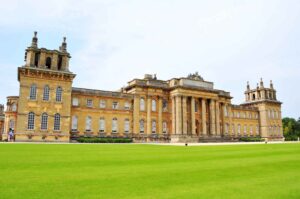
Blenheim Place in Oxfordshire is one of Britain’s most impressive historic homes. As a UNESCO World Heritage Site with a rich history and beautiful grounds to explore, it’s the ideal destination for a fun day out.
With that said, here are six things to do at Blenheim Palace, plus a brief look at its history.
The history of Blenheim Palace

Blenheim is a civil parish in West Oxfordshire, around seven miles north of Oxford. At the edge of the town is Blenheim Palace, one of Britain’s most impressive stately homes.
Today, the palace is a UNESCO World Heritage Site surrounded by over 2,000 acres of landscaped parkland and formal gardens. But what is its history?
The original 12th-century palace
Blenheim Palace hasn’t always looked the way it does today. The original palace was built as a hunting lodge by King Henry I in 1129. Enclosed by seven miles of wall, the king held a range of exotic animals inside, including lions and camels.
Later, Henry I’s grandson, Henry II, turned the hunting lodge into the first of the two palaces at Blenheim, known as Woodstock Palace. It stood until the early 18th century, when the building of the palace we see today began.
Blenheim as a symbol of Britain as a world power
Blenheim Palace, as we see it today, was built in 1705 as a gift from Queen Anne to John Churchill, Duke of Marlborough, to mark his role in defending Europe against French invasion. Churchill had united with Bavarian forces to defeat the French armies of King Louis XIV at the Battle of Blenheim near Vienna in August 1704.
The battle was costly, but, for the first time in two generations, the French had suffered defeat, and Louis XIV’s vision of a French-controlled Europe was slashed. It was Blenheim that would establish Britain’s reputation as a world power.
Construction of the Baroque-style building was completed in 1722, and it’s been home to the Dukes of Marlborough ever since. Today, the 12th Duke of Marlborough and his family live there.
Birthplace of Sir Winston Churchill
In 1874, the famous British prime minister, Sir Winston Churchill, was born at Blenheim Palace.
It was also at the Temple of Diana, in the gardens of Blenheim, that Winston Churchill proposed to Miss Clementine Hozier during the summer of 1908. Churchill’s love for Blenheim remained until he died in 1965, and he even chose to be buried in the nearby churchyard at Bladon.
6 things to see and do at Blenheim Palace

Blenheim Palace is located just outside the village of Woodstock, within easy reach of Oxford. With palace tours, beautiful gardens, and over 2,000 acres of rural parkland, it’s perfect for a family day out.
We’ll cover some of the best things to do at Blenheim Palace below.
Note: The attractions listed below are available year-round. However, Blenheim Palace also offers a range of seasonal events, including Christmas at Blenheim Palace, which you can browse here. All tickets to Blenheim Palace must be purchased in advance. You can head over to the Blenheim Palace website to secure yours.
1. Take a tour through the magnificent State Rooms
A great way to begin your visit to Blenheim Palace is with a tour of the impressive State Rooms. These rooms have hosted royalty, politicians, and famous names for centuries, and history seeps from their walls.
Beginning in the Great Hall, you can gaze up at the vast, elaborately decorated ceiling, which was painted by Sir James Thornhill and stands 20 metres high. You’ll then wander through a series of magnificent rooms adorned with priceless artefacts, portraits, tapestries, and ornate furniture, before moving onto the library, dining room and, finally, the chapel.
Keep an eye out for the palace’s collection of Meissen porcelain and the Blenheim tapestries, which illustrate the 1st Duke of Marlborough’s military victories. Other highlights include the Green Drawing Room – home to one of Nicholas Hawksmoor’s original ceilings – and the Long Library, which contains over 10,000 books and a famous statue of Queen Anne.
Audio tours, which guide you through the fascinating history of the State Rooms, are available through the Blenheim Palace app – just remember to bring your own headphones! Alternatively, guided Palace State Room tours often take place daily and are included in the day ticket price.
If you’re unable to get to the palace itself, virtual tours of the State Rooms are also available online.
2. Walk in the footsteps of Sir Winston Churchill
Blenheim Palace is the ideal destination for anyone wanting to learn more about the famous wartime leader and writer, Sir Winston Churchill. He was born here in 1874 while his parents were visiting the Estate, and returned many times throughout his lifetime. Today, several trails and exhibitions at the palace are dedicated to Churchill’s life.
At the Churchill Exhibition, you’ll find a mix of historic documents, including letters, photographs, and excerpts from his most famous speeches, as well as modern technology, which tell some of the key events of Churchill’s life as a politician, wartime leader, and husband.
The exhibition is hosted in a room overlooking the Water Terraces, where Churchill used to paint. There’s also a room at the end of the exhibition, which is set up as it would’ve been during his lifetime – complete with a bottle of whisky and a radio next to his armchair, and newspapers at the breakfast table. The tiny bedroom at Blenheim Palace, where Sir Winston Churchill was born on 30th November 1874, has recently reopened and is also worth a visit.
Following the trail outside to the palace grounds, you’ll find one of Churchill’s most cherished places, the Temple of Diana, where he proposed to Clementine Hozier in 1908. If you’d like to visit Churchill’s grave, he’s buried at St Martin’s Church in Bladon, just south of Blenheim Palace, next to his parents and other family members.
3. Soak up nature in Blenheim’s beautiful grounds
Blenheim Palace is surrounded by beautiful natural landscapes, and with 2,000 acres to explore, there are many ways to make the most of it.
The Formal Gardens surrounding the palace are the ideal place for a stroll. The gardens are split into sections with a mix of styles, dating from the 18th to the 20th centuries. There’s a stunning Rose Garden, the Duke’s Private Italian Garden, beautiful Water Terraces, and much more.
These gardens have been worked on over many centuries by several esteemed garden designers, including Henry Wise and Achille Duchêne, and reflect a captivating array of styles. They’re also constantly being updated – for example, a new cherry tree avenue leads towards the Rose Garden, which is being prepared for the arrival in 2027 of 200 period rose varieties. And ornamental crab apple trees now frame the path between the Rose Garden and the Temple of Flora, creating a seasonal corridor of blossom.
In the family-friendly Walled Garden area, you’ll also find the Kitchen Garden (supplying the Palace’s cafes and restaurant), as well as a two-mile-long Marlborough Maze, adventure playground, and Butterfly House. The ‘kitchen garden’ has recently doubled in size as it works towards self-sufficiency by 2027, with new fruit trees planted along the historic walls.
And if you’d like to venture into the wider Estate, why not explore one of Blenheim’s walking trails? In the wonderfully tranquil Secret Garden, winding paths will lead you through a jungle of trees, plants, pools, and streams. It’s also the ideal place to sit on a bench among botanical surroundings and tune into nature.
The Queen Pool Loop will take you past iconic sites like the Vanbrugh-designed Grand Bridge and through the neighbouring town of Woodstock. And the Park Perimeter route is ideal for anyone wanting to boost their step count. This 4.6-mile circular route is fringed by dense woodland and is a fantastic way to see the wider grounds.
Nature lovers may also be inspired by Blenheim’s tree trail. This self-guided tour takes you on a unique journey through the rich and varied collection of trees that cover the grounds – from centuries-old oaks to delicate ornamental varieties. The trail is thoughtfully designed to allow visitors to learn about the different trees, including their origins and significance – it’s a wonderful mix of learning and relaxation.
You can find out more about the tree trail on the Blenheim Palace website, and a trail booklet is also available to download here.
After you’ve worked up an appetite, why not head to one of Blenheim’s cafes and restaurants to enjoy some comfort food?

4. See what it’s like to work at Blenheim Palace on a Life Below Stairs Tour
Guests wanting to explore more of Blenheim Palace may be interested in the Life Below Stairs Tour, which is available to add to the price of a day ticket. The Downstairs Tour offers a glimpse into life as an employee at Blenheim Palace – both past and present.
Household staff have always been key to the aristocratic way of life, but their story is often lesser known. Wander through the palace’s network of corridors, learn about the iconic bell system, and explore areas that are still in use by Palace staff today, including the kitchen.
Along the way, you’ll learn about life here from the staff’s point of view. For more information about the Life Below Stairs Tour, including cost, head over to the Blenheim Palace website.
5. Learn about life as a resident at Blenheim Palace
Now you’ve seen the downstairs of Blenheim, why not head the other way with The Duke’s Tour? This explores the palace’s opulent private apartments that have hosted Dukes, Duchesses, and many esteemed guests over the years.
Upstairs, you can explore the bedrooms that belonged to the Marlborough family for over 300 years. Since then, these walls have housed everyone from royalty to Hollywood stars, not to mention countless treasures and trinkets.
It’s fascinating to see the contrast between the beautiful old artwork, furniture, and tapestries that sit alongside the modern televisions and family photographs of the current Duke of Marlborough and his family.
The Duke’s Tour is an additional £8 for adults and £7 for children, and you’ll need to show your Pass or day ticket.
6. Visit the Butterfly house
Blenheim’s Butterfly House, located in the Walled Garden, is home to butterfly species from all around the world and has welcomed visitors since the early 1980s.
You’ll find a beautiful range of butterflies living here, including Red Lacewing, Blue Wave, Emerald Peacock, and several Zebra Finches. To make the house closely resemble their wild habitat, the butterflies enjoy a selection of exotic plants from Madeira, Africa, and South America, as well as tropical fruits like mango, papaya, and pineapple.
The Butterfly House was given a fresh look in 2024 and is now more immersive and accessible for visitors, as well as being an even better environment for its tropical inhabitants.
Blenheim Palace’s official website has more information on visiting the Butterfly House.
Final thoughts…
Blenheim Palace is one of the UK’s most impressive historic homes. And with guided tours, walking trails, and beautiful landscapes, whether you’re after history, architecture, nature, or some time in the great outdoors, there’s something for everyone to enjoy.
For further reading, head over to our history and travel sections. Here, you’ll find information on everything from days out in the UK to popular museums and galleries.
What are some of your favourite historic sites in the UK? Which periods of history interest you the most? We’d love to hear from you in the comments below.
Francesca Williams is a senior lifestyle writer at Rest Less. She joined Rest Less in early 2021 after achieving a first-class degree in History at the University of Sheffield and qualifying as an NCTJ Gold Standard Journalist. Francesca is a qualified Level 3 Personal Trainer and writes across a range of lifestyle topics, specialising in health. In her spare time, Francesca likes to keep herself busy going to the gym, dancing, spending time with friends and family, and getting involved with her local church.
* Links with an * by them are affiliate links which help Rest Less stay free to use as they can result in a payment or benefit to us. You can read more on how we make money here.
Join the discussion
Read our full commenting terms and guidelines