

- Home
- Leisure & Lifestyle
- Art & Culture
- 10 things you might not know about Ted Hughes
How does Rest Less make money
We make money through advertising and commission from affiliate links, which enable us to offer Rest Less as a free service to our users. The content on this page may use affiliate links, which track traffic from our website to a third party provider and enable us to receive a commission or payment from any traffic we refer.
* Affiliate links on this page have an * next to them. We place enormous importance on our editorial independence and the integrity of our content which means that we will never change how we write about something as a result of an affiliate link.
Ted Hughes, born Edward James Hughes, is one of Britain’s most acclaimed poets and writers, known for his intense, unflinching verse, children’s stories, and work as an editor and translator.
He’s famous not only for his literary work, but also for his explosive marriage to American poet Sylvia Plath, who he met while they were both studying at Cambridge University.
Ted Hughes has often been a controversial figure in feminist circles, which may have heightened his public profile. Yet, many scholars argue that his personal life can overshadow his significant contributions to English literature. A devoted lover of nature, Ted spent much of his life in Yorkshire and then Devon, and his deep connection to the natural world, as well as to English folklore, is clearly visible in his poetry and other writings.
Here, we’ve curated some of our favourite facts about him, which hopefully might provide some contextual insights into his poetry.
1. He loved animals
Ted Hughes was born on 17th August 1930, in Mytholmroyd, Yorkshire, England. Growing up in this beautiful part of the country, he developed a keen interest in wildlife. He was inspired greatly by his connection to animals, and this is reflected in his poetry, with his depictions of them as a ‘bridge’ between the domestication of humans and the raw power and hunger of nature.
Ted’s passion for animals was one of the catalysts behind his decision to become a poet. He recollected that he wanted to capture a certain ‘aliveness’ and ‘wildness’ in his work. He was also a keen hunter in his youth, which helped him capture brutalistic dynamics in language.
As well as being an animal lover, Ted was also a passionate conservationist and environmentalist. He specialised in freshwater health, stemming from his years spent in Devon alongside the river Torridge. Ted became alarmed by the decline of fish in his local rivers, so, in 1994, he co-founded the West Country River Trust, a charity that worked to protect rivers, lakes, and wetlands in Devon and Cornwall.

The River Torridge in Devon
2. He was fascinated by mythology
Ted enjoyed writing about mythology, especially within English culture, and was often influenced by Yorkshire and his Northern Heritage when talking about the natural world. He wrote two essays titled ‘Myth and Education’ in which he argues forcefully that children should be introduced to mythology as early as possible because myths are our “blueprints for imagination”.
Ted also took an interest in the works of Shakespeare and protestant reformation, which both shaped England into the country it is today.
3. He was the youngest of three siblings
Gerard Hughes, born in 1920, and Olwyn Hughes, born eight years later in 1928, were Ted’s two older siblings. Gerard played a large role in Ted’s life as he introduced him to hunting and fishing, two of his favourite pastimes. One of Ted’s most notable childhood memories was when he and Gerard came across a fox caught in a trap, and Gerard coached him through his first kill.
Olwyn became Ted’s literary agent and was a great defender of his legacy after he died in 1998. Ted wrote many poems about family, which are less well-known than his other works.
4. He attended grammar school
Born into a working-class family to parents Edith Farrar and William Hughes, Ted’s father was a joiner, whilst his mother worked as a tailor. They later owned a newspaper and tobacco shop in Mexborough.
During his time at Mexborough Grammar School, Ted met his first mentor, John Fisher, who encouraged him to keep writing. Ted published his first work, “Wild West”, in the school newspaper and was awarded a scholarship to Cambridge University in 1948 to study literature.
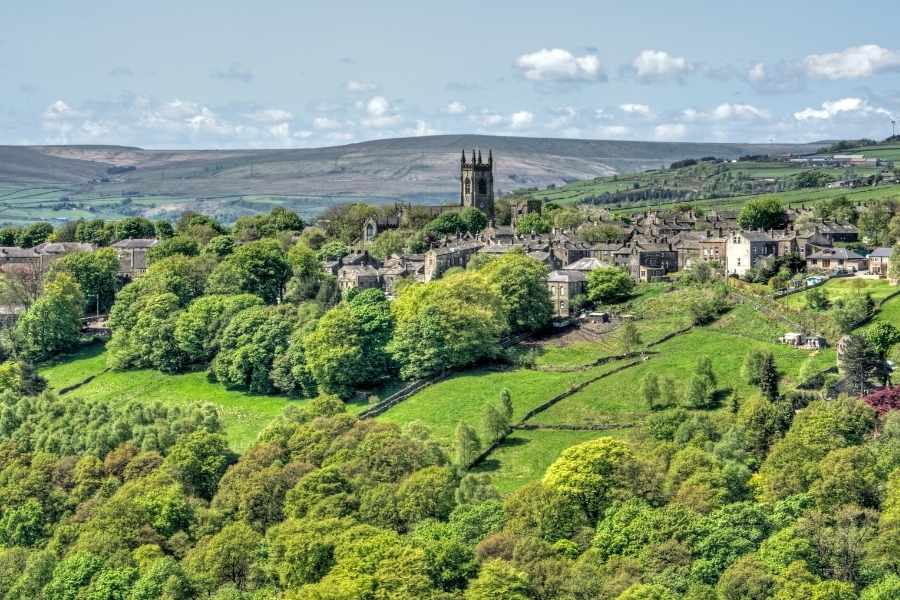
5. His father fought in World War One
Although Ted was born after the Great War, it served as a great inspiration to him, as his father fought in it and would often recount stories of his time serving as a veteran.
William Hughes suffered from post-traumatic stress syndrome (PTSD) after surviving the 1915 Gallipoli Campaign, which resulted in approximately 250,000 casualties. His experiences shadowed Ted’s childhood, enabling Ted to write “Bayonet Charge”, which explores the raw terror of battle.
6. He switched degree courses at university
Ted initially studied English at Pembroke College, Cambridge, when he joined in 1951, but later he ended up switching courses to do archaeology and anthropology, after claiming that studying literature was ‘stifling’.
This is actually where he met his first wife, Sylvia Plath, who was also studying English literature. Ted described his time at Cambridge as “a prison from life”.
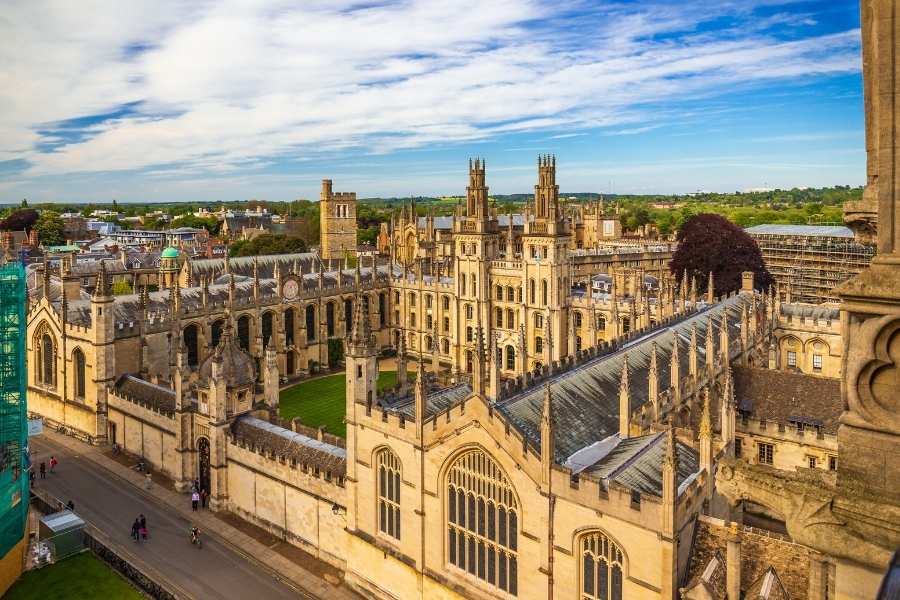
Cambridge University: where Ted Hughes met Sylvia Plath
7. He worked at London Zoo
After graduating from Cambridge, Ted got a job as a pot washer in London Zoo in Regent’s Park. He pursued this job for its proximity to animals, which allowed him to analyse their behaviours for his writing.
Ted took a particular interest in the jaguar, later writing a poem called ‘The Jaguar’ in which he describes the animal’s stride as “wildernesses of freedom”. Later in life, Ted created a jaguar sculpture, with his family believing this may have provided a way for him to process his trauma over Sylvia Plath’s death.
He utilised the animal’s strength and grace to convey a dark metaphor of the human condition. It may have been that the jaguar, to him, was like the tiger to William Blake in ‘Tiger, Tiger Burning Bright’ – representing a raw kind of creative force and animal passion.
8. Two of his partners ended their own lives in the same way
Ted and his first wife, Sylvia Plath, were married in 1956, a few months after meeting at Cambridge, and were a powerful creative duo in the arts world. They had a daughter, Frieda, in 1960 and a son, Nicholas, in 1962. Sadly, Sylvia experienced a miscarriage before having Nicholas and spiralled into a dark depression.
In the autumn of 1962, Ted left Sylvia for another woman. Alone and paranoid in London, Plath saw no way out and ended her own life in 1963 by putting her head in an oven and inhaling gas. Letters were released of alleged abuse within the relationship, years later.
Ted’s affair was with German poet and translator, Assia Wevill. They never married, but they had a daughter in 1965 called Alexandra Tatiana Elise, nicknamed Shura. They lived in the same Devon house Ted had lived in with Plath for six years. In 1969, Assia took her own life using the same method as Palth: asphyxiation from a gas stove. Wevil also killed Shura, who was just four years old.
9. He destroyed Plath’s final diary
Ted controversially destroyed Sylvia Plath’s last journal, which contained details of the final months of her tortured life.
He stated that he did so to protect the wellbeing of his children, but critics argue that he feared how he would have been portrayed by her, and was merely protecting his own image. The journal might have contained damning information about the marriage and his adultery.
Ted’s actions were not without consequence. The literary movement was outraged, and he experienced heckling at readings and harassment from the media. As Sylvia Plath’s spouse, Ted adopted her literary rights, meaning he had free rein to amend her work as he saw fit. This led readers to boycott him, claiming he wrongfully censored Plath’s work and corrupted its authenticity.
After 35 years of silence surrounding his relationship with Sylvia Plath, Ted released ‘Birthday Letters’ in 1998, a collection of poems addressing the tragedy and bravely confronting the public. It was published just months before Ted died of cancer, which sparked irritation from many, and he was accused of avoiding accountability yet again. It was an attempt at closure after a long, painful hush up. Birthday Letters touched many people and won numerous awards, such as the TS Eliot Prize for poetry. He was praised for his vulnerability and emotive impact.
10. He was appointed the poet laureate in 1984
Ted was appointed the highest honour for a writer: the British Poet Laureate, in 1984. This is an honorary position given by the monarch, in this case, Queen Elizabeth II. The role doesn’t involve any specific duties, but the holder is expected to write verse for significant national occasions.
Ted held this title for life. He also held a close relationship with Queen Elizabeth II, seeing the crown as a strong pillar in society. He was awarded an OBE in 1977 for his extensive contribution to British literature.
Ted died on October 28, 1998, at the age of 68, at his home in North Tawton, Devon, following a long battle with colon cancer, and his ashes were scattered on Dartmoor.
Final thoughts…
We hope these insights have given you a fresh perspective on Ted Hughes’ life and work. Drawing inspiration from the world around him, Ted offered readers glimpses into his personal experiences and passions. Though not without flaws, his keen vision and imagination led to him giving us a body of work that remains powerful and evocative.
If you liked this, you may like to head over to our books and literature section where you can find more articles about your favourite writers, including 15 facts about Roald Dahl and 15 fascinating facts about Charles Dickens.
Henrietta Gee is a freelance contributor for Rest Less.
* Links with an * by them are affiliate links which help Rest Less stay free to use as they can result in a payment or benefit to us. You can read more on how we make money here.
Join the discussion
Read our full commenting terms and guidelines