
- Home
- Leisure & Lifestyle
- Food & Drink
- 8 authentic Swiss recipes to try at home
How does Rest Less make money
We make money through advertising and commission from affiliate links, which enable us to offer Rest Less as a free service to our users. The content on this page may use affiliate links, which track traffic from our website to a third party provider and enable us to receive a commission or payment from any traffic we refer.
* Affiliate links on this page have an * next to them. We place enormous importance on our editorial independence and the integrity of our content which means that we will never change how we write about something as a result of an affiliate link.
Switzerland may be best known for its chocolate and cheese, yet its cuisine remains one of the most overlooked in Europe – and aside from fondue, many would struggle to name a single dish. But if you enjoy hearty, comforting meals made with fresh, high-quality ingredients, there’s a good chance you’ll fall in love with Swiss food.
Bordered by France and Italy, Swiss cuisine draws inspiration from these gastronomic giants, while also embracing influences from its German and Austrian neighbours. The country has a deep connection to dairy, so it’s no surprise that cheese, milk, and cream take centre stage in many recipes. Yet Swiss food is more diverse than you might think.
Here are eight authentic Swiss recipes to try at home.
1. Raclette
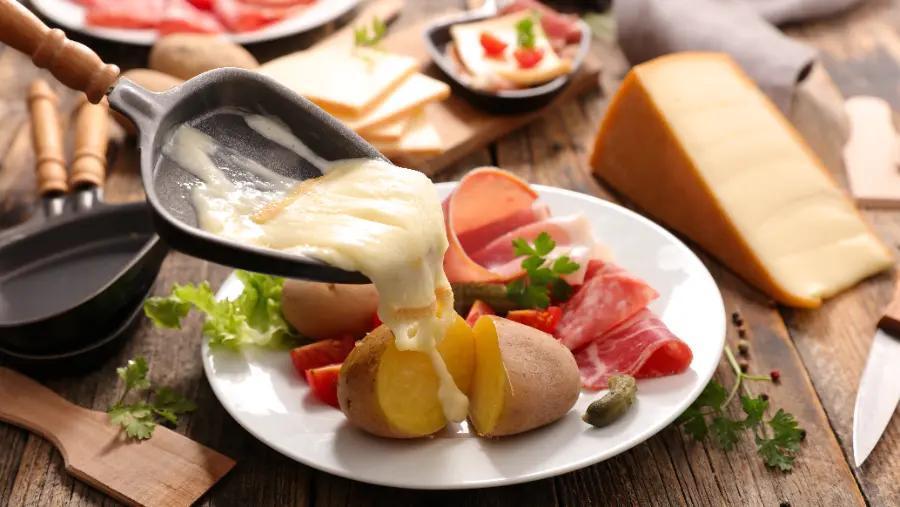
If you’re a fan of Swiss cheese, you might want to try eating it the local way: hot, molten, and spread over boiled potatoes. Raclette takes its name from the French word racler – ‘to scrape’ – and that’s what happens here. A wheel of Swiss mountain cheese is gently heated until it’s golden and bubbling, then scraped over a plate piled with potatoes, gherkins, pickled onions, and cured meats.
Originating from Valais, raclette is now eaten all around Switzerland, and even across the border in Germany and Northern Italy. Simple, delicious, and deeply comforting, it’s best enjoyed the Swiss way: with friends and family, as part of a cosy, communal meal.
To find out how to host the perfect raclette evening, have a read of this guide by Just Spices.
2. Älplermagronen (Alpine macaroni)
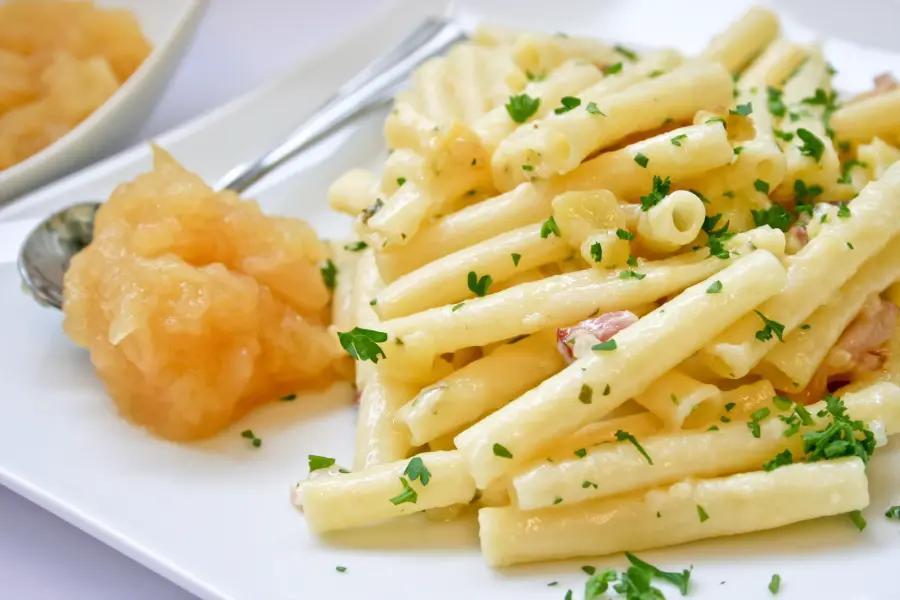
With Italy across the border, it’s no surprise that pasta plays a big role in Swiss cooking. Älplermagronen – or ‘Alpine macaroni’ – is a true mountain classic: hearty, comforting, and full of rustic charm. Once a simple meal for cattle herdsmen in the Alps, it’s now a beloved family favourite countrywide.
To make this dish, tube pasta like penne or macaroni is combined with chunks of potato and a rich sauce made from onions, cream, and melted cheese. It’s finished with a topping of crunchy golden onions, and sometimes crispy bacon lardons, too. For maximum authenticity, add a spoonful of applesauce on the side; the blend of creamy, sweet, and savoury is incredibly moreish.
Why not try this Älplermagronen recipe from Mission Food?
3. Rösti
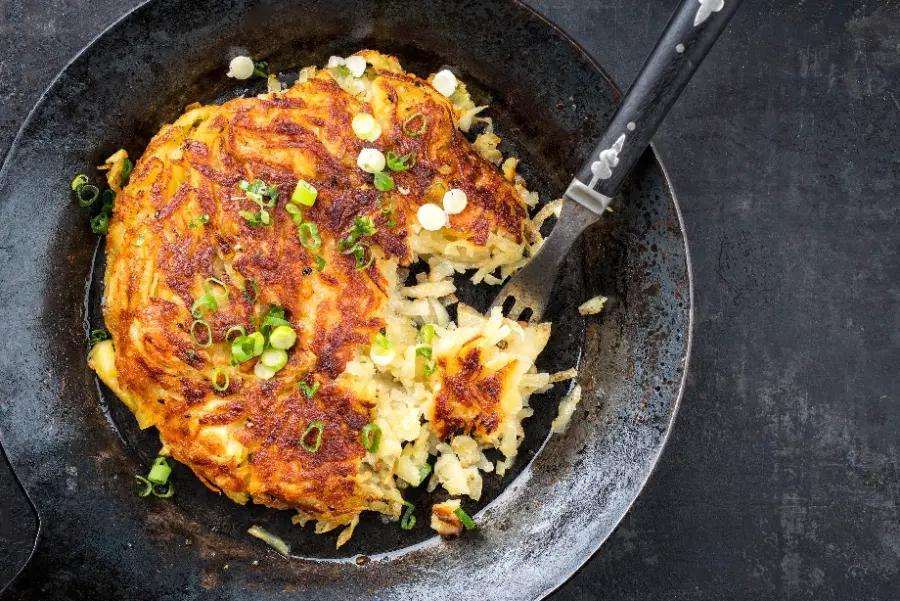
Rösti has been eaten in Switzerland since the 16th century, and today, this simple yet delicious potato dish is widely considered the national dish. It started life as a wholesome farmer’s breakfast, but soon grew so popular that it’s enjoyed at any time of day.
Crisp and golden on the outside, and soft and tender inside, rösti is made by pressing grated potatoes into a flat cake and frying it until golden brown. It can be served plain, with just a pinch of salt, or jazzed up in many different ways. For breakfast, it’s usually topped with a fried egg; for lunch or dinner, it’s often served with smoked salmon, spinach, sausages, or roasted vegetables. In some regions, it’s also eaten as part of a raclette feast.
To make authentic Swiss rösti, try this recipe from Helvetic Kitchen.
4. Cheese fondue
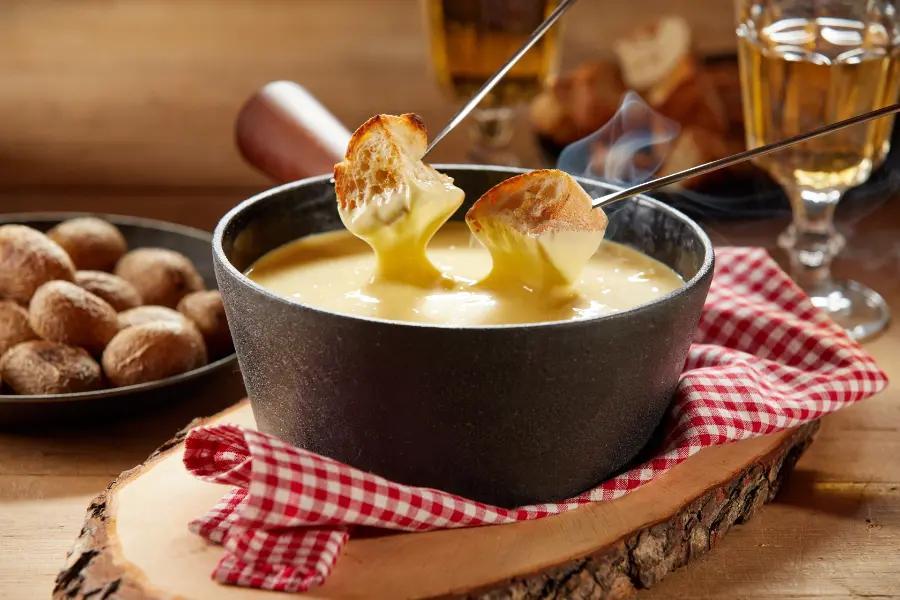
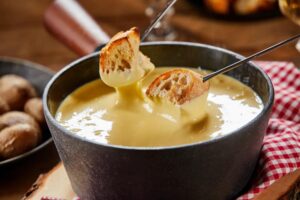
Few dishes capture the spirit of Switzerland quite like cheese fondue. Just like raclette, this is another cheese-based meal that’s designed to be shared among friends and family; simple, satisfying, and wonderfully social.
Authentic Swiss fondue is made from blending two of the most popular mountain cheeses, Gruyère and Vacherin Fribourgeois, and melting them with white wine, garlic, and a splash of kirsch for depth. But there are all kinds of variations: some recipes use Emmental cheese, others add mushrooms, chopped herbs, toasted mushrooms, or a swirl of mustard.
Though fondue is now seen as an indulgent treat, it began as a practical way for Alpine villagers to use up stale bread and hardened cheese during long winter months. Traditionally served in a ceramic pot over a flame, diners spear chunks of crusty bread on long forks and swirl them through the molten cheese until perfectly coated.
When all the melted cheese is eaten, the layer at the bottom of the pot cooks into a crust called a religieuse, and this is seen as a reward at the end of the meal. There’s just one unbreakable rule for a fondue evening: if you drop your bread in the pot, you owe the table a drink!
To make traditional Swiss fondue, try this recipe from Food and Wine. Or, if you have a sweet tooth, why not try making chocolate fondue? Dipping sweet, juicy strawberries into rich, melted chocolate is a wonderfully decadent dessert experience, and this recipe from The Kitchn is a real crowdpleaser.
5. Papet Vaudois
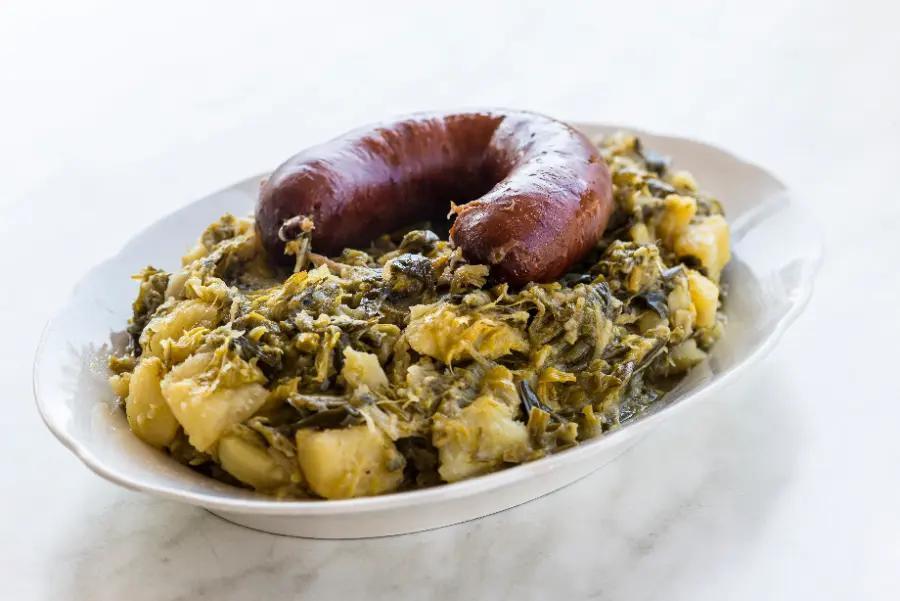
This next dish hails from the French-speaking region of Vaud, and is considered one of the country’s most nourishing winter meals. Papet Vaudois is made by slowly cooking leeks and potatoes together until they form a creamy, silky stew. Then a saucisson vaudois – smoked pork sausage – is simmered alongside the veg, soaking up their flavour and lending its own rich, smoky taste.
It’s the perfect example of Swiss cuisine at its best: unpretentious and satisfying, and made for sharing around the table. To make Papet Vaudois, try this recipe from Cuisine Helvetica.
6. Engadiner Nusstorte
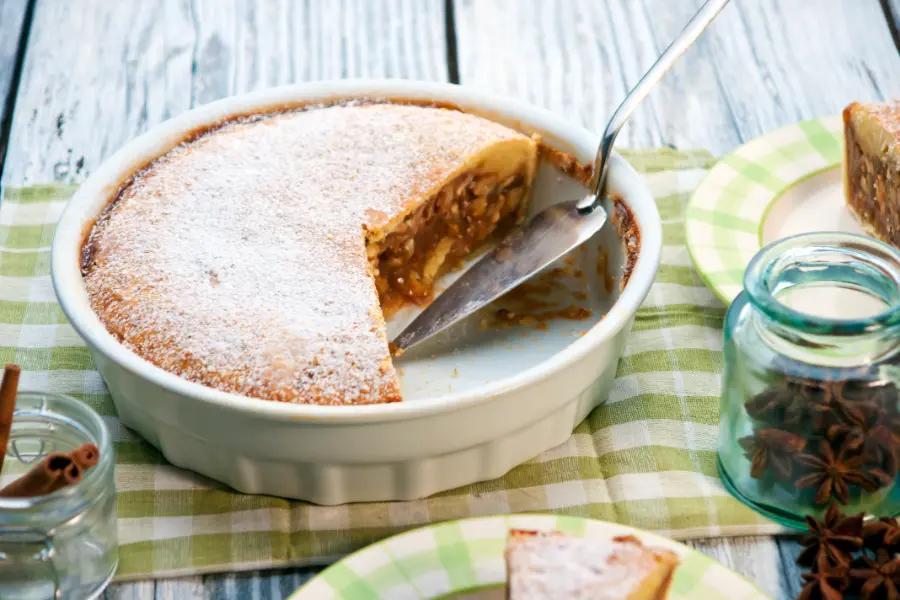
If you have a sweet tooth – and are especially fond of buttery, nutty tart – this next Swiss treat is unmissable. Originating from the Engadin Valley in eastern Switzerland, the Engadiner Nusstorte (nut tart) is one of the country’s favourite desserts. A rich shortcrust pastry is filled with chopped walnuts and a caramel filling, then topped with a pastry lid and baked until golden brown. Every bite is sweet, sticky, crunchy, and wonderfully rich.
Dating back to the early 1900s, the Nusstorte was first created by local bakers in the Engadin, who sold it as a regional specialty. It quickly became a nationwide favourite, and today you’ll find it in bakeries all across Switzerland. Because it keeps well for days, it’s a favourite among travellers and hikers and is a popular gift, too, often beautifully wrapped.
For an authentic touch, serve the tart with a scoop of vanilla ice cream or a dollop of whipped cream. It’s the perfect sweet ending to any Swiss-inspired meal. Try this recipe from Helvetic Kitchen.
7. Zürcher Geschnetzeltes
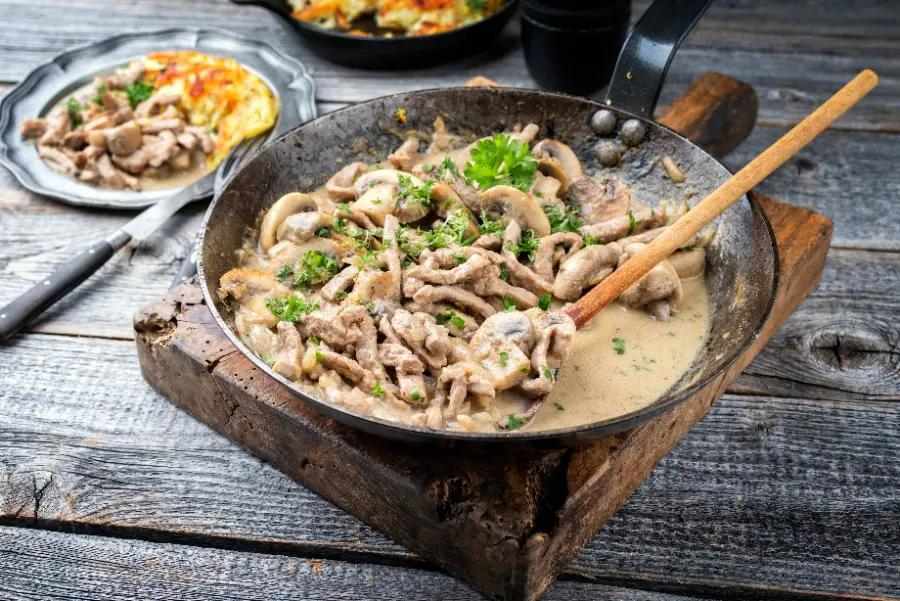
Fans of creamy meat dishes might like to have a go at this next recipe. Traditionally served with rösti, and hailing from Zurich, Zürcher Geschnetzeltes literally means ‘sliced meat Zurich-style’, and it’s a great example of refined Swiss cooking, where simple ingredients are beautifully elevated.
The dish is usually made with finely sliced strips of veal, which are cooked in a creamy white wine and mushroom sauce. The trick is to cook the ingredients low and slow, so the meat stays tender and the sauce becomes silky smooth. The result is a delicious dish that’s simple enough to make at home, but luxurious enough for a restaurant. Try adding a touch of lemon zest or parsley for a pop of colour.
To make Zürcher Geschnetzeltes, try this recipe from The Spruce Eats.
8. Tartiflette
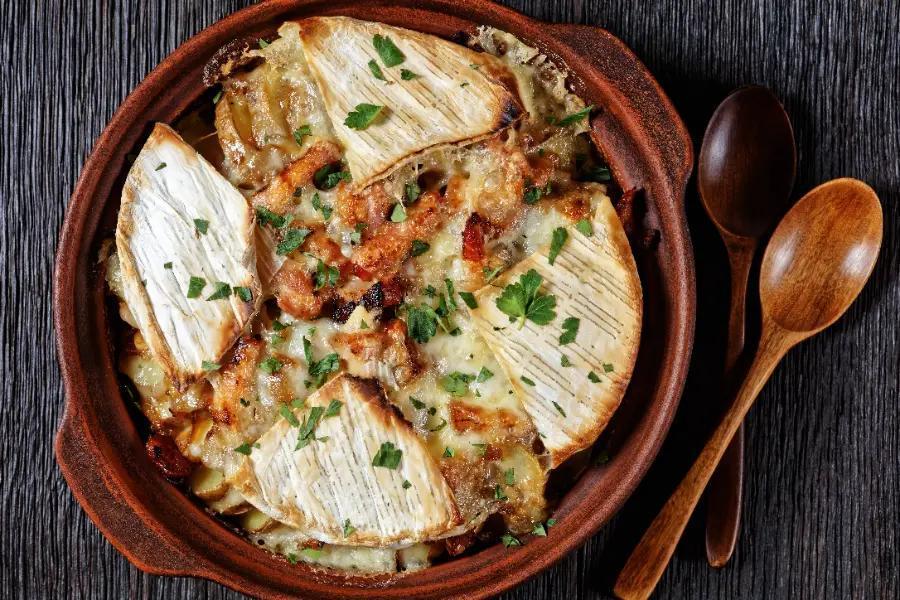
And finally, there’s tartiflette – arguably the richest and most indulgent meal of all! Though tartiflette originated in the French Alps, the Swiss quickly embraced it, and today it’s a staple on menus in ski resorts. Warm, creamy, and irresistibly cheesy, it’s the ultimate comfort food…the perfect reward after a long day on the slopes.
Layers of thinly sliced potatoes, onions, smoky bacon, cream, and Reblochon cheese are baked until golden and bubbling. The result should be crisp at the edges, velvety in the middle, and packed with flavour.
Interestingly, while tartiflette might look traditional, it wasn’t created until the 1980s. The dish was invented by the Reblochon cheese company as a way to promote their product, but proved so delicious it soon became an Alpine classic. Enjoy it with a glass of crisp white wine for the perfect Alpine experience.
Try this tartiflette recipe from Serious Eats.
Final thoughts…
From bubbling pots of molten cheese to golden, crispy potato cakes, Switzerland’s cuisine is hearty, simple, and satisfying. Humble ingredients are transformed into indulgent, soul-stirring dishes that can leave you feeling cosy and comforted.
But Swiss cuisine is about more than just food; it’s about warmth, connection, and togetherness. From gathering around a pot of fondue to sharing slices of rich nut tart, many of the most traditional meals are meant to be enjoyed with others.
So, as the days grow shorter and the nights colder, why not host a Swiss-inspired evening with friends, complete with delicious food, good company…and perhaps a little too much cheese?
For more cooking ideas and inspiration, check out our comforting recipes section.
Which of these Swiss dishes tempts you most – or have you already tried some? We’d love to hear from you in the comments below.
Selene Nelson is an author, freelance journalist, and lifestyle writer for Rest Less. After graduating from the University of Sussex with a degree in English Literature, Selene began contributing to many major newspapers and websites, and has written for the BBC, The Sunday Times, The Independent, Town & Country, and HuffPost. Her specialist subjects include food, travel, and health, though she enjoys writing about a wide range of topics (e.g. her two books are about veganism and psychopathy, respectively!). She enjoys cooking (particularly pasta and Asian noodle soups), reading, travelling, hiking, attempting to keep fit, and watching animal videos on YouTube.
* Links with an * by them are affiliate links which help Rest Less stay free to use as they can result in a payment or benefit to us. You can read more on how we make money here.
Join the discussion
Read our full commenting terms and guidelines