

- Home
- Health
- Healthy Body
- 9 of the best foods for digestion
Recent statistics estimate that almost one in two Brits is affected by gut issues, so it’s no surprise that interest in gut health remedies has spiked in recent years. If you’ve ever experienced symptoms like bloating, abdominal pain, constipation, or diarrhoea, you’ll know that struggling with gut issues can take its toll on daily life.
Luckily, there are several ways to help improve your digestive health, including through dietary changes, like eating more fibre and reducing intake of ultra-processed foods. Research also points us to foods that may be particularly beneficial for improving digestion and gut health.
With that said, here are nine of the best foods for digestion.
Why is digestion important for our health?

During digestion, the body breaks down the food we eat into nutrients that it can use for energy, growth, and repair.
When things aren’t running smoothly through the digestive tract, we may experience stomach discomfort, bloating, and symptoms like diarrhoea and constipation. However, beyond keeping our guts happy, research is increasingly revealing more about how digestion affects our overall health.
For example, evidence shows that the health of our gut microbiome (the ecosystem of microbes that live in the intestines) can affect everything from heart health to immunity and mental health. You can read more about this in our article: How does the gut microbiome affect overall health?
9 of the best foods to improve digestion
Many of the best foods for digestion are those high in fibre, of which we’re advised to eat at least 30g a day. Fermented foods are also great for digestion, because they contain plenty of gut-friendly bacteria.
1. Whole grains

Whole grains aren’t only anti-inflammatory, but they’re also great for improving digestion.
For a grain to be classified whole, it must contain 100% of the kernel. Some of the most popular types of whole grains include oats, brown rice, barley, quinoa, bulgur wheat, and whole-wheat bread.
The reason whole grains are so good for improving digestion is that they contain lots of fibre. Fibre helps to prevent constipation and feed healthy gut bacteria, known as probiotics.
For more ideas, check out our article: 9 healthy whole grains to add to your diet.
2. Tempeh

Many fermented foods are great for digestion because they’re packed with probiotics. For example, studies have linked diets high in fermented foods with lower inflammation and significant increases in gut microbiome diversity.
One of the healthiest fermented foods is tempeh, an Indonesian food made from fermented soybeans that you can buy in supermarkets. As well as probiotics, tempeh is an excellent source of protein, iron, magnesium, and manganese. Check out these tempeh recipes from Self if you’d like to up your intake.
Alternatively, for further reading, you might like our articles: 8 fermented foods for gut health and How to make your own fermented foods at home.
3. Yoghurt

Yoghurt is another well-known source of probiotics. However, it’s important to note that not all yoghurts contain probiotics.
When buying yoghurt, try to make sure you buy live yoghurt, because this contains active cultures that carry good bacteria and help our guts stay healthy. Greek yoghurt is one of the best yoghurts to eat if you want to consume the live, active cultures that act as probiotics.
Not only can probiotics help with digestive issues like bloating, constipation, and diarrhoea, but research has also found that they can also help us digest lactose, which can sometimes be more difficult to break down. So, if you like dairy, eating live yoghurt can make digestion that bit easier.
4. Peppermint

Drinking peppermint tea is an old remedy for curing digestive problems, but is there any truth to it? Science says yes. Peppermint leaves contain menthol – a compound that’s been shown to improve digestive issues, including bloating, stomach pain, and IBS symptoms.
It seems as though menthol may have a soothing effect on the muscles of the digestive tract, which in turn may improve digestion. Plus, peppermint oil can help reduce indigestion by speeding up how quickly food passes through the digestive system.
If you’d like to add peppermint to your diet, try drinking peppermint tea or adding fresh peppermint leaves to salads, smoothies, and desserts.
5. Chia seeds
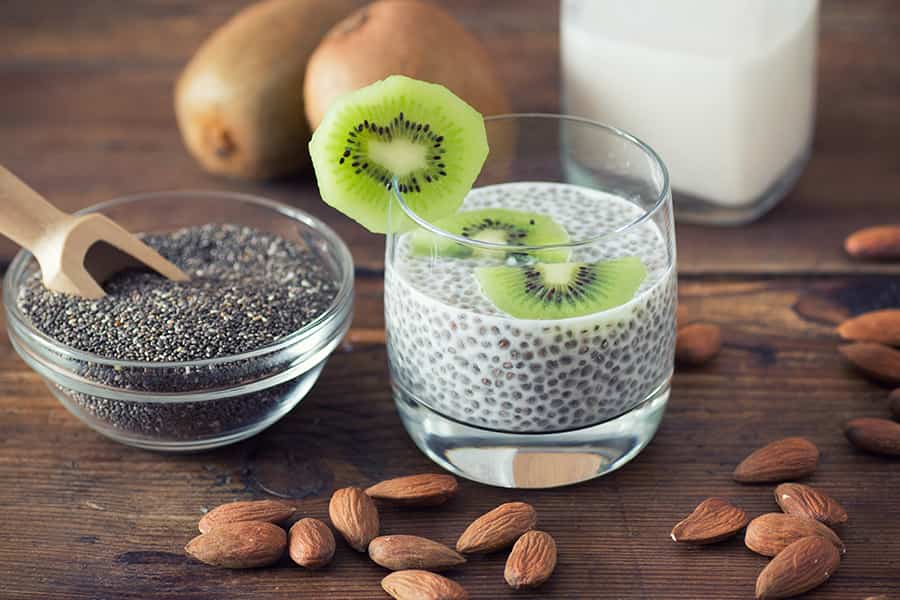
Chia seeds may be tiny, but they pack a real punch when it comes to health. They’re high in protein, packed with omega-3 fatty acids, contain many essential minerals and antioxidants, and have been shown to reduce the risk of heart disease and diabetes.
Chia seeds are also very high in fibre, making them a fantastic choice for digestive health. Once they reach your stomach, chia seeds form a jelly-like substance, helping to keep things moving through your digestive tract and feeding good bacteria.
If you’d like to eat more chia seeds, check out our article, 7 health benefits of chia seeds and different ways to use them, for inspiration.
6. Ginger

Ginger has been used for centuries for its medicinal benefits, and it’s known to be especially good for digestion.
As well as helping to lower blood pressure, cholesterol, and blood sugar levels, ginger has also been linked with benefits for digestive health. For example, studies suggest it may speed up stomach emptying, reducing the risk of bloating, cramps, and indigestion.
Ginger also has antimicrobial properties, meaning it can help destroy harmful microorganisms like viruses and bacteria, which affect your digestion. In particular, ginger has been shown to protect against Helicobacter pylori, a type of bacteria linked with stomach ulcers and inflammation.
Why not try one of these recipes from Bon Appétit if you’d like to add more ginger to your diet?
7. Kefir

Like live yoghurt, kefir is another dairy product that can support digestion. It’s a type of fermented milk drink that’s made by adding kefir ‘grains’ to milk. Just like the probiotics found in live yoghurt, the cultures found in kefir can make it easier for our bodies to digest lactose and reduce symptoms like bloating, cramps, and gas.
Studies show that kefir can increase the number of good bacteria in our guts while simultaneously reducing the number of harmful bacteria. Eating kefir is also linked to decreased inflammation and better immune health.
You can buy flavoured kefir drinks and desserts in supermarkets, but to avoid high amounts of added sugar, it’s best to buy plain kefir. However, kefir does have a very tart taste that some people don’t like, so, if you’d like ideas for how to make kefir tastier, check out this article from What’s Good.
8. Miso

Miso is a traditional Japanese seasoning that’s made by fermenting soybeans with salt and kōji (a type of fungus). It’s another fermented, probiotic-rich food linked with good gut health and digestion, with studies linking regular intake with reduced inflammation and greater gut diversity.
Miso is so healthy, in fact, that one of the world’s top wellness spas serves it for breakfast every day – and, in Japan, it’s consumed as a failsafe hangover cure.
One of the easiest and most popular ways to consume miso is to have a cup of miso soup. For convenience, you might like these miso sachets from Itsu, which are ready in seconds. Or, if you’d like to incorporate miso in your meals, why not try one of these tasty recipes from BBC Good Food?
9. Papaya

Papaya is delicious, refreshing, and great for your gut. As well as being high in fibre, papaya is rich in papain, a digestive enzyme linked with better digestion. Papain works by helping to break down protein fibres, making them easier to digest.
Experts have also linked papain with improvements in IBS symptoms, including constipation, bloating, and diarrhoea – though more up-to-date research is needed.
You can enjoy papaya as a snack on its own, or it’s also delicious in salads, smoothies, and as a breakfast topper. Check out these papaya recipes from BBC Good Food for more inspiration.
Final thoughts…
If you’ve ever struggled with digestive issues, you’ll know how challenging they can be. However, the good news is that there are several ways to improve digestion and help things run more smoothly.
For further tips on improving your gut health, head over to our gut health section.
What steps have you taken to improve your gut health? What are some of your favourite gut-boosting foods? We’d love to hear from you in the comments below.
Selene Nelson is an author, freelance journalist, and lifestyle writer for Rest Less. After graduating from the University of Sussex with a degree in English Literature, Selene began contributing to many major newspapers and websites, and has written for the BBC, The Sunday Times, The Independent, Town & Country, and HuffPost. Her specialist subjects include food, travel, and health, though she enjoys writing about a wide range of topics (e.g. her two books are about veganism and psychopathy, respectively!). She enjoys cooking (particularly pasta and Asian noodle soups), reading, travelling, hiking, attempting to keep fit, and watching animal videos on YouTube.
* Links with an * by them are affiliate links which help Rest Less stay free to use as they can result in a payment or benefit to us. You can read more on how we make money here.
Join the discussion
Read our full commenting terms and guidelines