
Exercising in summer can feel challenging. When the sun is beating down on us, we might not feel like going for a walk or bike ride, and retreating to an air-conditioned gym might mean missing out on the beautiful weather.
But there are plenty of other fun things you can do to stay active during the warmer months, whether it’s an exciting watersport, a competitive game, or an enjoyable activity with your friends and family.
To offer you some inspiration, we’ve pulled together eight fun and unique activities to help you stay active this summer.
1. Fruit picking

Whether you’re enjoying them in a dessert, chopped up in a jug of Pimms, or straight out of the punnet, we can all agree that fresh fruit is best paired with a warm summer’s day. However, there’s one thing that tastes better than fresh fruit, and that’s the kind you’ve picked yourself.
From plums and pears to apples and strawberries, there are farms UK-wide that open their doors to the public so we can pick our own fruit. Walking among the hedgerows in search of succulent treasures makes for a fun and active day out in the sunshine.
Fruit picking is a particularly rewarding activity to do with the children in your life, as it can help teach them where their food comes from, which is becoming increasingly important due to the environmental impact of imported food.
Plus, you’ll have something to enjoy when you get home as well, whether that’s baking your fruit into a pie, turning it into jams or preserves, or simply enjoying it by itself.
To read about the best pick-your-own experiences in the UK, check out this article from The Guardian. Or, to find your closest fruit farm, check out the PickYourOwnFarms website.
2. Paddling
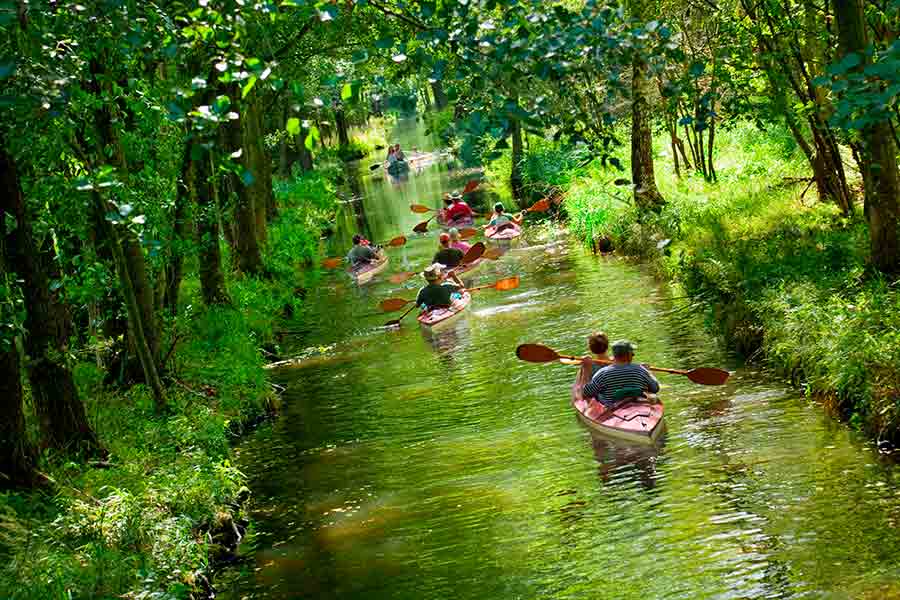
There’s nothing like being out on the water when it’s warm and the sun is shining. Instead of taking a boat ride this summer, why not do something more active and try a paddle sport like canoeing, kayaking, or stand-up paddleboarding?
Each of these activities involves paddling a waterborne vessel, with slight variations. Kayaks are closed-top vessels in which you sit and sweep the water past you with a double-bladed paddle. When canoeing, the boat is usually open-topped, and your paddle only has one blade.
As for stand-up paddleboarding, it’s often described as a cross between surfing and canoeing. The vessel is flat like a big surfboard, and you stand on top of it, propelling yourself with a large single-bladed paddle.
Paddling in general is a low-impact exercise, so it’s kind to your joints. But canoeing, kayaking, and paddleboarding are also effective cardiovascular workouts that’ll help you build strength and coordination. Plus, they’re great for exploring nature; some popular paddling trips include a journey through the Wye Valley or down the Norfolk Broads.
Although each specific paddling activity is fun and a good workout, they’re all slightly different. Picking the best for you depends on many factors, from the kind of experience you’re looking for to your fitness level.
To help you decide, why not take a look at these two articles from Cool of the Wind? One explains more about the differences between paddleboards and kayaks, while the other does the same for kayaks and canoes.
Once you’ve decided which paddle sport you’d like to try, it’s best to take a lesson before heading out. The good news is that no matter where you live in the UK, you’re never too far from a river, lake, reservoir, or even the sea.
3. Disc golf
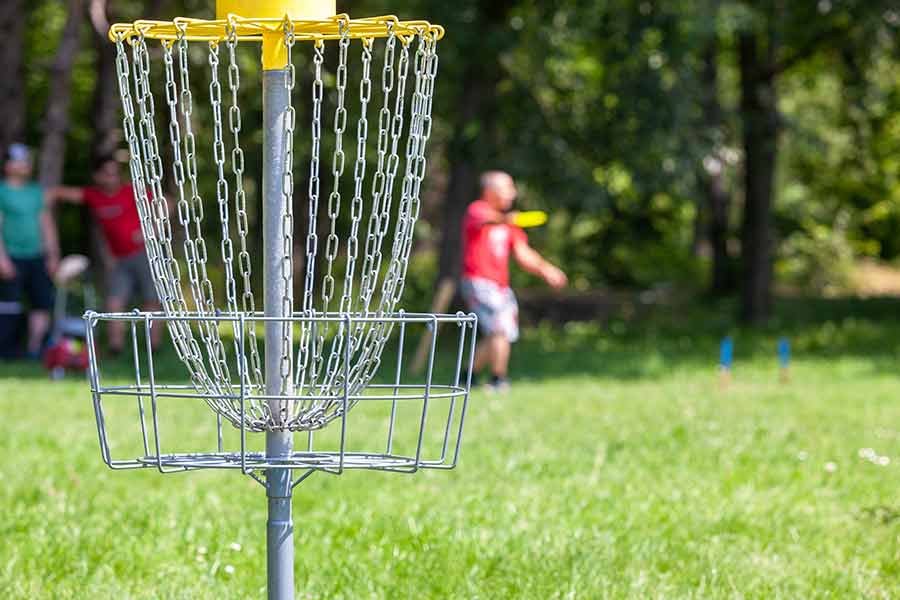
Cheap, accessible, social, and easy for anyone to get to grips with, disc golf is a unique and entertaining activity to get stuck into this summer. Invented in the 1960s across the pond in the US, this unusual pastime has grown steadily in popularity over the decades and is finally making a splash over here.
Disc golf shares many of its rules with its more conventional cousin, except that it’s played with small frisbees, not balls. Instead of holes, there are small, elevated metal baskets that act as targets.
The aim is to get from the starting position (the ‘tee’ in golf) to the basket in as few throws as possible. Each subsequent throw is taken from the spot where the previous one landed. Like regular golf, a typical round of disc golf is nine or 18 holes.
There are several ways to get involved with disc golf. For example, you could pick up a few discs and a target, and set up your own course in a local park, beach, or even garden (if it’s big enough). After playing one hole, you can move the target and the starting point and go again.
If you want a more organised experience, there are an increasing number of disc golf courses across the UK. Take a look at Disc Golf UK’s directory to find your closest course.
If you want to take it further, there are plenty of disc golf clubs around the country. Here, you can connect with other people who enjoy the sport and, if you’ve got a competitive side, you can even enter leagues and tournaments.
Have a watch of the video below to find out more about disc golf and how to play.
4. Orienteering

Orienteering is often described as an ‘outdoor adventure sport’, and it involves navigating (in singles or teams) between checkpoints, often referred to as ‘controls’, marked on a map.
Besides a map, all you have to assist you is a compass and your navigational skills. So if you like the sound of taking an adventure into the unknown, orienteering might be for you.
From city streets to the unspoilt countryside and everywhere in between, orienteering can be done wherever, so it’s very easy to get involved. Plus, as it involves walking and/or running between the checkpoints, it’s an excellent way to stay active.
You can do orienteering leisurely – going between checkpoints will add some purpose to your walk or hike, and determining the best route is entertaining. If you’re looking to up the ante, why not think about taking part in competitive orienteering? This is where teams compete to move between checkpoints and finish the course in the least amount of time.
To get started on your orienteering adventure, it’s worth getting in touch with your closest club, as many offer training or will point you in the right direction so you can get to grips with the basics. They’ll also be able to let you know about any social or competitive orienteering events you might be interested in. You can find your nearest club on the British Orienteering website.
Alternatively, you can take an orienteering course that’ll teach you everything you need to know. Go Orienteering has a handy course search tool to help you get started.
If you’d like to get involved with orienteering but have limited mobility, it’s worth looking into Trail Orienteering (or Trail-O). This specific discipline aims to create a level playing field for orienteers of all physical abilities. To find out more, head over to the British Orienteering website using the button below.
5. Punting

Another pleasurable way to spend time out on the water with some physical activity is to go punting. Punts are small, square boats with flat bottoms. They were originally developed to transport cargo along shallow waterways and for fishing, though now they’re primarily used for pleasure.
Punts are propelled and steered using a long pole to push off against the river/canal bed. It’s this action that’ll work your upper body and give you a good workout if you hire your own punt. Though if you just fancy relaxing and enjoying the gentle bob of the boat, you can hire a manned punt.
Punting is primarily associated with university towns like Oxford and Cambridge. Taking a waterborne ride through these ancient cities is a top way to see the sights, as both rivers twist and turn through many of the prestigious colleges of each institution.
While there are other places to punt across the UK, most are found in the South of England and the Midlands. So if you live elsewhere, you might want to include this activity on your next staycation.
To find out about some of the best places to go punting in the UK, why not check out this article from Matador?
6. Rounders

Like punting, rounders is a quintessentially British activity. It’s been played in the UK since the 1500s and even inspired baseball and softball. Cheap, accessible, and suitable for people of all ages and abilities, playing rounders is an excellent active pastime to enjoy this summer.
All you need to get started is a rounders bat, a ball (traditional balls are hard, but you can opt for a softer one or even a tennis ball), four posts or cones (these will act as bases), and two teams of at least six players. Rounders should be played in an open space with plenty of room, like a park, beach, or even a garden if it’s large enough.
It’s a pretty simple game. Once the four bases are set up correctly – this guide will show you how – the aim is to hit balls thrown to you by the other team’s bowler, before running around the bases and trying to score points for your team.
Each team serves two innings at bat and two innings fielding. An inning is over when each member of the batting team has either been caught or stumped out, or they’ve made their way around the bases. If you aren’t familiar with the ins and outs of the rules, check out this comprehensive guide from Masters Traditional Games.
Rounders is a sociable and entertaining game to play with your friends and family at a picnic or get-together. Though sometimes it can be difficult to get the numbers together. In this case, there are a variety of rounders teams and clubs UK-wide that welcome people of all ages and abilities. You can use the handy directory below from Rounders England to find one near you.
7. Open water swimming

We all know that swimming regularly is good for us. It’s a full-body workout that helps us maintain a healthy weight and build strength, cardiovascular health, and endurance. Though swimming laps can sometimes get monotonous, especially when you’re in an indoor pool during summer. So why not give open water swimming a try?
Sometimes called ‘wild swimming’, this activity is arguably even better for both your physical and mental health than swimming in a pool.
For example, without wall push-offs and fewer opportunities to rest (such as when gliding after a wall push-off), open water swimming can be more intensive than swimming laps in a pool.
Plus, the frosty temperatures of British waters come with a host of benefits that you won’t get from swimming in a pool at your local leisure centre. Cold temperatures cause our metabolism to work harder to keep us warm, resulting in more calories burnt.
Taking a dip in cold water is also thought to reduce tiredness, as well as boost our mood and immune systems.
But above all, swimming outside amongst nature with the sky above you is great fun. So, to find out more about how to get started with open water swimming, including where you can do it and how you can stay safe, check out our article: An introduction to open water swimming.
8. Pickleball

Fast and tonnes of fun, pickleball has slowly grown in popularity since it was invented in the 1960s as an entertaining garden game. Now, it’s a massive sensation, with over 22 million active players worldwide.
Hailing from the US, pickleball became a hit during the pandemic when people were looking for alternative ways to keep fit and have fun. But it seems that the pickleball craze is here to stay.
Part of the reason pickleball has become so popular is that it’s easy to learn and can be played by all ages and abilities. Like other similar games, it can be played by two (singles) or four people (doubles).
Described as a mix of tennis, badminton, and ping-pong, pickleball is played on a badminton-sized court with a low net. To get started, you’ll need two simple pieces of equipment: a pickleball (a hollow plastic ball with holes in it) and a paddle for each player. You can buy these as part of a set on Amazon.
New places to play pickleball are popping up all over the UK. If you want a casual game with a friend, it’s worth calling up your local leisure centre to see if they have a pickleball court. Alternatively, consider joining a pickleball club. The handy directory below from Pickleball England will help you find your closest one.
To find out more about this fast-growing sport, check out our article: An introduction to pickleball. Or, to get an idea of how it’s played, take a look at the video below.
Final thoughts…
From fruit picking to pickleball, there are plenty of activities for you to try if you’re looking for a new way to stay active this summer.
For more inspiration on entertaining ways to get moving, why not head on over to our fitness and exercise section? Or for more content on fun activities, take a look at our hobbies section.
What’s your favourite way to have fun and stay active throughout the summer months? We’d love to hear from you in the comments below.