

- Home
- Leisure & Lifestyle
- History
- 6 of the world’s most notorious serial killers
How does Rest Less make money
We make money through advertising and commission from affiliate links, which enable us to offer Rest Less as a free service to our users. The content on this page may use affiliate links, which track traffic from our website to a third party provider and enable us to receive a commission or payment from any traffic we refer.
* Affiliate links on this page have an * next to them. We place enormous importance on our editorial independence and the integrity of our content which means that we will never change how we write about something as a result of an affiliate link.
Thankfully, serial killers are rare – but when they do strike, the results are catastrophic. Many people picture them as fictional monsters from crime novels or horror films, making it almost unbelievable when they come to life.
But what exactly defines a serial killer, and how common are they really? The reality behind these crimes is both more complex and disturbing than fiction often portrays.
Trigger warning: This article is for informative purposes only and is not intended to glorify tragic events or make light of them. Although true crime cases can provide helpful insight into the human psyche and criminal legal system, we also appreciate that exposure to topics relating to violence and death can be distressing for some people. Therefore, reader discretion is advised.
Our thoughts go out to the victims, families, and anyone else affected by these – or similar – events.

Behind every crime, there's a story waiting to be told
Browse hundreds of bestselling crime, thriller & mystery books on Amazon.
What is a serial killer?
While there’s no single “official” definition, experts generally say a serial killer is an individual who murders at least three victims over a period of more than a month, typically with a “cooling off” period between each killing.
However, there are exceptions to this timeframe, as some killers have compressed their activities into much shorter periods. For example, in the US, 30-year-old Sabrina Kauldhar was labelled a serial killer after killing three people in three days.
Research suggests that serial killers are driven by a desire for power and control, sexual gratification, profit, or practical gain. Some may also kill to fulfil violent fantasies, sometimes involving rape or torture, and victims may be known to the killer or chosen at random.
You can read more in our article: Are serial killers born or made?
Where are serial killers most common?
Serial killers can exist anywhere, but there are pockets of the world where they seem more prevalent.
According to Crime + Investigation, the US has had the most documented serial killers by far, a chilling 3,204 of them, while the UK comes in second with 166. South Africa, Canada, Italy, Japan, Germany, Australia, India, and Russia are also listed in the top 10, but with lower numbers still.
Are serial killers in decline?
Although there isn’t sufficient data to be able to conclude whether serial killers are declining worldwide, US data shows that the number of identified serial killers has fallen since their peak in the 1970s and 1980s. Experts believe that this is largely due to longer prison sentences, a reduction in parole, increased public awareness and caution, and enhanced surveillance and tracking capabilities, like CCTV and GPS.
While this is reassuring, the devastating impact of the world’s most prolific serial killers is a stark reminder of why continued vigilance, research, and improved security measures are essential. Understanding how these individuals operated – and how they were eventually caught – has been key in developing better prevention strategies and investigative protocols.
Here are 10 cases that represent not only significant developments in criminal justice but also serve as reminders of the real human cost of these crimes.
6 of the world’s most notorious serial killers
1. Luis Garavito
According to reports, Luis Garavito is confirmed to have murdered 193 minors in Colombia between 1992 and 1999. Many of the boys were poor or lived on the street, and Garavito would adopt different disguises – including a beggar, a cripple, or a monk – to lure them away with the promise of money or food before subjecting them to horrific acts of violence.
Garavitos’ reign of terror ended after he was arrested on a rape charge in April 1999. An investigating judge asked him whether he was also the killer of 114 children whose bodies were found in 59 Colombian towns beginning in 1994. Garavitio confessed and admitted to more murders, amounting to more than 190. In court that year, he was heard begging the victims’ families for forgiveness.
In 2023, Garivto died in prison after being diagnosed with and treated for cancer. His sentence amounted to 1,853 years and nine days, but was consolidated to 40 years. Colombian law also allows inmates to gain freedom after serving 60% of their sentence. In 2021, he made a public appeal for release, claiming he’d been a model inmate and expressing concerns about being killed by other inmates. But because he hadn’t paid fines for his victims of roughly $41,500, his appeal was denied.
2. Pedro Lopez
Known as the ‘Monster of the Andes’, Pedro Lopez is thought to have killed over 300 people, mostly young girls, across Colombia (his home country), Peru, and Ecuador. Lopez claimed his mother was physically abusive and a prostitute, and some reports say he was kicked out on the streets at age 8, after she caught him fondling his younger sister. Later, Lopez was reported to have been sexually assaulted by a man who took him in.
As a young man, in 1969, Lopez was sentenced to seven years in prison for auto theft, where he was raped by three inmates, who he later killed, extending his sentence by two years. Upon his release in 1978, Lopez made his way from Colombia to Peru and then Educador, raping and murdering young girls, usually of Indigenous background, as he went.
At one point, Lopez was caught attempting to kidnap a nine-year-old girl by the Ayachucos community in Peru, who tried to submit him to tribal law and bury him alive. But a Western missionary convinced them to turn Lopez over to the police, after which he was promptly deported back to Colombia. Back on home turf, the murders continued, and in the late 70s, Lopez travelled to Ecuador, where hordes of girls began to go missing.
His reign of terror finally came to an end in 1980 when he was caught trying to lure away a street vendor’s daughter. Once in police custody, Lopez confessed his crimes to an undercover investigator posing as a fellow inmate. He was eventually charged with 110 murders and claimed to be responsible for around 200 more.
Alarmingly, Lopez was only given 16 years in prison and released in 1994 after serving 14. He was deported back to Colombia, where authorities tried to convict him of a two-decades-old murder before declaring him insane. They sent him to a psychiatric facility the following year.
In 1998, he was declared sane, released under specific conditions, and visited his elderly mother to ask for his inheritance. After finding out she was poor, he attempted to sell her furniture on the street before vanishing altogether. He hasn’t been seen since.
3. Harold Shipman
Harold Shipman, sometimes called the “angel of death”, was an English doctor and is widely considered to be Britain’s most prolific serial killer. In January 2000, Shipman was sentenced to 15 life terms for murdering 15 patients under his care, but a later enquiry revealed that between the 1970s and late 1990s, he’d killed at least 215 people. In 2004, Shipman died after he hanged himself in his cell in Wakefield prison.
He had worked as a GP in the town of Hyde in Greater Manchester, and many of his victims were women over 50, including Marie West (81), Bianka Pomfret (41), and Irene Turner (77). Reports say Shipman would visit patients at home to treat mild ailments and inject them with a deadly dose of morphine, before altering the notes to suggest they were gravely ill, and encouraging the family to choose cremation, so there was no evidence left of his crimes.
It’s believed that Shipman enjoyed the power of decision-making and choosing who lived or died. But his crimes were finally uncovered in 1998 after he attempted to forge the will of his final victim, Kathleen Grundy, for financial gain. Kathleen’s daughter, Angela Woodruff, raised the alarm, which prompted an investigation.
4. Rodney Alcala

Scene from Woman of the Hour. Credit Leah Gallo/Netflix © 2024 Netflix, Inc.
Between 1971 and 1979, Rodney Alcala was found guilty of eight murders across New York, California, and Wyoming – but the real number is expected to be more than 100 women and girls. Posing as a fashion photographer, Alcala would lure women to their death by complimenting them and offering to take their photo.
In 1978, Alcala appeared on the popular TV show The Dating Game, where he won a date with bachelorette Cheryl Bradshaw. Though reports say she later backed out. Alcala’s appearance on the hit dating show is reimagined in Netflix’s Women of the Hour (2024) – directed by and starring Anna Kendrick – juxtaposed with scenes of his chilling crimes.
What’s terrifying is that, before his TV appearance, Alcala had appeared on the FBI’s most wanted list and served 34 months in prison for brutally raping and beating eight-year-old Tali Shapiro. But without standardised background checks, the show’s producers were unaware. Alcala had also murdered at least five people, including a child and a pregnant woman, but had not yet been pinned to the crimes.
However, a year after the show, in 1979, Alcala abducted 12-year-old Robin Samsoe as she walked home from ballet class in Huntington Beach – and was arrested for her rape and murder later that year. In 2010, he was eventually convicted on five counts of first-degree murder and sentenced to death. His other victims were Jill Barcomb (18), Georgia Wixted (27), Charlotte Lamb (32), and Jill Parenteau (21).
Two years later, Alcala received another life sentence for the murders of Cornelia Crilley and Ellen Jane Hover (both 23) and in 2016, he was convicted of murdering Christine Ruth (28). Despite eight murders being confirmed, authorities estimate the true number of victims to be as high as 130. In July 2021, Alcala died of natural causes while on death row. He was 77 years old.
5. Samuel Little
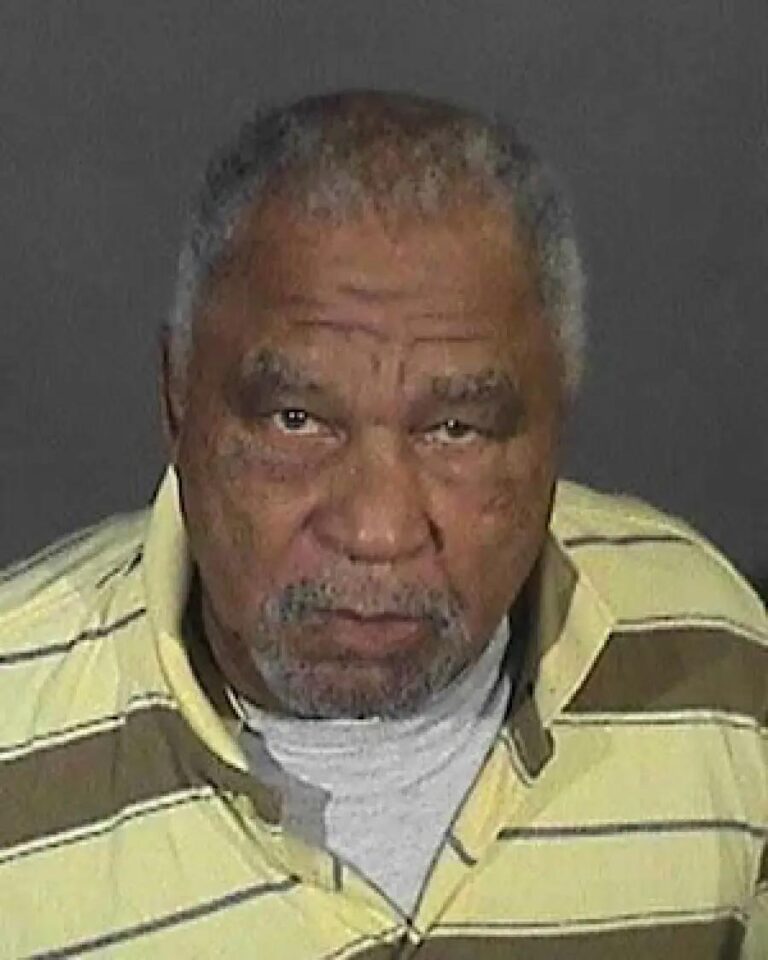
LAPD, Public domain, via Wikimedia Commons
Described by the FBI as the most prolific serial killer in US history, Samuel Little targeted vulnerable women, many of whom were drug users or sex workers. The former competitive boxer would punch his victims to knock them out before strangling them. Without obvious signs like bullet or stab wounds, some were incorrectly determined to be accidental deaths or overdoses.
Little was arrested for a drug charge in 2012, but his DNA linked him to three unsolved murders in California that dated back to the late 1980s. In 2014, he was convicted and sentenced to life in prison without parole, and later confessed to strangling 93 victims, freely sharing names, places, and details of how they died. He also drew pictures of 26 of his victims.
FBI analysts believe Little’s confessions to be credible, and more than 60 were verified. Among them were Mary Jo Peyto (21), who met Little at a bar; Anna Stewart (33), who was last seen in 1981 getting out of a cab to visit her sister in the hospital; and Rose Evans (32), whom Little came across while driving and offered a ride. In 2020, Little died in a California hospital. He was 80 years old.
6. Mikhail Popkov
Reports describe Mikhail Popkov as a seemingly ordinary man – charming even. His colleagues praised his police record, and his daughter described him as the “best dad”. But, terrifyingly, the former police officer was leading a double life and admitted to doing so. He said that after suspecting his wife Elena was having an affair in the 1990s, he wanted to rid the streets of women he deemed immoral.
Known as ‘The Werewolf’ or ‘the Angarsk Maniac’, Popkov murdered dozens of people (mostly women) in Russia between 1992 and 2007. Despite being diagnosed with “homicidal mania”, he was declared sane and accountable for his crimes. Popkov killed victims with an axe and hammer after offering them late-night rides in his car, and at least 10 were also raped. His youngest victim was a 15-year-old girl.
After tyre marks were found next to some of his victims and a DNA match identified his car, Popkov was caught in 2012. In 2015, he was found guilty of 22 murders and sentenced to life in prison. However, he was kept on remand after admitting to 59 more killings, investigations into which were ongoing. Of these, 56 were confirmed, and Popkov was given a second life sentence.

Understanding the unthinkable through expert investigation
Browse hundreds of bestselling mystery, thriller & suspense audiobooks on Amazon.
Final thoughts…
Most of us would agree that the crimes committed by serial killers are unthinkable, and the devastation insurmountable. Unlike fictional monsters, these killers were real, yet each was ultimately brought to justice.
While serial killers thankfully remain rare, the insights gained from studying these cases continuously improve our capacity to detect patterns, solve crimes, and protect potential victims.
Did you learn anything new from this article? What other true crime topics would you like to read about? We’d love to hear from you in the comments below.
Elise Christian is Lifestyle Editor at Rest Less. She joined Rest Less in 2018 after achieving a first class Master’s Degree in Journalism from the University of Kent, and writes across a range of lifestyle topics such as mental health, home and garden, and fashion and beauty. Prior to this, she worked as a freelance writer for small businesses and also spent a year training to be a midwife. Elise spends her spare time going to the gym, reading trashy romance novels, and hanging out with loved ones. She also loves animals, and has a fascination with sharks and tornadoes.
* Links with an * by them are affiliate links which help Rest Less stay free to use as they can result in a payment or benefit to us. You can read more on how we make money here.
Join the discussion
Read our full commenting terms and guidelines