
- Home
- Leisure & Lifestyle
- History
- 6 meaningful ways to commemorate Remembrance Day
How does Rest Less make money
We make money through advertising and commission from affiliate links, which enable us to offer Rest Less as a free service to our users. The content on this page may use affiliate links, which track traffic from our website to a third party provider and enable us to receive a commission or payment from any traffic we refer.
* Affiliate links on this page have an * next to them. We place enormous importance on our editorial independence and the integrity of our content which means that we will never change how we write about something as a result of an affiliate link.
World War One (1914-1918) was one of the most destructive conflicts in history. Up to 13 million people lost their lives, including 880,000 British forces – the equivalent of 6% of the male population.
Remembrance Day, originally called Armistice Day, takes place on 11th November to honour and remember the sacrifices of all who have served in the armed forces and defended our freedoms.
While it was first observed to mark the losses of World War One, today, Remembrance Day also honours all those who have died in wars since.
Below, we’ll explore six meaningful ways to commemorate Remembrance Day.
1. Wear a poppy
At this time of year, you’ll often see poppies on people’s clothes, in shops, schools, and laid out at memorials.
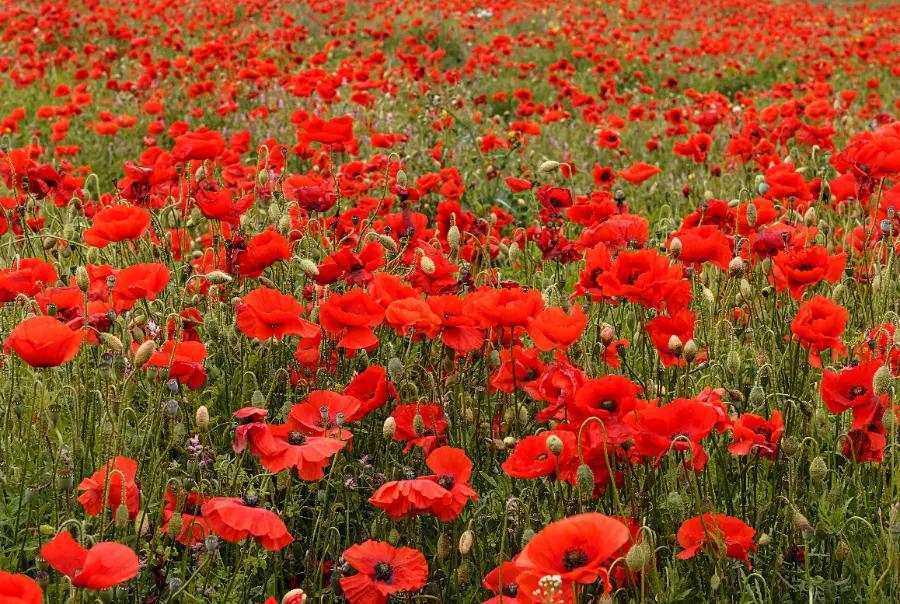
During World War One, much of the land in France was devastated by battle, with all signs of life virtually wiped out. After the war ended, one of the first plants to regrow on the battlefields were red poppies. And so, the poppy became a symbol of the suffering and sacrifice made by those fighting. Resilient yet also delicate, they were thought to be a fitting symbol for those who lost their lives.
You can find remembrance poppies from volunteers on the streets, in supermarkets and shops, as well as online stores like the Royal British Legion Poppy Shop. Many retailers, including Marks & Spencer, also partner with the Royal British Legion to sell poppies.
To learn more about the significance of poppies on Remembrance Day, you might like to read 11 things you might not know about the poppy from the Royal British Legion.
Note: There have previously been controversies over how and when to wear poppies, as well as the symbol’s links to war.
The Royal British Legion states that poppies are an emblem of hope and peace. It is not, the charity stresses, ‘blood’ red or a sign of support for war and death; neither should it be seen as a symbol of politics or religion. The Royal British Legion has more information on how to wear your poppy on their website.
2. Attend a Remembrance Sunday service
While Remembrance Day marks the actual day that World War One ended, on the 11th day of the 11th month, we also observe Remembrance Sunday. This year, Remembrance Sunday falls on 9th November, 2025.
On Remembrance Sunday, a National Service of Remembrance takes place at The Cenotaph in Whitehall, followed by the Cenotaph Parade of 10,000 veterans and other eligible participants. Led by HM The King, the Parade forms in columns through central London and involves the Royal Family laying wreaths at the Cenotaph.
If you’d like to watch the Cenotaph Parade in person, there will be viewing areas (including accessible areas) for spectators. Alternatively, the National Service of Remembrance will be broadcast live on BBC One and BBC Four, as well as other national channels – so you can join in from home too.
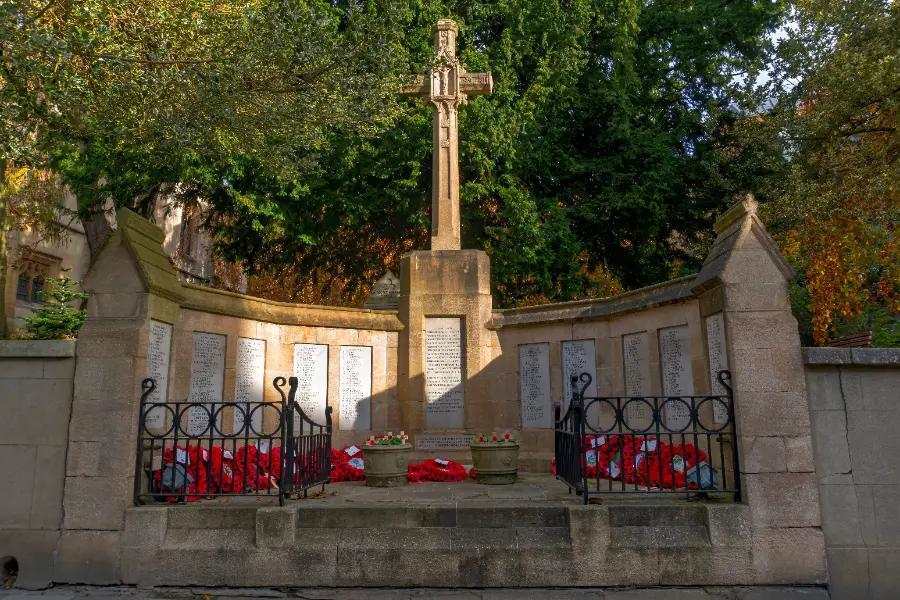
Many local communities also hold their own services and parades at local war memorials, churches, or cenotaphs. Attending one of these events can be a powerful way to come together in a communal act of remembrance. If you represent a certain group or would like to pay a personal tribute, you may also have the opportunity to lay a wreath or a cross at a memorial.
3. Observe the two-minute silence
The most universal act of Remembrance Day is the two-minute silence, held on 11th November at 11am. This moment marks the time when the armistice was signed, bringing World War One to an end in 1918.
The first two-minute silence in Britain was held on 11th November 1919, led by King George V, one year after the end of the War. King George made the request so that “the thoughts of everyone may be concentrated on reverent remembrance of the glorious dead.” Today, it remains a simple but powerful way to commemorate those who lost their lives.
Wherever you are, intentionally pausing for these two minutes offers a profound opportunity to reflect on the sacrifices war heroes made for peace, and the huge human cost of conflict. A nationwide two-minute silence will also take place at 11am on Remembrance Sunday.
4. Read some war poetry
During the horrific fighting of World War One, many soldiers documented their experiences via poetry.
World War One poems were different to anything that had come before. Instead of war poems written by imaginative members of the aristocracy who focused on the glories of war, World War One poems were written first-hand, by soldiers who’d experienced the terrors of trench warfare.
In his famous poem ‘In Flanders Fields’, for example, John McCrae wrote “Short days ago we lived, felt dawn, saw sunset glow, loved and were loved, and now we lie, in Flanders Fields.”
Raw and truthful, taking time to read words like these can be a meaningful act of remembrance, offering a new perspective into what life was like for those fighting. For more ideas on what you could read, Penguin has a list of moving World War One poetry to mark Remembrance Day.
5. Visit a military museum and learn more about World War One history
Remembrance Day is also a chance to learn more about military history and the personal stories of those who served. There are a number of ways to do this.
For example, you could visit a war memorial wall or visit a military museum. Reading the names of those who served, as well as personal accounts like biographies, letters, and personal memoirs from war veterans, can help bring history into focus. For inspiration on where to go, you might like to read this list of Britain’s best First World War museums and collections from Museum Crush.
This year, London’s Imperial War Museum will also be hosting two free-to-attend performances to mark Remembrance Day. This includes a remembrance choir performance, violin recital, and two-minute silence.
If you have family members who served, spending some time researching their service records, regiments, and where they were stationed can be rewarding. Sharing these stories and reflecting on them yourself is what helps to keep their memory alive. For more information on how to get started, you might find our guide to tracing your family tree useful.
6. Plan some Remembrance Day-themed arts and crafts
Creative activities like painting and drawing are great for self-expression and developing new skills. They can also help foster emotional connection, cultural awareness, and provide a calming, reflective environment to remember those who lost their lives.
Arts and crafts can also be good ways to introduce children to the significance of Remembrance Day. Naturally, the information you share will depend on the ages of the children you’re dealing with, but encouraging children to express gratitude and honour those who have made sacrifices for us is valuable whatever their age.
Check out these poppy craft ideas from Baker Ross for inspiration. Alternatively, for more ideas on how to engage children in Remembrance Day, The Royal British Legion’s Remembrance Learning Programme offers a diverse range of free resources and events for school children, youth groups, and families.
Final thoughts…
However you decide to mark it, Remembrance Day is a time to honour and remember the sacrifices of all who have served in the armed forces. It’s also an opportunity to reflect on the devastating effects of war and the importance of striving towards a peaceful future.
For further reading, head over to our history section.
How are you commemorating Remembrance Day this year? Do you have any other ideas that you’d like to share? We’d be interested to hear from you in the comments below.
Francesca Williams is a senior lifestyle writer at Rest Less. She joined Rest Less in early 2021 after achieving a first-class degree in History at the University of Sheffield and qualifying as an NCTJ Gold Standard Journalist. Francesca is a qualified Level 3 Personal Trainer and writes across a range of lifestyle topics, specialising in health. In her spare time, Francesca likes to keep herself busy going to the gym, dancing, spending time with friends and family, and getting involved with her local church.
* Links with an * by them are affiliate links which help Rest Less stay free to use as they can result in a payment or benefit to us. You can read more on how we make money here.
Join the discussion
Read our full commenting terms and guidelines