
Sponsored content

Guide dogs are transformative for people with sight loss. From helping people get out and about safely, to locating crossings, kerbs or bus stops, to providing security and companionship, guide dogs and their owners develop a unique and lasting bond.

There are currently around 3,200 working guide dog partnerships in the UK. And while most of us have a rough idea what guide dogs do, few of us know what these partnerships really involve and the work that goes into creating them.

To find out, we’ve partnered with Guide Dogs, the world’s largest assistance dog organisation, to explore six amazing things you might not know about guide dogs.

Every day, 250 people in the UK start to lose their sight. And with the number of people living with sight loss in the UK set to double by 2050, the need for guide dogs is growing.

Guide Dogs relies on donations to continue its life-changing work; in fact, nearly two out of three guide dog partnerships are only made possible thanks to gifts in Wills. No matter how big or small your donation, leaving a gift to Guide Dogs in your Will can help provide the guide dogs of the future.

Keep reading to discover more about Guide Dogs and the amazing work they do.

6 amazing things you might not know about guide dogs

1. Guide dogs are looked after by several trained volunteers during their first two years of life

It’s a common assumption that guide dogs stay with one person throughout their training until being paired with someone with sight loss. But after being born into the home of a Breeding Dog volunteer, who gives them the best possible start, guide dog puppies move to the National Centre for important checks at eight weeks old.

From here, they go to live with a volunteer Puppy Raiser until their formal training starts at around 12-14 months. At this point, guide dogs stay with one of Guide Dogs’ wonderful volunteer fosterers during evenings and weekends, whilst being trained during the day at one of the regional Guide Dogs centres. Finally, guide dogs are matched with someone with sight loss when they’re around two years old.

2. Guide dogs need to master 37 key behaviours before they can qualify

Guide dogs need to master 37 key behaviours before they can qualify Guide dogs learn from the moment they’re born – interacting with people and the rest of their litter, and exploring the world around them.

However, formal guide dog training, which begins at around 14 months old, is a comprehensive, three-stage, reward-based process carefully tailored to each dog’s personality and preferences. It usually lasts around six months, but each dog is unique, and some learn at a different pace than others.

During training, guide dogs need to learn and master 37 key behaviours. This includes learning skills and responses to verbal cues, all taught through marker training. Dogs are also taught to associate a ‘cue word’ with a particular behaviour, such as ‘sit’, ‘down’ or ‘forward’.
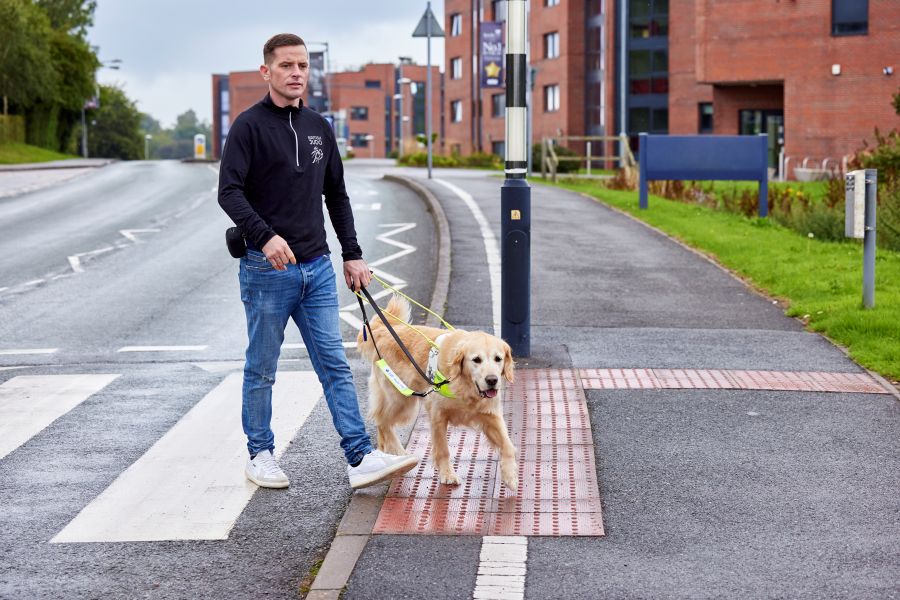
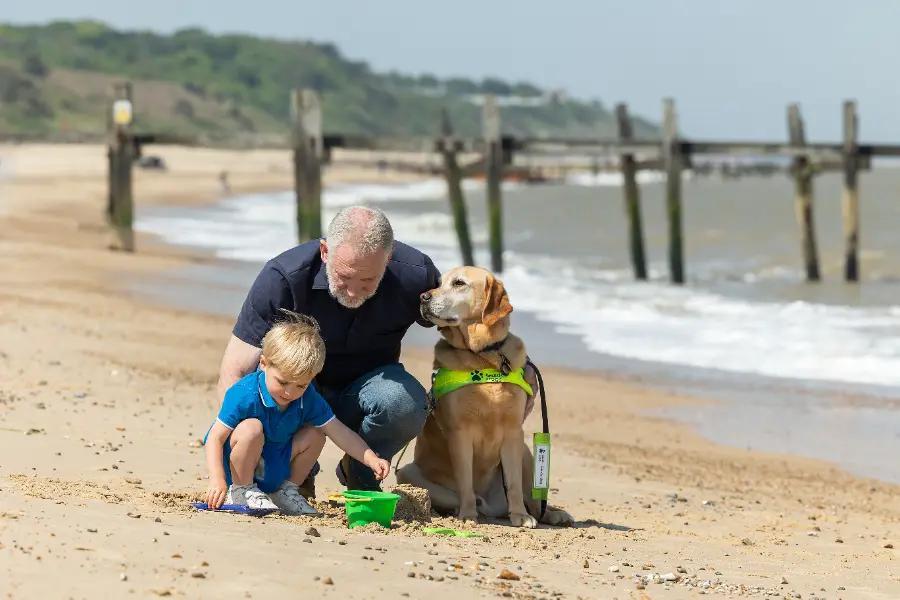
They also learn important features in the environment that become a cue, for example, approaching a curb or step is a cue to stop. Another behaviour guide dogs have to master is finding a seat: when given the cue, guide dogs are taught to find and rest their chin on an empty seat so their owner can sit down.

Guide dogs need to master 37 key behaviours before they can qualify

3. Guide dogs aren’t just Labradors

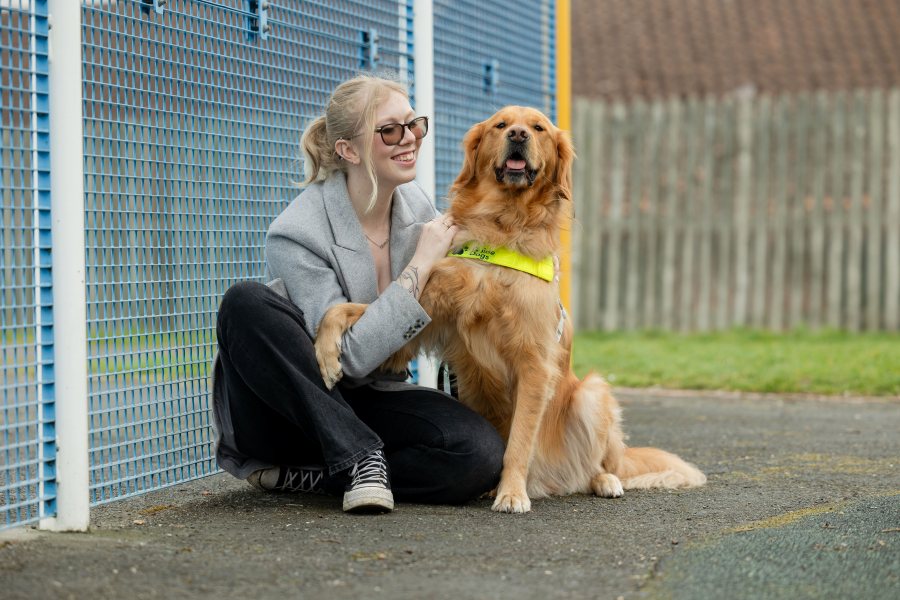
Most people associate guide dogs with Labrador and golden retrievers, but the first dogs trained by Guide Dogs back in 1931 were actually German shepherds named Folly, Judy, Meta, and Flash.

Today, German shepherds still make excellent guide dogs, as do other carefully selected varieties of crossbreeds, such as Labradoodles and curly coat retrievers.

Guide dogs aren’t just Labradors

4. Some guide dogs convert to ‘buddy dogs’

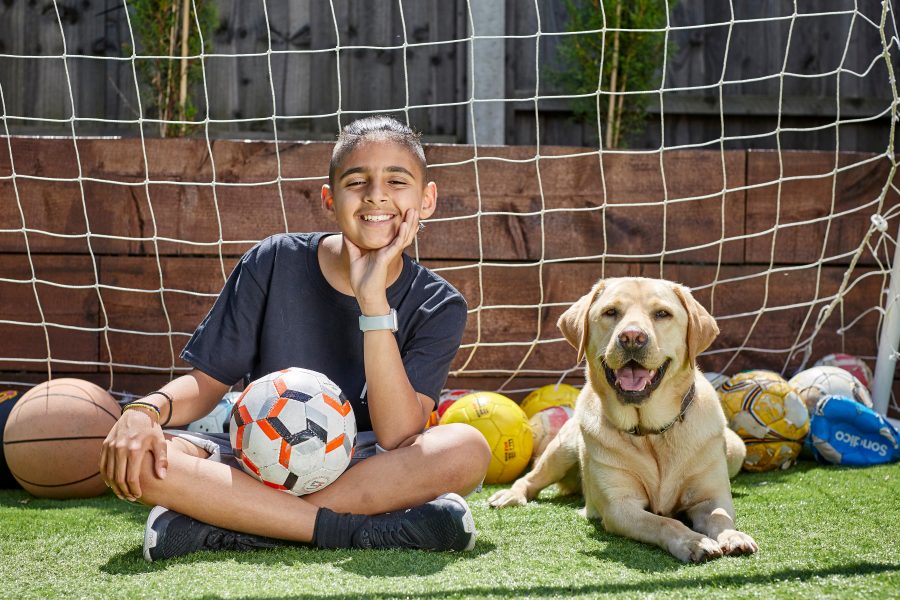
Guide Dogs also provides buddy dogs for children and young people with a vision impairment. These are dogs who have been given a career change because being a guide dog wasn’t quite right for them. This could be due to health or behavioural reasons, such as a skin condition, anxiety or problems with their joints.

Buddy dogs are friendly, well-behaved pet dogs and are offered to families of children with sight loss to help them increase their confidence and physical activity, create better relationships with others, and develop a sense of fun and trust. There are currently around 400 active buddy dog partnerships in the UK.

Some guide dogs convert to ‘buddy dogs’

5. Guide dogs boost confidence and transform lives

For people with sight loss, having a guide dog can be life-changing. Whether it’s giving them the confidence to travel to work safely or explore new passions, guide dogs provide life-changing practical support every single day.

You can head over to the Guide Dogs website to explore inspiring stories from guide dog owners. For example, after Anica’s sight deteriorated in her mid-20s and she struggled to get out and about, especially in the dark – that was, until she partnered with her guide dog, Lassie, who helped her achieve her dream of teaching at a university.

Anica said, “I’m much more relaxed and less stressed with Lassie around, and that’s really helped me to push on with my career. She guides me around the local area and campus. The students absolutely love her as well. She has her own Instagram account and even has her own gown for graduation ceremonies.”

6. It costs £102,000 to raise, train and look after a guide dog from birth to retirement.

Did you know that guide dogs are funded entirely by charitable donations? It costs £77,000 to breed, puppy raise, and train each guide dog, as well as £25,000 to support each guide dog partnership. Guide Dogs covers all expenses relating to their dogs, including food, equipment, and vet bills.

Final thoughts…

Guide dogs are wonderful animals and, when trained, nurtured, and cared for correctly, a guide dog partnership brings a new lease of life to people with sight loss.

More than 75,000 people have kindly remembered Guide Dogs with a gift in their Will. Gifts in Wills don’t just help people with sight loss; they help them live lives full of purpose and passion, opportunities and experiences.

If you’re interested in finding out more about gifts in Wills, follow the link below.

Do you have any experiences with guide dogs that you’d like to share? We’d be interested to hear from you in the comments below.