
- Home
- Pensions & Retirement Planning
- Approaching Retirement
- How to fund the gap between stopping work and accessing your pension
How does Rest Less make money
We make money through advertising and commission from affiliate links, which enable us to offer Rest Less as a free service to our users. The content on this page may use affiliate links, which track traffic from our website to a third party provider and enable us to receive a commission or payment from any traffic we refer.
* Affiliate links on this page have an * next to them. We place enormous importance on our editorial independence and the integrity of our content which means that we will never change how we write about something as a result of an affiliate link.
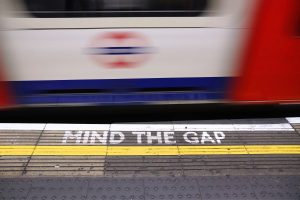
Many of us dream about being able to stop working in our late 50s or early 60s, but there’s often a tricky financial gap to fill between finishing work and accessing your pension.
With the normal minimum pension age rising from 55 to 57 in April 2028, anyone planning an early retirement needs to think carefully about how they will fund this period.
Here, we explain how to work out how long a gap you need to bridge, what sort of income you might need, and the different ways to ensure you don’t fall short financially.
Advertisement
If you’re considering seeking professional financial advice on the options available to you, we’ve partnered with nationwide Chartered independent advice firm Fidelius to offer Rest Less members a free initial consultation with a qualified financial adviser. There’s no obligation, however if the adviser feels you’d benefit from paid financial advice, they’ll talk you through how that works and the charges involved.
Fidelius are rated 4.7 out of 5 from over 2,600 reviews on VouchedFor, the review site for financial advisers.
Working out how long your gap is
Establishing how long a gap there’s likely to be between your desired retirement date and the time at which you can start drawing an income from your pension is vital, as any solution you come up with will depend heavily on the length of this gap.
There are five different questions that you need to ask yourself:
- When do you want to stop working?
- When can you access your workplace/private pension?
- When will you receive your State Pension?
- How much income will you need each year during the gap?
- Do you expect to receive any other income in this period?
For example, if you want to retire at 58, can access your pension at 60 and expect to receive your State Pension at 67, you have a two-year gap before you can take money out of your pension, followed by a further seven years before your State Pension starts. If you need £25,000 a year to live on, you’ll need to think about how you’ll fund roughly £50,000 during those first two years, and then how you’ll supplement your pension income for the following seven.
If you took out a pension directly with a pension provider, or through an independent financial adviser, you can usually access your retirement savings from the age of 55. This is increasing to 57 for most people from 2028, and you can learn more in our guide Will the pension access age rising to 57 affect you?
If you have a personal or workplace pension, you’ll need to check when you can actually start taking money from it. The normal minimum pension age is currently 55 for most people, but this is rising to 57 from 6 April 2028.
This is different from your pension scheme’s normal retirement age, which can vary between schemes and is often 65. In many cases, you can choose to take your pension earlier or later than this, subject to the scheme rules.
There are some exceptions to the normal minimum pension age, including certain people with a protected pension age and some schemes where members have specific early-access rights. It’s therefore worth checking with your pension provider or scheme before making plans.
The age at which you can start claiming your State Pension is 10 years later than the minimum pension age. To help you understand what your State Pension age is likely to be, you can use this when can I retire calculator to tell you when you’ll be eligible to start claiming.
Find out more in our article When can I retire?
Once you know when you want to retire and how long you might have to wait to access your retirement savings and the State Pension, you’ll need to think about how much income you’re going to need in retirement. The best way to do this is usually to sit down with your bank statement and tot up all your essential living costs, such as your mortgage, utility bills, Council Tax and food costs. You should then write a list of all your non-essential expenses, such as takeaways, holidays or regular subscriptions such as streaming services or magazines.
Work out how much you’re likely to need each month, and remember to factor in any current expenses that might stop when you retire, such as commuting costs.
How to bridge the gap
Now that you’ve got a rough idea of how much you’re likely to need each month when you retire, along with the length of gap you need to bridge before you can start taking an income from your pensions, you’ll need to consider where you’ll find this income.
ISAs
If you have savings in an ISA, these could provide a useful source of income to bridge the gap between stopping work and being able to access your pension. Unlike pension withdrawals, money taken from an ISA is not treated as taxable income, so it won’t increase your income tax bill.
The important point is that ISA money is accessible whenever you need it, giving you greater flexibility over when you retire and how you fund the years before you can access your pension.
For example, you might choose to use your ISA savings to cover some or all of your living costs for a few years, allowing your pension to remain invested until you are able to access it. This could also give your pension savings longer to potentially grow.
You don’t necessarily have to choose between an ISA and a pension when saving for retirement. Pensions can offer valuable tax relief on contributions, while ISAs provide greater flexibility because you can access your money at any time without an early withdrawal penalty. The right balance will depend on your circumstances, including when you plan to stop working and when you expect to need your pension savings.
You can find out more about the pros and cons of using ISAs and pension in our guide Is it better to save into an ISA or a pension?
Savings and investments held outside an ISA
If you have cash savings outside of an ISA, this will usually be straightforward to access, but you may need to pay income tax on interest if it takes your total interest above your Personal Savings Allowance. This is currently £1,000 for basic-rate taxpayers and £500 for higher-rate taxpayers, while additional-rate taxpayers do not receive a Personal Savings Allowance.
If you have investments outside an ISA, such as shares or funds, you may also need to consider Capital Gains Tax if you sell them for a profit. You have an annual Capital Gains Tax allowance, known as the annual exempt amount, which is currently £3,000. Any gains above this may be taxable, depending on your circumstances. You can learn more about CGT in our guide What is Capital Gains Tax and how do I pay it?
Using these savings and investments could therefore be another way to generate income before you can access your pension, but it’s important to consider the tax implications before selling investments or moving large amounts of money.
It can also make sense to think carefully about which assets you use first. For example, you may prefer to use cash savings for your immediate spending needs while leaving longer-term investments untouched, although this will depend on your circumstances, how your investments are performing and how much risk you are comfortable taking.
Could you work part-time instead?
Even relatively modest earnings can reduce the amount someone needs to take from their savings, so it may be that you decide to reduce your working hours before stopping work for good.
This may involve reducing your hours with your existing employer, if they will allow this, or perhaps going freelance or taking on consultancy work, or taking on seasonal work. You could then gradually take money out of your pension to supplement your earnings and meet any shortfalls, while carefully managing your tax allowances so you don’t pay more tax than necessary.
You can find out more about going part time in our article Balancing work and freedom: is phased retirement the answer?
Get your free no-obligation pension consultation
If you’re considering getting professional financial advice, Fidelius is offering Rest Less members a free pension consultation. It’s a chance to have a Chartered independent financial adviser give an unbiased assessment of your retirement savings. Fidelius is rated 4.7/5 from over 2,600 reviews on VouchedFor.
Your pension review is free and with no obligation, but if your adviser feels you’d benefit from paid financial advice, they’ll explain how that works and the charges involved. Capital at risk.
What if you want to stop work fully but don't have enough savings?
For some people, there simply won’t be enough savings available to comfortably cover the gap between stopping work and being able to access their pension. If this is the case, it’s worth looking at your options before you leave work, rather than finding yourself under pressure to make your pension savings last longer than expected.
Reducing your planned spending is one option that could help give your savings a boost, so it’s worth going through your budget carefully to identify which costs are essential and which could be reduced or postponed. Even relatively small changes can make a difference if they are maintained over several months or years.
You could also consider whether downsizing your home is appropriate for you. Moving to a smaller or cheaper property could potentially release some of the money tied up in your home, although there are costs involved in moving and it’s important to consider whether the move would suit your longer-term needs. Find out more in our guide Five questions to ask yourself if you’re considering downsizing your home.
Alternatively, you might want to think about whether equity release could work for you. This involves unlocking some of your property wealth. Interest on the money you release will generally build up over time unless you choose to make repayments. The loan, plus any interest owed, is typically repaid when you die or move permanently into long-term care and the property is sold.
Equity release is a significant financial decision, so it’s important to take professional advice before going ahead. There are several potential drawbacks to consider, including the fact that borrowing against your home could reduce the value of the inheritance you’re able to leave to loved ones. Learn more in our article Equity release: 8 questions to ask before taking the leap.
Advertisement
If you’re considering releasing equity from your home, Rest Less members can book a free consultation from Fidelius. Speak with a qualified, FCA-regulated financial adviser you can trust. Rated 4.7/5 on VouchedFor from over 2,600 reviews.
The key point is that if your numbers don’t add up, it’s better to identify the shortfall early. You may then have more options to adjust your plans, rather than being forced into decisions at short notice.
A final thought…
The years between finishing work and reaching pension age can feel somewhat like a financial no-man’s-land, but they don’t necessarily need to derail your retirement plans. If you try to think of your savings, investments, pensions and other income as different pieces of the same puzzle, you should be able to build a bridge between finishing work and your retirement income beginning.
The most important thing is to work out the numbers before you stop work, rather than finding yourself relying on an expensive pension withdrawal strategy once you’ve already left employment.
Advertisement
If you’re considering seeking professional financial advice on the options available to you, we’ve partnered with nationwide Chartered independent advice firm Fidelius to offer Rest Less members a free initial consultation with a qualified financial adviser. There’s no obligation, however if the adviser feels you’d benefit from paid financial advice, they’ll talk you through how that works and the charges involved.
Fidelius are rated 4.7 out of 5 from over 2,600 reviews on VouchedFor, the review site for financial advisers.
Rest Less Money is on Instagram. Check out our account and give us a follow @rest_less_uk_money for all the latest Money News, updated daily.
Melanie Wright is money editor at Rest Less. An award-winning financial journalist, she has written about personal finance for the past 25 years, and specialises in mortgages, savings and pensions. She is a former Deputy Editor of The Daily Telegraph's Your Money section, wrote the Sunday Mirror’s Money section for over a decade, and has been interviewed on BBC Breakfast, Good Morning Britain, ITN News, and Channel Five News. Melanie lives in Kent with her husband, two sons and their dog. She spends most of her spare time driving her children to social engagements or watching them play sport in the rain.
* Links with an * by them are affiliate links which help Rest Less stay free to use as they can result in a payment or benefit to us. You can read more on how we make money here.
Get your free no-obligation pension consultation
If you’re considering getting professional financial advice, Fidelius is offering Rest Less members a free pension consultation. It’s a chance to have a Chartered independent financial adviser give an unbiased assessment of your retirement savings. Fidelius is rated 4.7/5 from over 2,600 reviews on VouchedFor.
Your pension review is free and with no obligation, but if your adviser feels you’d benefit from paid financial advice, they’ll explain how that works and the charges involved. Capital at risk.
Join the discussion
Read our full commenting terms and guidelines