
- Home
- Pensions & Retirement Planning
- Pension News
- What could Andy Burnham as Prime Minister mean for your pension?
How does Rest Less make money
We make money through advertising and commission from affiliate links, which enable us to offer Rest Less as a free service to our users. The content on this page may use affiliate links, which track traffic from our website to a third party provider and enable us to receive a commission or payment from any traffic we refer.
* Affiliate links on this page have an * next to them. We place enormous importance on our editorial independence and the integrity of our content which means that we will never change how we write about something as a result of an affiliate link.
Love him or loathe him, Andy Burnham is set to become our next Prime Minister, having secured the backing of 349 Labour MPs to lead the Labour Party. But what could this mean for your pension and personal finances more broadly?
It’s well known that markets don’t like political or economic uncertainty, so a smooth transition to our next Prime Minister will be really important.
Maike Currie, vice president Personal Finance at PensionBee, said: “Investors will be looking for a clear handover, a credible economic team and an early commitment to fiscal discipline. Markets dislike uncertainty more than they dislike any particular politician.”
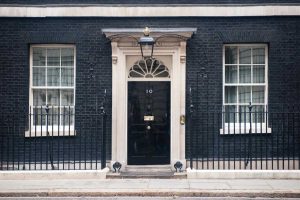
Here, we look at what impact Andy Burnham being appointed Prime Minister could have on your finances. It’s important to remember that this is just speculation at the moment, so we won’t know anything for certain until (and if) he enters Number 10.
It’s also worth noting that while the headlines tend to focus on the most prominent government positions, it is often appointments in less visible roles that have the greatest effect on people’s day-to-day finances. A future government could also appoint a new minister overseeing pensions across both the Department for Work and Pensions and HM Treasury. If confirmed, this would mark the third person to hold the role in only two years.
Advertisement
If you’re considering seeking professional financial advice on the options available to you, we’ve partnered with nationwide Chartered independent advice firm Fidelius to offer Rest Less members a free initial consultation with a qualified financial adviser. There’s no obligation, however if the adviser feels you’d benefit from paid financial advice, they’ll talk you through how that works and the charges involved.
Fidelius are rated 4.7 out of 5 from over 2,600 reviews on VouchedFor, the review site for financial advisers.
Could Andy Burnham help the WASPI campaigners?
Women born in the 1950s who were financially impacted by changes to the State Pension age were told earlier this year that no compensation would be paid to them, after the government reconsidered the case and upheld its earlier decision.
Campaigners say many women were not given enough warning to prepare for a later retirement age, often leaving them struggling to make ends meet. Burnham previously suggested WASPI women should receive some form of recompense, although his team later clarified that he was not advocating full financial compensation. He might, however, explore other ways to support them, possibly providing earlier access to concessionary travel, for example.
Sarah Coles, head of personal finance at AJ Bell, said: “Burnham’s pension views have largely focused on the needs of pensioners on low incomes. He briefly reopened the debate around compensation for women born in the 1950s who were affected by changes to the state pension age, saying there should be some recompense. However, his team clarified that he hadn’t meant full financial compensation. One suggestion is that they might get earlier access to cheaper travel schemes.
Might we see changes to the State Pension?
There’s long been debate about the sustainability of the triple lock, which determines how much the State Pension increases by each year. Under the triple lock, the state pension increases each year by the highest of earnings growth, price inflation or 2.5%. As a result, the State Pension rose by 4.8% in April 2026, in line with earnings growth last year, as this is the highest of the three. The new State Pension, therefore, increased from £230.25 to £241.30 a week whilst the full basic State Pension rose from £176.45 to £184.90 a week. Find out more in our guide What is the pension triple lock?
Many are therefore speculating whether a change in leadership could mean changes to the State Pension, although the signs so far are that Burnham is in favour of keeping the government’s manifesto commitment to maintain the triple lock throughout this parliament.
Steven Cameron, Pensions Director at Aegon, said: “Recent comments from Burnham, reaffirming he, if Prime Minister, would retain support for the triple lock, may provide short-term reassurance to today’s pensioners. But what’s needed from all major political party leaders is a longer-term vision for how the State Pension can remain fair, affordable, and sustainable not for the next three years but for the next 30 years and beyond.
“What’s clear is that public finances are under huge and increasing pressure. There’s no magic pot of money sitting to pay for State Pensions – they’re paid for by today’s workers on a ‘pay as you go’ basis. With an ageing population and fewer workers supporting more pensioners, the current system is already creaking at the seams and without reform, the triple lock will place an unprecedented burden on working-age taxpayers, raising serious questions around intergenerational fairness.”
The OECD has called on the Government to rethink its commitment to the triple lock, warning that the policy is becoming increasingly costly as the population ages. In a new report, it suggested that changing the way annual State Pension increases are calculated could save around £60 billion over the long term. It argues that reform would help improve the sustainability of the public finances, but any changes are likely to prove politically controversial given the importance of the State Pension to millions of retirees.
Get advice on your private pension
If you’re considering getting professional financial advice, Fidelius is offering Rest Less members a free pension consultation. It’s a chance to have a Chartered independent financial adviser give an unbiased assessment of your retirement savings. Fidelius is rated 4.7/5 from over 2,600 reviews on VouchedFor.
Your pension review is free and with no obligation, but if your adviser feels you’d benefit from paid financial advice, they’ll explain how that works and the charges involved. Capital at risk.
What could Andy Burnham as Prime Minister mean for taxes?
Pensions are due to come into the scope of inheritance tax for the first time in April 2027. Under current rules, your pension isn’t usually considered part of your taxable estate on death, although your beneficiaries may have to pay income tax on inherited pension savings if you’re aged 75 or over when you pass away.
This is set to change next year when, under the government’s proposed changes, unused pension funds and death benefits are expected to be included in the value of an estate when inheritance tax is calculated. You can find out more in our guide Inheritance tax and pensions: what’s changing in 2027.
Andy Burnham has previously argued that inheritance tax should be scrapped altogether and replaced with a new charge dedicated to funding health and social care. He has suggested that linking the two could help create a better-integrated system, and during the campaign he signalled that he would be prepared to look at the idea again.
He has also hinted that he might review the income tax personal allowance, which is due to remain frozen at its current level of £12,570 until 2031.
Ms Coles said “He said the inheritance tax changes for farmers should be reconsidered too. He has also suggested business rates for pubs should be cut by 20%, and the threshold lifted for small businesses. While he didn’t commit to reversing the rise in employers’ National Insurance, he said he is sympathetic to the idea.
“Meanwhile, Burnham has also shown enthusiasm for taxing wealth more heavily. He has mentioned land as being undertaxed and has spoken about reforming council tax and stamp duty, which he says is regressive. He has previously suggested reintroducing the 50p rate of tax but declined to say whether that would be on the table if he became Prime Minister”.
What should you do now?
While any changes remain uncertain, those approaching retirement or reviewing their estate plans may want to keep a close eye on future announcements about pension taxation, the State Pension and inheritance tax. Significant policy changes are usually introduced with advance notice, giving people time to assess how they may be affected.
Rob Morgan, Chief Investment Analyst at Charles Stanley Direct, part of Raymond James Wealth Management, said: “Until we know more about the composition of the cabinet and likely policy direction it is hard to draw any firm conclusions from the soundbites heard so far. However, bolder moves on taxation certainly appear to be a possibility, so it’s a time for anyone planning their finances to be on high alert for changes.
“Already the Budget in the autumn looms large as a potentially highly consequential event. Yet given we don’t even know the identity of the Chancellor at this stage we can make no conclusions. Of some comfort is the fact that marked changes to taxation or other policies affecting personal finances rarely happen overnight and usually come with a long lead in time. So while vigilance is essential there is likely plenty of time to assess any consequences, good or bad, that fall out of a change of political leadership.”
Advertisement
If you’re considering seeking professional financial advice on the options available to you, we’ve partnered with nationwide Chartered independent advice firm Fidelius to offer Rest Less members a free initial consultation with a qualified financial adviser. There’s no obligation, however if the adviser feels you’d benefit from paid financial advice, they’ll talk you through how that works and the charges involved.
Fidelius are rated 4.7 out of 5 from over 2,600 reviews on VouchedFor, the review site for financial advisers.
Rest Less Money is on Instagram. Check out our account and give us a follow @rest_less_uk_money for all the latest Money News, updated daily.
Melanie Wright is money editor at Rest Less. An award-winning financial journalist, she has written about personal finance for the past 25 years, and specialises in mortgages, savings and pensions. She is a former Deputy Editor of The Daily Telegraph's Your Money section, wrote the Sunday Mirror’s Money section for over a decade, and has been interviewed on BBC Breakfast, Good Morning Britain, ITN News, and Channel Five News. Melanie lives in Kent with her husband, two sons and their dog. She spends most of her spare time driving her children to social engagements or watching them play sport in the rain.
* Links with an * by them are affiliate links which help Rest Less stay free to use as they can result in a payment or benefit to us. You can read more on how we make money here.
Get your free no-obligation pension consultation
If you’re considering getting professional financial advice, Fidelius is offering Rest Less members a free pension consultation. It’s a chance to have a Chartered independent financial adviser give an unbiased assessment of your retirement savings. Fidelius is rated 4.7/5 from over 2,600 reviews on VouchedFor.
Your pension review is free and with no obligation, but if your adviser feels you’d benefit from paid financial advice, they’ll explain how that works and the charges involved. Capital at risk.
Join the discussion
Read our full commenting terms and guidelines