How does Rest Less make money
We make money through advertising and commission from affiliate links, which enable us to offer Rest Less as a free service to our users. The content on this page may use affiliate links, which track traffic from our website to a third party provider and enable us to receive a commission or payment from any traffic we refer.
* Affiliate links on this page have an * next to them. We place enormous importance on our editorial independence and the integrity of our content which means that we will never change how we write about something as a result of an affiliate link.
If you love history or enjoy connecting with different eras, there’s a good chance that you’d enjoy visiting a stately home. Historic, unique, and often featuring striking decor and architecture, these vast properties tell the tales of their previous owners, visitors, and everything else in between.
Located all over the UK, stately homes can make the perfect destination for a day out or even just a new topic to read up on.
To get you inspired, we’ve put together a list of 14 noteworthy stately homes whose stories are as impressive as their grand architecture.
1. Knole House, Kent
Found within Kent’s last surviving deer park, Knole House is the National Trust’s largest stately home. Knole was initially built as an archbishop’s palace over 600 years ago, before being passed through royalty to the Sackville family in 1603, who still live there today.
Today, Knole is well known for its splendour and impressive 1,000-acre grounds. Visitors can take a virtual tour through Knole’s showrooms, which include one of the rarest collections of Stuart royal furniture, objects, textiles, tapestries, and paintings. Much of the furniture is the last surviving from Hampton Court Palace and Whitehall, and is some of the most expensive objects of its time.
Other highlights include ‘witchmarks’ throughout the property, which were believed to fend off evil spirits, as well as a room that was built to accommodate King James I after the Gunpowder Plot.
Knole’s surrounding park is also the perfect place for a tranquil stroll, and the wild deer that roam there can be enjoyed from a distance.
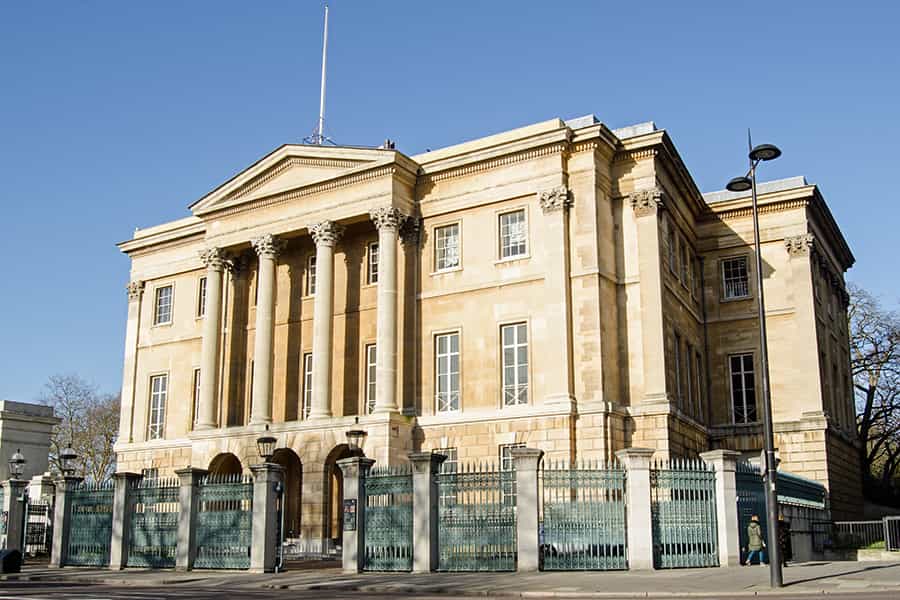
2. Apsley House, London
Hidden amongst the bustling streets of Piccadilly is one of London’s grandest properties: Apsley House. This Georgian building was home to the first Duke of Wellington and remains much the same now as when it was first built in 1815.
Today, Apsley remains the London home of the Dukes of Wellington and is a rare surviving aristocratic home in central London.
Once known as ‘Number 1 London’, Apsley holds an internationally important collection of art, silverware, and porcelain – known as The Wellington Collection. Many of the items were presented to the first Duke of Wellington after the Battle of Waterloo and include works by Velázquez and Rubens.

Discover holidays to treasure
Discover over 1,500 beautiful UK and European holiday homes with Holiday Property Bond. Enjoy wonderful facilities, stunning landscapes, and a lifetime of breaks to treasure.
Your return is in holidays but like most investments your capital is at risk. Initial payment from £5,000 and quarterly fee (under £39) provide access to HPB holiday homes. Initial and ongoing charges. User charges of around £388 for a studio, £597 for a two-bedroom. Surrender possible after two years, you will receive less than you invested. Advertisement by HPB Management Limited, HPB House, Newmarket, CB8 8EH regulated by FCA, FSCS scheme does not apply.
3. Cragside, Northumberland
Located in Morpeth in Northumberland, Cragside is the Victorian mansion known as Britain’s original ‘smart home’. It was created by two remarkable individuals, Lord William and Lady Margaret Armstrong, who together shared a love of engineering and the natural sciences.
Using man-made dams, lakes, and underground piping, the Armstrongs transformed Cragside from a rocky heathland into the first house in the world to be illuminated by hydroelectric power and fueled by hydraulics. Filled with the latest gadgets and inventions, Cragside was designed for modern living and efficiency.
Cragside’s architecture is a bit of a mismatch of mullioned windows, Gothic arches, and Tudor chimney stacks. Inside the property, however, visitors can marvel at one of the UK’s finest surviving Victorian interiors, featuring designs by William Morris, Philip Webb, and Burne-Jones.
4. Chawton House, Hampshire
Chawton House is a Grade II listed Elizabethan manor house, library, and gardens. Chawton’s Library is the research of The Centre for the Study of Early Women’s Writing, 1600-1830, and houses a unique collection of early women’s writing. The house also has strong connections with famous novelist Jane Austen, whose brother Edward once owned the property.
Visitors can enjoy the 400-year-old ‘Great House’ Austen referred to in her letters, relax in the tranquil gardens, and feel inspired by the lives and work of the female writers who worked there. Other features include the exact table that Austen dined at with her family, and the beautiful Walled Garden, built by Edward.
In addition, various exhibitions, garden tours, children’s workshops, evening talks, and conferences are also available to enjoy.
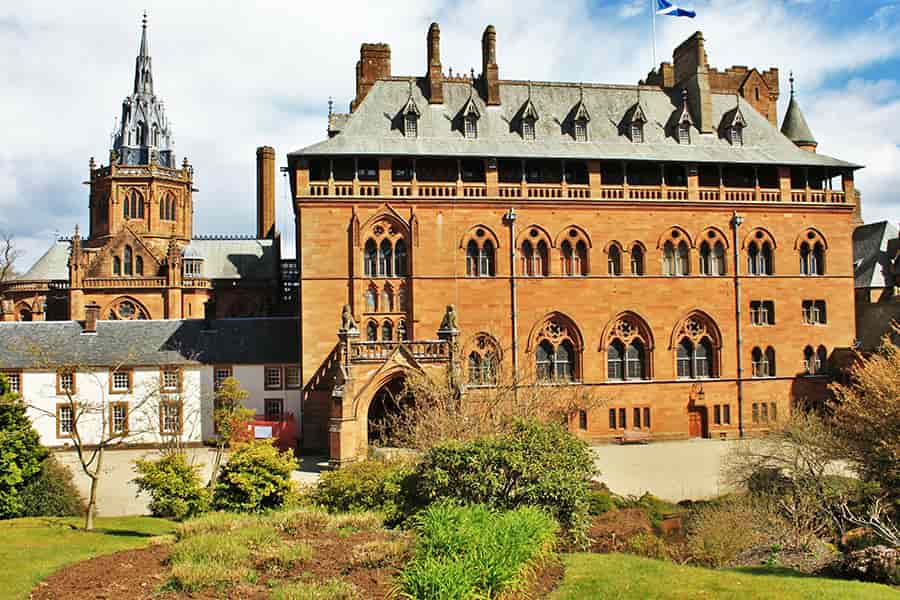
5. Mount Stuart, Isle of Bute
Mount Stuart is a 19th-century country house built in the Gothic Revival style on the East Coast of the Isle of Bute in Scotland. The house was designed in the late 1870s by Sir Robert Rowand Anderson for the 3rd Marquess of Bute, after the original house built in 1719 burnt down in 1877.
Mount Stuart was the first home in Scotland to be lit by electricity. The house is an award-winning attraction, largely due to its magnificent Victorian Gothic architecture and style, and its 300-acre backdrop of beautifully landscaped gardens.
Today, you can explore the house and gardens, uncover the house’s history with seasonal exhibitions, and even join the free parkrun around the grounds.
6. Castle Howard, North Yorkshire
Castle Howard, near York, is a magnificent historic house featuring ornate interiors and landscaped gardens. One of the great palaces in Europe, generations of the famous Howard family have welcomed guests to Castle Howard for over 300 years.
Construction of the property began in 1701 and took over 100 years to complete. Dubbed one of the top 10 buildings everyone must visit in their lifetime by The Telegraph, Castle Howard is nothing short of impressive.
Since the 1960s, it has also become a popular location for various film and television productions. The house itself, magnificent gardens, and wider estate provide the perfect setting for costume dramas, feature films, and documentaries.
From Lady L with Sophia Loren in 1965 and Brideshead Revisited in 1981, to ITV’s Victoria and Netflix’s hit show Bridgerton, Castle Howard has appeared in both large- and small-scale productions.
7. Clifton House, Belfast
Clifton House is an 18th-century building in Belfast. It was originally built as a poorhouse that opened in 1774 by the Belfast Charitable Society, Belfast’s oldest charitable organisation. For years, Clifton provided sanctuary to thousands of people from near and far.
The house has an extensive archive dating back to the 1600s that tells the story of the development of Belfast, and a vast collection of antiques and artefacts – some of which originate from 1774 when the Poor House first opened.
Today, Clifton House is a heritage centre and residential care home. It contains sheltered accommodation apartments, too. Tours of the house are open to the public, which, with the introduction of augmented reality, transport visitors back to what 18th-century daily life would have been like there.
There are also walking tours which follow in the footsteps of famous social activist, philanthropist, and abolitionist Mary Ann McCracken. McCracken has close family links to the Belfast Charitable Society and, among many other achievements, fought for the rights of women and the poor of Belfast.
8. Plas Newydd House and Gardens, North Wales
Set on the breathtaking backdrop of Snowdonia, Plas Newydd country house and gardens look like something out of a fairytale.
The house was built in 1470 and evolved over the centuries to become the Welsh residence of the Marquesses of Anglesey. The 1st Marquess of Anglesey, Henry William Paget, was born in 1768 and was most famous for leading the cavalry in the Battle of Waterloo in 1815, where he lost a leg. It was for his bravery that he was awarded the Marquess title.
In 1949, the training ship HMS Conway was moored near Plas Newydd. After the ship was wrecked in 1953, Plas Newydd became a home and school to hundreds of Conway cadets who were learning about life at sea until 1963.
Other points of interest include Rex Whistler’s largest painting, and an on-site military museum which contains war relics from Waterloo belonging to the 1st Marquess of Anglesey.
9. Greenway House, Devon
Greenway House was the holiday home of the famous author Agatha Christie and her family. Christie described Greenway as ‘the loveliest place in the world’. It was the place where she spent quality time with her family – reading, singing, and gardening – outside of the public eye.
The house is surrounded by landscaped gardens and overlooks the River Dart. Visitors can wander the place that inspired Christie’s famous works, such as Dead Man’s Folly, Towards Zero, and The ABC Murders, and get an insight into what her life was like.
These days, visitors can explore Greenway – including the kitchens, library, and drawing rooms. The house is home to a collection of art and artefacts that were owned by Christie. Many of these were collected during her trips to Egypt, Syria, and Iraq, which were fuelled by her love for archaeology.
The site also features a second-hand bookshop that sells many of the author’s classic novels and other books for all ages. Plus, surrounded by woodland gardens that meet with the banks of the River Dart, Greenway is also a great place to enjoy some fresh air and peace and quiet.

Discover holidays to treasure
Discover over 1,500 beautiful UK and European holiday homes with Holiday Property Bond. Enjoy wonderful facilities, stunning landscapes, and a lifetime of breaks to treasure.
Your return is in holidays but like most investments your capital is at risk. Initial payment from £5,000 and quarterly fee (under £39) provide access to HPB holiday homes. Initial and ongoing charges. User charges of around £388 for a studio, £597 for a two-bedroom. Surrender possible after two years, you will receive less than you invested. Advertisement by HPB Management Limited, HPB House, Newmarket, CB8 8EH regulated by FCA, FSCS scheme does not apply.
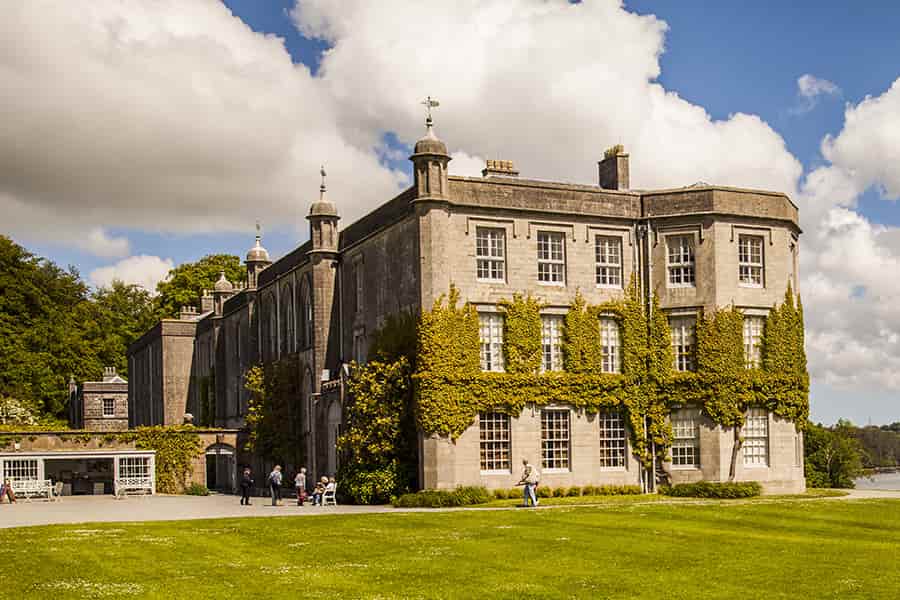
10. Polesden Lacey, Surrey
Polesden Lacey is an Edwardian house and estate near Dorking in Surrey. The Regency house was extended from an earlier building and remodelled in 1906 by Margaret Greville, a well-known Edwardian hostess.
Greville’s collection of fine paintings, furniture, silverware, and porcelain is displayed in the galleries and reception rooms – just as it was during her famous house parties.
Polesden Lacey was also the site where the future King George VI and Queen Elizabeth enjoyed part of their honeymoon in 1923. And today, Polesden Lacey is one of the National Trust’s most popular sites.
Inside the house, visitors can explore areas including picture corridors, the gun room, and the tea room. The estate itself, which is home to a wide variety of birds, butterflies, and beautiful viewpoints, is also the perfect place for a peaceful walk.
11. Traquair House, Scotland
Traquair House is Scotland’s oldest inhabited house. Visited by a total of 27 Scottish kings and queens, Traquir dates back to 1107 and has been lived in by the Stuart family since 1491. Originally a hunting lodge, the house has hosted various famous figures, including Mary Queen of Scots.
Today, visitors can learn more about the fascinating history of this long-inhabited family home. There’s also a maze, vast grounds, craft workshops, and a garden cafe to enjoy, as well as a varied programme of events and exhibitions for all ages throughout the year. Plus, the world-famous Traquair House Brewery is found in one of the wings of the house, and visitors can sample the ales in the on-site brewery shop and museum.
If you’d like to get a real taste of life at Traquair House, why not stay in one of the luxurious, antique-furnished rooms and live like royalty for the night?
12. Lacock Abbey, Wiltshire
Lacock Abbey is a country house with strong monastic roots. It was founded in the early 13th century by Ela, Countess of Salisbury, as a nunnery for the Augustinian order of monks. It remained a nunnery until the 16th century, when it was suppressed during Henry VIII’s Dissolution of the Monasteries.
Once home to William Henry Fox Talbot (the inventor of the photographic negative), Lacock is considered Britain’s birthplace of photography. Today, an on-site museum celebrates Fox Talbot’s life and explores the history of photography through a collection of photographic developments up to the present day. The Fenton Collection (a historic photographic collection), transferred to the museum from the British Film Institute in 2017, is also worth seeing.
Lacock Abbey has also been the site of various film and television series, including some of the Harry Potter films, The Other Boleyn Girl (2008), Jane Austen’s Pride and Prejudice (1995 BBC production), and Wolf Hall (2014).
13. Kenwood House, London
On the edge of Hampstead Heath, surrounded by tranquil gardens, Kenwood House is one of London’s hidden treasures. Kenwood is a great example of neoclassical architecture, designed by the mastermind Scottish architect Robert Adam.
Adam extended Kenwood and designed a number of the rooms – a prime example of his work being the Great Library, which was restored to its original colour scheme in 2013.
Kenwood is also home to a world-class art collection, featuring works from Vermeer, Gainsborough, and Reynolds, as well as Rembrandt’s famous ‘Portrait with Two Circles’.
Other features include a secondhand bookshop, family trails, and hands-on displays which tell the stories of those who lived at Kenwood. Plus, surrounded by 112 acres of tranquil gardens and parkland, Kenwood House is also a great place to stretch your legs and enjoy some peace and quiet.
14. Hardwick Hall, Derbyshire
Built between 1590 and 1597, Hardwick Hall is described as an Elizabethan masterpiece. It was the birthplace of Bess of Hardwick, an intimate friend of Queen Elizabeth I.
Married four times – each time to a wealthier, more influential man – Bess defied the social constructs of her time and became one of the richest and most remarkable women in Elizabethan England. Visitors can learn more about her extraordinary life through her houses at Hardwick.
Highlights of Hardwick include the Old Hall ruins, where you can enjoy a close-up view of some Elizabethan plaster friezes, which would have previously been painted in beautiful colours. There are also various on-site exhibitions, exploring the life of Bess of Hardwick, as well as popular architecture and building methods of the Elizabethan age.
Final thoughts…
Stately homes form a special part of the UK’s makeup. In amongst our modern skyscrapers and tower blocks, these snippets from the past provide the perfect testimony for our nation’s rich history and culture.
As the homes of various prominent figures throughout time, stately homes allow us to connect with our ancestors on a more personal level and grasp a better understanding of how they lived.
Plus, often grand and beautiful in structure and design, stately homes are a treat for architectural and arty buffs too. From esteemed holiday homes and royal residences, to distinguished film-sets and smart homes, there’s something for everyone when it comes to stately homes.
For more ideas for UK days out, check out our recent video on some of London’s hidden gems from Blue Badge Guide Andrew Warde.
What are the best stately homes that you’ve visited? Are you planning on visiting anytime soon? We’d love to hear from you in the comments below.
Francesca Williams is a senior lifestyle writer at Rest Less. She joined Rest Less in early 2021 after achieving a first-class degree in History at the University of Sheffield and qualifying as an NCTJ Gold Standard Journalist. Francesca is a qualified Level 3 Personal Trainer and writes across a range of lifestyle topics, specialising in health. In her spare time, Francesca likes to keep herself busy going to the gym, dancing, spending time with friends and family, and getting involved with her local church.
* Links with an * by them are affiliate links which help Rest Less stay free to use as they can result in a payment or benefit to us. You can read more on how we make money here.
See the best holiday deals today
Whether you’re looking for a last-minute getaway, city break, cultural tour, or the trip of a lifetime – search over 20,000 exciting deals from over 20 leading providers, with options to suit all budgets and tastes!
Join the discussion
Read our full commenting terms and guidelines