
How does Rest Less make money
We make money through advertising and commission from affiliate links, which enable us to offer Rest Less as a free service to our users. The content on this page may use affiliate links, which track traffic from our website to a third party provider and enable us to receive a commission or payment from any traffic we refer.
* Affiliate links on this page have an * next to them. We place enormous importance on our editorial independence and the integrity of our content which means that we will never change how we write about something as a result of an affiliate link.
On 12th October 2025, the EU’s new Entry/Exit System (EES) will come into effect. This new digital border system will change the requirements for UK nationals travelling to countries in the EU’s Schengen area.
By modernising border control processes, the EES is intended to make travel simpler and safer. But what will it look like in practice?
Here, we’ll cover everything you need to know about the EU’s new Entry/Exit System.
What is the EU’s new Entry/Exit System?
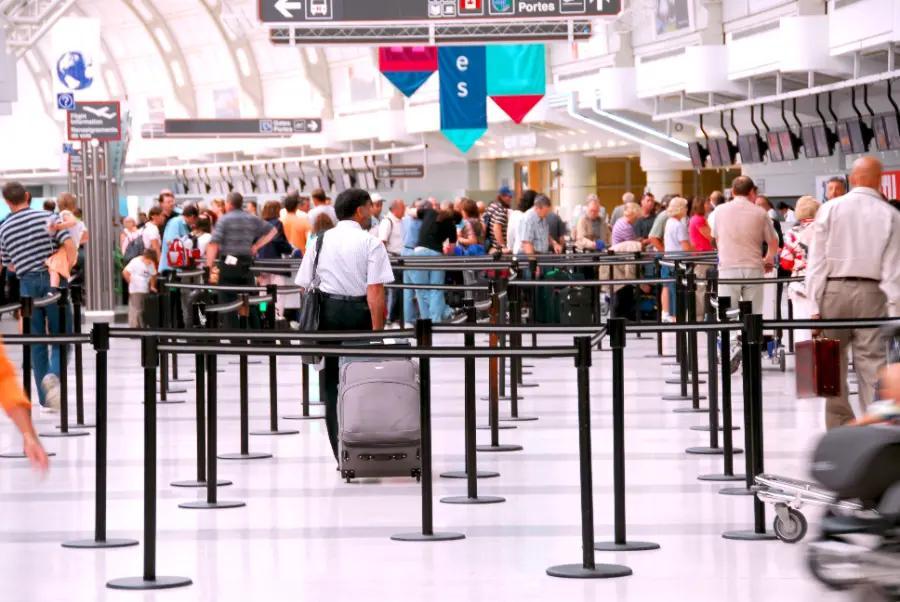
The EU’s Entry/Exit System (EES) is a new digital border system designed to register non-EU nationals travelling to EU countries for a short stay. The system will be used every time someone crosses the external borders of a European country in the Schengen area.
There are 29 countries in the Schengen area, including Austria, Belgium, the Czech Republic, Estonia, France, Hungary, Luxembourg, and Spain. You can find a full list on the UK Government website.
Cyprus and the Republic of Ireland aren’t within the Schengen area, so EES doesn’t apply when travelling to these countries.
For the purposes of the EES, ‘non-EU national’ means any traveller who isn’t an EU national or who holds the nationality of Iceland, Norway, Liechtenstein, or Switzerland.
What will the EES look like in practice?
If you’re travelling to a country in the Schengen area, you don’t need to take any action beforehand. There’s also no cost for EES registration.
However, when flying, you’ll need to complete checks upon arrival at your destination. This includes having your photograph and fingerprint taken.
If you enter the Schengen area through the Port of Dover, Eurotunnel at Folkestone, or St Pancras International, EES checks will be carried out at the border before you leave the UK. You may also need to have your photograph and fingerprints taken when you leave the Schengen area.
For those who travel to the Schengen area frequently for work or leisure purposes, total stays mustn’t exceed 90 days within every 180-day period. Staying longer will result in a penalty.
Once the new EES is fully implemented, EES registration will replace the current system of manually stamping passports when visitors arrive in the EU. The UK Government urges passengers to be prepared to wait longer than usual during this time of transition because it may take each person an extra few minutes to complete the EES.

Make border checks more efficient
The EES will gradually replace passport stamps with an automated digital system that records when travellers enter and exit. This will speed up border checks and help staff work more efficiently.
Simplify and speed up border crossings
Thanks to faster checks, self-service options, and the possibility of providing information in advance, travellers can spend less time at borders as a result of EES.
Prevent irregular migration
Using fingerprint and face data to track who enters and exits the Schengen area, the EES will help prevent people from overstaying, using fake identities, or misusing visa-free travel.
Improve security
The EES will give border officers and law enforcement authorities access to important traveller information, giving them a better chance at spotting security risks and reducing the risk of terrorism and other serious crimes.
The EES is part of a wider project being carried out by the EU to strengthen border security. In 2026, the EU is expected to begin operations on the new European Travel Information and Authorisation System (ETIAS).
When ETIAS is introduced, passengers with a UK passport will need to apply for authorisation to enter Schengen area countries. This will include providing personal information, details about your trip, and paying a €20 fee.
The EU will announce the specific date for the ETIAS before its launch, and no action is required from travellers at this point. You can find out more about ETIAS on the EU website.
What if I’m travelling to the EU on a cruise ship?
Cruises that start and finish their journey outside of the Schengen area (for example, at a UK port) will generally be exempt from EES checks. This includes any day trips into the area as part of cruise itineraries.
However, passengers who disembark a cruise within the Schengen area and travel on to a different destination, including an alternative port, by other modes of transport, will need to complete EES checks when leaving the ship.
Similarly, any passengers boarding a cruise within the Schengen area will need to complete EES checks at their initial entry port.
Are there any exemptions to the EES?
According to the UK Government website, some UK nationals are exempt from EES. This includes holders of long-stay visas and non-EU nationals travelling to Europe for research, studies, or voluntary service. You can find a full list of exemptions on the EU’s official Travel Europe website.
Being exempt means you don’t need to register for EES. Instead, when you arrive at the border, you’ll need to show your exemption documentation to a border officer.
If, for any reason, an EES record is created for someone exempt, it’ll need to be deleted. This can normally be done at the border by a border guard, or by relevant authorities within the Schengen area. In some cases, EES records may be automatically deleted – for example, if someone has a residence permit after entering the Schengen area.
For further reading, head over to our travel section.
Do you have any thoughts about the EU’s new Entry/Exit System that you’d like to share? We’d be interested to hear from you in the comments below.
Francesca Williams is a senior lifestyle writer at Rest Less. She joined Rest Less in early 2021 after achieving a first-class degree in History at the University of Sheffield and qualifying as an NCTJ Gold Standard Journalist. Francesca is a qualified Level 3 Personal Trainer and writes across a range of lifestyle topics, specialising in health. In her spare time, Francesca likes to keep herself busy going to the gym, dancing, spending time with friends and family, and getting involved with her local church.
* Links with an * by them are affiliate links which help Rest Less stay free to use as they can result in a payment or benefit to us. You can read more on how we make money here.
See the best holiday deals today
Whether you’re looking for a last-minute getaway, city break, cultural tour, or the trip of a lifetime – search over 20,000 exciting deals from over 20 leading providers, with options to suit all budgets and tastes!
Join the discussion
Read our full commenting terms and guidelines