
- Home
- Health
- Healthy Body
- 7 myths about hearing loss
Sponsored content
According to statistics, over 18 million adults in the UK are deaf, have hearing loss, or experience tinnitus. But, despite being one of the most common health concerns, hearing loss remains one of the most misunderstood.
Myths about symptoms, who’s affected, and hearing aids can lead many people to delay treatment and suffer in silence. However, we know from research that early diagnosis of hearing loss is key not only for preserving hearing, but for protecting overall health, too.
With this in mind, we’ve partnered with The Hearing Care Partnership to debunk seven myths about hearing loss and help you make informed decisions about your hearing health. The Hearing Care Partnership aims to help people better understand how hearing loss can be identified, treated, and, better still, prevented.
Their professional team of audiologists offers free hearing assessments and tinnitus support in over 300 locations across the UK, including free aftercare if you need to invest in a hearing device.

1. Myth one – it’s easy to tell if you have hearing loss
It’s usually pretty obvious when someone else has hearing loss. However, things aren’t always so straightforward when it comes to noticing our own hearing issues. In fact, research shows that people with hearing loss wait an average of 7-10 years before actively seeking help.
One reason for this is that hearing loss often develops gradually, meaning symptoms can be subtle. For example, you might ask people to repeat themselves, struggle in group conversations, and have the TV louder than others around you.
The key is knowing what to look out for, and The Hearing Care Partnership explains that side effects of hearing loss are often easier to identify than hearing loss itself. These include…
- Fatigue – your brain subconsciously works harder to understand what people are saying, which can leave you feeling fatigued. You may notice that lower energy levels are making it harder to do all your normal activities.
- Cognitive decline – research has linked untreated hearing loss with faster cognitive decline. Early signs of cognitive decline can include memory lapses, trouble problem-solving, and struggling to find the right words.
- Social isolation – it’s not uncommon for people with hearing loss to avoid social events due to difficulties hearing and interacting with others.

Hear life in full colour. Book a FREE hearing test!
The Hearing Care Partnership offer FREE full hearing tests to help you stay connected to everyday moments.
With 400+ clinics across the UK, personalised care, discreet hearing aids, support for tinnitus and gentle ear wax removal, book your free test today.

2. Myth two – you won’t be able to hear most sounds if you have hearing loss
You might expect hearing loss to impact your ability to hear all sounds. However, it doesn’t necessarily mean you’ll go completely deaf, and most people don’t notice hearing issues in all situations. Rather, you may experience a reduced ability to hear certain sounds, often those at higher pitches.
According to The Hearing Care Partnership, high-frequency hearing is often lost first. This typically affects your ability to detect soft sounds, including speech, particularly when there’s a lot of background noise.
This typically manifests as a loss of clarity, rather than volume. For example, you may be able to hear doors slamming in the distance but have trouble hearing in conversations.
3. Myth three – hearing aids make your ears lazy
Many people assume that hearing aids make your ears lazy and prevent them from improving or functioning well without assistance. However, hearing aids actually support your brain, and research shows the earlier they’re fitted, the more likely your hearing is to be preserved.
Untreated hearing loss can lead to auditory deprivation, which is when the brain loses its ability to interpret sounds due to a lack of stimulation over time.
Hearing aids provide regular stimulation of the auditory cortex, helping to preserve hearing and the brain’s processing ability and prevent or reverse auditory deprivation. To learn more, you might like to read our article: 5 myths about hearing aids debunked.
If you’d like some advice on hearing aids, including whether they’re right for you, it’s worth booking a hearing assessment. The Hearing Care Partnership offers free hearing assessments and tinnitus support in over 300 locations across the UK, including free aftercare if you need to invest in a hearing device.
4. Myth four – it’s better to leave wearing hearing aids until your hearing is worse
Some people believe that hearing aids are only for people with severe hearing loss. But this is another myth – and a potentially harmful one. You might think that the only drawback of delaying hearing loss treatment is struggling to hear properly at that time. But getting treated as early as possible is key to helping prevent further hearing damage and protecting long-term health.
As well as increasing the risk of auditory deprivation, research has linked untreated hearing loss with several other conditions and health concerns. Examples include musical ear syndrome, a condition that causes you to hear sounds that aren’t there as the brain attempts to ‘fill in the gaps’ caused by hearing loss.
Similarly, studies have linked hearing loss with a greater risk of isolation and loneliness, because many people begin to avoid social situations when interacting with others becomes more difficult. Aside from its impact on quality of life, social isolation is also linked with an increased risk of various health conditions, including stroke, heart disease, anxiety, depression, and general cognitive decline.
Lastly, when it comes to quality of life, experts say that hearing aids can make a difference even for people with mild hearing loss. In this British and Irish Hearing Instrument Manufacturers study, for example, 95% of UK respondents reported that their social lives, confidence, sense of independence, and personal and professional relationships had improved since wearing a hearing aid.
Some people are put off getting hearing aids due to their association with older adults. However, it’s important to remember that hearing loss doesn’t discriminate. Some people have worn hearing aids since they were babies.
5. Myth five – hearing loss only affects much older adults
Contrary to popular belief, hearing loss isn’t an issue that only affects adults of a certain age. While it’s true that hearing loss can become more prevalent and severe in later life, people of any age can be affected.
Research suggests that hearing can become less sensitive to high-frequency sounds as early as our 20s – a phenomenon known as presbycusis. In fact, studies have revealed a concerning rise in the number of young people experiencing hearing loss. Factors like frequent exposure to loud noise, including the use of headphones at high volumes, are thought to play a role.
As a result, experts believe that many younger people may have hearing loss without realising it. Genetics, certain medicines, and health conditions can also contribute to hearing loss at any age.
According to the RNID, hearing loss affects over half of people aged 55 or older in the UK, rising to over 80% of over-70s.

Hear life in full colour. Book a FREE hearing test!
The Hearing Care Partnership offer FREE full hearing tests to help you stay connected to everyday moments.
With 400+ clinics across the UK, personalised care, discreet hearing aids, support for tinnitus and gentle ear wax removal, book your free test today.
6. Myth six – there’s nothing you can do to improve tinnitus
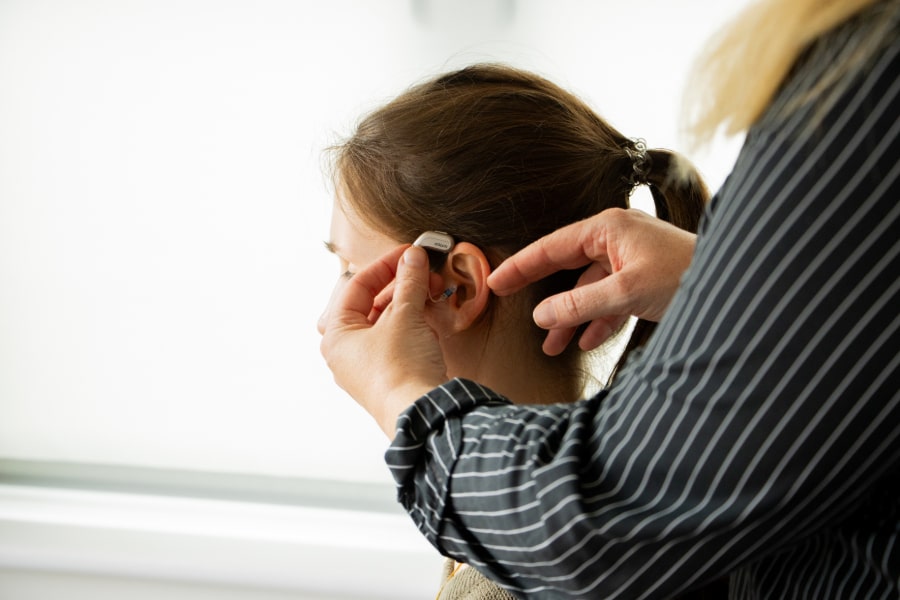
Tinnitus is a common condition that often causes – but isn’t limited to – a ringing sensation in the ears. According to statistics, tinnitus affects around one in eight people in the UK. It can be frustrating and upsetting to deal with and, in severe cases, significantly impact quality of life.
A common misconception is that tinnitus can’t be treated. However, while the condition can be caused by factors like earwax buildup and inner ear damage, research suggests that around 90% of cases are the result of hearing loss. For this reason, experts say that treating hearing loss can help improve tinnitus symptoms.
In fact, many people report becoming unaware of tinnitus symptoms when wearing hearing aids. Some hearing aids even have a ‘tinnitus relief’ setting, which creates soothing background noise to help ease symptoms.
The Hearing Care Partnership offers free tinnitus consultations at over 300 UK locations, with no obligation to pay for further care.
7. Myth seven – hearing assessments are only for people who have hearing concerns
Many people put off having a hearing assessment until they notice issues with their hearing. However, just like other health checks, it’s important to have regular hearing assessments, whether or not you have hearing loss.
As with other health concerns, the earlier hearing loss is detected, the more likely treatment is to be successful. Hearing assessments are particularly key because hearing loss can easily go undetected.
Generally speaking, The Hearing Care Partnership recommends that adults over 55 have a hearing assessment at least every two years, even if they feel they can hear fine. However, if you suspect you have hearing loss, no matter how mild, it’s best to intervene as early as possible, starting with a hearing test. If hearing loss is detected, assessments will be more frequent.
The Hearing Care Partnership offers free hearing assessments tailored to your needs.
Final thoughts…
Despite being one of the most common health concerns for UK adults, there are various myths around hearing loss and the condition remains largely misunderstood.
If you’re struggling with hearing loss, it’s important to remember that you’re not alone, and help is available. For many people, simply reaching out, connecting with others, seeking treatment, and debunking hearing loss myths can make all the difference.
Even if you’re unsure whether you have hearing loss and haven’t considered getting tested, having regular checks – like you might with your eyesight – is important for preventing further hearing loss and protecting long-term health.
The Hearing Care Partnership offers free hearing assessments and tinnitus consultations at over 300 locations across the UK, plus free hearing care advice and aftercare if you need to invest in a hearing device.
For further reading, head over to our general health section.
Francesca Williams is a senior lifestyle writer at Rest Less. She joined Rest Less in early 2021 after achieving a first-class degree in History at the University of Sheffield and qualifying as an NCTJ Gold Standard Journalist. Francesca is a qualified Level 3 Personal Trainer and writes across a range of lifestyle topics, specialising in health. In her spare time, Francesca likes to keep herself busy going to the gym, dancing, spending time with friends and family, and getting involved with her local church.
* Links with an * by them are affiliate links which help Rest Less stay free to use as they can result in a payment or benefit to us. You can read more on how we make money here.