- Home
- Health
- Healthy Body
- 10 signs it’s time to upgrade your lenses
Sponsored content
According to Boots Opticians, most adults over 50 need glasses of some description, even if only for reading. They can be used to correct conditions like myopia, hyperopia, and astigmatism by adjusting how light enters the eye. However, because eyesight changes naturally with age, it’s important to keep lenses up-to-date.
Among other things, outdated or damaged lenses can cause symptoms, such as eye strain, headaches, and other vision issues. So, being able to recognise the signs that your lenses need an upgrade can be helpful.
To shed some light on this, we’ve partnered with Boots Opticians to explore 10 signs it’s time for new specs.
Boots Opticians offer lenses suitable for a range of different needs, from single vision lenses to light-reactive and multifocal lenses. Their essential eye test, which includes a dry eye evaluation, will assess your eye health, vision, and prescription needs.

Why is it important to have correct lenses?
Lenses work by bending light rays before they enter the eye to focus them directly onto the retina, rather than in front of or behind it. They can be used to treat vision issues like myopia (short-sightedness), hyperopia (long-sightedness), and astigmatism, but only if they’re fitted properly and tailored to your specific needs.
Outdated or prescriptions that no longer meet your visual needs can negatively affect vision and daily life, and cause uncomfortable symptoms. For example, tasks like reading, computer work, and driving at night can become more difficult.
The best and most effective way to check whether your lenses match your vision needs, and to assess your overall eye health, is to have regular eye tests. Eye tests can also help detect sight-threatening conditions like glaucoma, cataracts, diabetes, and age-related macular degeneration early and reduce the risk of vision loss. For this reason, experts recommend that adults have eye tests at least every two years (or as advised by your optometrist), even if your vision feels fine.
Boots Opticians’ essential eye test includes a dry eye evaluation and can be used to assess your eye health, vision, and prescription needs.

Free NHS eye tests plus 10% off glasses for over 60s
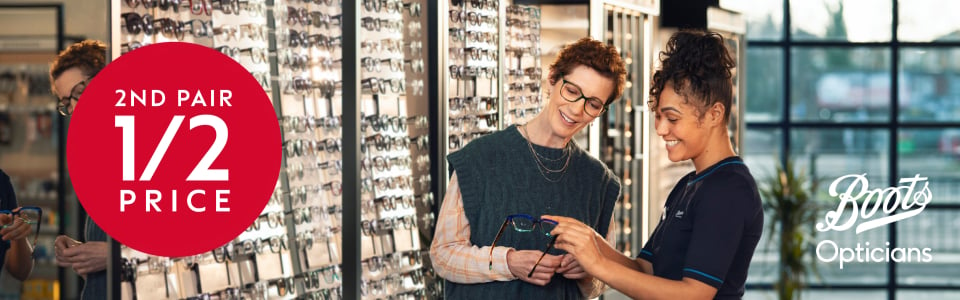
Booking an appointment online has never been easier, and with a range of offers from 10% off if you’re over 60**, 2nd pairs half price^ & a free NHS eye test if eligible, our expert optometrists are here to help you on your journey to clearer vision.
10 signs it’s time to upgrade your lenses
Alongside having regular eye tests, knowing the signs that your lenses need upgrading is important. We’ll cover some of these below.
Note: If you’re experiencing any of these symptoms, it’s important to book an eye test. Vision changes or discomfort can also signal an underlying condition.
1. Blurred vision
One of the most common signs that your lenses may need upgrading is if you have blurred vision, especially if this is an issue your glasses used to correct.
You may have trouble seeing objects in the distance, perhaps when driving or reading distant signs (short-sightedness), or up close, such as when reading a book or looking at a mobile screen (long-sightedness). Blurred vision can also be a sign of astigmatism, which is when your eyes are oval-shaped instead of round. Astigmatism can distort or blur vision at any distance.
Another prescription-related cause of blurred vision is presbyopia, also known as age-related longsightedness, because it develops naturally as we age. For example, around age 40, it’s common for people to begin to struggle to read things close up, like a restaurant menu or text message.
2. Squinting
If you find yourself frequently squinting to see more clearly, it may be a sign that your prescription needs updating.
Squinting is a natural response when our vision isn’t as clear or focused as it should be. And while glasses are designed to prevent squinting by helping you see more clearly, a wrong or out-of-date prescription can actually make the problem worse because eyes are forced to work harder to compensate for blurred vision.
That said, if you only squint when you’re outside in the sun, a good pair of prescription sunglasses might be what you need. All Boots Opticians sunglasses offer 100% UVA and UVB protection to help keep your eyes safe.
Note: Symptoms like squinting might seem minor, but it’s still important to book an eye test.
3. Tired, sore, or achy eyes
Sometimes when we’re tired, our eyes can feel heavy. However, if your eyes frequently feel tired, sore, or achy, it might be a sign of eye strain. Eye strain occurs when the eye muscles are overworked, for example, when reading, driving, using digital screens, or in poor lighting.
Eye strain is usually temporary and often disappears once you stop the activity causing it. If you’re experiencing frequent or prolonged eye strain, it may be a sign that your eyes are working harder than usual to compensate for poor vision. In many cases, upgrading your lenses is all it takes to relieve strained, overworked eyes.
If you’re struggling with digital eye strain specifically, caused by prolonged use of digital devices like phones or computers, your optometrist may suggest specific lenses or coatings to help.
4. Frequent headaches
Frequent headaches can be another sign that your lenses need updating.
Again, symptoms may be particularly noticeable if you spend a lot of time staring at digital screens or driving long distances. In some cases, issues with the frames themselves can also cause headaches. For example, if they’re too tight and cause tension on the sides of the head.
Note: New or regular headaches could indicate an underlying health condition, so it’s best to book an appointment with your GP or optometrist.

Free NHS eye tests plus 10% off glasses for over 60s
Booking an appointment online has never been easier, and with a range of offers from 10% off if you’re over 60**, 2nd pairs half price^ & a free NHS eye test if eligible, our expert optometrists are here to help you on your journey to clearer vision.
5. Double vision
Double vision, also known as diplopia, is when people see two images of one object at one time. It might look like the images are side by side, one above the other, or a mixture of the two.
Double vision can be caused by several different conditions, some of which can be serious, so it’s important to book an eye test and get your prescription checked. Treatment for double vision depends on its underlying cause, and can range from simple eye exercises to prism lenses or minor surgery.
6. Light sensitivity
It’s natural to squint a bit while you’re out in the sun. However, indoor light sensitivity may signal a more serious issue, particularly if it’s accompanied by pain – so it’s important to see an optometrist as soon as possible.
Light sensitivity, also known as photophobia, can sometimes be a sign of presbyopia. As we age, it may take our eyes longer to transition from dark to light environments, and vice versa. To help with this, your optometrist may recommend light-responsive lenses alongside a new prescription.
7. Poor night vision
Reduced night vision is another common symptom of presbyopia and often develops later in life. For example, many people report seeing an increase in glare around lights, particularly when driving at night.
To help, your optometrist may prescribe new lenses with an anti-reflective coating.
8. Lenses are visibly damaged, scratched, or discoloured
Replacing damaged lenses, whether they’re scratched, cracked, discoloured, or have peeling coatings, is important for maintaining clear vision, comfort, and protecting eye health. For example, it’s common for lenses to become discoloured over time due to factors like sunlight, heat, or chemicals, which may show up as a yellowish or brown tint.
Damaged lenses force your eyes to work harder by distorting light, leading to symptoms like eye fatigue, frequent headaches, and poor vision. Scratches can also make it more difficult to clean lenses, potentially resulting in further damage. Similarly, warped or bent frames can impact the fit and alignment of your lenses, and result in discomfort or distorted vision.
9. Your glasses no longer reflect your style or suit your features
While issues like headaches and blurred vision are important health signals and may mean your lenses need upgrading, it’s also important to have glasses that make you feel happy and confident.
With this in mind, you might also consider upgrading your lenses if they no longer suit your features or reflect your style. Several factors can influence which glasses suit you, from face shape to skin tone and personality, and it can be fun discovering the right frames for you.
Check out our article, How to choose glasses to suit your face, for inspiration.
10. You haven’t had your eyes tested recently
If you haven’t had your eyes tested within the past one to two years, your prescription may have changed and your lenses may need upgrading.

Free NHS eye tests plus 10% off glasses for over 60s
Booking an appointment online has never been easier, and with a range of offers from 10% off if you’re over 60**, 2nd pairs half price^ & a free NHS eye test if eligible, our expert optometrists are here to help you on your journey to clearer vision.
Final thoughts…
Whether you wear glasses daily or only for tasks like reading or driving, having the right lenses is important for maintaining clear vision and protecting long-term eye health. So, frequently assessing your specs is important.
Boots Opticians offer lenses suitable for a range of needs, from single vision to light-reactive and multifocal. Their essential eye test, which includes a dry eye evaluation, will assess your eye health, vision, and prescription needs.
Francesca Williams is a senior lifestyle writer at Rest Less. She joined Rest Less in early 2021 after achieving a first-class degree in History at the University of Sheffield and qualifying as an NCTJ Gold Standard Journalist. Francesca is a qualified Level 3 Personal Trainer and writes across a range of lifestyle topics, specialising in health. In her spare time, Francesca likes to keep herself busy going to the gym, dancing, spending time with friends and family, and getting involved with her local church.
* Links with an * by them are affiliate links which help Rest Less stay free to use as they can result in a payment or benefit to us. You can read more on how we make money here.