
- Home
- Health
- Healthy Body
- Swollen feet in summer – experts reveal 5 ways to prevent heat oedema
How does Rest Less make money
We make money through advertising and commission from affiliate links, which enable us to offer Rest Less as a free service to our users. The content on this page may use affiliate links, which track traffic from our website to a third party provider and enable us to receive a commission or payment from any traffic we refer.
* Affiliate links on this page have an * next to them. We place enormous importance on our editorial independence and the integrity of our content which means that we will never change how we write about something as a result of an affiliate link.
With temperatures continuing to soar in the UK, searches for ‘swollen feet in the heat’ have jumped by 200% over the past month, alongside a 350% spike in ‘remedies for swollen feet’.
Swollen feet, ankles, and legs, also known as ‘heat oedema’, can be caused or exacerbated by high temperatures. So, if you’ve been struggling with swollen feet in the heat, you’re not alone.
Keen to help reduce foot discomfort, footwear experts at Wards Shoes reveal five proven ways to help prevent heat oedema.
What causes feet to swell in summer?
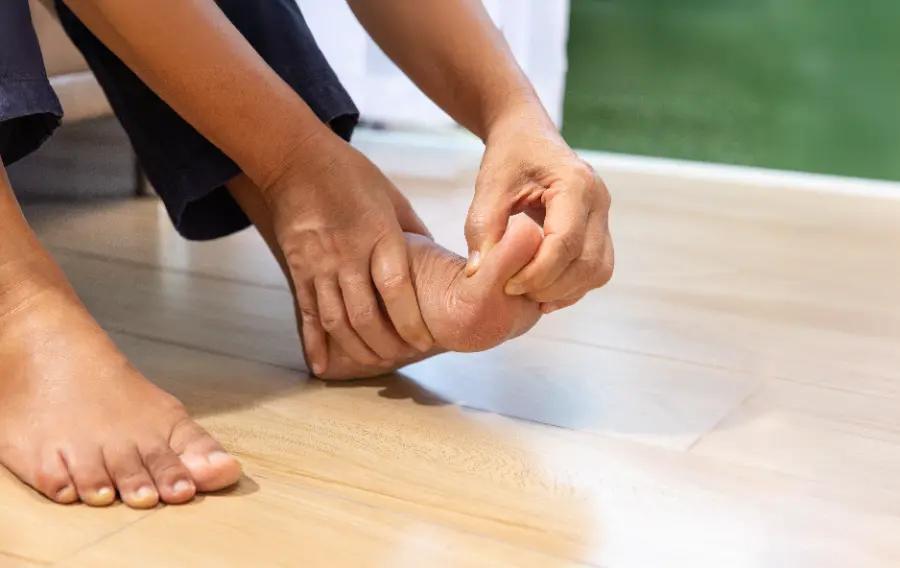
It’s common for feet and ankles to swell when exposed to high temperatures, largely because blood vessels dilate in heat, which can cause fluid to leak into surrounding tissues. Gravity then pulls this fluid down into the feet and ankles, causing them to swell.
Footwear specialists at Wards Shoes say, “There are many reasons as to why your feet may swell in the hotter months – the combination of rising temperatures, reduced circulation, fluid retention, and unsuitable footwear can all contribute to the problem.
“Heat causes blood vessels to expand, which makes it easier for fluid to leak into surrounding tissues, particularly in the lower legs and feet.
“While mild swelling is common and often harmless, persistent or painful swelling should be checked by a podiatrist or healthcare professional to rule out any underlying conditions.”
5 tips to reduce foot swelling in warm weather
1. Choose shoes with arch support and cushioning
Flip flops, flat sandals, and thin-soled shoes might be popular in summer, but they offer little to no support for your feet. Over time, this can cause swelling and increase the risk of conditions like plantar fasciitis and Achilles tendinopathy.
This is because, without support, the foot’s natural arch can collapse slightly, particularly when walking or standing for long periods; leading to poor alignment, uneven weight distribution, and increased strain on the muscles and ligaments in the legs and feet.
As a result, experts recommend selecting footwear with good cushioning and arch support.
Footwear specialists at Wards Shoes say, “Cushioned soles also help absorb shock, reducing the impact on your joints and improving comfort throughout the day.
“In warmer weather, when feet are more prone to swelling and discomfort, supportive shoes can make a huge difference. Flip flops are generally not recommended for long periods of wear. However, if you do wear them, always ensure that they have appropriate arch support to aid foot comfort.”
2. Size up slightly
Wearing tight shoes can squeeze swollen feet, causing rubbing, blisters, and general discomfort. For this reason, experts recommend wearing shoes that are half a size bigger or loosely fitted in summer to give your feet extra space to breathe and move freely as they swell.
Wards Shoes’ footwear specialists say this can make all the difference to overall comfort, particularly if you’re walking long distances, commuting, or spending time outdoors.
They explain, “Many people don’t realise that their feet can change size slightly in hot weather. Heat causes the blood vessels to expand, which often leads to swelling, especially by the evening.
“Opting for loose-fitting shoes during the summer months allows for that natural expansion and helps avoid unnecessary pressure. In addition, breathable socks made from bamboo viscose or performance synthetic blends, which are lightweight and designed to move moisture away from your skin and dry quickly, can further improve comfort.”
3. Avoid plastic or PVC shoes
PVC (polyvinyl chloride) is known for being strong and resilient. However, shoes made from PVC don’t allow your feet to breathe; instead trapping heat and sweat, and causing moisture buildup. When feet swell, PVC doesn’t expand to accommodate this, which can lead to pain and discomfort, and make swelling worse.
Experts at Wards Shoes say, “Opt for breathable fabrics like leather, mesh, or natural fibres, as this will allow for better airflow to help evaporate sweat more efficiently and reduce inflammation.”
4. Rotate shoes
It can be helpful to avoid wearing the same pair of shoes every day, especially in summer, when even well-fitted shoes can feel tight by the end of the day.
Wearing the same style of shoe consistently can also place significant pressure on certain areas of your feet, restricting circulation and causing discomfort.
Experts at Wards Shoes say, “Rotating between different pairs of shoes with varied support, structure, and fit helps reduce strain, gives your feet time to recover, and improves overall comfort. It’s also an effective way to spot when a certain pair of shoes isn’t supporting your feet enough in the heat.”
5. Avoid tight straps
Footwear specialists at Wards Shoes say it’s best to avoid wearing shoes with narrow or rigid straps. This is because, by creating localised pressure points on the skin, footwear with tight traps can cause inflammation, causing the body to trigger the body’s natural response to send extra fluid to the affected area.
Over time, consistent pressure from tight straps can even contribute to long-term skin damage or restrict the foot’s natural movement.
They say, “Choose footwear with straps made from soft, pliable materials to allow your feet to expand more naturally throughout the day. Additionally, straps that can be adjusted easily provide the flexibility to accommodate slight changes in foot size and shape, offering a more personalised and comfortable fit.”
What else can I do to help prevent foot swelling in summer?
As well as making smart footwear choices, Wards Shoes’ footwear specialists add, “To help prevent swollen feet, it’s important to stay hydrated and monitor your salt intake, as high sodium levels can cause your body to retain excess fluid, especially during warmer weather.
“Avoid staying in one position for too long – regular movement and elevating your legs above heart level can improve circulation and reduce swelling. Additionally, soaking your feet in cool water with Epsom salts followed by gentle upward massages can help to ease inflammation, stimulate circulation, and relieve discomfort.”
For further reading, head over to our health news section.
Do you have any other tips for managing swollen feet in summer that you’d like to share? We’d be interested to hear from you in the comments below.
Francesca Williams is a senior lifestyle writer at Rest Less. She joined Rest Less in early 2021 after achieving a first-class degree in History at the University of Sheffield and qualifying as an NCTJ Gold Standard Journalist. Francesca is a qualified Level 3 Personal Trainer and writes across a range of lifestyle topics, specialising in health. In her spare time, Francesca likes to keep herself busy going to the gym, dancing, spending time with friends and family, and getting involved with her local church.
* Links with an * by them are affiliate links which help Rest Less stay free to use as they can result in a payment or benefit to us. You can read more on how we make money here.
Join the discussion
Read our full commenting terms and guidelines