

- Home
- Health
- Healthy Mind
- 18 changes that can help retired life feel bigger
How does Rest Less make money
We make money through advertising and commission from affiliate links, which enable us to offer Rest Less as a free service to our users. The content on this page may use affiliate links, which track traffic from our website to a third party provider and enable us to receive a commission or payment from any traffic we refer.
* Affiliate links on this page have an * next to them. We place enormous importance on our editorial independence and the integrity of our content which means that we will never change how we write about something as a result of an affiliate link.
One of the biggest and most understandable concerns people have as they head into retirement is whether they can afford it. But it’s also not unusual to experience a loss of purpose and direction, and feel cast adrift as a result. Perhaps your days all look similar and feel a bit like a countdown to bedtime, or you’re lonelier than you expected. You might even find yourself questioning whether giving up work was the right choice.
If this sounds familiar, the encouraging news is that you can turn things around and bring more joy into your days. Even simple adjustments to your routine can transform how you feel when you wake up, so if you’re stuck in a rut, remember it doesn’t have to last.
Here are 18 small changes that can open up your world and make retired life feel bigger.
1. Give your week a shape again
If the days are blending into one another and you’re feeling bored and uninspired, structuring your time can help. Even setting just two “anchor” activities each week, such as a gym class and a coffee date, can break up your week and give you something to look forward to.
Oddfellows has all kinds of social activities you could add to your calendar if you’re looking for somewhere to start.
2. Get up at the same time every day

Without work to get up for, it can be tempting to do away with your alarm, but this can lead to bad habits. It only takes a few days of long lie-ins and late nights to start becoming nocturnal.
Getting up at the same time every day, whether you have plans or not, helps create a healthy sleep schedule and makes room for new opportunities.
If you struggle to sleep, which makes rising at the same time every day difficult, have a read of our article: What is insomnia and how can you improve it?
Get your free no-obligation pension consultation
If you’re considering getting professional financial advice, Fidelius is offering Rest Less members a free pension consultation. It’s a chance to have a Chartered independent financial adviser give an unbiased assessment of your retirement savings. Fidelius is rated 4.7/5 from over 2,600 reviews on VouchedFor.
Your pension review is free and with no obligation, but if your adviser feels you’d benefit from paid financial advice, they’ll explain how that works and the charges involved. Capital at risk.
3. Create a “Sunday reset” ritual to start the week with intention
When we’re working, Sunday is often a day to rest and/or reset, ready for the week ahead, and doing so can help us walk into it with purpose. That might mean prepping your meals, writing a to-do list, doing some self-care, or working through a list of chores.
This can be just as useful in retirement. It helps you stay loosely in sync with the rest of society and gives you a quiet pause to reflect on the week gone by and move calmly and intentionally into the next.
4. Read outside your genre once a month

Reading is one of life’s greatest pleasures, but it’s easy to settle on a genre we like, whether that’s romance or history, and rarely try anything new.
But reading something different, even just once a month, can act as a mental palate cleanser – sparking new ideas, building empathy through unfamiliar perspectives, and preventing reading burnout. It can introduce novelty back into your days, making your world feel bigger.
For inspiration, head over to our books and literature section where you’ll find everything from monthly book reviews to simple tips to help you read more.
5. Keep a “small wins” journal
Throughout our lives, our achievements are often tied to our careers, but personal achievements are important, too, including the everyday small wins we might take for granted.
Why not keep a “small wins” journal by your bedside and add one entry each evening? For example, “went to the gym for 20 minutes”, “finally tried that new brownie recipe and it was delicious”, or “set a boundary with someone without overexplaining”.
Fulfilment is often closer than we think. Sometimes we just need to look a little more closely at the moments we feel grateful for. Check out our article, How practising gratitude can lead to a happier life, for more on this.
6. Aim to have one “wander trip” a week

It’s easy to live on autopilot, running the same errands and taking the same routes until we stop truly seeing the place we live.
To break this cycle, you could try setting yourself one small outing each week to somewhere new, such as a bakery or cafe nearby, a street you’ve never walked down, a bus route you’ve never taken, or an entire area you’ve never explored on foot. You might be surprised how much novelty is on your doorstep once you start engaging with your surroundings again.
7. Pick a cause and commit to something small but consistent
Discovering a new passion or leaning into an existing one is a wonderful way to bring more meaning and purpose to your life, whether you’re passionate about protecting rhinos in South Africa, supporting the UK’s homeless, or helping find a cure for cancer.
This could mean keeping up with the latest news and developments on your chosen cause, fundraising, or volunteering for a charity.
8. Keep a conversation starter list

Much of life’s small talk is work-related, which can make socialising in retirement feel awkward and leave you short of topics.
Try to avoid letting this put you off socialising altogether. Instead, it can help to keep a list of conversation starters on your phone for when you get stuck. For example, “Do you like to travel? Have you got any holidays planned?” “How do you know [host/mutual friend]?” and “How’s your week been so far?”
9. Learn to eat alone in public without a phone
Getting comfortable with your own company is one way to open up your retirement, as it will make solo activities feel more comfortable and enjoyable. Instead of waiting for others to be available for a holiday or a trip to the cinema, you’ll be more likely to go.
A useful place to start is to challenge yourself to eat out alone and stay as present as you can, which means keeping your phone in your bag. It might feel uncomfortable at first, but it’s incredibly liberating once you relax into it.
If you tend to dread spending time alone, our article, 8 ways to fall in love with your own company, may help.
10. Keep a jar of “someday” ideas

Many of us have random ideas drift into our heads about things we’d like to try or achieve. To stop them from being fleeting thoughts, write each one down, fold it up, and pop it into a “someday” jar. Then on a quiet day or weekend, you can pluck one out and either do it or plan it. If you’ve got a bucket list, it’s a great way to start working through it.
11. Revisit a place from your childhood
Revisiting a place from your childhood asks you to hold two versions of yourself in mind at once, stretching your sense of time and reminding you that your life is bigger than your current routine.
It’s proof that you’ve been many people, in many places, across many decades, not just someone having a quiet Tuesday. It can also remind you how far you’ve come.
Get your free no-obligation pension consultation
If you’re considering getting professional financial advice, Fidelius is offering Rest Less members a free pension consultation. It’s a chance to have a Chartered independent financial adviser give an unbiased assessment of your retirement savings. Fidelius is rated 4.7/5 from over 2,600 reviews on VouchedFor.
Your pension review is free and with no obligation, but if your adviser feels you’d benefit from paid financial advice, they’ll explain how that works and the charges involved. Capital at risk.
12. Learn to do one home repair you’ve always paid someone else to do
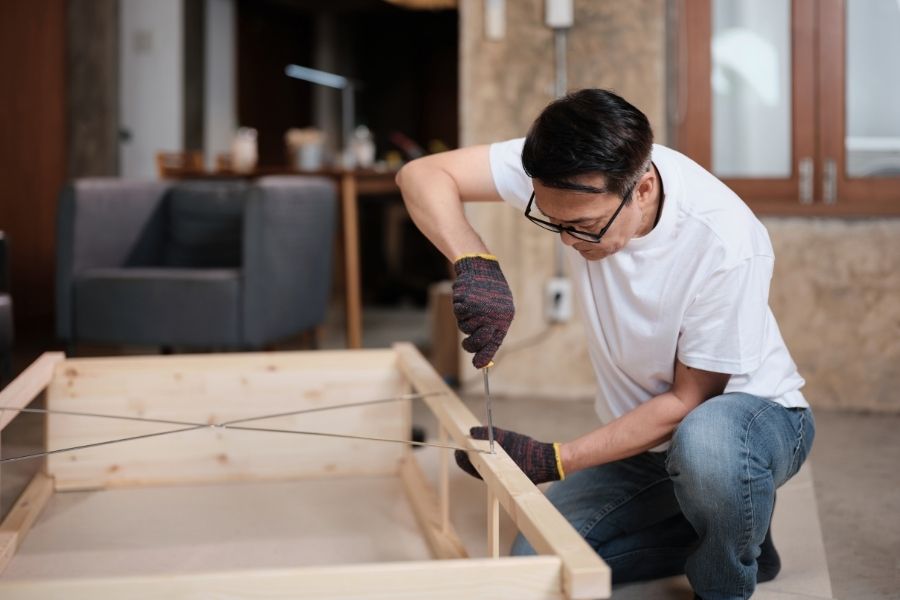
If you have a list of odd jobs around the house, it can be tempting to outsource them, especially if that’s what you’ve always done. But why not choose one or two to learn yourself?
Feeling able to tackle DIY on your own is empowering, and it can encourage you to push the boundaries of what you can learn in other areas of your life. The more we achieve, the more we realise what’s possible.
13. Learn basic first aid and CPR
First aid is one of those skills that nearly all of us think about learning and know we should, but that few of us actually do. So why not bite the bullet and book a course?
There are options to suit how involved you want to get. St John Ambulance, for example, offers courses ranging from a few hours to a few days. Knowing you could help in an emergency, and even save a life, can be a real confidence booster and a chance to give back.
14. Choose a hobby with a built-in community

Making friends later in life can feel more daunting than it did at school, college, or university. But what those places had in common is that friendship was secondary and developed naturally while everyone worked towards the same thing.
If you’re looking for more social plans in retirement, it can therefore be useful to seek out similar environments where you can socialise over a shared interest. For example, you could join a walking group, book club, allotment society, or choir. We have plenty of ideas in our hobbies and activities section.
15. Follow one global news story properly, over several months
Following international news allows you to explore the world from home, discover fascinating things, and have all kinds of enriching conversations. Plus, the more you invest in something, the more you care, which fosters purpose and passion: two important ingredients in creating a life that feels larger and more fulfilling.
This is why it can help to adopt a news story and follow it closely over weeks or months to find out how it ends. When the world feels like a constant stream of chaotic headlines, knowing one story deeply can also feel grounding. You can see how a single event fits into larger forces like economics, politics, or history, which makes the world feel more legible.
16. Get involved in local decision-making

If the walls feel like they’re closing in during retirement, it can help to find ways to engage more actively with your surroundings, so you become more of a driver of your own life rather than a passenger.
For example, you could start by attending council meetings in your local area (most are open to the public), responding to public consultations on things like new developments or road changes, and joining residents’ or tenants’ associations. Even small contributions can shape the place you live, and you’ll meet like-minded neighbours along the way.
17. Redesign one room around how you live – or want to live – now
Our home environments affect how we live and how we feel as we start and end each day. They can inspire or demotivate us, and help or hinder us. Perhaps you’re holding onto equipment for hobbies you no longer want to pursue, such as an old guitar or dried-up paints, or your decor tastes have changed and your current theme leaves you bored or even irritated.
Often, this is because we’re living on autopilot and no longer register that our space isn’t serving us. If this sounds familiar, start by reimagining one room (perhaps the one you use most) in terms of what would make your days easier and more enjoyable, then work outwards from there.
To get inspired, have a read of our articles: 8 ways to use feng shui for a happier home and 10 affordable ways to improve your living space.
18. Declutter your living space

Over the decades, many of us accumulate more than we realise, and our homes can start to feel crowded and difficult to move around in.
But retirement is a natural moment to keep only what supports the life you want now. For example, you could tackle one drawer or shelf at a time, sorting items into keep, donate, sell, and recycle piles. Charity shops and local Freecycle or Buy Nothing groups can give unwanted items a second life, which often makes them easier to let go of.
For more tips, check out our article: How to declutter and reorganise your home.
The simple, one-box selling solution
Put old electronics, jewellery, watches and more in one box. Send it to Vintage.com (formerly Vintage Cash Cow) for free and receive one fair offer.
Final thoughts…
Retirement is a big transition, and it’s normal for it to take time to find your feet. If your days feel smaller or lonelier than you’d hoped, remember that you don’t need to overhaul your life – you could start with just one or two things from this list.
Small steps tend to build on each other, and each new connection or routine can make life feel a little bigger. With time and a bit of curiosity, this stage of life can become one of the most fulfilling yet, and it’s never too late to shape it around what matters to you now.
For further reading, check out our articles: 22 brilliant retirement ideas for any age and 12 ways to make new friends.
Are you retired or approaching retirement? How does the transition feel for you? We’d love to hear from you in the comments below.
Elise Christian is Lifestyle Editor at Rest Less. She joined Rest Less in 2018 after achieving a first class Master’s Degree in Journalism from the University of Kent, and writes across a range of lifestyle topics such as mental health, home and garden, and fashion and beauty. Prior to this, she worked as a freelance writer for small businesses and also spent a year training to be a midwife. Elise spends her spare time going to the gym, reading trashy romance novels, and hanging out with loved ones. She also loves animals, and has a fascination with sharks and tornadoes.
* Links with an * by them are affiliate links which help Rest Less stay free to use as they can result in a payment or benefit to us. You can read more on how we make money here.
Join the discussion
Read our full commenting terms and guidelines