
- Home
- Money
- Everyday Finance
- Can I get financial help to install solar panels?
How does Rest Less make money
We make money through advertising and commission from affiliate links, which enable us to offer Rest Less as a free service to our users. The content on this page may use affiliate links, which track traffic from our website to a third party provider and enable us to receive a commission or payment from any traffic we refer.
* Affiliate links on this page have an * next to them. We place enormous importance on our editorial independence and the integrity of our content which means that we will never change how we write about something as a result of an affiliate link.
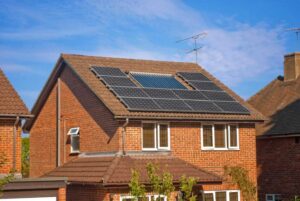
Many people assume that solar panels are too expensive to install, but if you’re on a low income and your property has a low energy efficiency rating, you might qualify for financial support to help with the cost.
Rising gas and electricity bills make the thought of generating your own energy more appealing than ever, so it’s well worth looking into whether solar panels could work for you and whether you can access any funding to help pay for them.
Working out whether you’re eligible for help and how to apply isn’t always straightforward, so here we explain how the various schemes work, who qualifies and where to go for more information.
Which schemes can help with the cost of installing solar panels?
There are three main schemes which may offer financial support if you’re looking to install solar panels, although you’ll need to meet a range of different criteria to qualify for help. These are the Energy Company Obligation (EC04), the Warm Homes Social Housing fund, and the Warm Homes Local Grant fund.
1) Energy Company Obligation (EC04)
Energy Company Obligation (ECO4) requires energy suppliers to offer efficiency improvements to eligible low-income and vulnerable households across England, Wales and Scotland.
The aim of the scheme is to help people make their homes warmer, cheaper to run, whilst at the same time ensuring their energy usage is better for the environment. The scheme started on 1 April 2022 and will continue until 31 March 2026.
The ECO4 isn’t a grant you can apply for directly. Instead, the government requires larger energy suppliers to pay for energy-saving improvements in people’s homes.
That means each energy company is responsible for choosing which households they’ll support, which improvements they’ll cover and which installers they’ll use.
The aim is that any improvements made will have a significant impact on your property’s rating. For example, if your home currently has an E energy rating, any upgrades should improve this to at least a C rating.
Improvements might include:
- Loft, wall, or floor insulation
- Installing central heating for the first time
- Renewable heating systems such as heat pumps or solar panels (you can only get solar panels if your home is powered by electricity)
- Connecting homes to a shared district heating system.
Who qualifies?
The ECO4 scheme is designed to help people living in fuel poverty (those who can’t afford to heat their homes adequately) and those in the least energy-efficient homes.
These are the main reasons you might be eligible for ECO4 funding:
1) If you receive certain benefits:
If you claim any of the following benefits, you may qualify for free or reduced-cost energy efficiency upgrades for your property via ECO4.
- Income-based Jobseeker’s Allowance (JSA)
- Income-related Employment and Support Allowance (ESA)
- Income Support
- Pension Credit (Guarantee Credit)
- Universal Credit
- Child Tax Credit
- Working Tax Credit
- Housing Benefit
- Pension Credit (Savings Credit)
- Child Benefit (subject to income caps that depend on who lives with you)
2) If you live in social housing and your property has an energy efficiency rating from D to G
Homes with a rating of D are usually limited to receiving insulation and certain innovation measures that satisfy the Minimum Insulation Requirements, but won’t be eligible for additional upgrades.
However, if your property falls into EPC bands E to G, you might be able to access a broader range of improvements, including insulation, first-time central heating, or renewable heating options such as heat pumps or solar panels.
3) If your household income before tax is less than £31,000 or you are vulnerable
If you don’t meet the criteria above, you might still qualify for support under what’s known as ECO4 Flex. This allows local authorities and other approved bodies to refer households for energy efficiency upgrades who might not otherwise qualify.
Through this route, local authorities focus on four specific groups to decide who qualifies, with priority given to people who are vulnerable or struggling with high energy costs. These include:
- Households with a total annual income below £31,000
- Households receiving financial support due to low income or vulnerability (this also covers people who’ve had fuel debt with their supplier for more than 13 weeks or are repaying debt through a payment plan)
- Households where someone has a long-term health condition that could be made worse by living in a cold home
- Other groups defined by the local authority as needing support.
If your household falls into one of these categories, your local authority will usually get in touch with you directly, but you can also contact them yourself to check whether you might be eligible. With around half of ECO4 funding ring-fenced for LA Flex, this option can be well worth exploring.
It’s worth noting that even if you meet the criteria, you aren’t guaranteed to receive support, as it’s ultimately down to energy suppliers to decide which improvements they’ll fund and how much they’ll contribute.
How much can I get?
The level of support you may be offered will depend on the specific energy efficiency improvements a supplier agrees to install in your home, along with factors such as your property’s condition and its Energy Performance Certificate (EPC) rating.
In some situations, you might also be asked to pay part of the costs yourself. Because funding amounts and contributions differ between suppliers, it’s a good idea to speak to a few and compare what’s available before deciding.
How to apply
If you think you might be eligible for ECO4, your first steps should be to check your home’s EPC rating. you can look this up free of charge on the government’s EPC register. You’ll then need to get in touch with your energy supplier and ask if they’re taking part in ECO4 and what support they offer.
Don’t despair if your supplier says they can’t help. Another supplier might, so it’s worth ringing around. If you are eligible for the scheme, the next step will be for an installer to visit your home and assess which improvements would make the biggest difference to your property’s energy efficiency.
You can find a list of ECO4 supplier contact details at Ofgem.
2) Warm Homes: Local Grant
The Warm Homes: Local Grant scheme is specific to England and provides energy performance upgrades via local authorities to certain households. The scheme was introduced in April 2025 and is due to run until 31 March 2028.
Eligible households will typically be those on low incomes, which have an Energy Performance Certificate rating between D and G and where the property is privately owned. You might be able to get funding from a different scheme if you live in Scotland, Wales or Northern Ireland.
Who qualifies?
To be eligible for the Warm Homes Local Grant scheme, your household income must usually be no more than £36,000 a year before tax. If you earn more than this, you might still qualify for support if you live in a certain postcode area, or if someone in your household is claiming certain benefits
How much can I get?
If you’re eligible for help from the Warm Homes Local Grant, the cost of any upgrades will be covered in full, so you won’t have to contribute at all. If the property you’re living in is rented, however, your landlord may need to pay for some of the improvements.
How to apply
You can check your eligibility for the Warm Homes Local Grant and apply for the scheme at Gov.uk. Once you’ve submitted your application, your local authority will usually contact you within 10 working days to ask for more information and book a home survey. If you need any help completing the application, you can contact the Warm Homes Local Grant assisted digital support helpline on 0800 098 7950.
3) Warm Homes Social Housing Fund
The Warm Homes Social Housing Fund was set up to provide funding for social housing landlords in England to support the installation of efficiency measures including solar panels. The scheme was introduced in April 2025 and is due to run until 31 March 2028.
Who qualifies?
Individuals can’t apply for the Warm Homes Social Housing Fund. Only social housing providers can apply for funding. If they receive it, they can then make energy-efficient upgrades for their tenants.
Tenants can contact their social housing provider or visit Warm Homes Social Housing Fund for more information.
A final thought…
Even if you aren’t eligible for support with the cost of installing solar panels, all homeowners who fit them currently benefit from 0% Value Added Tax (VAT) on them. Bear in mind, however, that this is a temporary measure. It is due to last until 31 March 2027 at the moment, but this could change at any time, so keep an eye out for any announcements.
Rest Less Money is on Instagram. Check out our account and give us a follow @rest_less_uk_money for all the latest Money News, updated daily.
Melanie Wright is money editor at Rest Less. An award-winning financial journalist, she has written about personal finance for the past 25 years, and specialises in mortgages, savings and pensions. She is a former Deputy Editor of The Daily Telegraph's Your Money section, wrote the Sunday Mirror’s Money section for over a decade, and has been interviewed on BBC Breakfast, Good Morning Britain, ITN News, and Channel Five News. Melanie lives in Kent with her husband, two sons and their dog. She spends most of her spare time driving her children to social engagements or watching them play sport in the rain.
* Links with an * by them are affiliate links which help Rest Less stay free to use as they can result in a payment or benefit to us. You can read more on how we make money here.
Get your free no-obligation pension consultation
If you’re considering getting professional financial advice, Fidelius is offering Rest Less members a free pension consultation. It’s a chance to have a Chartered independent financial adviser give an unbiased assessment of your retirement savings. Fidelius is rated 4.7/5 from over 2,600 reviews on VouchedFor.
Your pension review is free and with no obligation, but if your adviser feels you’d benefit from paid financial advice, they’ll explain how that works and the charges involved. Capital at risk.
Join the discussion
Read our full commenting terms and guidelines