
A mini stroke, also known as a transient ischaemic attack (TIA), occurs when blood flow to the brain is temporarily blocked. According to the Stroke Association, 46,000 people have a TIA for the first time every year, and it’s a warning sign that they’re at risk of stroke.
However, despite being a serious health concern, experts say that many people remain unaware of the link between TIA and stroke; and, as a result, aren’t taking the steps needed to reduce their risk.
While this topic may feel daunting, it’s important to remember that, when it comes to health, knowledge is power, and luckily, there are things you can do to stay as healthy as possible.
With that said, we’ll take a closer look at transient ischaemic attacks, including symptoms, causes, and how to reduce your risk.
What is a transient ischaemic attack (TIA)?

A transient ischaemic attack (TIA), or ‘mini stroke’, is caused by a temporary disruption of the blood – and, therefore, oxygen – supply to the brain.
A TIA can cause sudden symptoms similar to a stroke, such as speech disturbances and numbness or weakness in the face, arms, and legs. However, effects only last between a few minutes and a couple of hours, often fully resolving within 24 hours.
Although short-lived, a TIA is a warning sign that a person is at risk of a stroke and requires medical attention. Experts at the Stroke Association are keen to emphasise that a TIA isn’t just a ‘funny turn’. By spotting the symptoms early and accessing specialist services quickly, every year, thousands of people could avoid the serious consequences of stroke.
What are the symptoms of a TIA?
A TIA has the same main symptoms as a stroke. The difference lies in both the duration and severity of symptoms.
While both conditions are the result of a disrupted blood flow to the brain, stroke symptoms are longer-lasting and can result in permanent brain damage and disability. Meanwhile, TIA symptoms are temporary, usually resolving within 24 hours, sometimes within minutes.
Because TIA symptoms are often short-lived and can easily be mistaken for tiredness or other conditions, many people delay or avoid receiving urgent medical treatment. However, TIAs are a warning sign that you may be at risk of having a full stroke in the near future.
It’s important to call 999 immediately for a hospital assessment if you suspect you’re having a TIA – even if your symptoms disappear or improve while you’re waiting for an ambulance. Most people will be referred to a specialist within 24 hours of the onset of TIA symptoms.
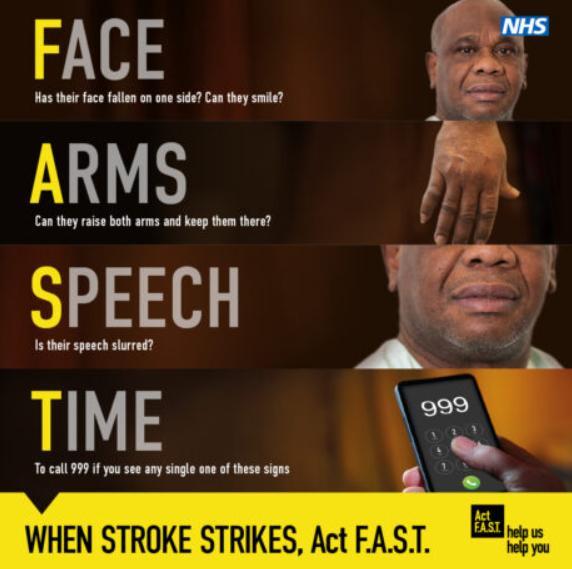
According to the NHS, the FAST test can help you spot the most common signs of TIA and stroke…
- Face – the face may drop on one side, impacting a person’s ability to smile. The mouth or eyes may also drop in isolation.
- Arms – the person may be unable to lift both arms and keep them lifted due to numbness or weakness in one arm.
- Speech – speech may become slurred or garbled, or they may not be able to speak at all, despite appearing to be awake. They may also have difficulty understanding what you’re saying.
- Time – if you see any of these signs or symptoms, it’s important to call 999 immediately.
Note: The NHS urges anyone who has previously had a TIA, but didn’t seek medical advice at the time, to make an urgent appointment with their GP. They’ll be able to determine whether or not you need to be referred for a hospital appointment.
What causes a TIA?
Most often, a TIA is caused by a blood clot forming elsewhere in the body (for example, in the heart or neck arteries) and travelling to a blood vessel in the brain.
According to the Stroke Association, clots that cause a TIA can happen for different reasons. One type of clot is caused by a build-up of fatty substances in the blood vessels around your body, a process known as atherosclerosis.
Other types of clot can occur as a result of heart conditions like atrial fibrillation (a type of irregular heartbeat), forming in the heart and travelling to the brain.
Damage to arteries in the neck, known as arterial dissection, and small vessel disease, a condition where the tiny blood vessels located deep inside the brain get blocked, can also lead to clot formation.
What can increase your risk of having a TIA?

While anyone can have a TIA, research has identified several factors that can increase your risk. These risk factors are the same as for stroke. We’ll cover some of these below.
Age, ethnicity, and family history
Age, ethnicity, and family history play a role in TIA risk – specifically, being over 55, having a close relative who’s had a stroke, or being of Asian, African, or Caribbean descent.
For example, according to the Stroke Association, stroke rates double every 10 years after age 55, and over 70% of all cases occur in people over 65. This is mainly because our arteries naturally become narrower, harder, and more likely to become clogged with fatty substances as we age.
Medical conditions
Certain medical conditions can increase your risk of TIA. This includes…
High blood pressure
The Stroke Association recognises high blood pressure as the single biggest risk factor for TIA and stroke, playing a role in around half of all strokes.
Blood pressure is the measure of the force of blood inside your arteries. High blood pressure can damage artery walls throughout the body, including those in the brain, making them more susceptible to rupture and blockages. It can also damage blood vessels, causing them to narrow and harden.
High cholesterol
Cholesterol is a fatty substance that circulates in the blood. While we need a certain amount of cholesterol to stay healthy (for example, it supports healthy digestion), having too much is a risk factor for stroke and TIAs.
If left to build up in blood vessels, high cholesterol can form plaques that clog arteries and obstruct blood flow to the brain.
Atrial fibrillation
Atrial fibrillation is a type of irregular heartbeat that increases your risk of stroke. When your heart beats irregularly, blood is more likely to pool and form clots, which can block blood flow.
If left untreated, experts say atrial fibrillation can make you five times more likely to experience a stroke or TIA.
Diabetes
Studies suggest that people with diabetes are around twice as likely to experience a stroke or TIA. This is because high blood sugar levels can damage blood vessels, potentially causing blood clots and blockages in arteries that affect blood flow to the brain.
Lifestyle factors
Lifestyle habits can contribute to your TIA risk. This includes…
Smoking
Among other things, smoking lowers oxygen levels in the blood, contributes to high blood pressure, and can trigger atrial fibrillation (an irregular heartbeat) – all of which are significant risk factors for TIAs and stroke.
For this reason, smokers are around three times more likely to experience a stroke or TIA than non-smokers. And, the more you smoke, the greater your risk.
Poor diet, lack of exercise, and being overweight
Being physically inactive, making poor diet choices, and being overweight can increase your risk of conditions like high blood pressure, high cholesterol, type 2 diabetes, heart disease – and, therefore, having a TIA.
There’s also evidence that where you carry excess weight can play a role, too. For example, studies suggest that carrying excess weight around your midsection is a stronger risk factor than BMI alone. TIA and stroke risk increase even further if you’re obese.
How is a TIA treated?
Although TIA symptoms usually resolve in a few minutes or hours, it’s still important to see a doctor to discuss treatment options.
While approaches may vary depending on individual circumstances, such as age and medical history, treatment is focused on preventing future TIAs or strokes. This usually involves lifestyle changes, as well as medicine to address any underlying issues that may have caused the TIA.
In some cases, a surgery called carotid endarterectomy may be needed to unlock carotid arteries – the main blood vessels that supply blood to the brain.
The NHS website has more information on treatment for TIAs.
How can I reduce my risk of a TIA?

While some TIA risk factors, such as age, ethnicity, and family history, can’t be changed, others, like lifestyle factors and underlying medical conditions, can be modified. We’ll explore some things you can do to help reduce TIA risk below.
Note: If you’re over 40, experts recommend having regular health checks to detect any changes that increase your risk of stroke and TIAs. If you’re black, Chinese, or South Asian, you’re eligible to have a diabetes check with your GP from the age of 25.
1. Take steps to lower blood pressure and cholesterol
High cholesterol and high blood pressure significantly increase the risk of TIAs.
Luckily, research has identified several effective ways to lower cholesterol and blood pressure, such as eating more fibre and reducing your salt intake. Research shows that even small improvements can reduce TIA and stroke risk – for example, in this study, every 10mmHg reduction in systolic blood pressure was linked with a 30% lower risk of stroke.
Check out our articles, 5 tips to help lower cholesterol and 10 natural ways to lower blood pressure, to learn more.
Note: High blood pressure and high cholesterol rarely cause symptoms, so it’s important to get checked.
2. Get tested for atrial fibrillation
According to the British Heart Foundation, over 1.5 million people in the UK are affected by atrial fibrillation, as well as a further 500,000 people who may unknowingly be living with the condition.
However, experts believe around 2,000 deaths caused by AF-related stroke could be prevented each year with proper management. For this reason, it’s important to get checked for AF by your GP.
3. Make healthy lifestyle changes
We know from research that lifestyle habits play a role in TIA and stroke risk. So, making healthy changes can make all the difference.
Staying active and eating a healthy, balanced diet is key – not only because it’s linked with lower cholesterol, blood pressure, and blood sugar levels, but exercise helps improve blood flow to the brain. Studies have also linked high intake of certain nutrients, such as vitamin C, with a reduced risk of stroke.
Similarly, cutting back on salt, moderating alcohol intake, and quitting smoking can make all the difference to TIA risk. For example, studies suggest that five years after quitting smoking, your TIA and stroke risk could be around the same as someone who’s never smoked.
Head over to our diet and nutrition and fitness and exercise sections for more healthy lifestyle tips.
Final thoughts…
TIAs are a key warning sign of future stroke risk, so it’s important to take them seriously. Luckily, there are plenty of healthy steps you can take to improve your health and reduce your risk.
For further reading, head over to our heart health section. Here, you’ll find information on everything from warning signs of heart disease to foods that can improve heart health.
Do you have any experience with TIAs that you’d like to share? We’d be interested to hear from you in the comments below.