

- Home
- Health
- Healthy Body
- Mouth taping – what is it and are there any benefits?
How does Rest Less make money
We make money through advertising and commission from affiliate links, which enable us to offer Rest Less as a free service to our users. The content on this page may use affiliate links, which track traffic from our website to a third party provider and enable us to receive a commission or payment from any traffic we refer.
* Affiliate links on this page have an * next to them. We place enormous importance on our editorial independence and the integrity of our content which means that we will never change how we write about something as a result of an affiliate link.
Having picked up steam on social media recently, mouth taping during sleep is one of the latest ‘health’ hacks on every wellness influencer’s lips. However, despite claiming various benefits for health, like better rest and improved oral health, research remains limited.
As a result, experts continue to advise caution around mouth taping, with some studies even linking it with serious health risks – particularly for those with sleep-disordered breathing and obstructive sleep apnoea.
Here, we’ll take a closer look at what mouth taping is, how it works, and what current research says.
What is mouth taping?
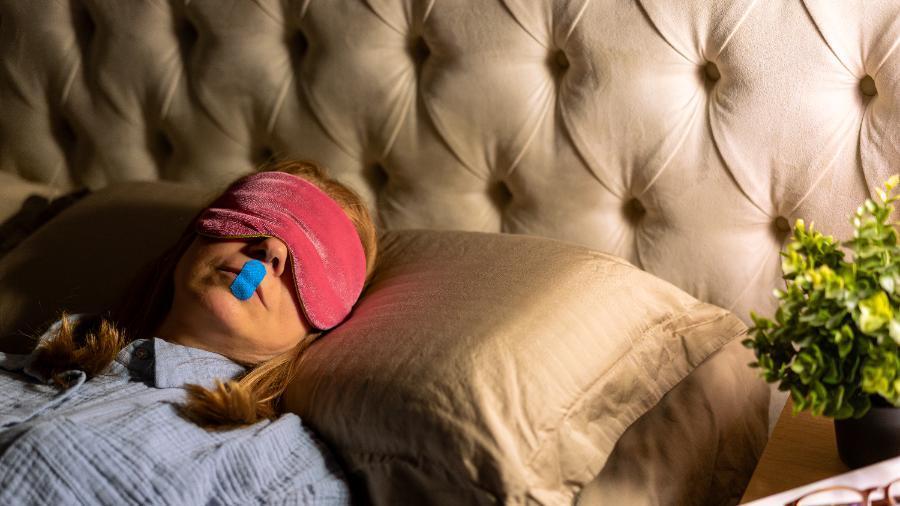
Mouth taping is a health and wellness trend that has become popular on social media recently, particularly on platforms like TikTok. It involves placing a piece of porous tape over your lips at night to keep your mouth closed and encourage nasal breathing.
Nasal breathing filters the air you breathe (removing dust, allergens, and pollutants) and engages the lower portions of your lungs more effectively. As a result, proponents of mouth taping suggest that it may offer various health benefits.
What are the potential benefits of mouth taping?
You may have seen people on social media sharing their mouth taping experiences and claiming various health benefits, from reduced snoring to less daytime fatigue and better oral health.
However, before we explore current research, it’s important to note that mouth taping isn’t a proven medical therapy. Studies on it are only small, so further research is needed to prove claims.
We’ll explore what current research says on the potential benefits of mouth taping below.
Mouth taping encourages nasal breathing
Mouth taping forces you to breathe through your nose, which is generally considered healthier than mouth breathing.
Among other things, nasal breathing helps to filter allergens, toxins, and debris from the air you breathe; control air temperature so that it’s not too hot or cold when it reaches your lungs; and make the air you breathe humid, helping to keep your mouth and throat moist.
On the other hand, research has linked mouth breathing with bad breath, daytime fatigue, dry mouth, poor oral health, reduced cognitive function (especially memory), and symptoms related to attention deficit hyperactivity disorder (ADHD).
However, research into these benefits is limited – and it’s unknown how often you should tape your mouth and which tape is most effective. It’s also worth noting that there are alternative methods of encouraging nasal breathing, which we’ll explore later.
Mouth taping for snoring and mild obstructive sleep apnoea
Snoring typically occurs when someone breathes through their mouth, causing the soft tissues in the throat to vibrate and make a sound. Snoring is often a hallmark symptom of obstructive sleep apnoea, a sleep disorder where breathing repeatedly stops and starts during sleep.
Some studies suggest that mouth taping may reduce snoring caused by mild sleep apnoea by gently encouraging nasal breathing and keeping the airway more stable.
In this study, 30 people with mild sleep apnoea who often mouth-breathed at night found that mouth taping reduced snoring (though it’s important to note that none of the participants had any nasal obstructions, such as enlarged tonsils). Another study of 20 people with mild sleep apnoea found that mouth taping reduced snoring, particularly in individuals with positional sleep apnoea (where symptoms are worse when lying on your back).
Research into mouth taping for sleep apnoea has mostly studied individuals with mild obstructive sleep apnoea and those using continuous positive airway pressure (CPAP) therapy. In this study of people with mild obstructive sleep apnoea, wearing porous mouth tape caused all participants to breathe through their nose, leading to significantly reduced snoring and fewer instances of lapsed breathing. Other research suggests that mouth taping may minimise CPAP mask air leaks caused by mouth breathing.
Note: According to experts, mouth taping isn’t a treatment for sleep apnoea and can be dangerous without professional guidance – particularly when the condition is severe. If you’re experiencing symptoms of sleep apnoea, such as loud snoring, extreme daytime fatigue, or choking and gasping for air during sleep, it’s important to speak to your GP before trying mouth taping. In some cases, mouth taping can further obstruct breathing.
Mouth taping for asthma control
Since nose breathing helps filter, warm, and moisten the air you breathe, researchers have considered whether mouth taping could be beneficial for controlling asthma.
However, this study of 50 people found that mouth taping every night for 26 or 28 nights had no impact on asthma control.
What are the potential risks of mouth taping?

There’s currently no concrete evidence to suggest that mouth taping is beneficial for treating health issues. Plus, with several potential risks and side effects to consider, many experts are unconvinced.
For example, Luisa Bazan, M.D., a sleep specialist at Henry Ford Health, says, “There’s no evidence to suggest that taping your mouth shut overnight is helpful. And it could put you at risk for a host of side effects.”
Because there are so few studies on mouth taping, we don’t yet know all of the potential side effects. However, some of the current side effects reported include…
- Anxiety from having your mouth taped shut
- Skin irritation on or around the lips
- Pain when removing mouth tape, particularly if you have facial hair
- Discomfort or struggling to breathe through your nose well
- Trouble sleeping
- Nasal congestion
Who is mouth taping not suitable for?
According to the Sleep Foundation, while mouth taping may benefit some people, it isn’t safe for everyone, particularly those with certain medical conditions. This includes…
- People with obstructive sleep apnoea who aren’t using CPAP therapy, as mouth taping may worsen breathing disruptions
- Anyone with nasal congestion or blockages, whether due to a cold, allergies, or a deviated septum, as nasal breathing may not be possible
- People with respiratory conditions, such as asthma or chronic obstructive pulmonary disease (COPD), unless advised by a doctor
- People with anxiety or panic disorders, as mouth taping may trigger discomfort or panic
- Anyone at risk of vomiting during sleep
- Children, unless under medical supervision
Note: Regardless of whether you have an underlying medical condition, it’s important to speak to your GP before trying mouth taping.
What are some alternatives to mouth taping?
If you’re intrigued by the potential benefits of nasal breathing, the good news is that mouth taping isn’t the only option.
According to experts, several alternative tools and strategies can encourage nasal breathing during sleep – many of which are likely to be more comfortable, carry fewer risks, and are more thoroughly researched. We’ll explore some of these below.
Side sleeping
If you’re struggling with snoring, you might benefit from sleeping on your side. Research has consistently shown that people with and without obstructive sleep apnea snore less when sleeping on their side, rather than on their back.
Side sleeping has also been linked with other benefits, including a reduced risk of Alzheimer’s disease, Parkinson’s disease, and other neurological conditions.
To make your sleeping position more comfortable, it’s worth investing in good-quality bedding, including your mattress and pillows. The ideal sleeping position is one that supports spinal alignment and reduces pressure on your joints.
To learn more, you might like to read our article: What are the best and worst sleeping positions?
Nasal strips
Nasal strips are another potential option for those looking to reduce snoring. They stick to the nose, expand the nasal passage, and encourage nasal breathing.
Studies on nasal strips are mixed, with some showing improvements in snoring and others showing no effect. In this study, nasal strip users and their partners reported a reduction in the frequency and intensity of snoring. However, in another study, nasal strips weren’t reported to make any difference to snoring intensity or frequency.
That said, unlike mouth taping, most people using nasal strips experience no or only mild side effects, such as skin irritation and a need to sneeze.
Practise good oral hygiene
Some people are interested in mouth taping because of promises that it can improve signs of poor oral hygiene, like bad breath. But, with no current evidence backing this up, health experts advise that the best thing you can do to protect against bad breath is to practise good oral hygiene.
This includes regular tooth brushing, flossing, and tongue cleaning – and cutting back on sugary foods. Check out our article, 9 ways to improve oral hygiene, to learn more.
Establish a good sleep routine
Some people say that mouth taping can reduce daytime tiredness and fatigue. However, much like maintaining oral hygiene, other habits can improve sleep quality and reduce daytime tiredness.
For example, exercising regularly, sleeping and waking at similar times, and avoiding screen time, caffeine, and alcohol before bed.
You’ll find plenty more information in our sleep and fatigue section, including tips on how to sleep better.
Treat allergies and asthma
Statistics show that around 25% of people in Westernised countries experience an allergic reaction to substances they breathe in, such as pollen. This type of allergic reaction often causes nasal congestion, making nasal breathing difficult.
As a result, if you have allergies and find yourself breathing through your mouth at night, it’s worth taking steps to treat and manage your allergies. Similarly, if you have asthma, working with your doctor to control and manage symptoms can help prevent mouth breathing.
Final thoughts…
Mouth taping is one of the latest ‘wellness’ trends, with many claiming its potential benefits for health. However, due to a current lack of research and its potential risks, caution around mouth taping as a legitimate health hack remains. As a result, taking other steps, like changing your sleep position and addressing underlying health issues, may be more beneficial.
For further reading, head over to our general health section. Here, you’ll find information on everything from heart health to boosting longevity.
Have you tried mouth taping before? Is there anything else you’d like to share? We’d be interested to hear from you in the comments below.
Francesca Williams is a senior lifestyle writer at Rest Less. She joined Rest Less in early 2021 after achieving a first-class degree in History at the University of Sheffield and qualifying as an NCTJ Gold Standard Journalist. Francesca is a qualified Level 3 Personal Trainer and writes across a range of lifestyle topics, specialising in health. In her spare time, Francesca likes to keep herself busy going to the gym, dancing, spending time with friends and family, and getting involved with her local church.
* Links with an * by them are affiliate links which help Rest Less stay free to use as they can result in a payment or benefit to us. You can read more on how we make money here.
Join the discussion
Read our full commenting terms and guidelines