
- Home
- Health
- Healthy Body
- Copper – what is it, what are the health benefits, and how much do I need?
Our bodies require several essential vitamins and minerals to stay healthy. One of the lesser-known of these is copper: a trace mineral needed for body functions like metabolism and immune system function.
It’s important to get just the right amount of copper, as having too little or too much can damage health.
With that said, here we’ll cover everything you need to know about copper, including its role in the body, some potential health benefits, and how to make sure you get the right amount in your diet.
What is copper?

Copper is an essential trace mineral that we need to stay healthy.
It’s found in all body tissues, though the majority is in the brain, liver, heart, kidneys, and skeletal muscles.
Copper plays an important role in several bodily functions – including the production of red blood cells, the regulation of blood pressure and heart rate, and the development and maintenance of bones, organs, and connective tissue. It also helps the body produce collagen and absorb iron, and plays a role in energy production.
The body cannot produce copper, so we have to get it through our diet. However, having too much or too little copper can lead to health issues, so it’s important to get just the right amount.
7 potential health benefits of copper

We know that copper is essential for health. And while research is ongoing, current findings suggest that it may have the potential to positively impact several health conditions.
We’ll cover some of the potential health benefits of copper below…
1. Copper may reduce the risk of infection and illness
Alongside other trace minerals like zinc and selenium, copper is important for healthy immune system function.
Studies have found that copper deficiency can lead to a reduction in neutrophils and macrophages. These are the immune cells responsible for defending against pathogens and other infections.
For this reason, a lack of copper can increase vulnerability to bacterial infections.
2. Copper may contribute to healthy hair and skin
According to science, a healthy adult body contains around 110mg of copper, 15% of which is found in the skin.
Copper is an important mineral for skin health because, among other things, it helps to regulate the production of collagen and elastin – both of which are major structural components of the body.
For example, studies have found that copper can improve skin elasticity, reduce the appearance of fine lines and wrinkles, and enhance wound healing. Some scientists have suggested that it may have antioxidant properties, which also contribute to healthy skin ageing.
Copper is also one of the micronutrients needed to produce melanin – the compound responsible for hair, eye, and skin colour. For this reason, some studies have suggested that copper plays an important role in hair health.
For example, this research found that copper peptides may promote hair growth and potentially thicken existing hair strands.
3. Copper may improve bone density and reduce the risk of osteoporosis
Severe copper deficiency has been linked with lower bone density and a higher risk of osteopenia.
For example, this study found that post-menopausal women with low bone density also had very low levels of copper and other minerals in their blood. In line with these results, some researchers recommended copper supplements as a potential treatment for improving bone density.
However, further research is needed to fully determine whether or not mild copper deficiency has the same impact on bone density. The role of copper supplements in preventing and managing osteoporosis also requires more research.
4. Copper is important for brain health and may reduce the risk of neurological disorders like Alzheimer’s disease
Copper is found throughout the brain, and studies have revealed that it may play an important role in brain health, preventing cognitive decline.
The brain absorbs around 20% of the oxygen we inhale, and to do so, it requires sufficient levels of copper, iron, and zinc. As a result, a lack of copper can lead to lower levels of oxygen in the body and has been linked to several neurological disorders – including Alzheimer’s disease, Parkinson’s disease, Menkes’, and Wilson’s.
However, other research has highlighted the importance of having just the right amount of copper for brain health, as both too much and too little is thought to have a negative impact.
For example, while this study linked Alzheimer’s disease with copper deficiency, others have associated the disease with having too much copper in the body.
Due to conflicting evidence on copper’s role in neurological disorders like Alzheimer’s disease, further research is needed to confirm any findings.
5. Copper may help reduce fatigue
Research shows that copper plays a role in the production of adenosine triphosphate (ATP), which is the energy currency of cells.
As a result, several lab and animal studies have revealed that a lack of copper can reduce the mitochondria’s production of ATP, leading to feelings of fatigue.
Therefore, having sufficient amounts of copper in the body can help you to feel more awake and energised.
6. Copper may boost heart health
Copper plays a role in maintaining heart health.
For example, there’s evidence that copper deficiency can slow cholesterol metabolism and may result in cardiovascular disorders. Other studies have also linked low copper levels with high cholesterol and high blood pressure.
In line with these findings, some research has linked copper deficiency with an increased risk of heart disease. And one group of researchers have suggested that patients with heart failure may benefit from copper supplements.
However, most studies linking copper deficiency with heart disease focus on animals, so whether or not it has the same impact on humans is yet to be determined.
7. Copper may help to reduce the risk of disease by limiting free radical damage
Research suggests that copper may have antioxidant properties that help to reduce the production of free radicals.
Free radicals are unstable molecules that cause damage to other cells and can increase the risk of cancer and other diseases.
As a result, sufficient copper intake may help to reduce the risk of cancer and other diseases.
That being said, research again points to the importance of getting just the right amount of copper. For example, this study found that copper imbalances have been linked to several pathological conditions, including cancer.
What foods contain copper, and how much do I need?

According to the NHS, adults need 1.2mg of copper a day. Most people should be able to get all the copper they need by eating a varied and balanced diet.
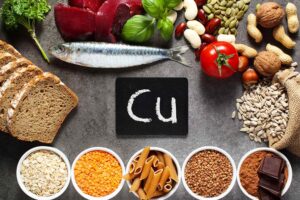
Copper is found in a wide range of foods, but some of the best sources include…
- Oysters and other shellfish (7.6mg per 100g oysters and 2.8mg per 145g lobster)
- Shiitake mushrooms (5.16mg per 100g)
- Dark leafy greens (0.16mg per 100g Swiss chard)
- Beans (0.9mg per 100g red kidney beans)
- Organ meats like liver and kidneys (10.3mg copper per 67g calf liver)
- Nuts like almonds and cashews (2.22mg per 100g cashew nuts)
- Cocoa (3.8mg per 100g)
- Black pepper (1.33mg per 100g)
- Whole grains (0.5mg per 100g buckwheat)
- Potatoes (1.13g per 100g)
Sometimes, copper is also added to breakfast cereals and other fortified foods. For more information, check out this list of the top 20 foods high in copper and their benefits from Dr Axe.
Copper supplements aren’t usually necessary and can cause imbalances in the body. For this reason, if you’re considering taking copper supplements, it’s important to always speak to your doctor first.
What are the symptoms of copper deficiency and toxicity, and who’s at risk?

As we’ve mentioned, for optimal health, copper is needed in just the right amounts. Having either too much or too little copper in the body can be harmful.
We’ll cover the symptoms and potential causes of both copper deficiency and toxicity below…
Note: If you’re concerned about your copper intake or believe you’re at risk of deficiency or toxicity, it’s important to speak to your doctor.
Copper deficiency
Most people can get enough copper from their diet, and if you’re in good health, it’s unlikely that you have low levels of copper in your blood.
That being said, some health conditions and risk factors can make people more likely to develop copper deficiency. This includes conditions such as celiac disease, cystic fibrosis, Crohn’s disease, and Menkes syndrome.
Having gastric bypass surgery is also a risk factor, as is taking too many zinc or vitamin C supplements, because this makes it more difficult for the body to absorb copper.
Potential symptoms of copper deficiency include tremors, numbness, fatigue, tingling sensations, anaemia, and vision loss. Over time, copper deficiency has been linked to an increased risk of infection, osteoporosis, and depigmentation of skin and hair.
Copper toxicity
According to GOV.UK, copper toxicity is very rare in the UK. However, some factors can increase a person’s risk.
One condition known to increase a person’s risk of copper toxicity is Wilson’s disease. Wilson’s disease is an inherited disorder where the liver is unable to get rid of excess copper. This causes copper to build up in organs such as the brain, liver, and eyes, which can cause damage over time.
Potential symptoms of copper toxicity include diarrhoea, vomiting, muscle pain, and jaundice. In severe cases, copper toxicity can lead to liver damage, and heart and kidney failure.
Final thoughts…
Copper plays an essential role in keeping us healthy. While most people can get enough copper through a healthy, balanced diet, certain health conditions, such as Crohn’s disease or having gastric bypass surgery, can increase the risk of copper deficiency.
For further reading, head over to our diet and nutrition section, where you’ll find other essential vitamin and mineral guides, such as vitamin A, C, and K, potassium, and magnesium.
Do you feel like you’re getting enough copper in your diet? Do you have any additional tips for staying healthy? We’d be interested to hear from you in the comments below.
Francesca Williams is a senior lifestyle writer at Rest Less. She joined Rest Less in early 2021 after achieving a first-class degree in History at the University of Sheffield and qualifying as an NCTJ Gold Standard Journalist. Francesca is a qualified Level 3 Personal Trainer and writes across a range of lifestyle topics, specialising in health. In her spare time, Francesca likes to keep herself busy going to the gym, dancing, spending time with friends and family, and getting involved with her local church.
* Links with an * by them are affiliate links which help Rest Less stay free to use as they can result in a payment or benefit to us. You can read more on how we make money here.
Join the discussion
Read our full commenting terms and guidelines