

- Home
- Leisure & Lifestyle
- Food & Drink
- Recipes
- 8 recipe ideas from around the world
How does Rest Less make money
We make money through advertising and commission from affiliate links, which enable us to offer Rest Less as a free service to our users. The content on this page may use affiliate links, which track traffic from our website to a third party provider and enable us to receive a commission or payment from any traffic we refer.
* Affiliate links on this page have an * next to them. We place enormous importance on our editorial independence and the integrity of our content which means that we will never change how we write about something as a result of an affiliate link.
It may be a while until your next holiday, but that doesn’t mean you can’t enjoy exploring in your own kitchen. If you’re feeling restless, why not discover different cuisines and flavours by cooking a delicious new dish?
While most are familiar with comforting spaghetti bolognese and a rich Balti, with foreign cuisine, there are many great-tasting dishes that most of us have yet to try. From the Louisiana-inspired jambalaya to Indonesian nasi goreng, we’ve pulled together a list of mouthwatering meals from around the world to inspire you.
Some you may have eaten before, some you may have only heard of, and others may be brand new. But one thing’s for sure, though – they’re all delicious.
1. Nasi Goreng (Indonesia)

Most people who have been to Bali will be familiar with nasi goreng – because it’s everywhere! Locals eat it throughout the day – at roadside food stalls, in restaurants, and at home. ‘Nasi goreng’ means fried rice, and while no one is disputing the delicious simplicity of plain fried rice, nasi goreng is a seriously amped-up version of this comfort food.
As it’s often made with leftover ingredients, nasi goreng can vary quite a lot, but the rice is usually served with spring onions, shallots, garlic, chilli, cucumber and tomatoes, with a fried egg on top.
Aside from the additional ingredients, what really sets nasi goreng apart from ‘normal’ fried rice is its wonderfully deep, salty-yet-sweet flavour. The sauce is made with kecap manis, an Indonesian sweet soy sauce that caramelises the rice when heated. Combined with pungent spice and shrimp paste, the overall flavour packs a punch: fresh, hot, and fragrant.
The egg provides the protein, but other sources are sometimes added – usually tempeh, an Indonesian food made from fermented soybeans. You can buy tempeh in most supermarkets, though you can always add chicken or tofu.
Part of the beauty of nasi goreng is its flexibility. Because it’s typically made with leftovers, you can throw in whatever you have in the fridge – peas, carrots, green beans, mushrooms, spinach. You can also make it as simple or elaborate as you wish. If you like getting creative in the kitchen, you can knock up your own spice paste – or for something quicker, try a ready-made paste from a supermarket.
For a plant-based version, just leave out the shrimp paste and egg, and add some tofu or tempeh, if you like.
This nasi goreng recipe from The Guardian will show you how to cook it, or check out the video below to see the process come to life.
2. Pho (Vietnam)
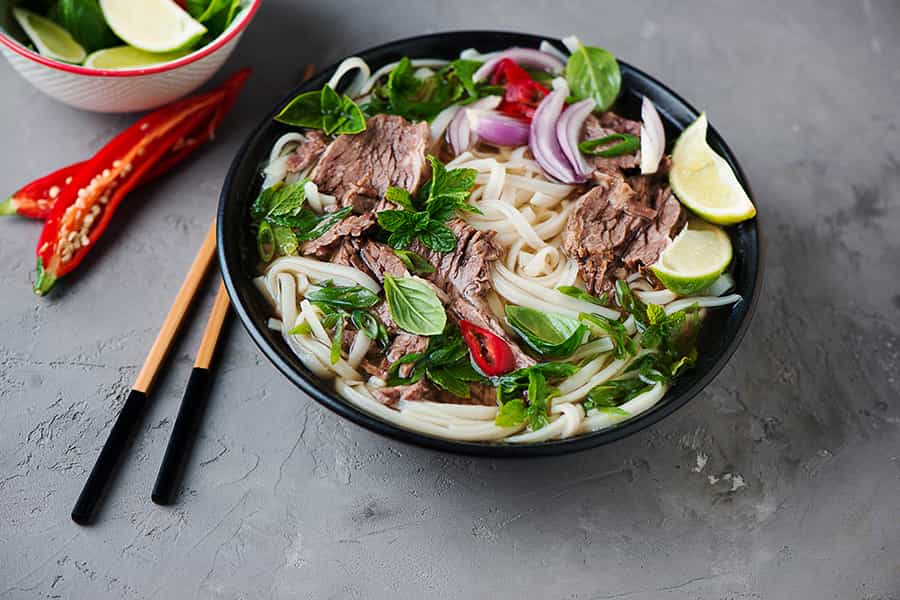
It wasn’t long ago that only visitors to Vietnam were familiar with pho – but thanks in part to UK restaurant Pho, this delicious noodle soup is fast becoming a favourite over here.
Pho (pronounced “fuh”) is the Vietnamese national dish, and it perfectly encapsulates the country’s diverse background. Thought to have been inspired by Chinese ingredients like rice noodles, star anise and ginger, and the French dish pot au feu, it’s the perfect blend of flavours and textures. With each mouthful, you get silky noodles, crunchy bean sprouts, spicy chilli, fragrant fresh herbs, and an exquisitely spiced clear broth.
Traditional pho is made with a complex beef stock cooked for eight to 14 hours to infuse all the flavours. And there are lots them – aside from the beef, the stock contains charred onions or shallots, star anise, ginger, garlic, cinnamon sticks, cloves, and sometimes cardamom, depending on where in Vietnam.
For protein, beef or crispy tofu is usually used, then Thai basil, fresh coriander, spring onions, mint and raw bean sprouts are added. Pho is eaten with chopsticks, and it’s perfectly acceptable to slurp as you eat – which is handy for those still learning chopsticks. When you’ve finished the noodles, you can drink the remaining broth right from the bowl – it’s so tasty it would be a crime to pour it away.
If you’d like to make your own, try this traditional beef pho recipe from Leite’s Culinaria. While traditional pho can take hours (even days) to make, it can be quick, too. Check out the video below to find out more.
3. Smørrebrød (Scandinavia)

If you think sandwiches are just for lunch, picnics, or as an on-the-go snack, think again. Smørrebrød are Scandinavian open sandwiches that have become a culinary art form. Originating in Denmark – the word ‘Smørrebrød’ comes from the Danish words for butter (smør) and bread (brød) – they’re popular all over Scandinavia.
Though they started as a lunchtime meal, they’re also eaten as a quick yet satisfying dinner that uses whatever you have in the fridge. They’re the perfect vehicle for leftovers, as you can put almost anything on them.
Traditionally, smørrebrød is made with dense Danish-style fermented rye bread, which has a tasty tang. Then, the bread is primed with a thick layer of butter. Toppings are almost always local Danish ingredients – often fresh seafood like shrimp, salmon, and pickled or fermented herring, though meat and vegetarian smørrebrød are also popular.
Whatever you put on your bread, it’s important to embellish your smørrebrød with garnishes that enhance the taste, texture and overall look. Traditionally, smørrebrød has a good crunch – so feel free to add plenty of pickles, raw onion, cucumber, radishes, etc. The one rule that all Danes follow is that smørrebrød is never eaten by hand. It’s customary to eat it with a knife and fork, savouring every mouthful.
Feeling inspired? You can learn how to build your own smørrebrød on Serious Eats, or watch the video below for more smørrebrød ideas.
4. Tacos (Mexico)

Almost everyone likes a good taco, but the tacos most of us are familiar with are typically inspired by the US. Traditional Mexican tacos don’t include garnishes like lettuce, tomato, cheese or sour cream. Instead, they’re topped with fresh coriander, finely chopped white onion, salsa, guacamole, a squeeze of lime, and sometimes some sliced radish.
Crunchy yellow taco shells you buy in a box are an American invention. In Mexico, tacos are almost always served in soft corn tortillas. While we might think of ground beef as a traditional taco filling, that’s also a US creation. Mexican tacos are generally fresher, healthier, and more delicious.
Wherever you are in Mexico, tacos are everywhere. They’re the ultimate street food, and while you can eat them in restaurants, they’re usually served from street stalls and carts. Tacos are either made fresh by the vendor or bought from a local tortilleria.
Some of the most popular Mexican tacos are el pastor (made with marinated pork), seafood (usually made with breaded white fish), asada (made with steak), and carnitas (made with shredded pork). While most tacos involve meat, plenty of veggie tacos are available, too – usually with roasted vegetables like peppers, squash or courgettes.
To have a go at making your own, Damn Delicious have a great Mexican street food recipe – or try this vegetarian tacos recipe from Cookie and Kate. To see tacos made by experts, you can also watch the video below.
5. Dim sum (China)
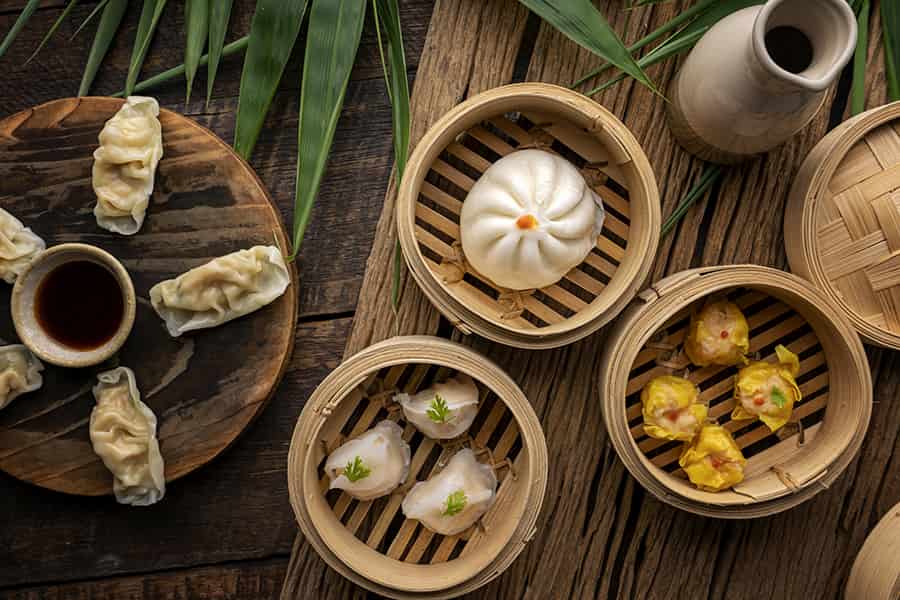
Technically, dim sum isn’t a dish – it’s several. Originating in China, dim sum is a range of small Cantonese dishes. Traditionally eaten on Sundays and Chinese New Year, dim sum is enjoyed slowly, with each dish shared out. It’s often a family experience and, in China, families go out on a Sunday to eat dim sum and drink jasmine tea.
The words dim sum mean “touch the heart”, and the story goes that it was created centuries ago by the Chinese Royal Court chefs to “touch the heart” of the emperor. The focus for this meal is savouring the food and the company; dim sum is meant to be nibbled, not gobbled, no matter how delicious it is.
There are many types of dim sum, but almost all menus contain steamed fluffy white buns, rice noodle rolls, and dumplings. Steamed buns are usually filled with a mixture of barbecued pork and shallots, or mushrooms, vegetables and herbs, and – because sweet sits alongside savoury during dim sum – sweet custard buns, too. Delicate steamed dumplings are stuffed with pork and prawns, or mushrooms and water chestnuts. Rice noodle rolls are large sheets of rice noodles with several fillings, usually prawns, pork or vegetables, served with a splash of soy sauce.
Other popular dim sum dishes include sticky rice wrapped in lotus leaves, sesame prawn toast, turnip cake, sesame seed balls, stuffed peppers and aubergine, spring rolls, and radish cakes, which are steamed and then pan-fried. Because there are so many dim sum dishes, they can be enjoyed by everyone, whether you’re an omnivore, a vegan, or gluten-free.
Check out some popular dim sum dishes on The Spruce Eats, or get inspired by watching Hong Kong’s top chef make shrimp and chive dumplings below.
6. Masala dosa (India)
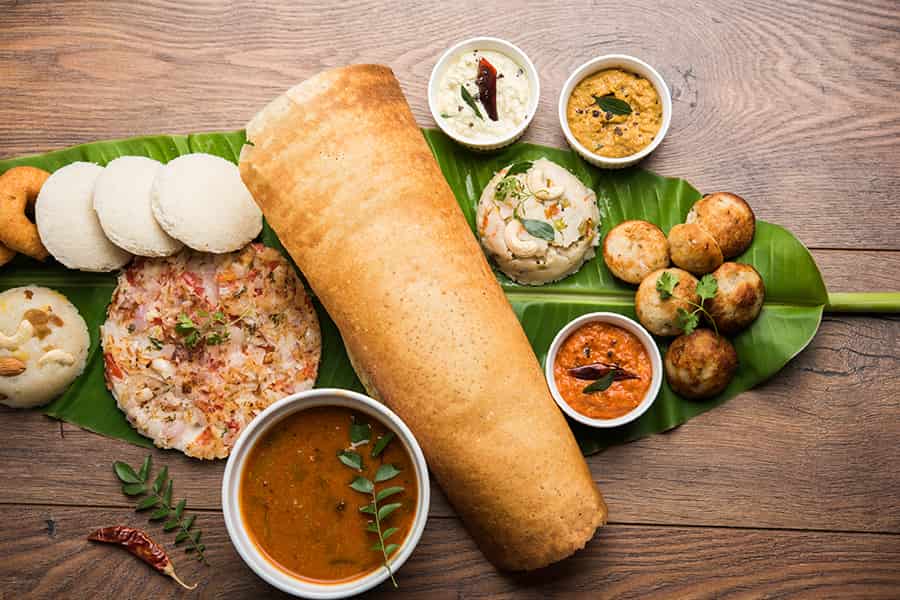
There’s no denying that we Brits love Indian food – so much so that the tikka masala is widely considered our national dish. But most of us aren’t quite as familiar with Southern Indian cuisine.
One of the most popular Southern Indian meals is masala dosa, a crispy, savoury pancake made from rice and lentils, stuffed with mashed potatoes, onions, green chillies and plenty of spices. It’s often served with aromatic chutney and sambar, a lentil-based vegetable stew, and is an enormously popular dinner, breakfast, or hearty snack. Dosa dishes have been eaten since the fifth century, and masala dosa is treasured for its complex flavours, textures, aromas and visual appeal.
While stuffed crepe-type dishes generally aren’t too healthy, masala dosa is an exception. Because the batter is made from rice and lentils, it’s protein-packed and low in cholesterol – and because it’s typically fermented, it’s even healthier. Traditional masala dosa batter is fermented overnight, but you can make a quick batter by mixing chickpea flour, wholewheat flour, baking soda, salt and water, then frying in a pan until you have a crispy, golden pancake.
Each bite of masala dosa is a joy: a crisp pancake, fluffy potatoes, crunchy onions, hot spices, sweet chutney…these crepes have everything going on. Masala dosas don’t contain any animal products, so they’re a great choice if you’re trying to eat more plant-based food.
Swasthi’s Recipes has a great traditional fermented masala recipe – or if you’re short on time, you can try this dosa recipe from Holy Cow Vegan. Or, watch the video below for some extra tips.
7. Tagine (Morocco)

The tagine is arguably Morocco’s national dish and its most famous culinary offering. A tagine is a slow-cooked stew that takes its name from the cone-shaped clay pot that it’s cooked in.
Tagines are an important part of Moroccan culture, and cooking in ceramic pots has been documented as early as the ninth century. Created as a portable oven, the tagine pot was first used by nomadic tribes across North Africa. The cone-shaped lid of the tagine traps heat and steam, so you don’t have to use much water to cook your stew – and because the cooking process is very slow, the food is infused with wonderfully deep flavours.
So what goes into a tagine? Typically, a tagine is a rich stew of vegetables and meat or fish. Spices are very important, and turmeric, cinnamon, saffron, ginger, and cumin are all tagine staples. Dried fruit, nuts, olives, preserved lemons and fresh herbs are all key ingredients, and couscous is often served on the side. There are dozens of tasty tagine recipes to try: chicken and apricot tagine, chickpea and carrot tagine, and lamb and prune tagine are all popular in Morocco.
You can buy tagine pots on Amazon, though you can make a tagine in a slow-cooker. You can have a look at some tagine recipes on The Spruce Eats website, or make sure you get your five-a-day by checking out Jamie Oliver’s seven-veg tagine below.
8. Jambalaya (USA/Caribbean)

Fusion food is almost always exciting. Combining different flavours and cuisines can lead to delicious new traditions – and jambalaya is a great example.
Originating in Louisiana, USA, and considered the ‘national dish’ of New Orleans, jambalaya brings together flavours from France, Spain, West Africa, North America and the Caribbean. It’s essentially a rice dish with vegetables and meat or seafood, and it’s jam-packed with flavour.
There are many different types of jambalaya, but traditional dishes are based on the key ingredients of Creole and Cajun cooking: onion, green pepper, celery, garlic, and jalapeño chillies. Jambalaya is simple comfort food at its best, and because it’s a one-pot meal, it’s effortlessly easy to make.
There are two main types of jambalaya: Creole and Cajun. The biggest difference is that Creole jambalaya (also known as “red jambalaya”) uses tomatoes while Cajun jambalaya doesn’t. The seasoning is the most important part, and you can make your own seasoning by mixing garlic powder, onion powder, paprika, smoked paprika, thyme, oregano, basil, cayenne pepper, salt and pepper – or you can just buy Creole seasoning pre-made.
Louisiana jambalaya typically contains seafood like shrimp, crayfish, or prawns, and sometimes includes sausage or chicken. Because jambalaya’s key flavours come from the spices, it’s easy to make a delicious veggie version, too, by swapping the meat or fish for beans, peas or mock meat.
Why not have a go at making NYT Cooking’s perfect shrimp jambalaya? Or to make a vegetarian alternative, try this vegetable jambalaya recipe from Taste, Love and Nourish. To see how to make a classic New Orleans version, you might also like to watch the video below.
Final thoughts…
Aside from discovering new cuisines and enjoying delicious dishes, cooking has many powerful benefits. It’s relaxing, therapeutic, and an expression of affection to friends, family, or ourselves. It also leads to more balanced eating, encourages a wider variety of foods, and allows us to become more mindful of what we eat.
Many of us are keen to experience new things, and trying new cuisines is a great way to get more creative in the kitchen. If you’re looking for further inspiration, check out our food and drink section.
Have you tried any delicious new dishes recently? We’d love to hear about your culinary adventures in the comments below.
Selene Nelson is an author, freelance journalist, and lifestyle writer for Rest Less. After graduating from the University of Sussex with a degree in English Literature, Selene began contributing to many major newspapers and websites, and has written for the BBC, The Sunday Times, The Independent, Town & Country, and HuffPost. Her specialist subjects include food, travel, and health, though she enjoys writing about a wide range of topics (e.g. her two books are about veganism and psychopathy, respectively!). She enjoys cooking (particularly pasta and Asian noodle soups), reading, travelling, hiking, attempting to keep fit, and watching animal videos on YouTube.
* Links with an * by them are affiliate links which help Rest Less stay free to use as they can result in a payment or benefit to us. You can read more on how we make money here.
Join the discussion
Read our full commenting terms and guidelines