
- Home
- Health
- Healthy Body
- What are the health benefits and uses of Manuka honey?
In the quest to feel healthy and add years to our lives, many of us try to add plenty of superfoods to our diet. These are generally recognised as nutrient-rich foods that are especially beneficial for health and wellbeing.
While superfoods are mostly plants, there are a few exceptions – most notably manuka honey, which is actually referred to by some as the ‘ultimate superfood’.
But why exactly is manuka honey so good for us? And what are some of the different ways that we can use it? Here’s everything you need to know about manuka honey.

Save on real Manuka Honey this month
We’ve teamed up with honey experts Manuka Doctor to give you an extra discount on their Manuka honey + skincare range! Right now you’ll save 70% off the RRP, but with our special code RESTLESS10 you can get an extra 10% off on top as well!
Stock up on healthy Manuka from New Zealand’s Number 1 brand before this offer ends on 30th September.
What is manuka honey?
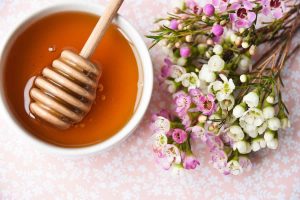
Manuka honey is a dark honey that’s native to New Zealand. It’s made by bees that pollinate the Leptospermum scoparium flower – otherwise known as the manuka bush – and it’s been used by the Māori communities for hundreds of years.
Though honey has been used around the world for its health and beauty benefits, manuka honey contains active compounds that give it antibacterial and antimicrobial properties. This is what sets it apart from other types of honey.
According to experts, however, not all manuka honey is created equal, and to buy good-quality manuka honey, look for the UMF trademark. UMF stands for Unique Manuka Factor, a quality trademark that shows you’re buying genuine manuka honey from registered and licensed beekeepers and producers. UMF ratings are often 10+ or 25+, and this represents the honey’s level of unique signature compounds.
Another rating you might see on manuka products is MGO, which refers to methylglyoxal – the key antibacterial and antimicrobial ingredient in manuka honey. The higher the MGO or UMF, the more pure and potent the product is – and the more expensive.
It’s important to be mindful that, to be classified as ‘real’ manuka honey, a product must contain at least 5+ UMF, or 83+ MGO. Some brands deliberately use vague labelling to confuse customers, so do look into this before you buy. Studies show that manuka honey provides health benefits when it has ratings of 10+ UMF and above, which is 263 MGO.
What are the benefits of manuka honey?
Manuka honey is thought to offer a variety of health and beauty benefits.
For example, its antiviral, anti-inflammatory, and antioxidant properties mean it may help heal wounds, soothe sore throats, and prevent tooth decay.
Let’s take a closer look at some of the scientifically proven health benefits of manuka honey.
1. Manuka honey can aid wound healing
Honey has been used to treat wounds, burns, and sores for millennia – but only manuka honey has been approved by the US Food and Drug Administration as an option for wound treatment.
Multiple studies suggest that manuka honey can improve wound healing, boost tissue renewal, and even decrease pain in patients suffering from burns. One study found that when manuka honey was applied to people with non-healing wounds, 88% of the wounds decreased in size.
Other evidence suggests that manuka honey can help heal diabetic ulcers. For example, this study found that manuka honey dressings reduced healing time in patients suffering from diabetic ulcers, while another study found that manuka honey dressings cured ulcers more effectively than conventional treatment.
2. Manuka honey can soothe a sore throat
Honey and lemon is an age-old remedy for a sore throat, and manuka honey’s antiviral and antibacterial properties make it particularly beneficial.
This is because manuka honey is effective at reducing inflammation, killing bacteria responsible for pain and discomfort, while protecting and soothing the inner lining of the throat.
In this study, manuka honey was found to decrease levels of Streptococcus mutans (a type of bacteria responsible for sore throats) in people undergoing chemotherapy, and another study revealed that manuka honey decreased the harmful strain of bacteria responsible for inflammation and ulcerations in the oesophagus and digestive tract. Manuka honey has also been shown to help suppress general coughs.
3. Manuka honey can support digestive health
Research shows that regularly consuming manuka honey may help alleviate some symptoms of irritable bowel syndrome (IBS) – one of the most common digestive disorders.
For example, this study found that manuka honey intake was linked with a decrease in symptoms like constipation, diarrhoea, abdominal pain, and irregular bowel movements.
There’s also evidence that manuka honey can help treat gut infections such as Clostridium difficile, which causes severe diarrhoea and bowel inflammation and is linked to conditions like colitis.
4. Manuka honey can promote oral health
To keep our teeth, mouth, and gums healthy, it’s important to limit the bad oral bacteria that can cause plaque to form in the mouth. That said, it’s also important not to kill good bacteria that help promote oral health.
Science shows that manuka honey kills some of the harmful bacteria linked to plaque formation, gum inflammation, and tooth decay, including porphyromonas gingivalis and aggregatibacter actinomycetemcomitans.
While the idea of sucking sweets to improve oral health may seem counterintuitive, studies show that consuming honey sweets made from manuka honey may help reduce plaque and gingivitis. This is because honey doesn’t contain refined sugar, has powerful antibacterial effects, and is unlikely to cause tooth decay.
As a result, research suggests that sucking manuka honey sweets may be more effective than chewing sugar-free gum in reducing plaque and gingival bleeding.
5. Manuka honey can improve skin
While manuka honey offers a variety of benefits for our internal health, it may also provide powerful benefits for the skin.
For example, manuka honey is used to treat a variety of skin conditions, including acne. This is generally caused by hormonal changes, but it can also result from bacteria growing in blocked pores, which manuka honey’s antimicrobial properties can target.
Plus, manuka honey’s anti-inflammatory properties may also help alleviate inflammation caused by acne. One study revealed that manuka honey was just as effective as antibacterial soap at improving acne.
Skincare professionals also believe manuka honey is a natural moisturiser, largely because it absorbs moisture directly from the air and draws it into the skin. It may also be effective at treating inflamed or irritated skin, though more research is needed to confirm this.
To learn more about the health benefits of manuka honey, check out the video below.

Save on real Manuka Honey this month
We’ve teamed up with honey experts Manuka Doctor to give you an extra discount on their Manuka honey + skincare range! Right now you’ll save 70% off the RRP, but with our special code RESTLESS10 you can get an extra 10% off on top as well!
Stock up on healthy Manuka from New Zealand’s Number 1 brand before this offer ends on 30th September.
How much manuka honey should you consume?
While there’s no established daily amount of Manuka honey needed to reap its potential health benefits, 1–2 tablespoons a day are generally suggested.
While manuka honey offers plenty of health-boosting properties, it’s still a sugar, so it’s advised to be consumed in moderation. Anyone monitoring their blood sugar, like people with diabetes, should be especially mindful of how much honey they consume.
Manuka honey should be avoided if you’re allergic to bees. The NHS also advises that children under the age of one shouldn’t be given any form of honey, as it could contain bacteria that can cause serious illness in babies.
The easiest way to consume manuka honey is to simply eat a spoonful of it, but this can be quite intense – so below are some other ways we can consume or use it.

Save on real Manuka Honey this month
We’ve teamed up with honey experts Manuka Doctor to give you an extra discount on their Manuka honey + skincare range! Right now you’ll save 70% off the RRP, but with our special code RESTLESS10 you can get an extra 10% off on top as well!
Stock up on healthy Manuka from New Zealand’s Number 1 brand before this offer ends on 30th September.
6 ways to use manuka honey
1. Incorporate manuka honey into your breakfast
If you don’t fancy eating a pure spoonful of rich honey, the easiest way to make sure you’re regularly consuming manuka honey is to include it in your breakfast each day.
You could spread it on toast or drizzle it over porridge, yoghurt, or cereal. If you enjoy making smoothies, a spoonful of manuka honey can act as a healthy sweetener.
For more inspiration, check out this list of breakfast recipes that use manuka honey from Foodies 100’s.
2. Swirl manuka honey into a hot drink
If you like to add sugar to your tea, why not try swapping it for manuka honey? Not only will this make your tea just as sweet, but it’ll also be much better for your teeth.
Alternatively, you could mix it with herbal teas, or make a hot lemon and honey drink. While these are good to drink when you have a sore throat, they can be enjoyed daily, too.
For more ideas on healthy hot drinks you can add manuka honey to, check out this section of our article on warm winter nutrition.
3. Make a manuka honey face mask
While it’s possible to make a manuka honey facial mask simply by applying the product to your face, mixing manuka honey with other ingredients such as coconut oil or avocado can act as an even more intensive moisturiser.
Alternatively, you could mix manuka honey with olive oil and brown sugar and make your own exfoliating face mask: the olive oil softens your skin, the sugar exfoliates, and the honey soothes.
Check out this article by Marie Claire to find out more about making manuka honey face masks.
4. Apply manuka honey to your hair
Because manuka honey is great at attracting and retaining moisture, it can also make an effective hair mask to nourish dull or brittle hair.
Simply mix manuka honey with coconut oil, leave on for 20–30 minutes, then wash off.
For further guidance on how to make a manuka honey hair mask (as well as a honey hand soak), check out this guide by Kore New Zealand.
5. Cook with manuka honey
Aside from adding manuka honey to your tea, toast, or cereal, there are plenty of other ways to enjoy this superfood.
For example, if you enjoy baking, consider swapping sugar for honey in your recipes. The general rule is to switch sugar for half the amount of honey. Because cooking honey at high temperatures may destroy its natural enzymes, you should also reduce the oven temperature by 15°C.
Check out these manuka honey recipes for some inspiration. Or, if you don’t have a sweet tooth, why not try making this manuka honey sriracha sauce from Kenneth Temple?
6. Suck manuka honey sweets
If you have a sweet tooth and enjoy eating boiled sweets, you might like to buy some manuka honey lozenges to suck on.
These are particularly great if you have a sore throat, but they’re also just delicious if you fancy a sweet treat.
Amazon sells a wide range of manuka honey sweets, drops, and lozenges.

Save on real Manuka Honey this month
We’ve teamed up with honey experts Manuka Doctor to give you an extra discount on their Manuka honey + skincare range! Right now you’ll save 70% off the RRP, but with our special code RESTLESS10 you can get an extra 10% off on top as well!
Stock up on healthy Manuka from New Zealand’s Number 1 brand before this offer ends on 30th September.
Final thoughts...
Thanks to its antibacterial, antiviral, and anti-inflammatory properties, manuka honey is completely unique.
It has powerful benefits for healing wounds and may also be effective at treating conditions like sore throats and IBS. It’s also beneficial for skin and hair health. And, of course, it’s absolutely delicious.
There are many ways to include more manuka honey in your diet and lifestyle, whether you decide to add it to tea, toast, or bake with it – or even create your own DIY beauty products. To get the most out of your manuka honey, be sure to buy a good-quality product with a UMF or MGO rating.
For more health content and advice, head over to our general health section where you’ll find information on everything from longevity to important health checks.
Do you try to consume manuka honey – or are you interested in making your own honey beauty treatments? We’d love to hear from you in the comments below.
Selene Nelson is an author, freelance journalist, and lifestyle writer for Rest Less. After graduating from the University of Sussex with a degree in English Literature, Selene began contributing to many major newspapers and websites, and has written for the BBC, The Sunday Times, The Independent, Town & Country, and HuffPost. Her specialist subjects include food, travel, and health, though she enjoys writing about a wide range of topics (e.g. her two books are about veganism and psychopathy, respectively!). She enjoys cooking (particularly pasta and Asian noodle soups), reading, travelling, hiking, attempting to keep fit, and watching animal videos on YouTube.
* Links with an * by them are affiliate links which help Rest Less stay free to use as they can result in a payment or benefit to us. You can read more on how we make money here.
Join the discussion
Read our full commenting terms and guidelines