
- Home
- Health
- Healthy Body
- Why vitamin B2 is important and how to get enough
We rely on 13 essential vitamins to stay healthy. Eight of these are B vitamins, which play a role in everything from brain health to nervous system function. This includes vitamin B2, a powerhouse coenzyme needed for energy production and cell growth.
Here, we’ll cover everything you need to know about vitamin B2 – including what it does, how much we need, and the best sources.
What is vitamin B2?
Vitamin B2, also known as riboflavin, is one of eight essential B vitamins that we need to stay healthy. It’s a coenzyme that plays a key role in several bodily processes, including breaking down food for energy and supporting cell growth and function.
Vitamin B2 also supports the nervous system and immune system and has powerful antioxidant properties. Along with vitamin A, it’s also needed to maintain mucous membranes in the digestive system and keep eyes, muscles, nerves, and skin healthy.
However, because vitamin B2 is water-soluble, the body can’t store it. Instead, it’s carried through the bloodstream, and whatever’s not needed is passed out in urine. So, we need to get a steady supply of B2 from our diet.
Vitamin B2 is found naturally in some foods and added to others. It can also be taken as a supplement.
Note: It’s important to always seek the advice of your GP before adding any new supplements to your diet because they won’t be suitable for everyone.

Free NHS eye tests plus 10% off glasses for over 60s
Booking an appointment online has never been easier, and with a range of offers from 10% off if you’re over 60**, 2nd pairs half price^ & a free NHS eye test if eligible, our expert optometrists are here to help you on your journey to clearer vision.
What are the health benefits of vitamin B2?
Research has linked vitamin B2 with several health benefits.
We’ll cover some of these below.
Vitamin B2 may be beneficial for heart health
There’s evidence to suggest that getting enough vitamin B2 may contribute to healthier heart.
B2 is a component of two major coenzymes, flavin mononucleotide (FMN) and flavin adenine dinucleotide (FAD), which are needed to carry out essential daily functions, such as DNA repair and cell growth. As a result, research has linked B2 deficiency with an increased risk of several health conditions, including heart disease.
Vitamin B2 also plays a role in regulating levels of homocysteine in the blood – an amino acid that enters the body when we consume animal proteins, like meat. High levels of homocysteine are a risk factor for heart disease and stroke, as well as other health conditions.
Along with other B vitamins, like B6, B9, and B12, B2 breaks down homocysteine in the body. This is significant as, according to this study, a 25% reduction in blood homocysteine levels could reduce the risk of heart disease by 11-16%, and of stroke by 19-24%. However, as this review highlights, homocysteine levels and their direct relationship with cardiovascular conditions are still being examined.
Vitamin B2 may help treat migraines
Vitamin B2 can help reduce oxidative stress, caused by imbalances of harmful free radicals and antioxidants. It can also reduce nerve inflammation, which is known to contribute to migraines.
Migraines can also occur when the structures (mitochondria) within cells that are responsible for converting food into energy aren’t functioning properly. Because B2 is required for normal mitochondrial activity, The Migraine Trust lists it as a potential natural treatment for migraines.
In this review of eight randomised controlled trials, vitamin B2 supplementation significantly decreased migraine pain, frequency, and duration. However, it’s important to note that the benefits occurred after supplementation of 400mg/day over three months.
Another scientific review found that vitamin B2 supplements (400mg daily for adults and 200mg daily for children) caused a mild reduction in the frequency of migraines in adults and children over three months old, with no serious side effects.
To learn more, check out our article: What role does diet play in migraine headaches?
Vitamin B2 may boost immunity
Vitamin B2 is a powerful antioxidant that plays a key role in healthy immune system function. Antioxidants help to destroy free radicals (unstable molecules that can damage cells) and reduce the risk of disease.
This study also found that B2 is important for the survival of macrophage cells, which form a key part of the immune system. As a result, vitamin B2 deficiency may weaken the immune system, while getting enough can boost immune health.
That said, further research is still needed to fully confirm vitamin B2’s impact on immune health.
Vitamin B2 may help reduce the risk of certain cancers
Due to its antioxidant properties and role in immunity, some studies suggest that getting enough vitamin B2 may reduce the risk of certain cancers.
One theory for this is that B2 helps protect cells from free radical damage, which can contribute to the development of health conditions like cancer over time.
In this scientific review, vitamin B2 intake was found to have a minor positive effect on lung cancer and ovarian cancer risk. However, further research is needed to confirm these findings.
Vitamin B2 is beneficial for eye health
Vitamin B2 is important for eye health for several reasons. Firstly, it plays a key role in allowing the retinas (the layer at the back of the eyeballs) to receive light. It also supports the function of the glutathione enzyme – an important antioxidant that’s responsible for removing free radicals in the eyes.
As a result, research suggests that vitamin B2 deficiency may lead to increased light sensitivity and increase the risk of eye conditions like cataracts. This is a common age-related condition that causes the eye lens to cloud over. However, this study showed that increasing vitamin B2 intake reduced the risk of cataracts.
Other studies have also suggested that a lack of vitamin B2 may increase the risk of night blindness and age-related macular degeneration (AMD). Experts believe there are photoreceptors in the eyes that need B2 to adapt to darkness – and that it may work alongside vitamin A to improve our nighttime vision.
Lastly, vitamin B2 eye drops are sometimes used alongside ultraviolet (UV) light therapy as treatment for the degenerative eye disorder, keratoconus.
Advertisement
If you’d like to read more about various eye conditions and book an eye test, you can also do so on the Boots Opticians website.
Vitamin B2 may help reduce tiredness
Vitamin B2 is needed to break down food into energy. It’s also involved in converting carbohydrates into a substance called adenosine triphosphate (ATP), which allows the body to store energy in muscle cells until we need it.
Vitamin B2 is involved in iron absorption, too. As a result, research has found that deficiency can increase the risk of anaemia – a condition known to cause fatigue.
This is because we need iron to produce red blood cells, which carry oxygen to our tissues and organs, where it’s used to break down glucose into energy.
How much vitamin B2 do I need, and what are the best sources?
According to the NHS, adult men and women require around 1.3mg and 1.1mg of vitamin B2 a day, respectively.
Most people can get enough vitamin B2 by eating a healthy, balanced diet. However, because vitamin B2 can’t be stored in the body, you need to get it from your diet every day.
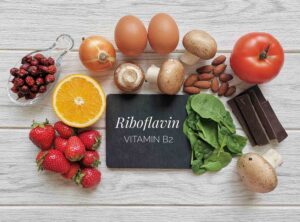
Some of the best sources of vitamin B2 include…
- Milk (approx. 0.47mg per 200ml whole milk)
- Eggs (approx. 0.5mg per two medium eggs)
- Plain Greek yoghurt (approx. 0.23mg per 100g serving)
- Mushrooms (approx. 0.3mg per 100g)
- Salmon (approx 0.5mg per 100g)
- Red meat (approx. 0.3mg per 100g beef steak)
- Tuna (approx. 0.3mg per 100g)
Vitamin B2 is also commonly added to fortified cereals and grains. For example, 50g of Weetabix contains roughly 0.6mg of vitamin B2.
However, it’s important to note that B vitamins break down when exposed to light. For this reason, it’s best to store dairy and other B2-rich foods in opaque containers rather than clear ones, wherever possible.
If you’d like to up your intake of vitamin B2, you might find this list of the best vitamin B2-rich foods, fruits, and vegetables from Digit useful. Or, why not experiment with one of these high riboflavin recipes from Eat This Much? You’ll find everything from nutty spinach salads to creamy chicken and corn soup.
What are the symptoms of vitamin B2 deficiency and toxicity, and who’s at risk?
Like all vitamins and minerals, it’s important to get the right amount of vitamin B2 for maximum health benefits.
Below, we’ll look at vitamin B2 deficiency and toxicity…
Vitamin B2 deficiency
Because vitamin B2 is found naturally in a variety of foods, deficiency is relatively rare in developed countries.
That said, several factors and conditions can increase a person’s risk of becoming deficient. This includes…
- Excessive alcohol intake – drinking large amounts of alcohol can make it difficult to get enough vitamin B2 in the diet and can also reduce absorption of the vitamins you do ingest.
- Lactose intolerance – because dairy products are a rich source of vitamin B2, being lactose intolerant can increase a person’s likelihood of becoming deficient.
- Birth control pills – research has found that birth control pills can interfere with the absorption of vitamin B2, as well as vitamin B6, B12, C, zinc, folate, and magnesium.
- Being vegan or vegetarian – a lower intake or complete exclusion of dairy and meat products can make it more difficult to get enough B2.
It’s relatively unusual for vitamin B2 deficiency to occur on its own. Instead, it’s more likely to occur as the result of a lack of all key B vitamins. This can result in a variety of symptoms, including…
- Sore throat
- Anaemia
- Fatigue and weakness
- Hair loss
- Swollen blood vessels in the eyes
- Inflammation of the tongue
If you’re worried about your vitamin B2 intake, it’s worth speaking to your GP. If you’re not getting enough through diet alone, they may recommend a daily multivitamin or a B-complex supplement.
Note: It’s important to always seek the advice of your GP before adding any new supplements to your diet because they won’t be suitable for everyone.
Vitamin B2 toxicity
There’s currently no evidence to confirm what the effects of taking too much vitamin B2 may be.
However, the NHS advises that taking 40mg or less of B2 supplements a day is unlikely to cause any harm. Though, again, it’s always important to speak to your GP before adding any supplements to your diet.
You can find out more about vitamin B2 deficiency and toxicity on the NHS website.

Free NHS eye tests plus 10% off glasses for over 60s
Booking an appointment online has never been easier, and with a range of offers from 10% off if you’re over 60**, 2nd pairs half price^ & a free NHS eye test if eligible, our expert optometrists are here to help you on your journey to clearer vision.
Final thoughts…
Vitamin B2 is one of the eight essential B vitamins necessary for health. From maintaining our energy supply to supporting immune system function, it’s important that we get enough B2 from our diet.
For further reading, head over to our diet and nutrition section. Here, you’ll find other essential vitamin and mineral guides, as well as ideas for healthy diet swaps and tips for eating out.
How do you make sure you’re getting enough essential vitamins and minerals? We’d be interested to hear from you in the comments below.
Francesca Williams is a senior lifestyle writer at Rest Less. She joined Rest Less in early 2021 after achieving a first-class degree in History at the University of Sheffield and qualifying as an NCTJ Gold Standard Journalist. Francesca is a qualified Level 3 Personal Trainer and writes across a range of lifestyle topics, specialising in health. In her spare time, Francesca likes to keep herself busy going to the gym, dancing, spending time with friends and family, and getting involved with her local church.
* Links with an * by them are affiliate links which help Rest Less stay free to use as they can result in a payment or benefit to us. You can read more on how we make money here.

Free NHS eye tests plus 10% off glasses for over 60s
Booking an appointment online has never been easier, and with a range of offers from 10% off if you’re over 60**, 2nd pairs half price^ & a free NHS eye test if eligible, our expert optometrists are here to help you on your journey to clearer vision.
Join the discussion
Read our full commenting terms and guidelines